







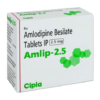
Amlode
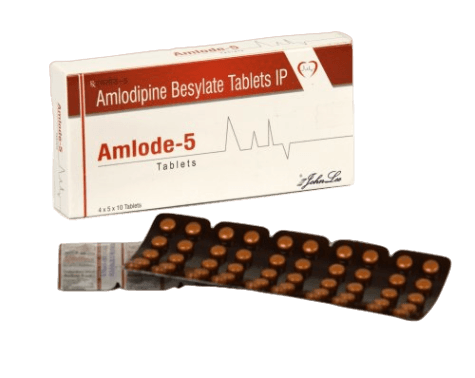
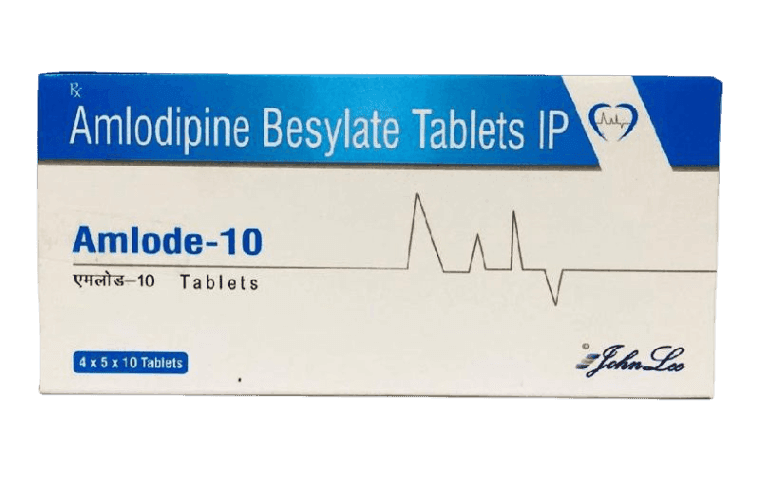
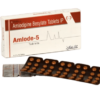
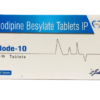
Amlode is amlodipine 5 / 10 mg tablets — the reference third-generation dihydropyridine CCB. 35-50h half-life = smoothest once-daily BP control of any CCB. ASCOT-BPLA trial evidence (beat atenolol+thiazide); VALUE trial. Standard dose 5-10 mg once daily. Also for chronic stable angina, Prinzmetal angina, Raynaud’s. Safely combinable with beta-blockers. Ankle oedema is the main side effect (up to 25% at 10 mg).
✓ Medically reviewed by Morgan Ellis — Pharmacy Researcher · 8 years experience · Last reviewed: May 2026
⚡ Quick Answer — What is Amlode?
Amlode is a 5 / 10 mg amlodipine tablet from a WHO-GMP certified manufacturer — a third-generation dihydropyridine calcium-channel blocker (CCB). Introduced 1990 (Pfizer as Norvasc / Istin). The reference DHP for hypertension worldwide. Plasma half-life 35-50 hours — the longest of any CCB and one of the longest half-lives in cardiovascular medicine. Amlodipine’s extremely long half-life means: (1) dose missed by a day has minimal effect, (2) gradual smooth onset with no reflex tachycardia (unlike short-acting nifedipine), (3) no need for sustained-release formulations, (4) can be paired safely with any other antihypertensive class including beta-blockers. Typical hypertension dose: 5 mg once daily (2.5 mg if elderly, small body size, or hepatic impairment); target 5-10 mg once daily. Main side effects: ankle (peripheral) oedema, flushing, headache from vasodilation, reflex tachycardia (blunted by amlodipine’s long half-life; common with IR nifedipine). Safe to combine with beta-blockers, ACE inhibitors, ARBs, and thiazides (unlike non-DHP CCBs). Pregnancy: nifedipine MR is pregnancy-safe and often first-line; amlodipine is reasonable second option.
📦 Every order is covered by our Reshipment Assurance Policy — if your parcel does not arrive within 20 business days, we reship it.
Why order from MedsBase
Our generic medications are sourced from WHO-GMP certified manufacturers and shipped worldwide in discreet, plain packaging — no medication name on the parcel exterior. Card payments are routed through a regulated processor (statement descriptors include a regulated card-payment processor — never “MedsBase” or any medication name). Crypto and SEPA bank transfer are also accepted. Every order is backed by our Reshipment Assurance Policy.
What Is Amlode?
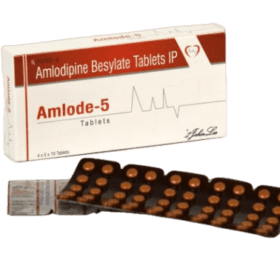
Amlode is an oral 5 / 10 mg amlodipine tablet from a WHO-GMP certified manufacturer, supplied in 30-180 tablets. Introduced 1990 (Pfizer as Norvasc / Istin). The reference DHP for hypertension worldwide.
Amlodipine belongs to the dihydropyridine calcium-channel blocker subclass, distinguished from the non-dihydropyridines (diltiazem, verapamil) by its selective action on vascular smooth muscle with minimal direct cardiac effect. This selectivity profile is clinically important: DHPs can be combined safely with beta-blockers (the combination is standard in angina), while non-DHPs cannot (additive bradycardia/heart-block risk).
How Amlodipine Works
Calcium-channel blockers bind L-type voltage-gated calcium channels and reduce calcium influx into the cell during depolarisation. In arterial smooth muscle, reduced calcium entry means less actin-myosin interaction and direct arterial vasodilation — lowering systemic vascular resistance and blood pressure.
Dihydropyridines are ~10-fold more potent on vascular smooth muscle than on cardiac muscle — so the dominant clinical effect is vasodilation, with minimal direct suppression of cardiac contractility or conduction. The body’s baroreflex can trigger mild reflex tachycardia after fast-onset vasodilation; amlodipine’s very long onset eliminates this effect clinically.
Onset of clinical effect: gradual onset over 6-12 hours, full effect at 7-8 days.
Approved and Evidence-Based Uses
- Uncomplicated hypertension — often first-line, particularly for Black patients and those over 55 (NICE, AHA)
- Hypertension + stable angina (dual indication)
- Prinzmetal / vasospastic angina — first-line
- Raynaud’s phenomenon
- Hypertension in heart failure with preserved ejection fraction (HF-pEF) — safer than non-DHP CCBs which are contraindicated in HF-REF
- Hypertension in pregnancy — not first-line but reasonable second option after methyldopa / labetalol / nifedipine MR
Pivotal trial evidence: ASCOT-BPLA (2005) — perindopril + amlodipine beat atenolol + thiazide for CV outcomes in hypertension, establishing the modern preference for CCB + ACEi/ARB over beta-blocker + thiazide. VALUE (2004) — amlodipine-based therapy had slight advantage over valsartan-based therapy on stroke+MI endpoints, driven largely by faster BP drop. ALLHAT (2002) — amlodipine equivalent to chlorthalidone for most outcomes, better than lisinopril for stroke in black patients.
Amlode Dosage
Hypertension:
- Starting dose: 5 mg once daily (2.5 mg if elderly, small body size, or hepatic impairment)
- Target dose: 5-10 mg once daily
- Maximum: 10 mg once daily
- Titrate every 1-2 weeks based on BP response and tolerability (particularly oedema)
Angina: 5-10 mg once daily for chronic stable and vasospastic angina
Administration: once daily (or twice daily for IR nifedipine formulations). Swallow whole — do NOT crush or split extended-release formulations (delivers an IR dose with risk of hypotension). Take with or without food.
Discontinuation: no specific withdrawal syndrome; can be stopped without taper. BP will return to pre-treatment levels within 1-2 weeks.
Side Effects
Common (>5%, mostly mild and transient):
- Peripheral (ankle) oedema — Peripheral (ankle) oedema from pre-capillary vasodilation — dose-related (up to 25% at 10 mg/day). Not from fluid overload; does not respond to diuretics. Management: reduce dose, combine with an ACE inhibitor or ARB (which neutralise the oedema via balanced pre-and-post-capillary vasodilation), or switch to a non-DHP CCB (diltiazem, verapamil) if the heart-rate effect is acceptable.
- Flushing (warm face and upper body)
- Headache (particularly at start of therapy; usually adapts within 2-4 weeks)
- Minor palpitations (less common than with short-acting nifedipine)
- Dizziness, postural hypotension
- Fatigue
- Mild constipation (less than non-DHPs)
Uncommon:
- Rash, pruritus
- Nausea, abdominal discomfort
- Erectile dysfunction (rare)
- Liver enzyme elevations (usually mild, reversible)
- Rare reports of photosensitivity
Contraindications & Cautions
- Known hypersensitivity to amlodipine or dihydropyridine class
- Cardiogenic shock
- Severe aortic stenosis (can cause critical hypotension)
- Unstable angina or MI within 1 month (DHPs other than amlodipine)
- Obstructive hypertrophic cardiomyopathy (reduces outflow gradient dynamically)
- Severe hepatic impairment (all DHPs are hepatically metabolised)
Pregnancy: amlodipine is not first-line in pregnancy but has reassuring observational data; a reasonable second-line choice if labetalol, methyldopa, and nifedipine MR are ineffective or contraindicated.
Breastfeeding: small amounts in breast milk; generally considered acceptable with infant monitoring.
Drug Interactions
- Grapefruit juice — inhibits CYP3A4 metabolism; can raise plasma levels of amlodipine and particularly nifedipine/nimodipine by 2-3×. Avoid on treatment days, or use consistently if at all.
- Strong CYP3A4 inhibitors (ketoconazole, itraconazole, clarithromycin, ritonavir, cobicistat) — raise CCB plasma levels; reduce dose or avoid
- Strong CYP3A4 inducers (rifampicin, phenytoin, carbamazepine, St John’s wort) — reduce CCB plasma levels; may need dose increase
- Simvastatin — amlodipine modestly increases simvastatin exposure; cap simvastatin at 20 mg/day when combined
- Beta-blockers — DHPs combine safely with beta-blockers (the combination is standard in angina — beta-blocker blunts reflex tachycardia, CCB provides vasodilation). Distinct from non-DHP CCBs (diltiazem, verapamil) which should NOT be combined with beta-blockers.
- Other antihypertensives — generally complementary; monitor BP
- Sildenafil / tadalafil (PDE5 inhibitors for erectile dysfunction) — additive hypotension; caution particularly at high CCB doses
Calcium-Channel Blocker Class at a Glance
| CCB | Class | Niche |
|---|---|---|
| Amlodipine (Amlode, Amlip) | DHP (3rd gen) | Reference DHP; once-daily HTN + angina; ASCOT evidence |
| Nifedipine (Depin, Nicardia Retard, Cardipin) | DHP (1st gen) | Pregnancy-safe MR; tocolysis; must use ER formulations for chronic HTN |
| Nimodipine (Nimodip) | DHP (cerebrovascular) | Subarachnoid haemorrhage vasospasm prevention — NOT for routine HTN |
| Diltiazem (Dilzem, Dilzem CD) | Non-DHP (benzothiazepine) | HTN + rate control + angina; moderate cardiac effect |
| Verapamil (Calaptin 40, Calaptin SR) | Non-DHP (phenylalkylamine) | Strongest cardiac effect; SVT, AF rate, cluster headache |
DHP vs non-DHP — why it matters: DHPs (amlodipine, nifedipine) act selectively on arterial smooth muscle with minimal cardiac effect — safe to combine with beta-blockers. Non-DHPs (diltiazem, verapamil) slow AV nodal conduction and reduce cardiac contractility — do NOT combine with beta-blockers (additive bradycardia, heart block, acute heart failure risk). If your patient is already on a beta-blocker, use a DHP.
Storage
Store Amlode below 25°C. Protect from light. Keep out of reach of children.
Frequently Asked Questions
Why have my ankles started swelling after Amlode?
Peripheral oedema is a class effect of dihydropyridines, caused by pre-capillary arteriolar dilation that raises hydrostatic pressure in the lower-leg venules. It is NOT fluid overload and does NOT respond to diuretics. Management options: (1) reduce the CCB dose; (2) add an ACE inhibitor or ARB which balances pre- and post-capillary vasodilation and eliminates the oedema mechanism (often the preferred solution); (3) switch to a non-DHP CCB (diltiazem, verapamil) if rate-related side effects are acceptable; (4) leg elevation and compression stockings as adjuncts.
How long does Amlode take to lower blood pressure?
Gradual onset — measurable BP reduction within 24-48 hours; full effect at 7-8 days. Amlodipine’s extremely long half-life (35-50 h) gives one of the smoothest BP profiles in cardiovascular medicine.
Can I take Amlode with a beta-blocker?
Yes — DHPs combine safely with beta-blockers. The combination is standard in angina: the DHP vasodilates and reduces myocardial oxygen demand; the beta-blocker blunts the reflex tachycardia. This is different from non-DHP CCBs (diltiazem, verapamil) which should NOT be combined with beta-blockers due to additive bradycardia and heart-block risk.
Can I eat grapefruit on Amlode?
Grapefruit (juice and fresh fruit) inhibits CYP3A4 metabolism and can raise amlodipine plasma levels by 2-3×, increasing the risk of hypotension, dizziness, and oedema. Best practice: avoid grapefruit/juice while on CCBs, or consume consistently (your dose is titrated to BP response; sporadic grapefruit disrupts that).
Is Amlode safe in pregnancy?
Amlodipine is not first-line in pregnancy but has reassuring observational data; a reasonable second-line if labetalol, methyldopa, and nifedipine MR are ineffective or contraindicated. Discuss with your obstetrician.
Can I combine Amlode with my other BP medications?
Yes — DHP CCBs combine well with ACE inhibitors (ramipril, lisinopril), ARBs (losartan, telmisartan, olmesartan), beta-blockers (bisoprolol, metoprolol), and thiazide diuretics (HCTZ). The ACEi/ARB + CCB combination is particularly useful because it eliminates the ankle oedema side effect.
Where can I buy Amlode online?
You can buy Amlode (amlodipine 5 / 10 mg, 30-180 tablets) from MedsBase with discreet packaging and worldwide shipping.
Related Antihypertensives on MedsBase
- Aquazide — Hydrochlorothiazide diuretic
- Calaptin 40 — Verapamil IR 40 mg
- Calaptin SR — Verapamil SR 120/240 mg
- Concor — Bisoprolol beta-blocker
- Dilzem CD — Diltiazem CD 120/180 mg
- Nimodip — Nimodipine (subarachnoid haemorrhage)
- Browse all High Blood Pressure Medications
Related Alternatives
Other products in Chronic Conditions that customers also view:
More options in High Blood Pressure Medication
Ranked by recent MedsBase order volume — what other customers in this category are picking.
| Strength | 5 mg, 10 mg |
|---|---|
| Quantity | 30 Tablet/s, 60 Tablet/s, 90 Tablet/s, 180 Tablet/s |
 Amlode
Q & A
Amlode
Related products



Reviews
There are no reviews yet