









Clomisign
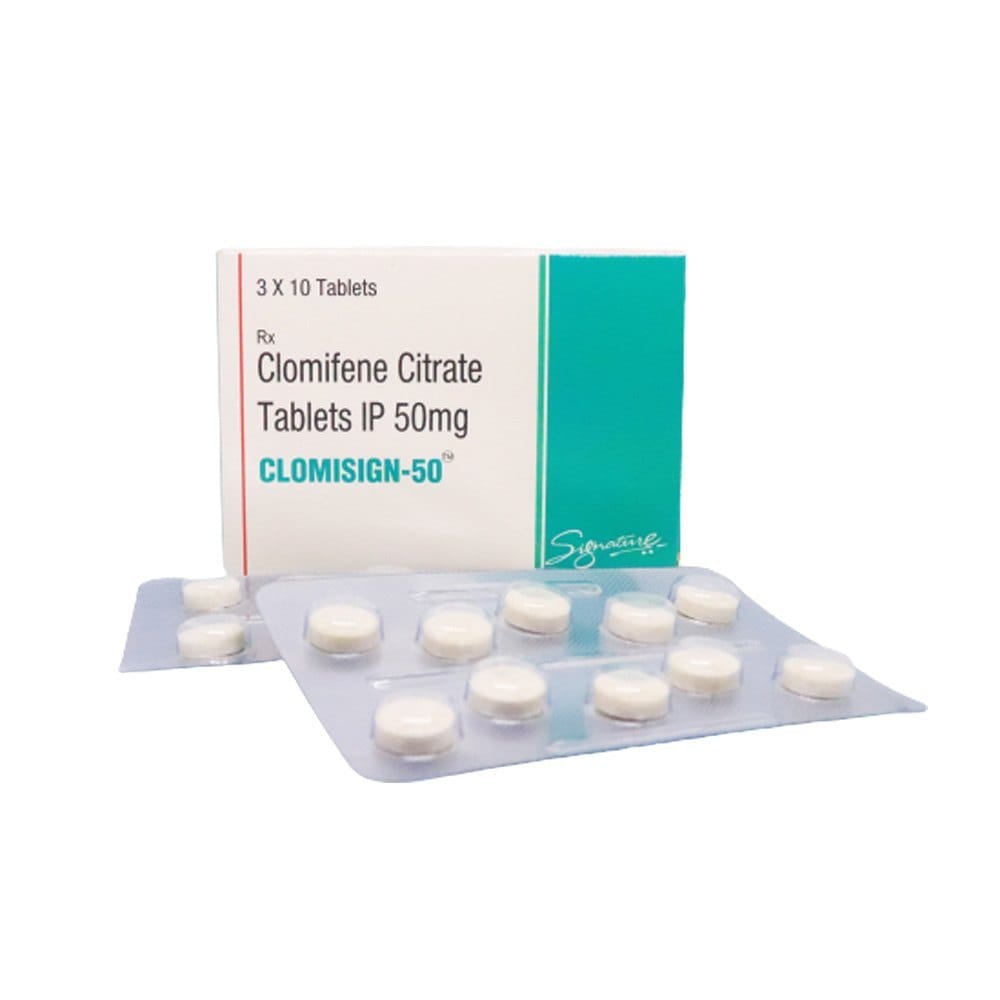
✅ Stimulates ovulation
✅ Treats infertility
✅ Regulates menstrual cycle
✅ Improves fertility
✅ Safe and effective
Clomisign contains Clomifene.
✓ Medically reviewed by Morgan Ellis — Pharmacy Researcher · 8 years experience · Last reviewed: May 2026
Quick Answer — What is Clomisign?
Clomisign contains clomiphene citrate 50 mg — a selective oestrogen receptor modulator (SERM) manufactured by Cipla, supplied as oral tablets. Clomiphene is the first-line oral medication for ovulation induction in anovulatory women trying to conceive (most commonly PCOS), and is also widely used off-label in men with hypogonadism (low testosterone) as a fertility-preserving alternative to direct testosterone replacement. Standard female dose: 50 mg once daily for 5 days starting on cycle day 2-5; if no ovulation, dose increases by 50 mg in subsequent cycles to a maximum of 150 mg/day. Standard male dose: 25-50 mg every other day or daily for several months, monitored by serum total testosterone and LH. Maximum 6 cycles in women (longer use is associated with reduced cumulative pregnancy benefit and theoretical ovarian risk). Specialist-supervised worldwide. Multiple pregnancy rate is 8-10% (mostly twins). Visual disturbances are uncommon but require immediate discontinuation if they occur.
📦 Every order is covered by our Reshipment Assurance Policy — if your parcel does not arrive within 20 business days, we reship it.
Why order from MedsBase
Our generic medications are sourced from WHO-GMP certified manufacturers and shipped worldwide in discreet, plain packaging — no medication name on the parcel exterior. Card payments are routed through a regulated processor (statement descriptors include a regulated card-payment processor — never “MedsBase” or any medication name). Crypto and SEPA bank transfer are also accepted. Every order is backed by our Reshipment Assurance Policy.
- What is Clomisign?
- How clomiphene works
- Approved & off-label uses
- Dosing for ovulation induction (women)
- Dosing for male hypogonadism (off-label)
- Side effects & safety
- Visual disturbances — STOP and seek review
- Contraindications & warnings
- Drug interactions
- How clomiphene compares to alternatives
- Storage & shelf life
- Frequently Asked Questions
What is Clomisign?
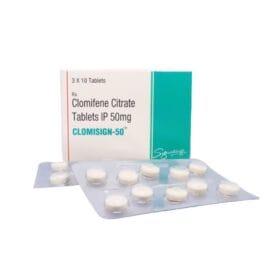
Clomisign contains clomiphene citrate 50 mg as oral tablets. Manufactured by Cipla. Pack sizes available at MedsBase: 30, 60, 90 or 180 tablets.
Clomiphene citrate is a selective oestrogen receptor modulator (SERM) — the same drug class as tamoxifen. It is sold internationally under brand names including Clomid (Sanofi-Aventis), Serophene (Merck Serono), Milophene, Fertomid, Klomen, Pergotime, and many generic versions. Identical active ingredient at equivalent doses.
How clomiphene works
Clomiphene citrate is a mixed agonist/antagonist at oestrogen receptors. Its principal site of action is the hypothalamus, where it blocks the negative-feedback signal that circulating oestradiol normally exerts on GnRH neurones. The hypothalamus “thinks” oestrogen is low, so it increases GnRH pulse frequency. Increased GnRH drives the pituitary to release more LH and FSH, which in turn stimulate:
- In women: ovarian follicular development, dominant-follicle selection, and (with the LH surge that follows) ovulation
- In men: Leydig cell testosterone production, Sertoli cell support of spermatogenesis
Because clomiphene works upstream at the hypothalamic-pituitary level rather than replacing oestrogen or testosterone directly, it preserves the body’s natural endocrine axis — which is why it is preferred over testosterone replacement therapy in younger men with secondary hypogonadism who wish to maintain fertility.
Clomiphene is a racemic mixture of two isomers: enclomiphene (anti-oestrogenic) and zuclomiphene (more oestrogenic). Most of the desired LH/FSH-stimulating effect comes from enclomiphene; zuclomiphene has a much longer half-life (~5-7 days vs hours for enclomiphene) and accumulates with repeated dosing, contributing to oestrogenic side effects including the hostile cervical-mucus and thin-endometrium effects sometimes seen in long courses.
Approved & off-label uses
Licensed indications (women):
- Ovulation induction in anovulatory infertility — primarily polycystic ovary syndrome (PCOS), which accounts for ~70% of clomiphene prescriptions globally
- Hypothalamic dysfunction (group I or II WHO ovulation disorders) where there is some intact hypothalamic-pituitary axis
- Luteal-phase defect — selected cases
- Unexplained infertility — sometimes used with intrauterine insemination (IUI) although evidence is mixed
Off-label but well-established uses (men):
- Secondary hypogonadism — particularly in younger men with low testosterone who want to preserve fertility. Clomiphene maintains the HPG axis intact, unlike exogenous testosterone which suppresses it.
- Idiopathic male infertility — with normal-or-low LH/FSH and normal-or-low testosterone
- Post-cycle therapy (PCT) after anabolic-androgenic steroid use — restarts the HPG axis after AAS-induced suppression
- Recovery from TRT for men who wish to come off testosterone replacement and restore endogenous production
- Oligozoospermia with hormonal imbalance
Dosing for ovulation induction (women)
Clomiphene cycles must be supervised by a fertility specialist or experienced gynaecologist with access to ultrasound monitoring.
- Start dose: 50 mg once daily for 5 consecutive days, beginning on cycle day 2, 3, 4 or 5 (specialist preference; day 2 vs day 5 starts give similar overall results)
- Take at the same time each day, with or without food
- Ovulation typically occurs 5-12 days after the last clomiphene tablet, on average around cycle day 14-16
- Confirm ovulation by ultrasound follicular tracking, mid-luteal progesterone (day 21), home LH-surge kits, or basal body temperature charts
- Time intercourse, IUI, or hCG ovulation trigger accordingly
- If no ovulation occurs in the first cycle, increase the dose in the next cycle to 100 mg/day for 5 days, then to 150 mg/day for 5 days if still anovulatory
- Maximum 6 ovulatory cycles — after that, the cumulative pregnancy benefit plateaus and the regulatory recommendation is to switch to letrozole, gonadotropins, or assisted reproduction
- Maximum dose 150 mg/day — doses above this provide little additional benefit and are not licensed
Approximately 70-80% of women will ovulate on clomiphene; the cumulative pregnancy rate over 6 ovulatory cycles is ~50-60% in well-selected PCOS populations.
Dosing for male hypogonadism (off-label)
Male protocols vary by indication and prescriber. Common regimens:
- Secondary hypogonadism, fertility-preserving: 25-50 mg every other day or 12.5-25 mg daily, titrated to a target serum total testosterone of ~600 ng/dL (20 nmol/L)
- Post-cycle therapy after AAS: 50 mg/day for 4-6 weeks, sometimes combined with hCG and/or tamoxifen, with serial bloodwork (LH, FSH, total testosterone, oestradiol, SHBG)
- Recovery from TRT: often combined with hCG for the first 2-4 weeks to re-prime the testes, then clomiphene 25-50 mg every other day for several months
- Idiopathic oligozoospermia with low-normal LH/FSH: 25-50 mg/day for 3-6 months, with semen analysis at 3 and 6 months
Men taking clomiphene should have baseline testosterone, oestradiol, LH, FSH, SHBG, prolactin, full blood count, and liver function. Repeat at 6-12 weeks to titrate dose. Some men experience marked oestradiol elevation on clomiphene — an aromatase inhibitor (anastrozole) is sometimes co-prescribed.
Side effects & safety
Common (1 in 10):
- Hot flushes (the classic “anti-oestrogen” symptom)
- Mood changes — irritability, low mood, anxiety; usually mild and reversible
- Headache
- Nausea, mild abdominal discomfort
- Breast tenderness
- Heavy menses, midcycle spotting (women)
Less common but important:
- Visual disturbances (blurred vision, scotomata, flashes of light, after-images, photosensitivity) — see dedicated section below
- Ovarian hyperstimulation syndrome (OHSS) — less common with clomiphene than with injectable gonadotropins, but possible particularly in PCOS
- Multiple pregnancy — 8-10% twin rate (mostly fraternal), much lower triplet rate (<1%)
- Ovarian cysts — usually functional and self-resolving; baseline ultrasound at the start of each cycle is recommended
- Thin endometrium — cumulative oestrogen-antagonist effect at the uterine receptor; addressed by switching to letrozole if pregnancy is not achieved on clomiphene
- Hostile cervical mucus — same mechanism; can reduce sperm penetration
- Liver function abnormalities — rare; baseline LFTs and periodic monitoring on long courses (men)
Visual disturbances — STOP and seek review
Visual side effects affect approximately 1-2% of patients and are dose-related. Symptoms include blurred vision, scotomata (blind spots), flashes of light, double vision, after-images, photosensitivity, and rarely persistent visual field defects.
If you develop any visual disturbance while taking clomiphene:
- Stop the medication immediately
- Contact your prescriber promptly
- Most visual symptoms resolve within days-to-weeks of stopping; rare cases of persistent or irreversible visual changes have been reported
- Clomiphene should not be re-started after visual disturbances; switch to letrozole if ovulation induction is needed
- Avoid driving or operating machinery while symptoms persist
Contraindications & warnings
Do not take Clomisign if you have:
- Pregnancy — clomiphene is teratogenic in animal studies; pregnancy must be excluded before each cycle
- Liver disease (active or previous)
- Undiagnosed abnormal uterine bleeding
- Ovarian cysts (other than known PCOS-related cysts) or enlarged ovaries
- Hormone-dependent cancer (breast, endometrial, ovarian)
- Pituitary tumour
- Uncontrolled thyroid or adrenal dysfunction (treat the underlying disorder first)
- Visual disturbances (current or with previous clomiphene cycles)
- Hypersensitivity to clomiphene citrate
Use with caution if you have:
- PCOS (higher risk of multi-follicular response and OHSS — close monitoring recommended)
- Thrombophilia or prior VTE (clomiphene increases oestradiol which is a thrombosis risk factor)
- Endometriosis (clomiphene may exacerbate)
- Migraine, epilepsy, depression
Drug interactions
- Other ovulation-induction agents (letrozole, FSH, hMG) — do not combine without specialist supervision; OHSS and multiple-pregnancy risk multiply
- hCG (Eutrig HP, HUCOG, Pregnyl) — commonly co-administered as an ovulation trigger after clomiphene-induced follicular growth; this is intentional and standard, not a harmful interaction
- Tamoxifen — similar SERM mechanism; combined use only in specialist PCT or fertility protocols
- Aromatase inhibitors (anastrozole) — sometimes co-prescribed in male protocols to manage clomiphene-driven oestradiol
- Bexarotene — reduces clomiphene effect
- Anabolic-androgenic steroids and exogenous testosterone — suppress endogenous LH/FSH and would defeat clomiphene’s mechanism. PCT protocols administer clomiphene AFTER stopping AAS, not concurrently.
How clomiphene compares to alternatives
For women (ovulation induction):
- Letrozole 2.5-5 mg/day — aromatase inhibitor, increasingly first-line for PCOS (PPCOS-II trial showed higher live-birth rate vs clomiphene in PCOS), no thin-endometrium effect, lower multiple-pregnancy rate. Off-label in many jurisdictions but well-supported. Often the next step if 3 clomiphene cycles fail.
- Gonadotropins (FSH, hMG) — injectable, more potent, more controllable but much higher OHSS and multi-pregnancy risk; reserved for clomiphene/letrozole failures or IVF
- Metformin — insulin-sensitiser, useful adjunct in insulin-resistant PCOS; modest standalone effect
For men (hypogonadism):
- Direct testosterone replacement (TRT) — gels, patches, injections. Faster symptom relief but suppresses endogenous LH/FSH and shuts down spermatogenesis — NOT for men wanting fertility.
- Enclomiphene citrate — the pure anti-oestrogenic isomer of clomiphene; theoretically fewer side effects than racemic clomiphene; available in some markets (Androxal, no longer marketed in US)
- hCG (Eutrig HP, HUCOG) — LH analogue, directly stimulates Leydig cells. Commonly combined with clomiphene in PCT and HPG-axis-restoration protocols.
- Anastrozole — aromatase inhibitor; reduces oestradiol so the hypothalamus increases GnRH; sometimes used as alternative or adjunct to clomiphene
Other relevant pages on this site: Eutrig HP (hCG 5,000 IU), HUCOG 5000 (hCG 5,000 IU).
Storage & shelf life
Store Clomisign tablets below 25°C in the original blister pack. Protect from moisture and light. Keep out of reach of children. Do not use after the expiry date printed on the carton.
Frequently Asked Questions
When will I ovulate after taking Clomisign?
Ovulation typically occurs 5-12 days after the last clomiphene tablet, with most women ovulating around cycle day 14-16. Confirm with ultrasound follicle tracking, a mid-luteal progesterone level, or LH-surge home kits.
What is the chance of twins on clomiphene?
Approximately 8-10% of pregnancies conceived on clomiphene are twins (almost all fraternal, from two follicles releasing eggs in the same cycle). Triplet pregnancies are rare (<1%). This is higher than the spontaneous twin rate of ~1-2% but lower than the rate with injectable gonadotropins.
Why is clomiphene limited to 6 cycles?
The cumulative pregnancy benefit plateaus after about 6 ovulatory cycles — if pregnancy hasn’t occurred by then, additional cycles add little benefit and the recommendation is to switch to letrozole, gonadotropins, IUI, or IVF. Older concerns about clomiphene increasing ovarian cancer risk with very prolonged use have not been confirmed in modern studies, but the 6-cycle ceiling remains the standard guidance.
Can men take Clomisign for low testosterone?
Yes — off-label use of clomiphene 25-50 mg every other day (or daily) is well-established for men with secondary hypogonadism, particularly younger men who wish to maintain fertility. Unlike testosterone replacement, clomiphene preserves the natural HPG axis and spermatogenesis. Should be supervised by an endocrinologist or men’s-health physician with baseline and 6-12 week bloodwork.
What if I get visual disturbances?
Stop clomiphene immediately and contact your prescriber. Visual disturbances (blurred vision, flashes, scotomata) affect 1-2% of patients and are usually reversible if the medication is stopped — but rare cases of persistent visual changes have been reported. Clomiphene should not be re-started after visual symptoms; letrozole is the standard alternative.
Should I take Clomisign with food?
You can take clomiphene with or without food. Take it at approximately the same time each day for the 5-day course. Mild nausea is more common on an empty stomach — if so, take it with a small meal.
Can I drink alcohol while taking clomiphene?
Moderate alcohol does not interact with clomiphene directly. However, regular heavy drinking is itself a fertility-impairing factor (in both women and men), so minimising alcohol throughout a fertility cycle is sensible.
What’s the difference between clomiphene and letrozole?
Both induce ovulation but by different mechanisms: clomiphene is a SERM that blocks oestrogen feedback at the hypothalamus; letrozole is an aromatase inhibitor that lowers oestradiol production. Modern evidence (PPCOS-II trial) shows letrozole gives higher live-birth rates than clomiphene in PCOS, with no thin-endometrium effect and a lower twin rate. Many specialists now use letrozole first-line in PCOS; clomiphene remains first-line for non-PCOS anovulation and is the licensed indication in most countries.
Can Clomisign be used after anabolic steroid use (PCT)?
Yes — clomiphene is a backbone of “post-cycle therapy” protocols designed to restart endogenous testosterone production after AAS-induced HPG-axis suppression. Common protocol: 50 mg/day for 4-6 weeks, often combined with hCG and/or tamoxifen, monitored by serial bloodwork (LH, FSH, total testosterone, oestradiol). Strongly recommend endocrinologist or experienced men’s-health prescriber supervision.
Where can I order Clomisign online?
You can order Clomisign 50 mg tablets from MedsBase in pack sizes of 30, 60, 90 or 180 tablets. Orders ship worldwide with discreet packaging. Clomisign is specialist-supervised worldwide — please ensure you have a valid clinical indication and supervising clinician before ordering.
Most post-cycle-therapy protocols pair clomiphene with tamoxifen — the dual-SERM regimen restarts LH/FSH while protecting against estrogen-receptor activation in breast tissue; for the bundled protocol see our PCT Stack (Clomisign 50 mg + Tamoxilon 20 mg) with both SERMs in matched 4-week supply tiers.
After an ovulation-induction cycle with Clomisign (clomiphene citrate 50 mg), a specialist typically adds a trigger injection such as Puretrig 5000IU Injection (hCG 5000IU) to confirm final follicular maturation before timed intercourse or intrauterine insemination.
Related Alternatives
Other products in Fertility that customers also view:
- Qualifol 75IU Injection
- HUCOG 10000IU Injection
- Confido
- Puretrig 5000IU Injection
- Eutrig HP 5000IU Injection
More options in Fertility Supplements for Men
Ranked by recent MedsBase order volume — what other customers in this category are picking.
| Strength | 50 mg |
|---|---|
| Quantity | 30 Tablet/s, 60 Tablet/s, 90 Tablet/s, 180 Tablet/s |
 Clomisign
Q & A
Clomisign
Related products



Reviews
There are no reviews yet