








Cozartan
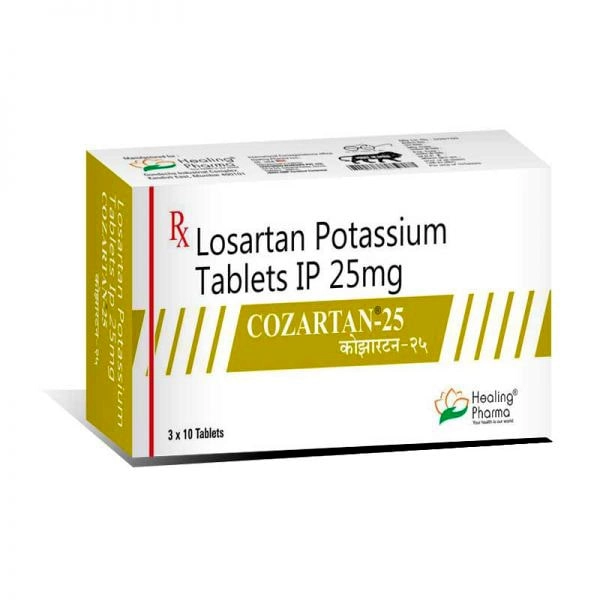
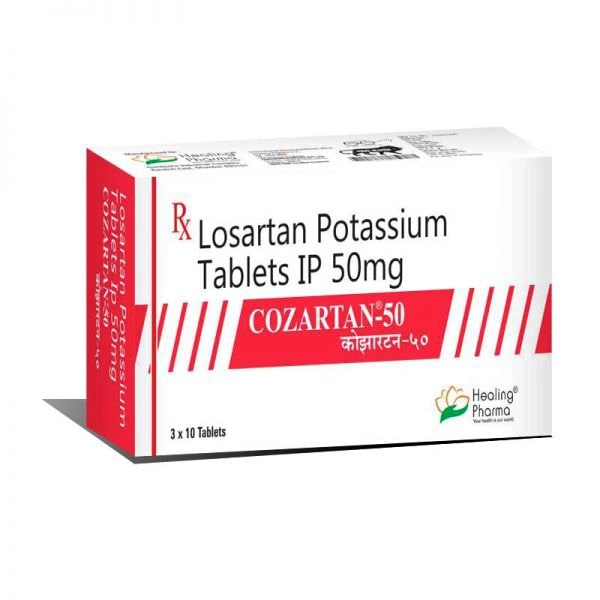
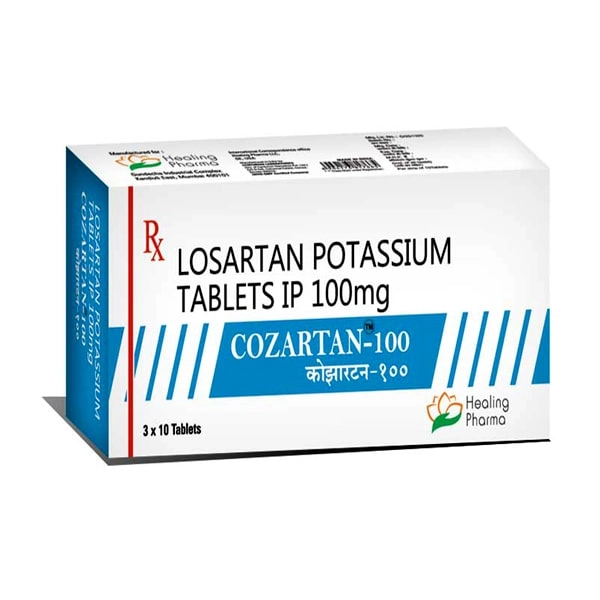
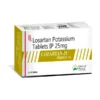


✅ Lowers High Blood Pressure
✅ Prevents Stroke Risks
✅ Reduces Heart Failure
✅ Kidney Protection Benefits
✅ Improves Cardiovascular Health
Cozartan contains Losartan
✓ Medically reviewed by Morgan Ellis — Pharmacy Researcher · 8 years experience · Last reviewed: May 2026
⚡ Quick Answer — What is Cozartan?
Cozartan is a losartan potassium tablet available in 25, 50, and 100 mg strengths. It is an angiotensin II receptor blocker (ARB) used to treat hypertension, diabetic nephropathy, and heart failure, and to reduce stroke risk in patients with left-ventricular hypertrophy. Usual adult dose is 50 mg once daily, titrating to 100 mg if needed. Clinically equivalent to Merck’s Cozaar®.
📦 Every order is covered by our Reshipment Assurance Policy — if your parcel does not arrive within 20 business days, we reship it.
Why order from MedsBase
Our generic medications are sourced from WHO-GMP certified manufacturers and shipped worldwide in discreet, plain packaging — no medication name on the parcel exterior. Card payments are routed through a regulated processor (statement descriptors include a regulated card-payment processor — never “MedsBase” or any medication name). Crypto and SEPA bank transfer are also accepted. Every order is backed by our Reshipment Assurance Policy.
Cozartan is a Unichem generic losartan potassium tablet. Losartan was the first angiotensin II receptor blocker (ARB) approved by the FDA (1995) and remains one of the most-prescribed blood-pressure drugs in the world. Cozartan contains the same active ingredient at the same strengths as Merck’s branded Cozaar®.
ARBs like losartan offer the blood-pressure-lowering benefit of ACE inhibitors (lisinopril, ramipril, perindopril) without the characteristic dry cough that leads 10–15% of patients to discontinue ACE inhibitors. For this reason, losartan and other ARBs are often chosen as first-line agents in primary hypertension, particularly in patients who have experienced ACE-inhibitor cough.
What Is Cozartan?
Cozartan is a prescription antihypertensive in the angiotensin II receptor blocker (ARB) class. It competitively blocks the AT₁ subtype of the angiotensin II receptor, blunting the pressor, sodium-retaining, and vasoconstrictor effects of angiotensin II.
Cozartan is indicated for:
- Essential hypertension — first-line or as add-on therapy
- Diabetic nephropathy in type 2 diabetes — slows progression of proteinuric kidney disease
- Left ventricular hypertrophy — stroke risk reduction in LVH patients (LIFE trial)
- Heart failure with reduced ejection fraction — in ACE-inhibitor-intolerant patients
- Chronic kidney disease with proteinuria — renoprotective effect
How Does Cozartan Work?
Angiotensin II is the effector hormone of the renin-angiotensin-aldosterone system (RAAS). It raises blood pressure by three main mechanisms, all blocked by losartan:
- Vasoconstriction — losartan antagonism allows systemic and renal vasodilation
- Aldosterone release — blockade reduces sodium and water retention
- Sympathetic stimulation and cardiac remodelling — losartan reduces the long-term hypertrophic and fibrotic effects of angiotensin II on the heart and kidneys
Losartan itself is a modest receptor blocker. Its effect is mostly mediated by its active metabolite EXP3174, formed by CYP2C9 in the liver, which is 10–40× more potent and has a half-life of 6–9 hours. This is why losartan is typically dosed once daily for blood-pressure control.
A distinctive secondary benefit: losartan is uniquely uricosuric among ARBs, lowering serum uric acid by ~10–15%. This makes it a preferred ARB in hypertensive patients with gout or elevated uric acid.
Cozartan Dosage and Administration
| Indication | Starter | Target / Max |
|---|---|---|
| Hypertension (standard) | 50 mg once daily | Up to 100 mg once daily after 3–6 weeks if needed |
| Hypertension with volume depletion / elderly | 25 mg once daily | Titrate upward as tolerated |
| Diabetic nephropathy | 50 mg once daily | 100 mg once daily (target dose per RENAAL trial) |
| Heart failure (ACE-intolerant) | 12.5 mg once daily | Titrate to 50 mg (and up to 150 mg in HEAAL trial) |
| LVH / stroke reduction | 50 mg once daily | 100 mg once daily (LIFE trial target) |
| Hepatic impairment | 25 mg once daily | Losartan and its metabolite are hepatically cleared |
| Mild–moderate renal impairment | No routine adjustment | Monitor K⁺ and creatinine |
| Severe renal impairment / dialysis | Start at 25 mg; caution | Specialist supervision |
How to Take Cozartan Properly
- Swallow the tablet whole with water
- Can be taken with or without food (food slightly reduces peak plasma but does not change total effect)
- Take at the same time each day for steady-state blood-pressure control
- It may take 3–6 weeks for the full antihypertensive effect to develop; do not expect immediate BP change
- Do not stop abruptly in heart failure or after long-term use — taper under medical guidance
- Monitor BP regularly; aim for targets set by your doctor (commonly <140/90, or <130/80 in diabetes and CKD)
Side Effects of Cozartan
Losartan is generally well tolerated — side-effect profile is cleaner than ACE inhibitors (no characteristic dry cough).
| Severity | Side Effect |
|---|---|
| Common (≥1 in 100) | Dizziness (especially first dose), fatigue, headache, orthostatic hypotension |
| Uncommon | Back pain, nasal congestion, mild GI upset, transient hyperkalaemia, raised creatinine |
| Rare but serious | Angioedema (much less common than with ACE inhibitors but possible), hyperkalaemia, acute kidney injury (particularly in bilateral renal artery stenosis), severe hypotension, rhabdomyolysis |
Unlike ACE inhibitors, ARBs do not cause the characteristic persistent dry cough. This is a primary reason to choose losartan over lisinopril or ramipril in patients who have experienced cough.
Warnings and Precautions
- First-dose hypotension. Volume-depleted patients (on diuretics, dehydrated, low-sodium diets) may experience marked BP drop. Start at 25 mg and take the first dose at bedtime
- Renal function and potassium. Check creatinine, eGFR, and serum potassium 2–4 weeks after starting or up-titrating. A small rise in creatinine is expected and is NOT a reason to stop; a >30% rise warrants review
- Bilateral renal artery stenosis. Avoid — can precipitate acute kidney injury
- Pregnancy. Contraindicated — RAAS blockers cause fetal harm in the second and third trimesters (renal agenesis, oligohydramnios, skull hypoplasia). Stop immediately if pregnancy is discovered
- Breastfeeding. Not recommended — alternatives preferred
- Angioedema. Rare but potentially life-threatening — if airway swelling occurs, stop immediately and seek emergency care
- Lithium. Losartan raises lithium levels — avoid or monitor closely
- NSAIDs. Regular NSAID use can negate the BP-lowering effect and accelerate renal impairment
Contraindications — Who Should NOT Take Cozartan
- Pregnancy (all trimesters, but especially 2nd and 3rd)
- Breastfeeding
- Hypersensitivity to losartan or any excipient
- Concurrent use of aliskiren in patients with diabetes
- Severe hepatic impairment
- Bilateral renal artery stenosis
Drug Interactions
| Drug / Class | Interaction |
|---|---|
| Potassium-sparing diuretics (spironolactone, amiloride) / potassium supplements / salt substitutes | Hyperkalaemia risk — monitor K⁺ |
| NSAIDs (ibuprofen, naproxen, diclofenac) | Reduce antihypertensive effect; additive nephrotoxicity — avoid regular use |
| Lithium | Reduces renal clearance — raises lithium levels; monitor |
| Aliskiren (direct renin inhibitor) | Contraindicated in diabetics; avoid combination in all patients |
| ACE inhibitors | Dual RAAS blockade generally not recommended — increased AKI and hyperkalaemia risk |
| CYP2C9 inhibitors (fluconazole, rifampicin) | Alter conversion to active metabolite EXP3174 — may change efficacy |
| Alcohol | Additive vasodilation and hypotension — moderate intake |
Storage Instructions
- Store below 30 °C in a dry place, away from direct sunlight
- Keep in the original blister packaging
- Keep out of reach of children
- Do not use after the expiry date
Related Alternatives on MedsBase
- Losar — Unichem losartan, alternative brand
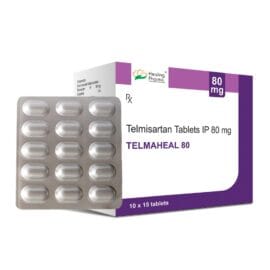
- Telma — telmisartan, a related ARB with longer half-life (24 h)
- Browse all Blood Pressure medications →
- Heart & Blood Pressure category
Frequently Asked Questions
What is Cozartan used for?
Cozartan (losartan) is used to treat hypertension, diabetic nephropathy, heart failure, and left-ventricular hypertrophy (reducing stroke risk). It is also used in chronic kidney disease with proteinuria for its renoprotective effect.
How fast does Cozartan work?
Some BP-lowering effect begins within 6 hours of the first dose. Full antihypertensive effect builds over 3–6 weeks. Most people reach their target blood pressure after dose titration.
Is losartan better than an ACE inhibitor?
Both are highly effective. The main practical difference is the ACE-inhibitor dry cough (affecting ~10–15% of patients), which ARBs like losartan do not cause. For cardiovascular outcomes the two classes are broadly similar.
Can I take Cozartan with food?
Either works. A meal can slightly reduce peak plasma concentration but does not affect the overall BP-lowering effect.
Is losartan safe in pregnancy?
No — losartan is contraindicated in pregnancy. It can cause serious fetal injury including kidney malformation and skull hypoplasia in the 2nd and 3rd trimesters. Switch to a pregnancy-safe antihypertensive (labetalol, nifedipine, methyldopa) if pregnancy is planned or confirmed.
Does Cozartan lower uric acid?
Yes — losartan is the only ARB with meaningful uricosuric activity, lowering serum uric acid by about 10–15%. It is therefore a preferred choice for hypertensive patients who also have gout or high uric acid.
Will Cozartan cause a dry cough?
Very unlikely. Dry cough is an ACE-inhibitor side effect (linked to bradykinin accumulation) and is rarely seen with ARBs like losartan.
Can I stop Cozartan once my blood pressure is controlled?
No — hypertension is usually a lifelong condition. Stopping the medication will cause BP to return to pre-treatment levels, losing the long-term cardiovascular protection.
Can I take Cozartan with other antihypertensives?
Yes — combination therapy is the norm. Common pairings are with calcium-channel blockers (amlodipine) or thiazide diuretics. Avoid combining with ACE inhibitors or aliskiren (dual RAAS blockade).
What should I avoid while taking Cozartan?
Regular high-dose NSAIDs, salt substitutes containing potassium chloride, heavy alcohol intake, and dehydration. If you become unwell with vomiting or diarrhoea, hold the dose temporarily and seek advice — acute dehydration + ARB can cause kidney injury.
Related Alternatives
Other products in Chronic Conditions that customers also view:
More options in High Blood Pressure Medication
Ranked by recent MedsBase order volume — what other customers in this category are picking.

| Strength | 25 mg, 50 mg, 100 mg |
|---|---|
| Quantity | 100 Tablet/s, 200 Tablet/s, 300 Tablet/s |
| Pharma Form | Tablet/s |
| Manufacturer | Healing Pharma |
| Treatment | High blood pressure |
| Generic Brand | Losartan Potassium |
2 reviews for Cozartan
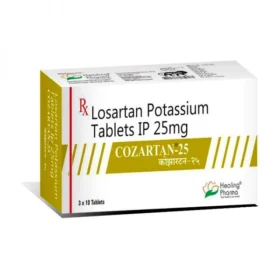 Cozartan
Q & A
Cozartan
Related products







Works great to help keep my blood pressure at normal levels!
Excellent product, I check my blood pressure daily and this keeps it where it’s supposed to be!