







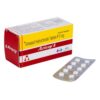
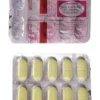
Dompewal Tablet
Dompewal Tablet (Domperidone 10 mg) — peripheral dopamine D2 antagonist for short-term nausea, vomiting, regurgitation, and gastroparesis. Speeds gastric emptying.
✓ Medically reviewed by Morgan Ellis — Pharmacy Researcher · 8 years experience · Last reviewed: May 2026
⚡ Quick Answer — What is Dompewal?
Dompewal is an oral domperidone 10 mg tablet — a peripheral dopamine D2 receptor antagonist used short-term for nausea, vomiting, and gastroparesis. It accelerates gastric emptying, increases lower-oesophageal sphincter tone, and antagonises D2 receptors in the chemoreceptor trigger zone. Unlike metoclopramide it does not cross the blood-brain barrier in significant amounts and so does not produce extrapyramidal symptoms. Standard dose: 10 mg up to three times daily, taken 15–30 minutes before meals, for a maximum of 7 days at a maximum of 30 mg/day per EMA 2014 restriction. WHO-GMP certified manufacturer.
📦 Every order is covered by our Reshipment Assurance Policy — if your parcel does not arrive within 20 business days, we reship it.
Why order from MedsBase
Our generic medications are sourced from WHO-GMP certified manufacturers and shipped worldwide in discreet, plain packaging — no medication name on the parcel exterior. Card payments are routed through a regulated processor (statement descriptors include a regulated card-payment processor — never “MedsBase” or any medication name). Crypto and SEPA bank transfer are also accepted. Every order is backed by our Reshipment Assurance Policy.
Why order from MedsBase
Dompewal is supplied from a WHO-GMP certified manufacturer. Every order ships discreetly worldwide and is covered by our Reshipment Assurance Policy — if it does not arrive within 20 business days, we reship at no cost. Domperidone is widely used for short-term symptom relief and is a useful alternative to metoclopramide in patients who experience extrapyramidal effects on the latter.
Mechanism of action
Domperidone is a benzimidazole derivative that selectively blocks dopamine D2 receptors in the gut wall (gastric antrum and duodenum) and in the chemoreceptor trigger zone (CTZ) of the area postrema, which lies outside the blood-brain barrier. Peripheral D2 blockade increases acetylcholine release from cholinergic neurons in the myenteric plexus, accelerating gastric emptying and tightening LES tone. CTZ blockade produces antiemetic effect. Because the molecule has poor BBB penetration, central D2 blockade and the resulting extrapyramidal side effects are minimal.
Indications
- Nausea and vomiting (acute, short-course)
- Adjunct in diabetic gastroparesis (specialist initiation)
- Functional dyspepsia with postprandial distress
- Off-label: galactagogue (induction of lactation)
- Adjunct to levodopa to control peripheral nausea in Parkinson’s without antagonising central effects
Dose
Adults: 10 mg up to three times daily, 15–30 minutes before meals. Maximum 30 mg/day. Maximum 7 days. Children > 12 years and > 35 kg: same as adult. Children < 35 kg: weight-based 250 mcg/kg up to 3 times daily, max 750 mcg/kg/day. Severe hepatic impairment: avoid. CrCl < 30: not contraindicated but extend interval.
Side effects
- Common: dry mouth, headache, abdominal cramps
- Hyperprolactinaemia: galactorrhoea, gynaecomastia, menstrual disturbance, low libido, erectile dysfunction
- QT prolongation, torsades de pointes (rare, dose- and risk-factor-dependent)
- Allergic skin reactions
Drug interactions
- QT-prolonging: azithromycin, ondansetron, fluoroquinolones, citalopram, methadone — avoid combination.
- Strong CYP3A4 inhibitors: ketoconazole, ritonavir, clarithromycin, grapefruit juice — raise levels 4–8 fold; avoid.
- Anticholinergic drugs oppose the prokinetic effect.
- Levodopa: can be co-prescribed deliberately to manage levodopa-induced nausea without affecting CNS levodopa effect.
Frequently Asked Questions
When should I take Dompewal?
15–30 minutes before meals on an empty stomach. Food delays absorption and weakens the prokinetic effect.
Can I take it for chronic gastroparesis?
Long-term use needs specialist supervision with baseline and periodic ECG. The EMA short-course rule applies to general practice prescribing; specialist exemption is allowed when benefits outweigh and monitoring is in place.
What is the difference between domperidone and metoclopramide?
Both are D2 antagonists and prokinetics. Metoclopramide crosses the BBB and can cause extrapyramidal symptoms (acute dystonia, tardive dyskinesia — FDA black-box) and has its own 12-week limit. Domperidone has minimal CNS penetration but a clearer cardiac (QT) signal and a 7-day rule.
Why do I have breast tenderness on this drug?
Domperidone raises prolactin via pituitary D2 blockade. This is reversible on discontinuation. Persistent symptoms warrant a serum prolactin check and review.
Is it safe in pregnancy?
Limited human data. Avoid unless the prescriber decides benefits outweigh. Breastfeeding: small amounts in breast milk; sometimes used off-label to enhance lactation but specialist input is recommended.
Can I take it with my heart medication?
Tell the prescriber about every drug you take, especially antibiotics (azithro/clari), antifungals (keto/itra), antidepressants (citalopram), antimalarials (chloroquine), and methadone. Domperidone QT-prolongation stacks with these.
Why does the EMA limit it to 7 days?
Pharmacovigilance signal of sudden cardiac death linked to high doses and long courses, particularly in older adults. The 7-day cap balances symptom relief against arrhythmia risk.
What if I have Parkinson’s?
Avoid. Even peripheral D2 blockade can worsen motor symptoms in vulnerable patients. Discuss alternatives with neurology.
Storage
Below 30°C, protect from moisture. Keep out of reach of children.
What if I miss a dose?
Take it before the next meal, then continue the schedule. Do not double up.
Other Gastro Health Medications
- Reglan — Metoclopramide 10 mg (alt prokinetic)
- Stemetil — Prochlorperazine 5 mg (antiemetic)
- Doxinate — Doxylamine + B6 (NVP-specific)
- Omez D — Omeprazole + Domperidone SR combo
- GR8-OD — Pantoprazole + Domperidone SR combo
- Browse all Gastro Health Medications
More options in Nausea Treatment
Ranked by recent MedsBase order volume — what other customers in this category are picking.
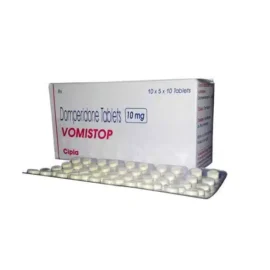

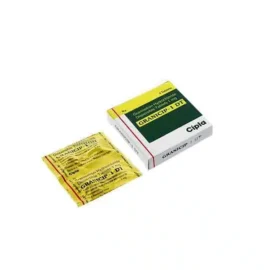

| Strength | 10 mg |
|---|---|
| Quantity | 30 Tablet/s, 60 Tablet/s, 90 Tablet/s, 180 Tablet/s |
Q & A
Related products





Reviews
There are no reviews yet