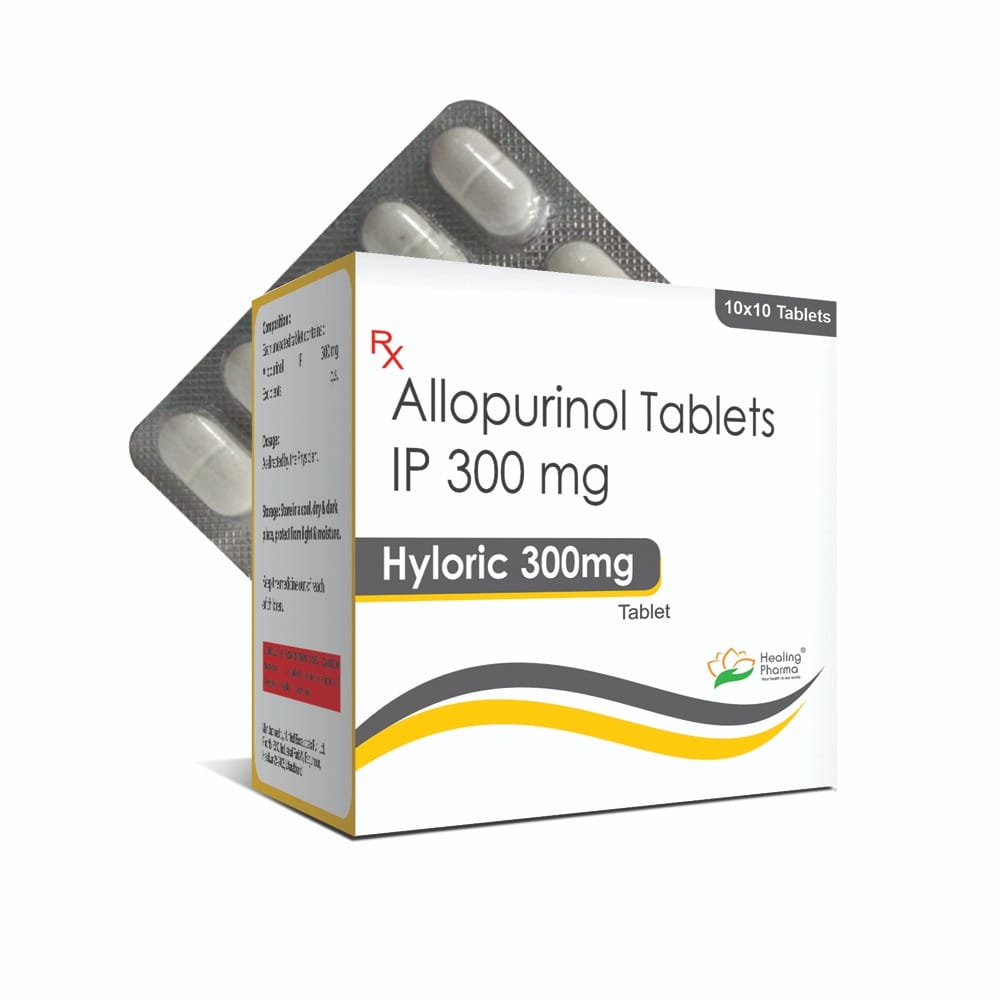
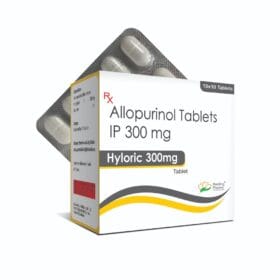
Hyloric
✅ Reduces uric acid
✅ Prevents gout attacks
✅ Alleviates joint pain
✅ Decreases swelling
✅ Improves mobility
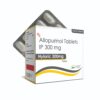
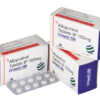
Hyloric contains Allopurinol.
✓ Medically reviewed by Morgan Ellis — Pharmacy Researcher · 8 years experience · Last reviewed: May 2026
⚡ Quick Answer — What is Hyloric?
Hyloric is allopurinol 300 mg, a xanthine-oxidase inhibitor that lowers blood uric acid to prevent gout attacks, tophi, and urate kidney stones. Dosing starts at 100 mg daily and titrates toward 300–600 mg based on serum urate. Paradoxical flares are common in the first 3–6 months of treatment — this is expected and not a reason to stop.
📦 Every order is covered by our Reshipment Assurance Policy — if your parcel does not arrive within 20 business days, we reship it.
Why order from MedsBase
Our generic medications are sourced from WHO-GMP certified manufacturers and shipped worldwide in discreet, plain packaging — no medication name on the parcel exterior. Card payments are routed through a regulated processor (statement descriptors include a regulated card-payment processor — never “MedsBase” or any medication name). Crypto and SEPA bank transfer are also accepted. Every order is backed by our Reshipment Assurance Policy.
Hyloric is a widely prescribed allopurinol 300 mg tablet used to lower uric acid levels in people with chronic gout, recurrent kidney stones, and certain cancer therapies. Manufactured to the same pharmaceutical-grade quality as international brands such as Zyloric, each Hyloric tablet contains the clinically proven xanthine oxidase inhibitor allopurinol.
Unlike quick-acting painkillers, Hyloric is a long-term preventive medicine — it does not relieve an active gout flare, but with daily use it steadily lowers the amount of uric acid in the blood, dissolving crystal deposits and preventing future attacks. Most patients begin to see fewer flares within 3–6 months of consistent treatment.
What Is Hyloric?
Hyloric is the Indian brand name for allopurinol, one of the oldest and most widely studied urate-lowering therapies in medicine. Allopurinol has been in continuous clinical use since 1966 and is the first-line option recommended by the American College of Rheumatology, EULAR, and the British Society for Rheumatology for chronic urate-lowering therapy.
Hyloric is most commonly prescribed for:
- Chronic gout — to prevent repeated flares by lowering serum urate
- Asymptomatic hyperuricaemia when uric acid levels are very high (≥9 mg/dL / 0.54 mmol/L) with risk factors
- Tophaceous gout — to dissolve visible urate deposits (tophi) in the ears, fingers, toes, and elbows
- Uric acid kidney stones and recurrent calcium oxalate stones with high urinary urate
- Tumour lysis syndrome prevention during chemotherapy for haematological cancers
How Does Hyloric Work?
Uric acid is the end-product of purine metabolism. In people with gout, the body either produces too much uric acid or clears it too slowly — leading to supersaturated blood and needle-like monosodium urate crystals that deposit in joints, tendons, and kidneys.
- Purines from food and cell turnover are converted to hypoxanthine, then to xanthine, then to uric acid
- The last two steps are catalysed by the enzyme xanthine oxidase
- Allopurinol and its active metabolite oxypurinol block xanthine oxidase, reducing uric acid production upstream
- Serum urate falls, existing crystals slowly dissolve, and future crystal formation is prevented
The full preventive effect takes time — typically 2–6 months to clear accumulated crystal deposits — which is why consistent daily dosing is essential, even when you feel well.
Uses and Indications
- Prevention of gout flares in patients with two or more flares per year, tophi, or urate nephropathy
- Dissolution of tophaceous deposits in long-standing gout
- Lowering of serum urate to target levels (<6 mg/dL for most patients, <5 mg/dL for tophaceous gout)
- Prevention of recurrent uric acid kidney stones
- Prevention of calcium oxalate stones in patients with hyperuricosuria
- Prevention of tumour lysis syndrome before chemotherapy for leukaemia, lymphoma, or other high-turnover malignancies
- Hyperuricaemia associated with cytotoxic therapy, haematological conditions, or certain inherited enzyme disorders
Hyloric Dosage and Administration
Dosing is individualised based on kidney function and serum urate target. Treatment usually begins at a low starting dose to reduce the risk of a paradoxical gout flare as urate levels shift.
| Indication / Patient | Starting Dose | Usual Maintenance |
|---|---|---|
| Chronic gout (initial) | 100 mg once daily | Titrate up by 100 mg every 2–5 weeks to reach urate target |
| Chronic gout (maintenance) | — | 300–600 mg daily (max 900 mg in divided doses) |
| Tophaceous gout | 100 mg once daily | Titrate to urate <5 mg/dL; often 400–600 mg daily |
| Kidney stones (uric acid) | 200–300 mg daily | Adjust based on 24-hour urinary urate |
| Tumour lysis prevention | 600–800 mg daily | Started 1–2 days before chemotherapy, 3–7 day course |
| eGFR 30–59 mL/min | 50–100 mg once daily | Titrate slowly with close monitoring |
| eGFR <30 mL/min | 50 mg every other day | Specialist supervision recommended |
| Elderly (65+) | 100 mg daily | Use lowest dose that maintains target urate |
How to Take Hyloric Properly
- Take Hyloric once daily, preferably with food, to reduce the risk of stomach upset
- Doses above 300 mg should generally be split into two or three doses during the day
- Drink at least 2 litres of water per day — good hydration protects the kidneys as uric acid is mobilised
- Take Hyloric at roughly the same time every day to maintain steady blood levels
- Do not stop Hyloric when a gout flare occurs — stopping and restarting can trigger a fresh attack. Continue Hyloric and treat the flare with a short course of NSAID, colchicine, or corticosteroid as prescribed
- If a dose is missed and it is within 12 hours, take it as soon as you remember. Otherwise skip it — do not double up
Side Effects of Hyloric
Most patients tolerate Hyloric very well, especially when the dose is started low and titrated up. Side effects tend to cluster in the first few months.
| Severity | Side Effect |
|---|---|
| Common (≥1 in 100) | Paradoxical gout flare in first 2–3 months, rash, nausea, diarrhoea, headache, drowsiness |
| Uncommon | Elevated liver enzymes, fever, joint pain, mild anaemia |
| Rare but serious | Severe skin reactions (Stevens-Johnson syndrome, toxic epidermal necrolysis), allopurinol hypersensitivity syndrome (DRESS), acute kidney injury, aplastic anaemia, hepatitis |
Stop Hyloric immediately and seek urgent medical care if you develop any skin rash, blistering, mouth ulcers, fever, swelling of the face, or yellowing of eyes/skin. These can be early signs of severe hypersensitivity that is life-threatening if the drug is continued.
The Paradoxical Flare — What to Expect in the First Few Months
When uric acid starts to fall, it pulls existing crystal deposits back into solution — and this process itself can trigger a gout flare. This is called a “mobilisation flare” and is not a sign the drug is failing. Guidelines recommend flare prophylaxis — a low dose of colchicine, NSAID, or prednisolone — during the first 3–6 months of urate-lowering therapy. Always keep taking Hyloric through the flare.
Warnings and Precautions
- HLA-B*5801 genetic testing is recommended for patients of Han Chinese, Thai, Korean, or other Southeast Asian descent before starting Hyloric, as they have a higher risk of severe skin reactions
- Kidney impairment — reduce the starting dose and titrate slowly; oxypurinol is cleared by the kidneys
- Liver disease — monitor liver enzymes; reduce dose if significantly abnormal
- Acute gout attack — do not start Hyloric during an active flare; wait until inflammation has settled (unless you are already established on therapy)
- Cardiovascular risk — modest risk reduction observed; allopurinol is preferred over febuxostat in patients with established cardiovascular disease
- Alcohol (especially beer and spirits) increases uric acid; limiting intake makes Hyloric more effective
- Avoid sudden changes in purine-rich foods (red meat, offal, shellfish, high-fructose drinks) without medical advice
Contraindications — Who Should NOT Take Hyloric
- Known hypersensitivity to allopurinol
- Previous allopurinol hypersensitivity syndrome (DRESS, SJS, or TEN)
- Active, severe liver or kidney failure without specialist supervision
- Pregnancy (category B3) — only if benefit outweighs risk
Drug Interactions
| Drug | Interaction |
|---|---|
| Azathioprine, 6-mercaptopurine | Allopurinol blocks metabolism — life-threatening bone-marrow toxicity. Dose of azathioprine/6-MP must be reduced by 75% if co-administration is unavoidable |
| Warfarin | May increase INR and bleeding risk — monitor more frequently when starting or stopping |
| Amoxicillin and ampicillin | Higher incidence of skin rash when combined |
| Thiazide diuretics, loop diuretics | Raise uric acid and reduce allopurinol efficacy; can also increase rash risk |
| ACE inhibitors | Increased risk of hypersensitivity, particularly in renal impairment |
| Ciclosporin | Increased ciclosporin levels — monitor closely |
| Theophylline | Allopurinol may raise theophylline levels at high doses |
Monitoring on Hyloric
- Serum urate every 2–4 weeks during up-titration, then every 6–12 months once stable
- Target: <6 mg/dL (<0.36 mmol/L) for most patients; <5 mg/dL for tophaceous gout
- Renal function (eGFR and creatinine) at baseline and every 6–12 months
- Liver enzymes (ALT, AST) at baseline and periodically during therapy
- Full blood count if any unusual bruising, fatigue, or recurrent infection
Storage Instructions
- Store below 25 °C in a dry place, away from direct light
- Keep in the original blister until use
- Keep out of reach of children
- Do not use after the printed expiry date
Related Products on MedsBase
- Meftal (Mefenamic Acid) — NSAID often used to manage acute gout flares
- Heart & Blood Pressure Medications — gout often coexists with hypertension
Frequently Asked Questions
How quickly does Hyloric lower uric acid?
Serum urate typically starts falling within 1–2 weeks, reaching a new steady state at 4–6 weeks. Full dissolution of existing crystal deposits can take 6–12 months of consistent therapy.
Can I take Hyloric during a gout flare?
If you are already established on Hyloric, do not stop — continue taking it and treat the flare with a short course of NSAID, colchicine, or corticosteroid. If you are not yet on Hyloric, most specialists wait until the flare has settled before starting.
Do I need to take Hyloric forever?
For most patients with chronic gout, yes — urate-lowering therapy is long-term. Stopping Hyloric usually causes urate to rise back to its pre-treatment level within weeks, and gout flares return.
Can I drink alcohol while on Hyloric?
Alcohol, especially beer and spirits, raises uric acid and increases gout attacks. Moderate wine intake is generally tolerated. Total abstinence is not required, but reducing alcohol makes Hyloric significantly more effective.
Is Hyloric the same as Zyloric?
Both contain the same active ingredient — allopurinol — at the same 300 mg strength. Hyloric is the Indian generic; Zyloric is an international brand. Clinical efficacy is identical.
Why have my gout attacks gotten worse since starting Hyloric?
This is the “paradoxical flare” — common in the first 2–3 months. Falling uric acid mobilises old crystal deposits, which can trigger attacks. It is not a sign of failure — keep taking Hyloric and ask your doctor about flare prophylaxis with low-dose colchicine or NSAID.
Can Hyloric damage my kidneys?
Long-term Hyloric at appropriate doses actually protects kidney function in patients with hyperuricaemia. However, severe hypersensitivity reactions are rare and can cause acute kidney injury. Kidney function should be checked at baseline and monitored periodically.
What foods should I avoid on Hyloric?
Foods high in purines include organ meats (liver, kidney), shellfish, sardines, anchovies, and high-fructose drinks. You do not need to eliminate these, but moderate them. Dairy and plant-based proteins are associated with lower gout risk.
Can Hyloric be used for kidney stones?
Yes — it is used to prevent recurrent uric acid stones and calcium oxalate stones in people with high urinary urate. Urine alkalinisation and increased fluid intake are typically combined with allopurinol for stone prevention.
When will I notice fewer gout attacks?
Most patients see a clear reduction in flare frequency within 3–6 months of reaching their target urate level. Tophi often take 12–24 months of sustained therapy to visibly shrink.
Related Alternatives
Other products in Chronic Conditions that customers also view:
More options in Gout Treatment
Ranked by recent MedsBase order volume — what other customers in this category are picking.


| Strength | 300 mg |
|---|---|
| Quantity | 30 Tablet/s, 60 Tablet/s, 90 Tablet/s, 180 Tablet/s |
Q & A
 Hyloric
Related products