









Labebet
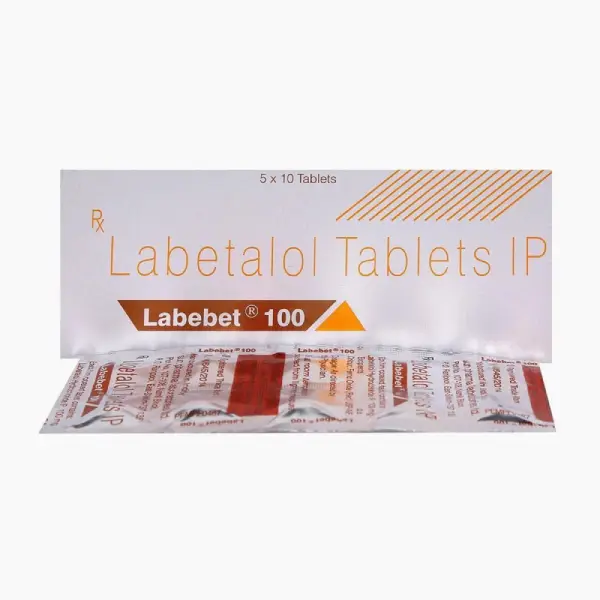
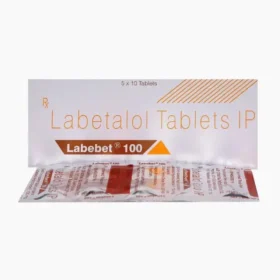
Labebet is labetalol 100 mg tablets — combined non-selective beta + alpha-1 blocker. First-line antihypertensive in pregnancy, preeclampsia, and hypertensive emergencies. Start 100 mg twice daily; titrate to 200-400 mg BID. Combined alpha+beta profile avoids reflex tachycardia. Safe in pregnancy (preferred beta-blocker).
✓ Medically reviewed by Morgan Ellis — Pharmacy Researcher · 8 years experience · Last reviewed: May 2026
⚡ Quick Answer — What is Labebet?
Labebet is a 100 mg labetalol tablet from a WHO-GMP certified manufacturer — non-selective beta-blocker with additional alpha-1 blockade (beta:alpha ratio ~3:1 oral, 7:1 IV). Primary use is hypertension; also used for angina, arrhythmia control, post-myocardial-infarction secondary prevention, and as first-line antihypertensive in pregnancy. Typical hypertension dose: 100 mg twice daily; titrate to 200-400 mg BID if needed (800 mg/day usual max; up to 2,400 mg/day in severe cases). Contraindicated in asthma, severe bradycardia, second/third-degree heart block, acute decompensated heart failure, and phaeochromocytoma without prior alpha-blockade. Do NOT stop abruptly — taper over 1-2 weeks to avoid rebound tachycardia / angina / MI.
📦 Every order is covered by our Reshipment Assurance Policy — if your parcel does not arrive within 20 business days, we reship it.
Why order from MedsBase
Our generic medications are sourced from WHO-GMP certified manufacturers and shipped worldwide in discreet, plain packaging — no medication name on the parcel exterior. Card payments are routed through a regulated processor (statement descriptors include a regulated card-payment processor — never “MedsBase” or any medication name). Crypto and SEPA bank transfer are also accepted. Every order is backed by our Reshipment Assurance Policy.
What Is Labebet?
Labebet is an oral tablet containing labetalol 100 mg from a WHO-GMP certified manufacturer, supplied in 30-180 tablets. Labetalol is a non-selective beta-blocker with additional alpha-1 blockade (beta:alpha ratio ~3:1 oral, 7:1 IV). Combined alpha-1 and non-selective beta blockade gives rapid BP-lowering without reflex tachycardia. First-line antihypertensive in pregnancy — one of the three “pregnancy-safe” options alongside methyldopa and nifedipine. Also the standard drug for hypertensive emergencies including preeclampsia, hypertensive crisis, and phaeochromocytoma (after alpha-blockade).
How Labetalol Lowers Blood Pressure
Beta-blockers reduce blood pressure through four mechanisms:
- Reduction of cardiac output — beta-1 blockade in the sinoatrial node reduces heart rate, and blockade in ventricular myocardium reduces contractility. Lower cardiac output = lower blood pressure.
- Renin-angiotensin suppression — beta-1 blockade in juxtaglomerular cells reduces renin release, lowering angiotensin II and aldosterone over 2-4 weeks. This accounts for much of the long-term BP effect.
- Central sympathetic reduction — lipophilic beta-blockers cross the blood-brain barrier and reduce central sympathetic outflow.
- Alpha-1 blockade — direct peripheral vasodilation (labetalol-specific), giving a faster BP reduction than pure beta-blockers.
Beta-blockers are moderately lipophilic. Plasma half-life of labetalol is 6-8 hours.
Approved and Evidence-Based Uses
- Hypertension (primary indication)
- Hypertension in pregnancy — first-line; safer than most other BP drugs (no teratogenic signal, preferable to methyldopa in many UK/EU guidelines)
- Preeclampsia / severe gestational hypertension
- Hypertensive emergency / urgency (IV)
- Phaeochromocytoma — ONLY after alpha-blockade established (like all beta-blockers; never as first agent)
- Aortic dissection — IV labetalol plus morphine for BP/HR control
Labebet Dosage
Adult hypertension dose: 100 mg twice daily; titrate to 200-400 mg BID if needed (800 mg/day usual max; up to 2,400 mg/day in severe cases).
Start low, titrate upward over 2-4 weeks to target BP (typically <140/90 in uncomplicated hypertension; <130/80 in diabetes, chronic kidney disease, or established cardiovascular disease). Check resting pulse before each dose-increase — do not titrate if <55 bpm.
Monitoring:
- Resting pulse and BP at 2, 4, and 8 weeks after starting or dose change
- Baseline ECG if any cardiac history; periodic ECG if symptoms change
Administration: swallow whole with water. Take at approximately the same time each day.
Discontinuation: NEVER stop abruptly. Taper over 1-2 weeks (reduce by 25-50% every 3-5 days). Abrupt discontinuation causes rebound tachycardia, worsened angina, and — in patients with coronary disease — can precipitate myocardial infarction. This is one of the most important safety points for beta-blockers.
Side Effects
Common (>5%):
- Fatigue, lethargy — often adapts over 2-4 weeks
- Cold hands and feet (peripheral vasoconstriction)
- Bradycardia (check pulse; stop if <50 bpm)
- Exercise intolerance — maximum heart rate is blunted by beta blockade
- Dizziness, postural hypotension
- CNS effects possible but less common than with propranolol
- Postural dizziness (more common due to vasodilator component)
Less common: depression, reduced libido / erectile dysfunction, gastrointestinal upset, Raynaud-like cold intolerance, bronchospasm (more common with non-selective agents).
Important but uncommon:
- Masked hypoglycaemia in diabetics — beta-blockers blunt the tachycardia / tremor warning signs of low blood sugar. Monitor glucose more carefully; prefer nebivolol or bisoprolol in insulin-treated diabetes.
- Bronchospasm — can be severe in asthma / COPD. Absolute contraindication for non-selective agents; relative for cardioselective.
- Heart block or worsening heart failure — in susceptible patients. Start low, titrate slowly.
Contraindications & Cautions
- Asthma / severe COPD / any bronchospastic disorder — absolute contraindication (non-selective beta blockade)
- Second or third-degree atrioventricular block (without pacemaker)
- Sinus bradycardia <50 bpm
- Cardiogenic shock, decompensated heart failure requiring inotropes
- Severe peripheral arterial disease, Raynaud’s syndrome (relative)
- Phaeochromocytoma without prior alpha-blockade — paradoxical hypertensive crisis (Labetalol has alpha-1 blocker component, which softens but does not eliminate this risk)
- Severe hepatic impairment (for extensively hepatic-metabolised agents: propranolol, metoprolol, carvedilol, labetalol)
- Severe renal impairment — dose adjustment needed for renal-excreted agents (atenolol, nadolol)
- Hypersensitivity to labetalol
Pregnancy: Labetalol is the first-line antihypertensive in pregnancy — safer than most alternatives; no teratogenic signal; widely used for gestational hypertension and preeclampsia.
Breastfeeding: compatible (low milk transfer).
Drug Interactions
- Verapamil, diltiazem (non-dihydropyridine CCBs) — additive bradycardia, heart block, and negative inotropy; generally avoid combination. Dihydropyridine CCBs (amlodipine, nifedipine) are safer to combine with beta-blockers.
- Other beta-blockers — do not combine; additive bradycardia
- Clonidine — if stopping clonidine, stop the beta-blocker first (several days before) to avoid rebound hypertensive crisis
- Insulin and sulphonylureas — mask hypoglycaemia warning signs; monitor glucose closely
- NSAIDs — reduce the antihypertensive effect of beta-blockers; avoid chronic combination
- Alcohol — additive hypotension and CNS depression (particularly for lipophilic agents)
Beta-Blocker Class at a Glance
| Beta-blocker | Selectivity | Best for |
|---|---|---|
| Propranolol (Inderal, Ciplar, Beloc) | Non-selective | Migraine, tremor, thyrotoxicosis, performance anxiety, HTN |
| Metoprolol | Cardioselective | Post-MI, HF-REF (succinate ER), angina, AF rate control |
| Carvedilol | Non-selective + α-1 | HF-REF (mortality evidence), post-MI |
| Bisoprolol | Highly cardioselective | HF-REF, HTN, angina, AF rate control |
| Nebivolol | Ultra-selective + NO | Elderly, metabolic syndrome, erectile dysfunction |
| Atenolol | Cardioselective (hydrophilic) | Angina, AF rate control (second-line for HTN) |
| Labetalol | Non-selective + α-1 | Pregnancy hypertension, hypertensive crisis |
The combined alpha + beta profile avoids reflex tachycardia seen with pure alpha-blockers (prazosin) and the reflex vasoconstriction seen with pure beta-blockers. First-choice beta-blocker in pregnancy. Do not use as monotherapy for phaeochromocytoma before alpha-blockade — paradoxical hypertensive crisis.
Storage
Store Labebet below 25°C. Keep out of reach of children — accidental paediatric beta-blocker ingestion can cause life-threatening bradycardia and hypoglycaemia.
Frequently Asked Questions
How long does Labebet take to lower blood pressure?
You should see some BP reduction within 1-2 days of starting; the full antihypertensive effect takes 2-4 weeks (driven by the gradual renin-angiotensin suppression, not the immediate heart-rate effect). Measure BP at home at the same time each day to track response.
Can I take Labebet if I have asthma?
No — Labetalol is non-selective and can cause severe bronchospasm in asthmatics. Absolute contraindication. For asthmatic patients needing a beta-blocker, nebivolol or bisoprolol (highly cardioselective) are safer alternatives — though no beta-blocker is completely safe in asthma.
Why should I never stop Labebet abruptly?
Abrupt discontinuation causes rebound tachycardia and worsened angina within 24-48 hours, driven by up-regulation of beta receptors during chronic blockade. In patients with coronary artery disease, this can precipitate myocardial infarction or unstable angina. Always taper over 1-2 weeks when stopping.
Will Labebet affect my exercise performance?
Yes — beta blockade blunts the heart-rate response to exercise, so your maximum pulse is lower and you fatigue faster at high intensities. For recreational exercise most people adapt; for competitive endurance athletes, beta-blockers can meaningfully impair performance and are banned in precision sports (shooting, archery — where they reduce physiological tremor).
Will Labebet affect my blood sugar if I have diabetes?
Beta-blockers mask the tachycardia / tremor / palpitation warning signs of hypoglycaemia, making low blood sugar harder to detect. They can also blunt the counter-regulatory glucose response. Monitor glucose more frequently on a beta-blocker, particularly if on insulin or sulphonylureas. Nebivolol and bisoprolol have the best metabolic profile.
Can I drink alcohol on Labebet?
Moderate alcohol is generally acceptable but alcohol potentiates the hypotensive and CNS-depressant effects. Stand up slowly after drinking. Alcohol is also an independent BP-raiser; reducing intake can improve BP control independent of Labebet.
Does Labebet cause weight gain?
Older beta-blockers (propranolol, atenolol, metoprolol) are associated with modest weight gain (1-3 kg) and worsening of insulin sensitivity over time. Nebivolol and carvedilol are weight-neutral or slightly weight-favourable due to their vasodilator components. For patients with metabolic syndrome, nebivolol is the preferred beta-blocker when one is needed.
Is Labebet safe in pregnancy?
Yes — labetalol is the first-line antihypertensive in pregnancy. Widely used for gestational hypertension and preeclampsia; decades of real-world safety data.
Can I take Labebet with other BP medications?
Yes — beta-blockers combine well with dihydropyridine calcium-channel blockers (amlodipine), ACE inhibitors (ramipril, lisinopril), ARBs (losartan, telmisartan, olmesartan), and thiazide diuretics (HCTZ). Avoid combination with non-dihydropyridine CCBs (verapamil, diltiazem) — additive bradycardia and heart-block risk.
Where can I buy Labebet online?
You can buy Labebet (labetalol 100 mg tablet, 30-180 tablets) from MedsBase with discreet packaging and worldwide shipping.
Related Beta-Blockers & Antihypertensives
- Carvejohn — Carvedilol 12.5/25 mg
- Concor Cor — Bisoprolol 2.5 mg (HF starter)
- Inderal — Propranolol IR 20/40 mg (AstraZeneca)
- Nebicard — Nebivolol 2.5/5 mg
- P-Nolol SR — Propranolol 80 mg sustained-release
- Provanol SR — Propranolol 80 mg SR
- Browse all High Blood Pressure Medications
Related Alternatives
Other products in Chronic Conditions that customers also view:
More options in High Blood Pressure Medication
Ranked by recent MedsBase order volume — what other customers in this category are picking.
| Strength | 100 mg |
|---|---|
| Quantity | 30 Tablet/s, 60 Tablet/s, 90 Tablet/s, 180 Tablet/s |
 Labebet
Q & A
Labebet
Related products

Reviews
There are no reviews yet