







Lametec-100 DT
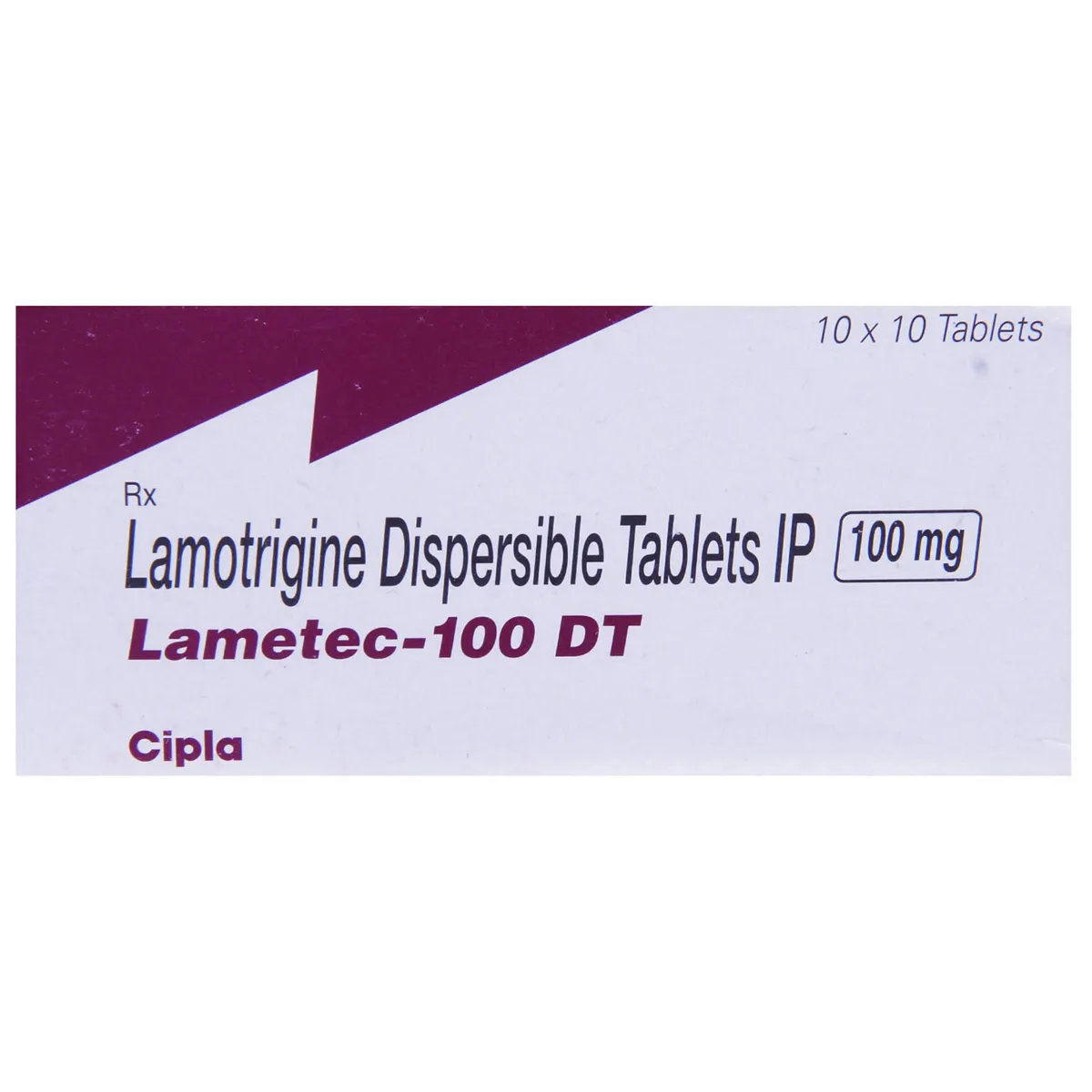
✅ Controls seizures
✅ Treats bipolar disorder
✅ Stabilizes mood swings
✅ Reduces manic episodes
✅ Minimizes depressive symptoms
Lametec-100 DT contains Lamotrigine.
✓ Medically reviewed by Morgan Ellis — Pharmacy Researcher · 8 years experience · Last reviewed: May 2026
⚡ Quick Answer — What is Lametec-100 DT?
Lametec-100 DT is an oral dispersible tablet (can be taken with water or dispersed in water) containing lamotrigine (100 mg) — a broad-spectrum anticonvulsant and mood stabiliser. Used for: partial and generalised tonic-clonic seizures, Lennox-Gastaut syndrome, and maintenance therapy of bipolar I disorder (preventing depressive episodes). Adult dosing requires slow titration over 6 weeks — rapid escalation is the single biggest cause of severe rash and Stevens-Johnson syndrome. Standard maintenance: 200–400 mg/day in 1–2 doses. Half this dose if combined with valproate; double if combined with carbamazepine/phenytoin. Take with or without food. Common side effects: rash, headache, dizziness, double vision. Stop immediately for any new rash — SJS/TEN risk highest in the first 8 weeks. One of the few anticonvulsants with relatively low fetal risk in pregnancy.
📦 Every order is covered by our Reshipment Assurance Policy — if your parcel does not arrive within 20 business days, we reship it.
Why order from MedsBase
Our generic medications are sourced from WHO-GMP certified manufacturers and shipped worldwide in discreet, plain packaging — no medication name on the parcel exterior. Card payments are routed through a regulated processor (statement descriptors include a regulated card-payment processor — never “MedsBase” or any medication name). Crypto and SEPA bank transfer are also accepted. Every order is backed by our Reshipment Assurance Policy.
What Is Lametec-100 DT?
Lametec-100 DT is an oral lamotrigine DT (dispersible tablet) available in 100 mg strengths. Lamotrigine is a phenyltriazine anticonvulsant that has been a first-line agent for focal epilepsy, generalised tonic-clonic seizures and bipolar I maintenance since the late 1990s. It is on the WHO Model List of Essential Medicines.
The DT (dispersible tablet) formulation can be swallowed whole, chewed, or dispersed in a small volume of water before swallowing — useful for patients who have difficulty swallowing tablets and for paediatric dosing.
Lametec-100 DT is supplied by a WHO-GMP certified manufacturer and is bioequivalent to originator-brand lamotrigine (Lamictal®).
How Does Lametec-100 DT Work?
Lamotrigine has multiple complementary mechanisms:
- Voltage-gated sodium channel blockade in a use-dependent manner — the primary anticonvulsant mechanism. It preferentially silences hyperactive neurons without affecting normal firing.
- Reduction of glutamate release at presynaptic terminals — contributes to both seizure control and mood stabilisation.
- Modest inhibition of high-voltage-activated calcium channels — complementary to the sodium-channel effect.
This mechanism profile makes lamotrigine effective against focal seizures, generalised tonic-clonic seizures and bipolar depression (the only mood-stabilising anticonvulsant licensed specifically for bipolar maintenance to prevent depression, not mania). It is generally not used for myoclonic seizures, where it can occasionally worsen seizure frequency.
Uses and Indications
- Partial (focal) seizures with or without secondary generalisation — first-line monotherapy in adults and adolescents
- Primary generalised tonic-clonic seizures — first-line, particularly in women of childbearing potential (alternative to valproate)
- Lennox-Gastaut syndrome — adjunctive therapy for the drop attacks and atypical absences
- Bipolar I disorder — maintenance therapy for prevention of mood episodes, particularly depressive episodes (FDA-approved). Not first-line for acute mania.
- Off-label: bipolar II depression, treatment-resistant unipolar depression (adjunct), borderline personality disorder, peripheral neuropathy
Lametec-100 DT is not first-line for: acute mania (use valproate or atypical antipsychotic); myoclonic seizures (can worsen them); status epilepticus (no IV form, slow onset).
Lametec-100 DT Dosage and How to Take
Lametec-100 DT strengths: 100 mg.
Lamotrigine titration is indication- and co-medication-dependent and must always be slow. The titration schedule is the single biggest factor in avoiding severe rash.
Adult monotherapy or add-on without enzyme-inducers/valproate (epilepsy):
- Weeks 1–2: 25 mg once daily
- Weeks 3–4: 50 mg once daily
- Week 5: 100 mg once daily (or 50 mg twice daily)
- Week 6+: increase by 50–100 mg every 1–2 weeks. Maintenance 100–400 mg/day in 1–2 doses.
Add-on to valproate (which doubles lamotrigine levels):
- Weeks 1–2: 25 mg every other day
- Weeks 3–4: 25 mg once daily
- Week 5: 50 mg once daily; titrate slowly to 100–200 mg/day total
Add-on to enzyme inducers (carbamazepine, phenytoin, phenobarbital, primidone) without valproate:
- Weeks 1–2: 50 mg once daily
- Weeks 3–4: 100 mg/day in 2 doses
- Week 5+: increase by 100 mg/week. Maintenance 200–700 mg/day in 2 doses.
Bipolar I maintenance: Same monotherapy schedule, target 200 mg/day (or 100 mg if on valproate, 400 mg if on inducers).
How to Take Lametec-100 DT Properly
- Follow the titration schedule exactly. Skipping a step or escalating faster sharply increases rash risk. There is no clinical benefit to faster titration.
- With or without food. Food does not significantly affect absorption. If GI upset occurs, take with food.
- If you miss >5 consecutive days, you must restart the titration from week 1. Lamotrigine tolerance to rash is lost rapidly. Do not resume at the previous dose after a treatment break.
- Twice-daily dosing at maintenance for most patients (half-life 24–30 hours, but less if on enzyme inducers). Once-daily dosing is fine for the OD/extended-release form.
- Stop the drug for any new rash in the first 8 weeks. Most lamotrigine rashes are benign morbilliform eruptions, but Stevens-Johnson syndrome and TEN are not distinguishable in the first 24–48 hours. The threshold to stop is very low.
- Never stop abruptly for epilepsy — rebound seizures and status epilepticus are possible. Taper over 2 weeks unless a serious adverse reaction (rash, anaphylaxis) requires immediate cessation.
- Combined oral contraceptives can halve lamotrigine levels. Tell your prescriber if starting or stopping the pill — the dose may need to be increased on the pill or reduced in the pill-free week.
- Pregnancy and breastfeeding: lamotrigine is among the lower-risk anticonvulsants for fetal exposure. Levels drop dramatically in pregnancy and rise again post-partum — therapeutic-drug-monitoring in specialist clinics is recommended.
Side Effects of Lametec-100 DT
Common (often dose-related, may settle):
- Headache
- Dizziness
- Nausea
- Diplopia (double vision)
- Drowsiness or insomnia (paradoxical — insomnia in some patients, sedation in others)
- Tremor
- Ataxia — usually with rapid titration or at high doses
- Mild morbilliform rash (5–10% of patients on slow titration)
Less common but important:
- Mood activation, irritability, restlessness
- Aseptic meningitis (very rare)
- Movement disorders — tics, dystonia (rare)
- Insomnia
- Worsening of myoclonic seizures in some genetic generalised epilepsies
Rare but seek emergency care:
- Stevens-Johnson syndrome and toxic epidermal necrolysis (TEN) — risk is highest in the first 8 weeks, increased by rapid titration and concurrent valproate. Approximately 1 in 1,000 adults; higher in children. Stop the drug at the first sign of any rash, mucosal involvement, or systemic illness with fever.
- Drug Reaction with Eosinophilia and Systemic Symptoms (DRESS) — fever, lymphadenopathy, hepatitis, eosinophilia. Stop immediately.
- Haemophagocytic lymphohistiocytosis (HLH) — very rare, life-threatening immune activation. FDA warning issued 2018.
- Serious cardiac arrhythmias — Brugada-like ECG changes have been reported in patients with structural heart disease (FDA warning 2021). Caution with pre-existing heart disease and Brugada syndrome.
- Suicidal ideation — class warning for all anticonvulsants.
- Anaphylaxis
Warnings and Precautions — CRITICAL
- Severe skin reactions (SJS/TEN/DRESS) — lamotrigine carries a black-box warning. Risk factors: rapid titration, concurrent valproate, age <16, prior anticonvulsant rash. Stop for any rash and seek medical assessment within hours, not days.
- Drug interactions matter more than for most anticonvulsants. Valproate doubles lamotrigine; carbamazepine/phenytoin/phenobarbital/primidone halve it; oestrogen-containing contraceptives roughly halve it. Dosing schedules differ for each scenario.
- Pregnancy: lamotrigine is one of the safer anticonvulsants in pregnancy (registry data show no clear increase in major malformations at typical doses). However lamotrigine clearance increases markedly in pregnancy; breakthrough seizures are common if the dose is not adjusted. Specialist follow-up is essential.
- Cardiac warning (FDA 2021): caution in patients with structural heart disease, conduction system disease, or Brugada syndrome. Baseline ECG is reasonable in older adults with cardiac history.
- Aseptic meningitis — rare but described. Headache, neck stiffness, fever after starting or after dose increase warrants assessment.
- Suicidality — class warning. Tell a clinician for any new mood change, self-harm thought or behaviour change.
- Treatment break of >5 days — restart titration from week 1 to avoid losing rash tolerance.
- Driving: avoid until stable on dose; double vision and dizziness can impair driving in the titration phase.
Contraindications — Who Should NOT Take Lametec-100 DT
- Known hypersensitivity to lamotrigine or any tablet excipient
- Prior severe skin reaction to any anticonvulsant
- Severe hepatic impairment (Child-Pugh C) without dose adjustment and specialist monitoring
- History of Stevens-Johnson syndrome to any drug (relative contraindication, specialist input required)
Drug Interactions
| Combine with | Effect | What to do |
|---|---|---|
| Sodium valproate | Doubles lamotrigine levels — sharply increases SJS/TEN risk | Halve the lamotrigine starter dose; very slow titration. Specialist supervision. |
| Carbamazepine, phenytoin, phenobarbital, primidone | Halve lamotrigine levels (enzyme induction) | Use the higher titration schedule (50 mg starter, faster up-titration, higher maintenance 200–700 mg/day). |
| Oestrogen-containing contraceptives | Reduce lamotrigine levels by ~50% | Monitor seizure control; may need higher dose on pill, lower dose in pill-free week. Progestogen-only contraceptives do not significantly affect lamotrigine. |
| Pregnancy | Clearance increases 2–3 fold by third trimester | Specialist follow-up; therapeutic drug monitoring; dose increase often needed; reduce post-partum to avoid toxicity. |
| Rifampicin | Reduces lamotrigine levels (enzyme induction) | Increase dose under specialist guidance. |
| Lopinavir/ritonavir, atazanavir/ritonavir | Reduce lamotrigine levels | Monitor levels; dose increase often needed. |
| Sertraline (high doses) | May modestly raise lamotrigine levels | Usually clinically insignificant; observe for side effects after starting. |
| Alcohol | Additive CNS depression | Limit alcohol entirely on Lametec-100 DT. |
Storage Instructions
- Store at room temperature, 15–30°C. Protect from light and moisture.
- Keep tablets in the original blister pack until use.
- Do not store in the bathroom.
- Keep out of reach of children — lamotrigine overdose causes seizures, coma and arrhythmia.
- Do not use after the expiry date.
- Return unused tablets to a pharmacy for proper disposal.
Related Alternatives on MedsBase
Other medications stocked for related conditions:
- Browse all neurological & epilepsy medications
- Browse anti-migraine medications
- Browse mental health & psychiatric medications
Frequently Asked Questions
Why does Lametec-100 DT take 6 weeks to titrate up?
The slow titration is specifically designed to avoid Stevens-Johnson syndrome and toxic epidermal necrolysis. Studies in the 1990s showed that the rash incidence is directly proportional to the speed of titration and the starting dose. The 6-week schedule reduces the rate of severe rash from ~5% to under 0.1% in adults. There is no clinical benefit from faster escalation; it only increases risk.
What if I get a rash on Lametec-100 DT?
Stop the drug and seek same-day medical assessment. Most lamotrigine rashes are benign maculopapular eruptions that resolve on stopping, but Stevens-Johnson syndrome cannot be reliably distinguished from a benign rash in the first 24–48 hours. Red flags that require emergency care: mucous-membrane involvement (mouth, eyes, genitals), blistering, peeling, fever, malaise. The threshold to stop Lametec-100 DT for any rash is intentionally very low.
Why does the dose differ if I am on valproate or carbamazepine?
Other anticonvulsants change lamotrigine clearance dramatically. Valproate inhibits glucuronidation and roughly doubles lamotrigine levels — so you need half the usual dose, and the rash risk is sharply increased without slow titration. Carbamazepine, phenytoin, phenobarbital and primidone induce glucuronidation and roughly halve lamotrigine levels — so you need approximately double the usual dose. Combined oral contraceptives also halve lamotrigine levels.
Is Lametec-100 DT safe in pregnancy?
Lamotrigine is one of the safer anticonvulsants in pregnancy. Pregnancy registries (UK, North American) have not shown a clear increase in major congenital malformations at typical doses (<200 mg/day), particularly compared with valproate or topiramate. However, lamotrigine clearance increases substantially in pregnancy — sometimes by 200–300% by the third trimester — and breakthrough seizures are common if the dose is not adjusted. Specialist obstetric/neurology follow-up with therapeutic drug monitoring is essential, and the dose must be reduced quickly post-partum to avoid toxicity.
Can Lametec-100 DT treat depression?
For bipolar depression, yes — lamotrigine is FDA-approved for maintenance therapy of bipolar I disorder, particularly preventing depressive episodes. For unipolar depression it is sometimes used as an augmentation agent in treatment-resistant cases but is not first-line. Effect on bipolar depression takes 6–12 weeks to develop fully because of the slow titration. It is not effective for acute mania.
What happens if I miss several days of Lametec-100 DT?
If you miss more than 5 consecutive days, you lose the tolerance that the slow titration built up — the rash risk on resumption at the previous dose is unacceptably high. You must restart the titration from week 1 if you have a treatment break of >5 days, regardless of how long you were stable before the break. This is the same rule as initial titration.
Will Lametec-100 DT cause weight gain?
Generally weight-neutral. Lamotrigine is one of the few anticonvulsants and mood stabilisers that does not typically cause weight gain — in contrast to valproate, gabapentin, pregabalin, olanzapine and quetiapine. This makes it a popular choice for bipolar maintenance in patients concerned about metabolic side effects.
Can I drink alcohol on Lametec-100 DT?
Light, occasional alcohol is usually tolerated. Heavy or binge drinking adds CNS depression and lowers seizure threshold, increasing breakthrough seizure risk in epilepsy patients. Avoid alcohol entirely during the titration phase — it is harder to attribute symptoms (dizziness, ataxia, rash) correctly when alcohol is involved.
Why did my prescriber order an ECG before starting Lametec-100 DT?
In March 2021 the FDA added a label warning about Brugada-like ECG changes and arrhythmia risk in patients with structural heart disease, conduction-system abnormalities or Brugada syndrome. A baseline ECG is reasonable in older adults with cardiac history; it is not required for healthy young patients without cardiac symptoms.
How do I taper off Lametec-100 DT safely?
For epilepsy: taper over at least 2 weeks, ideally longer, under your neurologist’s supervision — sudden discontinuation can precipitate seizures and status epilepticus. For bipolar maintenance: tapering over 2–4 weeks reduces the risk of mood relapse but cannot fully prevent it; specialist input is recommended. Immediate discontinuation is only appropriate for serious adverse reactions (rash, DRESS, HLH).
Where is Lametec-100 DT manufactured?
Lametec-100 DT is supplied by a WHO-GMP certified manufacturer and is bioequivalent to originator-brand lamotrigine (Lamictal®, GSK). Batch certificates of analysis are available on request.
Related Alternatives
Other products in Chronic Conditions that customers also view:
More options in Neurological Conditions and Epilepsy
Ranked by recent MedsBase order volume — what other customers in this category are picking.




| Strength | 100 mg |
|---|---|
| Quantity | 30 Tablet/s, 60 Tablet/s, 90 Tablet/s, 180 Tablet/s |
 Lametec-100 DT
Q & A
Lametec-100 DT
Related products



















Reviews
There are no reviews yet