








Lanoxin
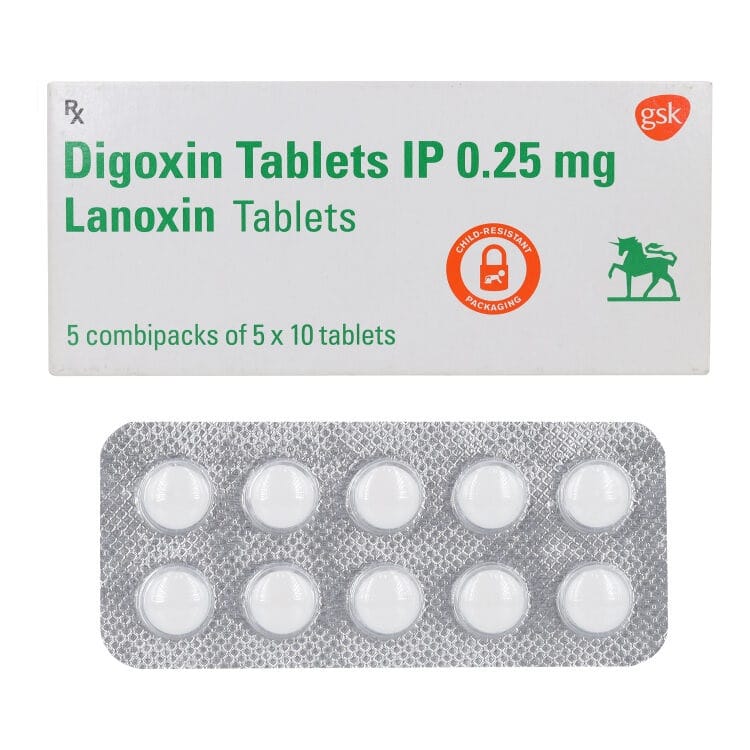
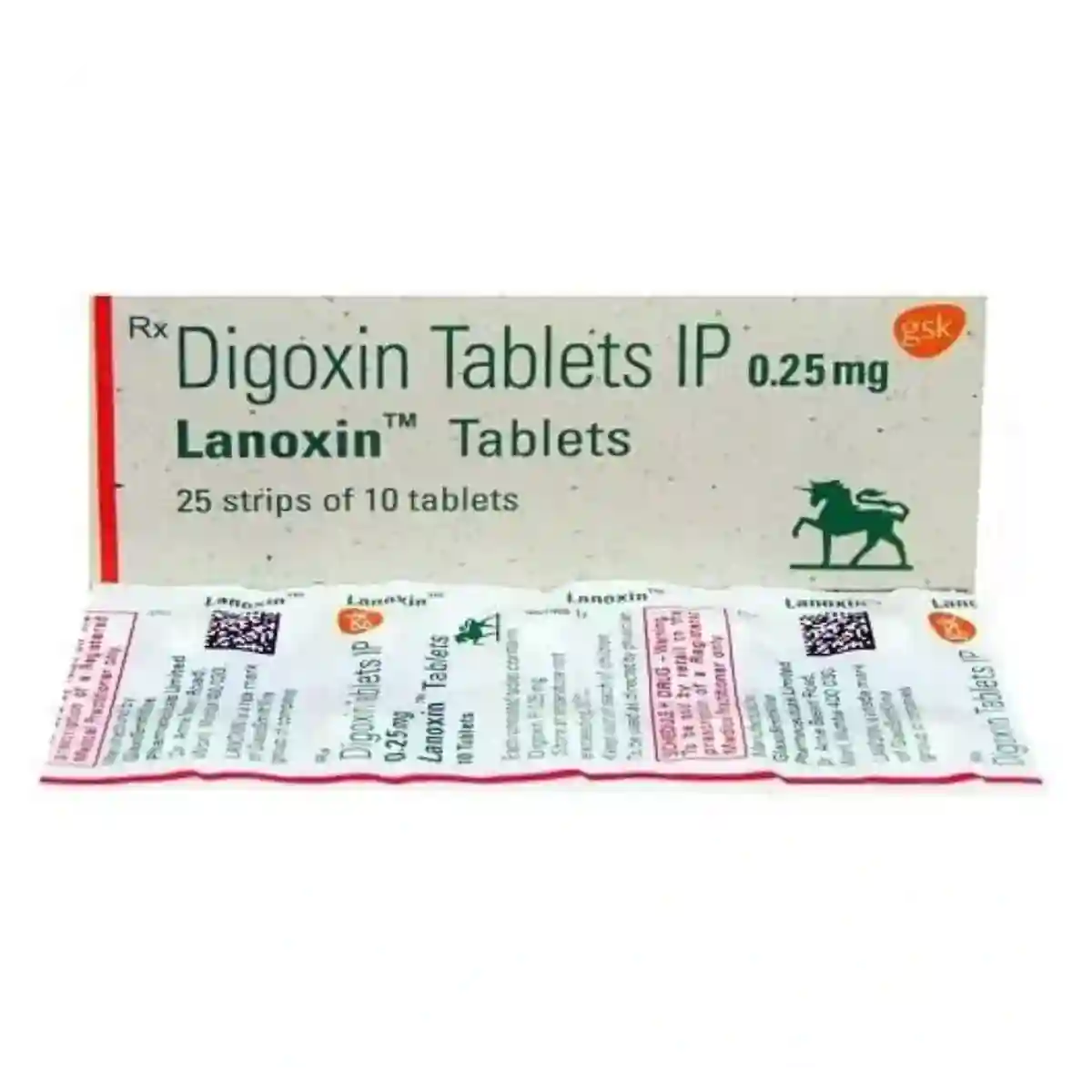
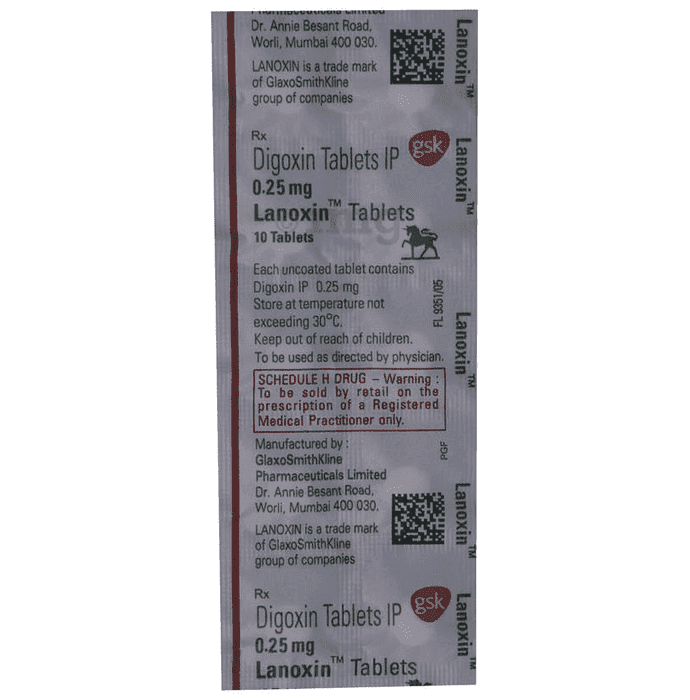
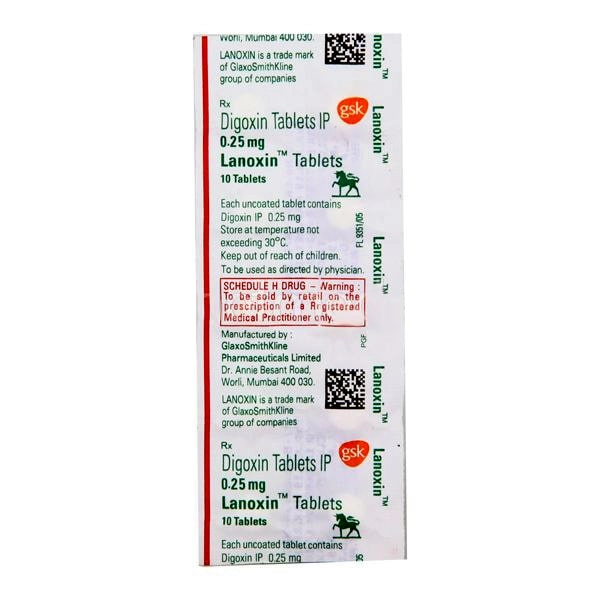

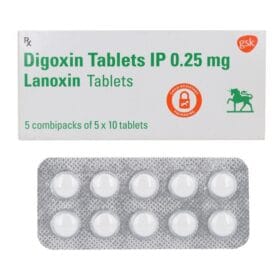
Lanoxin is GSK’s digoxin 0.25 mg tablets — the reference cardiac glycoside, derived from the foxglove plant and in continuous clinical use since William Withering’s 1785 monograph. Modern roles: HF-REF add-on when symptoms persist despite optimal triple/quadruple therapy (DIG trial 1997 — 28% reduction in HF hospitalisation, no mortality benefit); atrial fibrillation rate control when beta-blocker intolerance limits other options. Narrow therapeutic window — serum levels required.
✓ Medically reviewed by Morgan Ellis — Pharmacy Researcher · 8 years experience · Last reviewed: May 2026
⚡ Quick Answer — What is Lanoxin?
Lanoxin is a 0.25 mg digoxin tablet from GSK — a cardiac glycoside extracted from the foxglove plant (Digitalis lanata). Digoxin is the oldest cardiovascular drug still in widespread clinical use (William Withering 1785). Modern uses: heart failure with reduced ejection fraction (HF-REF) — symptomatic benefit and reduced hospitalisation (DIG trial 1997, no mortality benefit); atrial fibrillation rate control — particularly in sedentary or elderly patients where beta-blocker intolerance limits other options. Narrow therapeutic index — serum target 0.5-0.9 ng/mL in HF; 0.8-2.0 ng/mL in AF. Toxicity at >2 ng/mL, especially in renal impairment, hypokalaemia, or with interacting drugs. Typical dose: 62.5-250 mcg once daily, titrated to level + rate response. Contraindicated in Wolff-Parkinson-White syndrome with AF, second/third-degree AV block, severe bradycardia, hypertrophic obstructive cardiomyopathy, active myocarditis.
📦 Every order is covered by our Reshipment Assurance Policy — if your parcel does not arrive within 20 business days, we reship it.
Why order from MedsBase
Our generic medications are sourced from WHO-GMP certified manufacturers and shipped worldwide in discreet, plain packaging — no medication name on the parcel exterior. Card payments are routed through a regulated processor (statement descriptors include a regulated card-payment processor — never “MedsBase” or any medication name). Crypto and SEPA bank transfer are also accepted. Every order is backed by our Reshipment Assurance Policy.
What Is Lanoxin?
Lanoxin is 0.25 mg digoxin tablets from GSK, supplied in 30-90 tablets. Digoxin is the reference cardiac glycoside, extracted from the leaves of Digitalis lanata (woolly foxglove). Its antecedent, digitalis (from Digitalis purpurea), was introduced into Western medicine by William Withering in his landmark 1785 monograph “An Account of the Foxglove” — arguably the first evidence-based clinical pharmacology text. Digoxin has a narrow therapeutic window and requires careful individualisation, serum-level monitoring, and vigilance for toxicity.
How Digoxin Works
Digoxin inhibits the sodium-potassium ATPase (Na/K pump) on myocardial cell membranes. Downstream effects:
- Rise in intracellular sodium — secondary reduction of Na/Ca exchanger activity, leading to rise in intracellular calcium
- Positive inotropy — more forceful cardiac contraction. Mild effect, useful in systolic HF.
- Increased vagal tone — reduced heart rate and slowed AV nodal conduction. This is the dominant rate-control mechanism in AF.
- Neurohormonal effects — reduced sympathetic activation, reduced plasma noradrenaline and renin. Mechanism of benefit in HF-REF.
- No peripheral vasodilation or direct afterload reduction — unlike ACE inhibitors, ARBs, and ARNIs which also reduce afterload.
Evidence and Uses
Heart failure with reduced ejection fraction (HF-REF): DIG trial (1997) — digoxin in 6,800 HF-REF patients already on ACEi produced no mortality difference but reduced heart-failure hospitalisation by 28%. Post-hoc analyses suggested benefit is concentrated at serum levels 0.5-0.9 ng/mL; higher levels (>1.2 ng/mL) showed possible harm. Modern guidelines place digoxin as an add-on for persistent symptoms despite optimal triple/quadruple therapy (ACEi/ARB/ARNI + beta-blocker + MR antagonist + SGLT2 inhibitor).
Atrial fibrillation and flutter rate control: digoxin was the original AF rate-control drug. Modern preference is beta-blockers or non-dihydropyridine CCBs (diltiazem, verapamil) for most AF patients. Digoxin retains a place where beta-blocker intolerance or HF coexistence makes the other agents problematic; it is also useful in sedentary elderly patients where adequate resting rate control is achievable without the exercise-rate-control required in active patients. Modern use often adds digoxin to a beta-blocker rather than using it alone.
Other uses: historically used in supraventricular tachycardia (now superseded by adenosine acutely and by catheter ablation definitively).
Dosage
Loading dose (rapid digitalisation, acute AF or HF): rarely used in modern practice. If needed: 500 mcg PO followed by 250-500 mcg at 6-8 hourly intervals to a total of 0.75-1.5 mg over 24 hours.
Maintenance dose: 62.5-250 mcg once daily. Typical elderly dose 62.5-125 mcg; typical younger adult dose 125-250 mcg. Reduce further in renal impairment (digoxin is 70% renally cleared).
Target serum level: 0.5-0.9 ng/mL in HF-REF; 0.8-2.0 ng/mL in AF rate control. Measure trough level (8-12 hours post-dose), at 7 days after dose change.
Monitoring: baseline U&E (potassium and creatinine critical), ECG, digoxin level at day 7, then at every dose change and annually once stable. Reassess at any change in renal function, at initiation of interacting drugs (amiodarone, verapamil, spironolactone, clarithromycin), or at clinical concern for toxicity (nausea, visual disturbance, confusion, any new arrhythmia).
Digoxin toxicity (level >2 ng/mL with symptoms):
- Early: nausea, vomiting, anorexia, confusion
- Classic: yellow-green visual disturbance (xanthopsia), halos
- Cardiac: any arrhythmia — most commonly atrial tachycardia with AV block, ventricular ectopy, bidirectional VT
- Severe: life-threatening arrhythmia, hyperkalaemia (potassium leak from inhibited Na/K pump is a marker of severity)
Treatment of toxicity: withhold digoxin, correct potassium and magnesium, consider digoxin-specific antibody fragments (DigiFab) for life-threatening arrhythmia or potassium >5 mmol/L in acute poisoning.
Contraindications
- Wolff-Parkinson-White syndrome with atrial fibrillation (can accelerate ventricular response via accessory pathway, causing VF)
- Second or third-degree AV block without pacemaker
- Hypertrophic obstructive cardiomyopathy (HOCM) — positive inotropy worsens outflow obstruction
- Active myocarditis
- Ventricular tachycardia or fibrillation (inotrope can worsen)
- Severe bradycardia or sick sinus syndrome
- Baseline digoxin intoxication (check level)
- Hypersensitivity to digoxin
Pregnancy: relatively safe if needed; crosses placenta; used occasionally in fetal tachyarrhythmia treatment. Breastfeeding: compatible.
Drug Interactions
- Amiodarone — raises digoxin levels 50-100%. Halve digoxin dose when starting amiodarone.
- Verapamil, diltiazem — raise digoxin levels 50-70% and add bradycardia. Reduce dose; monitor levels.
- Quinidine, dronedarone, propafenone — raise digoxin levels significantly.
- Spironolactone, eplerenone — raise digoxin levels modestly (P-glycoprotein competition).
- Clarithromycin, erythromycin, azithromycin — raise digoxin levels (gut-microbiome + P-gp effects). Monitor.
- Loop and thiazide diuretics — hypokalaemia potentiates digoxin toxicity. Monitor potassium; add spironolactone or eplerenone if needed.
- Beta-blockers, non-DHP CCBs — additive bradycardia and AV block.
- Cholestyramine, antacids, bran — reduce digoxin absorption. Separate doses by 2 hours.
- Rifampicin, St John’s Wort — lower digoxin levels via P-gp induction.
Storage
Store Lanoxin below 25°C. Keep out of reach of children.
Frequently Asked Questions
Why do I need blood tests on Lanoxin?
Digoxin has a narrow therapeutic window — effective and toxic levels are close together, and toxicity can be life-threatening. Serum levels are measured at baseline (after 7 days on a stable dose), at every dose change, at changes in renal function, on starting interacting drugs, and on any symptom suggesting toxicity (nausea, visual change, new arrhythmia).
What are the signs of digoxin toxicity?
Early: loss of appetite, nausea, vomiting. Classic: yellow-green vision changes or halos around lights. Cardiac: any new palpitation or arrhythmia. Neurological: confusion, fatigue. If any of these appear, stop the drug and seek urgent medical review — check digoxin level, potassium, and ECG.
Can I take ibuprofen with Lanoxin?
Chronic NSAID use is risky — NSAIDs reduce renal function, raising digoxin levels (digoxin is 70% renally cleared). Use paracetamol for chronic pain.
What if I miss a dose?
Take it as soon as you remember unless more than 12 hours have passed — in which case skip the missed dose and resume normally. Do not double up. A missed dose rarely destabilises BP or rhythm.
Where can I buy Lanoxin online?
You can buy Lanoxin (digoxin 0.25 mg, 30-90 tablets) from MedsBase with discreet packaging and worldwide shipping.
Related Cardiac & Hypertension Medications
- Aldactone — Spironolactone (non-selective MR antagonist)
- Amlopres AT — Amlodipine + Atenolol combo
- Aten — Atenolol (beta-blocker)
- Cardace — Ramipril (ACE inhibitor)
- Ecosprin — Aspirin 75/150 mg
- Lipvas — Atorvastatin 10/20/40 mg
- Browse all High Blood Pressure Medications
Related Alternatives
Other products in Chronic Conditions that customers also view:
More options in High Blood Pressure Medication
Ranked by recent MedsBase order volume — what other customers in this category are picking.
| Strength | 0.25 Mg |
|---|---|
| Quantity | 30 Tablet/s, 60 Tablet/s, 90 Tablet/s |
| Pharma Form | Tablet/s |
| Manufacturer | Glaxo SmithKline |
| Treatment | Heart failure, Arrhythmias |
| Generic Brand | Digoxin |
 Lanoxin
Q & A
Lanoxin
Related products



Reviews
There are no reviews yet