









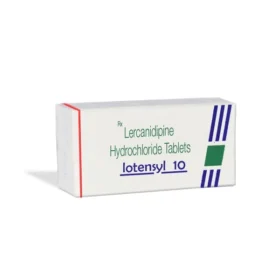
Lotensyl
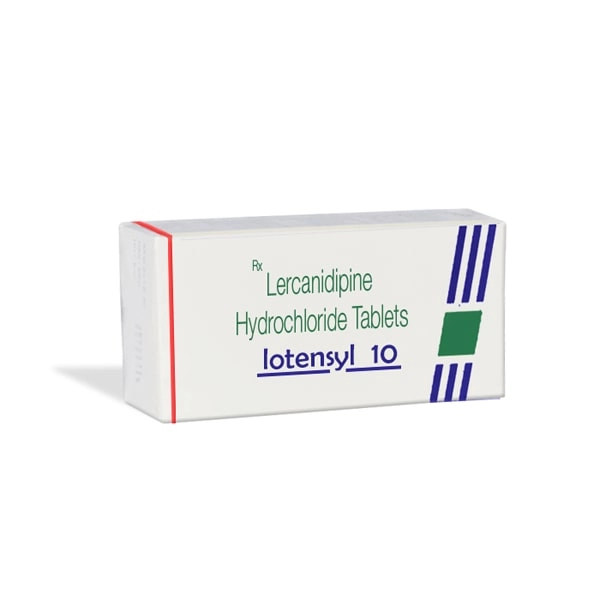
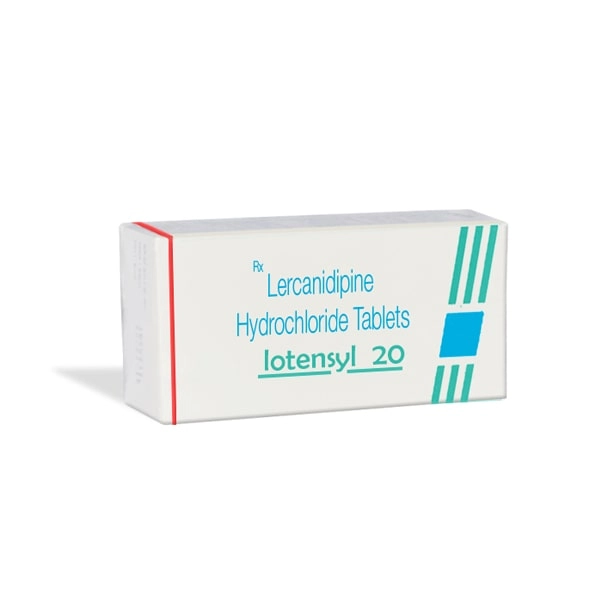


Lotensyl is Lupin’s cilnidipine 10/20 mg tablets — fourth-generation dihydropyridine calcium-channel blocker uniquely blocking BOTH L-type (vasodilation) and N-type (sympathetic nerve terminal) calcium channels. Popular in India, Japan, and parts of East Asia. Advantages vs amlodipine: ~50% lower ankle-oedema rate in head-to-head trials, no reflex tachycardia, modestly better proteinuria reduction in CKD (CARTER trial). Does not yet have the large CV outcome-trial base of amlodipine.
✓ Medically reviewed by Morgan Ellis — Pharmacy Researcher · 8 years experience · Last reviewed: May 2026
⚡ Quick Answer — What is Lotensyl?
Lotensyl is a 10 / 20 mg cilnidipine tablet from Lupin — a dihydropyridine calcium-channel blocker that uniquely blocks BOTH L-type and N-type calcium channels. L-type blockade produces arterial vasodilation (the standard CCB effect); N-type blockade at sympathetic nerve terminals reduces noradrenaline release, suppressing the reflex tachycardia that limits other dihydropyridines. Popular in India, Japan, and parts of East Asia as a “next-generation” DHP; less widely used in Europe/US where amlodipine and nifedipine dominate. Clinical advantages vs amlodipine: lower ankle oedema rates, no reflex tachycardia, modestly better renal protection in proteinuric CKD (CARTER-AKI, ACTION-HKD trials). Typical dose: 5-20 mg once daily. Contraindications: cardiogenic shock, acute MI with hypotension, severe hepatic impairment, pregnancy.
📦 Every order is covered by our Reshipment Assurance Policy — if your parcel does not arrive within 20 business days, we reship it.
Why order from MedsBase
Our generic medications are sourced from WHO-GMP certified manufacturers and shipped worldwide in discreet, plain packaging — no medication name on the parcel exterior. Card payments are routed through a regulated processor (statement descriptors include a regulated card-payment processor — never “MedsBase” or any medication name). Crypto and SEPA bank transfer are also accepted. Every order is backed by our Reshipment Assurance Policy.
What Is Lotensyl?
Lotensyl is 10 / 20 mg cilnidipine tablets from Lupin, supplied in 30-90 tablets. Cilnidipine was introduced in Japan in 1995 (FujiRebio as Atelec) and gained FDA-equivalent approval in many Asian markets. It is a fourth-generation dihydropyridine with a distinctive dual L/N-type calcium-channel blocking profile.
How Cilnidipine Works
Most DHP CCBs (amlodipine, nifedipine, felodipine, nicardipine) block L-type calcium channels on arterial smooth muscle, producing vasodilation and BP fall. Cilnidipine uniquely adds N-type channel blockade at sympathetic-nerve terminals:
- L-type blockade (arterial smooth muscle) — standard vasodilation; afterload reduction; BP falls 10-15 mmHg
- N-type blockade (pre-synaptic sympathetic terminals) — reduced noradrenaline release; suppresses the reflex tachycardia that normally follows arterial vasodilation
- Lower ankle oedema rate — L-type blockade dilates pre-capillary arterioles; the N-type blockade’s effect on post-capillary tone is more balanced, producing less capillary hydrostatic pressure spike and less peripheral oedema than pure-L-type CCBs
- Proteinuria reduction — reduced renal sympathetic tone dilates efferent as well as afferent arterioles, reducing glomerular hyperfiltration; trials in proteinuric CKD have shown greater proteinuria reduction vs amlodipine at equivalent BP
- Long half-life — 6-8 hours (once-daily dosing at steady state)
Evidence for Cilnidipine
- CARTER (2007) — cilnidipine vs amlodipine in proteinuric hypertensive CKD: cilnidipine produced greater proteinuria reduction at equivalent BP control; creatinine trajectory similar.
- Direct head-to-head comparisons with amlodipine show comparable BP efficacy but approximately 50% lower ankle oedema rates on cilnidipine.
- ACTION-HKD (2014) — extended renoprotection data in CKD patients.
- Indian real-world data — widely used as amlodipine alternative where ankle oedema or reflex tachycardia limits amlodipine.
Cilnidipine is not included in Western guideline first-line recommendations for hypertension — partly because amlodipine has a much larger outcome-trial dataset (ASCOT, ACCOMPLISH, VALUE), partly because cilnidipine has not been marketed in the US or most of Europe.
Dosage
Hypertension: start 5-10 mg once daily; titrate to 10-20 mg once daily at 2-4 weeks.
Administration: with or without food; same time each day; swallow whole.
Monitoring: BP at 2 and 4 weeks; then every 3-6 months. LFTs at baseline and periodically (cilnidipine is hepatically cleared). Check for ankle oedema on review.
Side Effects
Common:
- Headache, flushing
- Dizziness
- Ankle oedema (lower than amlodipine — roughly half the rate in head-to-head trials)
- Constipation
- Mild transaminase elevation
- Palpitations (much less than short-acting DHPs)
Uncommon:
- Severe hypotension
- Gingival hyperplasia (rare DHP class effect)
- Photosensitivity
- Rash
Contraindications
- Cardiogenic shock
- Acute myocardial infarction with hypotension
- Severe aortic stenosis
- Severe hepatic impairment (Child-Pugh C)
- Known hypersensitivity to dihydropyridines
- Pregnancy (limited data; amlodipine or nifedipine are preferred DHPs if a CCB is required in pregnancy)
Drug Interactions
- Strong CYP3A4 inhibitors (clarithromycin, itraconazole, ritonavir) — raise cilnidipine levels; increased hypotension risk.
- Grapefruit juice — minor to moderate interaction; regular daily consumption is discouraged.
- Other antihypertensives — additive BP lowering; intentional in combination therapy.
- CYP3A4 inducers (rifampicin, phenytoin, St John’s Wort) — may reduce cilnidipine effect.
- Digoxin — modest digoxin level rise; monitor.
- Alcohol — additive orthostatic hypotension.
Storage
Store Lotensyl below 25°C. Keep out of reach of children.
Frequently Asked Questions
How is cilnidipine different from amlodipine?
Cilnidipine blocks both L-type (same as amlodipine) AND N-type calcium channels. N-type blockade at sympathetic nerve terminals reduces noradrenaline release, giving cilnidipine two practical advantages: (1) lower ankle-oedema rates (roughly half of amlodipine’s in head-to-head trials); (2) no reflex tachycardia. Amlodipine, however, has vastly more cardiovascular outcome evidence (ASCOT, ACCOMPLISH, VALUE) and is the preferred DHP where outcome data are paramount.
When is Lotensyl a better choice than amlodipine?
Two common clinical situations: (1) troublesome ankle oedema on amlodipine that has not responded to adding an ACEi/ARB; (2) proteinuric CKD where the N-type mechanism may give additional renoprotection (CARTER trial).
Will Lotensyl cause ankle swelling?
Less than amlodipine, but not never. Roughly half the rate in head-to-head trials. Adding an ACE inhibitor or ARB reduces residual oedema further by venous dilation that rebalances the capillary pressure.
Can I take Lotensyl in pregnancy?
Avoid — pregnancy data are limited. If a CCB is required in pregnancy, nifedipine is the preferred DHP (largest safety database).
Where can I buy Lotensyl online?
You can buy Lotensyl (cilnidipine 10 / 20 mg, 30-90 tablets) from MedsBase with discreet packaging and worldwide shipping.
Related Cardiac & Hypertension Medications
- Amlopres AT — Amlodipine + Atenolol combo
- Atorvatin — Atorvastatin 5 mg
- Cardace — Ramipril (ACE inhibitor)
- Eptus — Eplerenone 25/50 mg (selective MR antagonist)
- Tenoric — Atenolol + Chlorthalidone combo
- Zivast AM — Atorvastatin + Amlodipine combo
- Browse all High Blood Pressure Medications
More options in High Blood Pressure Medication
Ranked by recent MedsBase order volume — what other customers in this category are picking.
| Strength | 10 mg, 20 mg |
|---|---|
| Quantity | 30 Tablet/s, 60 Tablet/s, 90 Tablet/s |
| Pharma Form | Tablet/s |
| Manufacturer | Sun Pharma |
| Treatment | High blood pressure |
| Generic Brand | Lercanidipine |
 Lotensyl
Q & A
Lotensyl
Related products





Reviews
There are no reviews yet