








Meftal
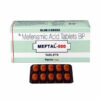
✅ Relieves menstrual pain
✅ Reduces fever quickly
✅ Eases headache discomfort
✅ Alleviates muscle cramps
✅ Manages dental pain
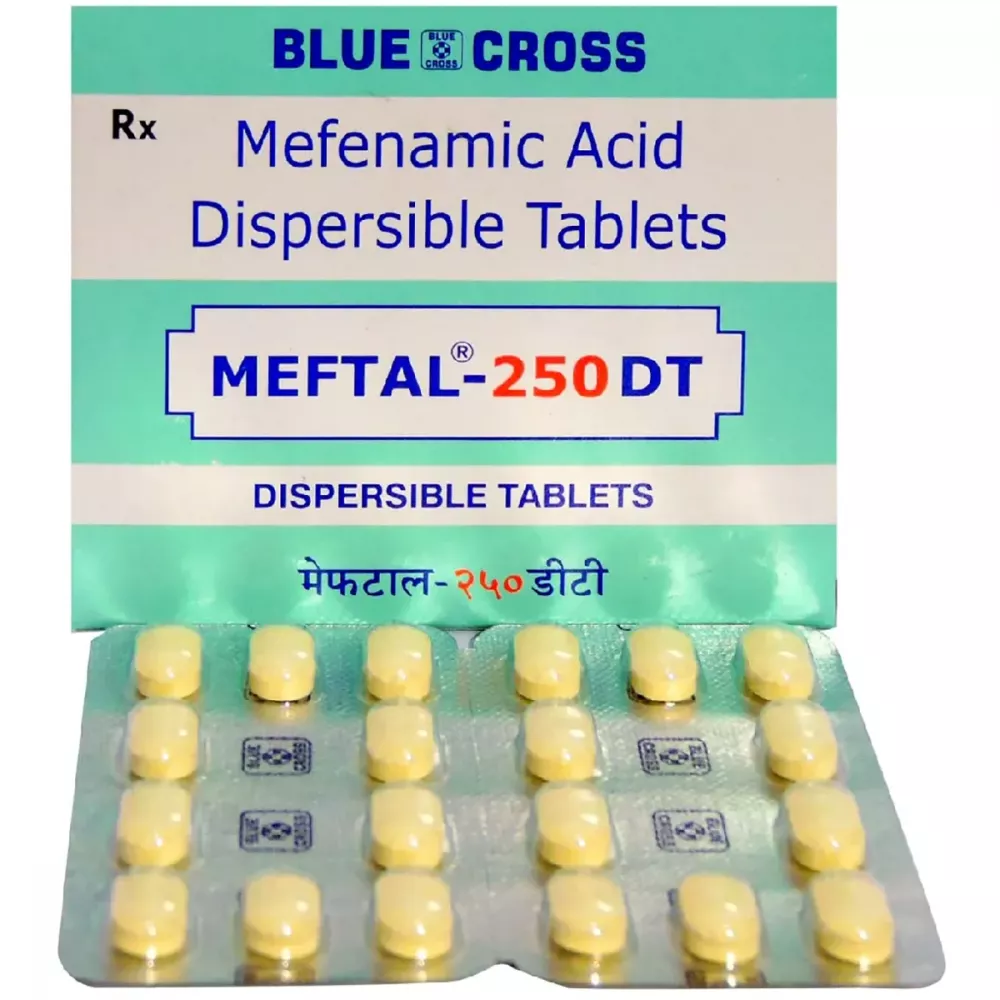
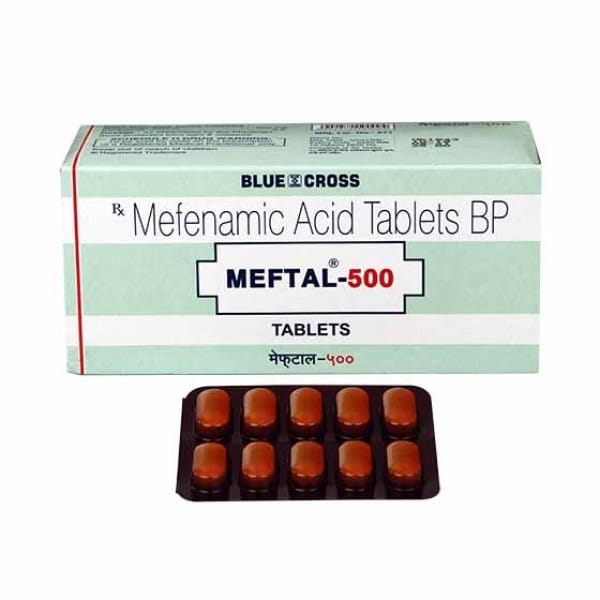
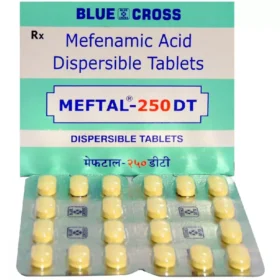
Meftal contains Mefenamic Acid.
✓ Medically reviewed by Morgan Ellis — Pharmacy Researcher · 8 years experience · Last reviewed: May 2026
⚡ Quick Answer — What is Meftal?
Meftal is a brand of mefenamic acid, a prescription NSAID used for menstrual cramps, mild-to-moderate pain, fever, and inflammation. Available as 250 mg dispersible tablets and 500 mg conventional tablets. Typical adult dose: 500 mg initially, then 250 mg every 6 hours as needed for up to 7 days. Take with food to minimise stomach irritation.
📦 Every order is covered by our Reshipment Assurance Policy — if your parcel does not arrive within 20 business days, we reship it.
Why order from MedsBase
Our generic medications are sourced from WHO-GMP certified manufacturers and shipped worldwide in discreet, plain packaging — no medication name on the parcel exterior. Card payments are routed through a regulated processor (statement descriptors include a regulated card-payment processor — never “MedsBase” or any medication name). Crypto and SEPA bank transfer are also accepted. Every order is backed by our Reshipment Assurance Policy.
Meftal is a widely trusted mefenamic acid tablet used to relieve menstrual cramps, mild-to-moderate pain, fever, and inflammation. Manufactured to pharmaceutical-grade standards, Meftal is available in 250 mg dispersible tablets (DT) and 500 mg conventional tablets, giving prescribers flexible dosing across adult and paediatric patients. Each tablet contains the same active ingredient as branded formulations such as Ponstan and Ponstel — at a fraction of the price.
As a member of the fenamate class of non-steroidal anti-inflammatory drugs (NSAIDs), mefenamic acid has been in clinical use for more than 50 years and is the first-line option recommended by many gynaecologists for primary dysmenorrhoea.
What Is Meftal?
Meftal is the Indian brand name for mefenamic acid — a prescription-strength NSAID used as an analgesic, antipyretic, and anti-inflammatory. Unlike paracetamol, which acts almost entirely on the central nervous system, mefenamic acid works at the site of injury by blocking the enzymes that produce prostaglandins. This makes it particularly effective for pain driven by inflammation or smooth-muscle contractions.
Meftal tablets are most frequently prescribed for:
- Primary dysmenorrhoea (menstrual cramps)
- Mild-to-moderate musculoskeletal pain — backache, strains, sprains
- Post-dental and post-surgical pain
- Headache and migraine-associated pain
- Fever associated with inflammation
How Does Meftal Work?
Mefenamic acid is a non-selective cyclo-oxygenase (COX) inhibitor. Prostaglandins are lipid messengers produced via the COX-1 and COX-2 enzymes, and they are responsible for sensitising pain receptors, driving inflammation, raising body temperature during infection, and causing uterine contractions during menstruation. Here is how the process works:
- Tissue injury, infection, or hormonal signalling activates COX-1 and COX-2
- COX enzymes convert arachidonic acid into prostaglandins (PGE₂, PGF₂α) and thromboxanes
- These prostaglandins sensitise nociceptors, dilate blood vessels, and cause smooth-muscle contraction
- Meftal blocks COX, lowering prostaglandin production and directly reducing pain, swelling, fever, and menstrual cramping
- Mefenamic acid also has a small additional effect as a prostaglandin receptor antagonist, which contributes to its strong analgesic profile in dysmenorrhoea
Onset of action is typically 30–60 minutes, with peak plasma concentration reached in about 2–4 hours. The plasma half-life is short (~2 hours), which is why Meftal is usually dosed every 6–8 hours.
Uses and Indications
- Primary dysmenorrhoea — mefenamic acid is specifically licensed for menstrual pain and is recognised as a first-line option by the Royal College of Obstetricians and Gynaecologists
- Menorrhagia (heavy menstrual bleeding) — can reduce blood loss by 20–50% when taken during menses
- Acute pain — post-operative, post-dental, muscular, and traumatic pain
- Osteoarthritis and rheumatoid arthritis — short-term symptomatic relief of joint stiffness and inflammation
- Fever — when paracetamol alone is insufficient, or when an anti-inflammatory effect is also desired
- Headache and tension-type pain
Meftal Dosage and Administration
| Indication | Recommended Dose | Frequency / Duration |
|---|---|---|
| Dysmenorrhoea (menstrual cramps) | 500 mg (initial) then 250 mg | Every 6 hours, starting at onset of pain; max 3 days |
| Menorrhagia (heavy bleeding) | 500 mg | 3 times daily, starting day 1 of menses, up to 5 days |
| Mild-to-moderate pain (adults) | 500 mg (initial) then 250 mg | Every 6 hours as needed; max 7 days |
| Fever | 500 mg (initial) then 250 mg | Every 6 hours; max 7 days |
| Children 6 months – 14 years | 25 mg/kg/day in divided doses | Under paediatric supervision only; max 7 days |
| Elderly (65+) | 250 mg | Every 8 hours; lowest effective dose |
| Mild–moderate renal impairment | 250 mg | Use with caution; monitor kidney function |
| Maximum daily adult dose | 1,500 mg (three 500 mg tablets) | Do not exceed |
How to Take Meftal Properly
- Swallow the tablet whole with a full glass of water
- Always take Meftal with food or milk — this reduces the risk of stomach irritation, the most common side effect of NSAIDs
- For menstrual cramps, start at the first sign of pain or the day your period begins — earlier dosing gives better relief
- For dispersible tablets (250 mg DT), disperse in a spoonful of water before swallowing if preferred
- Do not take Meftal for longer than 7 consecutive days without medical review
- If a dose is missed and the next dose is within 2 hours, skip the missed dose — do not double up
Side Effects of Meftal
Most people tolerate Meftal well when it is taken short-term at recommended doses. Side effects are dose-dependent and more likely with prolonged use.
| Severity | Side Effect |
|---|---|
| Common (≥1 in 100) | Dyspepsia, nausea, abdominal pain, diarrhoea, heartburn, dizziness, drowsiness, headache |
| Uncommon (1 in 100 – 1 in 1,000) | Skin rash, pruritus, oedema, tinnitus, elevated liver enzymes |
| Rare (<1 in 1,000) | Gastrointestinal bleeding or ulceration, haemolytic anaemia, acute kidney injury, bronchospasm (especially in NSAID-sensitive asthmatics), photosensitivity |
| Very rare / serious | Stevens-Johnson syndrome, hepatitis, aseptic meningitis, agranulocytosis, anaphylaxis |
Seek medical attention immediately if you notice black or tarry stools, vomiting blood, severe abdominal pain, yellowing of the eyes or skin, breathing difficulty, or a widespread skin rash.
Warnings and Precautions
- Cardiovascular risk — like all NSAIDs, mefenamic acid may increase the risk of heart attack or stroke with high-dose or long-term use
- Gastrointestinal risk — may cause ulcers or bleeding, particularly in patients over 65 or those taking anticoagulants, corticosteroids, or other NSAIDs
- Kidney function — avoid in dehydration, heart failure, or significant renal impairment; mefenamic acid is cleared by the kidneys
- Asthma — patients with a history of aspirin/NSAID-induced bronchospasm should not take Meftal
- Pregnancy — avoid throughout pregnancy, particularly in the third trimester (risk of premature closure of the foetal ductus arteriosus)
- Breastfeeding — small amounts pass into breast milk; short courses are generally acceptable, but discuss with a healthcare professional
- Driving — Meftal can cause drowsiness or dizziness; do not drive or operate machinery until you know how you react
Contraindications — Who Should NOT Take Meftal
- Active or recurrent peptic ulcer disease or gastrointestinal bleeding
- Severe heart failure, severe hypertension, or recent coronary artery bypass surgery
- Severe renal or hepatic impairment
- Known hypersensitivity to mefenamic acid, aspirin, or other NSAIDs
- Inflammatory bowel disease (Crohn’s disease, ulcerative colitis) — NSAIDs can trigger flares
- Third trimester of pregnancy
- Children under 6 months of age
Drug Interactions
| Drug / Class | Interaction |
|---|---|
| Warfarin, apixaban, rivaroxaban | Increased bleeding risk — co-administration generally avoided |
| Lithium | Mefenamic acid reduces renal clearance — lithium toxicity risk |
| Methotrexate | Increased methotrexate toxicity, especially at high MTX doses |
| ACE inhibitors, ARBs, diuretics | Reduced antihypertensive effect; increased risk of acute kidney injury |
| Other NSAIDs, aspirin, corticosteroids | Additive GI toxicity — avoid combination |
| SSRIs (sertraline, fluoxetine, etc.) | Increased GI bleeding risk |
| Ciclosporin, tacrolimus | Increased nephrotoxicity |
| Quinolone antibiotics | Possible increased seizure risk |
Always share a full list of your current medications, including over-the-counter products and herbal supplements, with your prescriber before starting Meftal.
What to Do in Case of Overdose
Symptoms of mefenamic acid overdose include severe nausea and vomiting, abdominal pain, drowsiness, convulsions, and in severe cases coma and acute renal failure. There is no specific antidote — management is supportive, with activated charcoal if presentation is within 1 hour of ingestion. Seek emergency medical attention or contact your local poisons centre immediately.
Storage Instructions
- Store below 25 °C in a dry place, away from direct sunlight
- Keep in the original blister packaging until use
- Keep out of reach of children and pets
- Do not use after the expiry date printed on the pack
- Dispose of unused tablets via a pharmacy take-back scheme where available — do not flush down the toilet
Related Alternatives on MedsBase
Looking for related pain or symptom relief options?
- Ondem Injection — for nausea and vomiting that often accompany severe dysmenorrhoea
- Lox 2% Jelly — topical lidocaine for localised pain relief
- Placentrex Injection — for chronic inflammatory conditions
Frequently Asked Questions
Is Meftal the same as Meftal Spas?
No. Meftal contains only mefenamic acid. Meftal Spas is a combination tablet containing mefenamic acid plus dicyclomine (an antispasmodic). Meftal Spas is often preferred when cramping is the dominant symptom; plain Meftal is sufficient when inflammation or fever is the main issue.
Can I take Meftal and paracetamol together?
Yes — mefenamic acid and paracetamol act on different pathways and are commonly combined for stronger pain relief. Do not, however, combine Meftal with another NSAID such as ibuprofen, diclofenac, or aspirin.
How quickly does Meftal work for menstrual cramps?
Most women notice meaningful relief within 30–60 minutes of taking a 500 mg loading dose. Effectiveness is greatest when Meftal is started at the first sign of pain or the day the period begins.
Can I take Meftal while breastfeeding?
Short courses of mefenamic acid at recommended doses are generally considered compatible with breastfeeding, as only very small amounts enter breast milk. Always confirm with your doctor or pharmacist.
Does Meftal cause drowsiness?
Mild drowsiness or dizziness can occur in some users, particularly at the start of treatment. Do not drive or operate machinery until you know how Meftal affects you.
Can I take Meftal on an empty stomach?
It is not recommended. Mefenamic acid can irritate the stomach lining; always take Meftal with food, milk, or a full glass of water.
How long can I take Meftal?
Short-term use — generally no more than 7 consecutive days — is recommended. Longer courses should only be taken under medical supervision and with monitoring of kidney function and blood counts.
Is Meftal safe during pregnancy?
Meftal should be avoided in pregnancy, particularly in the third trimester, because it can cause premature closure of the foetal ductus arteriosus and reduce amniotic fluid. If pain relief is needed during pregnancy, discuss paracetamol as a safer alternative with your doctor.
Does Meftal interact with alcohol?
Alcohol increases the risk of stomach irritation and gastrointestinal bleeding when combined with any NSAID. Limit or avoid alcohol while taking Meftal.
What is the difference between Meftal 250 mg DT and Meftal 500 mg?
The 250 mg DT (dispersible tablet) form is designed to dissolve in water, which is useful for children, elderly patients, or anyone with swallowing difficulties. The 500 mg conventional tablet is the standard adult strength. Total daily dose is what matters — not the individual tablet strength.
Related Alternatives
Other products in Chronic Conditions that customers also view:
More options in Pain Relief Medication
Ranked by recent MedsBase order volume — what other customers in this category are picking.
| Strength | 250 mg DT, 500 mg |
|---|---|
| Quantity | 30 Tablet/s, 60 Tablet/s, 90 Tablet/s, 180 Tablet/s |
 Meftal
Q & A
Meftal
Related products

Reviews
There are no reviews yet