







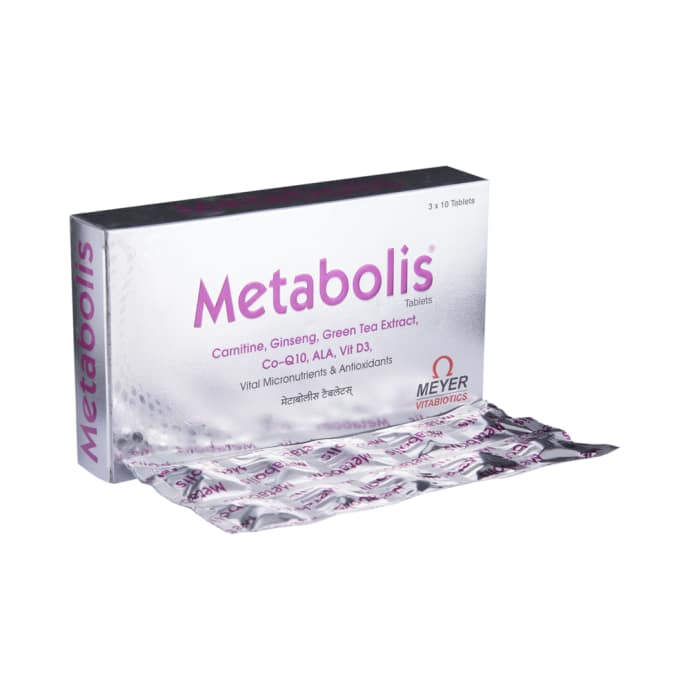
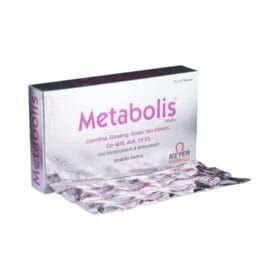
Metabolis
✅ Boosts overall health
✅ Provides essential nutrients
✅ Supports metabolism
✅ Enhances energy levels
✅ Strengthens immune system
Metabolis contains multivitamins and multiminerals.
✓ Medically reviewed by Morgan Ellis — Pharmacy Researcher · 8 years experience · Last reviewed: May 2026
Quick Answer
Metabolis (methylation-support multivitamin tablet) is a methylation-support multivitamin combining methylated B vitamins (methylfolate, methylcobalamin, P-5-P pyridoxal) with key cofactor minerals for patients with elevated homocysteine or MTHFR polymorphisms.
- Methylated B-complex (methylfolate, methylcobalamin, P-5-P), choline, betaine, magnesium, zinc, selenium
- Indications: elevated homocysteine, MTHFR polymorphism, methylation-related conditions
- Daily oral tablet with food
- WHO-GMP certified manufacturer
📦 Every order is covered by our Reshipment Assurance Policy — if your parcel does not arrive within 20 business days, we reship it.
Every order is covered by our Reshipment Assurance Policy.
Why order from MedsBase
Metabolis is sourced from a WHO-GMP certified manufacturer. Every order ships in discreet, unbranded packaging worldwide and is covered by our Reshipment Assurance Policy. Pay securely with credit card, SEPA bank transfer, or cryptocurrency. See our 1,400+ verified customer reviews.
What is Metabolis?
Metabolis is a methylation-support multivitamin built around bioactive forms of folate (5-methyltetrahydrofolate / 5-MTHF), vitamin B12 (methylcobalamin), and vitamin B6 (pyridoxal-5-phosphate, P-5-P), plus methyl-donor cofactors (choline, betaine, methionine) and key minerals (magnesium, zinc, selenium). It is designed for patients with elevated homocysteine, with MTHFR (C677T or A1298C) polymorphisms, or for whom standard B-complex preparations may not provide optimal methylation support.
Indications
- Elevated homocysteine — cardiovascular and dementia risk factor; methylation cofactor support reduces levels
- MTHFR polymorphism (C677T homozygous reduces enzyme activity ~70%; A1298C reduces ~40%) — methylated folate bypasses the MTHFR step
- Adjunct in depression / mood disorders with low folate or B12 status — modest evidence for SSRI augmentation
- Pregnancy planning in MTHFR carriers — methylated folate may be preferred over folic acid
- Recurrent miscarriage with hyperhomocysteinaemia
- Adjunct in chronic fatigue with documented B-vitamin deficiency
- Long-term metformin or PPI users with documented B12 deficiency
How to take
One tablet daily with food. Effects on homocysteine are visible at 4–8 weeks — recheck levels at 12 weeks to assess response.
Folic acid (synthetic) requires reduction by DHFR and methylation by MTHFR to become bioactive 5-MTHF. In patients with MTHFR polymorphisms (~30% of the population is heterozygous; ~10% homozygous), this conversion is inefficient. Methylated folate (5-MTHF in Metabolis) bypasses this step. For most healthy adults, regular folic acid works fine. For patients with confirmed MTHFR polymorphism plus elevated homocysteine, the methylated form is more rationally chosen. Routine MTHFR testing in healthy adults is not recommended — the clinical impact is small and not all guidelines support testing.
Side effects
- Mild GI upset — nausea, dyspepsia; take with food
- Bright yellow urine from riboflavin — harmless
- Initial sensitivity to high-dose methylated B vitamins — some patients report transient anxiety, irritability, headache — ease in with half a tablet for the first week
- Niacin flushing — transient
- Pyridoxine sensory neuropathy — only at sustained extreme doses; standard product doses are well below threshold
Drug interactions
- Methotrexate — folate (any form) may reduce efficacy in oncology dosing; in low-dose RA / psoriasis dosing folate is co-prescribed to reduce side effects
- Antiepileptics (phenytoin, carbamazepine, phenobarbital, valproate) — deplete folate; supplementation appropriate but discuss with neurologist
- Trimethoprim, pyrimethamine — antifolates; high-dose folate may theoretically reduce efficacy
- Levodopa (without decarboxylase inhibitor) — B6 effect (rare)
- Long-term metformin or PPI — reduce B12 absorption; combination with Metabolis appropriate
Contraindications
- Hypersensitivity to any component
- Untreated B12 deficiency (folate alone — even methylated — can mask megaloblastic anaemia and let neurological B12 damage progress; Metabolis contains B12 so this risk is reduced but baseline B12 should still be checked)
- Active malignancy on antifolate chemotherapy without oncology approval
Storage
Store below 25°C in original packaging, protect from moisture and light.
Frequently Asked Questions
What is methylation and why does it matter?
Methylation is the body’s reaction of adding a methyl group (-CH3) to molecules — central to DNA repair, neurotransmitter synthesis, hormone metabolism, and homocysteine clearance. The methyl donor is S-adenosyl-methionine (SAM), regenerated from homocysteine using B12, methylfolate, and B6 as cofactors. Inefficient methylation raises homocysteine and may contribute to cardiovascular and cognitive risk.
Should I get tested for MTHFR?
For most healthy adults — no. The clinical impact of MTHFR polymorphism is modest, and not all guidelines recommend testing. Indications: unexplained recurrent miscarriage, premature thrombosis, hyperhomocysteinaemia, family history. Routine pre-conception MTHFR testing is not recommended.
Will it lower my homocysteine?
Yes — in patients with elevated homocysteine, B12 + methylfolate + B6 supplementation reliably reduces it (often by 25–30%). Whether this reduces cardiovascular events is less clear — large RCTs (HOPE-2, VISP, NORVIT, SEARCH) showed homocysteine lowering but no consistent reduction in MACE. Treatment is most justified when homocysteine is markedly elevated (>15 μmol/l) or where there is also a clear deficiency.
Methylated folate or regular folic acid in pregnancy?
For most women, regular folic acid 400–800 mcg/day from 3 months pre-conception works perfectly to prevent neural tube defects. In MTHFR homozygous carriers, methylated folate (5-MTHF) is more rationally chosen but evidence that it is superior to folic acid for NTD prevention is limited. Discuss with your obstetrician.
Will it help my mood?
Methylated folate at 7.5–15 mg/day has modest evidence as SSRI augmentation in MDD (the L-methylfolate / Deplin protocol). At standard multivitamin doses (in Metabolis) the effect is smaller. Worth supplementing if folate or B12 is deficient; not a replacement for antidepressant therapy.
Can methylation supplements feel “too strong”?
Some patients (often labelled “slow methylators” in functional medicine circles) report transient anxiety, headache, or irritability at high methylated B doses. Start with half a tablet for the first week, then full dose; symptoms usually settle.
Should I take it long-term?
Yes if the indication persists (chronic hyperhomocysteinaemia, MTHFR with documented benefit, ongoing depression with deficiency). Reassess every 6–12 months — recheck homocysteine and B12 levels.
Will it interfere with my antidepressant?
Generally compatible. Methylated folate is studied as SSRI augmentation. Discuss with your prescriber if you start or stop — baseline B12 and folate should be checked.
Is it different from Beplex Forte?
Beplex Forte uses standard cyanocobalamin and folic acid — cheap and effective for most. Metabolis uses methylated forms (methylcobalamin, 5-MTHF, P-5-P) and adds methyl-donor cofactors (choline, betaine). For patients with MTHFR polymorphism or elevated homocysteine, Metabolis is more rationally targeted. For everyone else, Beplex Forte does the job.
Should I avoid folic acid if I take methylated folate?
No need. The body handles both. Stacking is fine but pointless. Pick one. If you take a prenatal multivitamin with folic acid, that is sufficient unless you have a specific MTHFR-related indication for switching.
Other Vitamins & Minerals
- Multivite Gold — comprehensive multivitamin softgel
- Cheri — iron + protein + calcium + vitamins capsule
- Becozinc — B-complex with zinc
- C Vitan Z — vitamin C + zinc + minerals
- Metabolis — methylation-support multivitamin
- Celin — vitamin C 500 mg
Medical Disclaimer
More options in Vitamins and Minerals
Ranked by recent MedsBase order volume — what other customers in this category are picking.

| Quantity | 30 Tablet/s, 60 Tablet/s, 90 Tablet/s, 180 Tablet/s |
|---|
 Metabolis
Q & A
Metabolis
Related products







Reviews
There are no reviews yet