







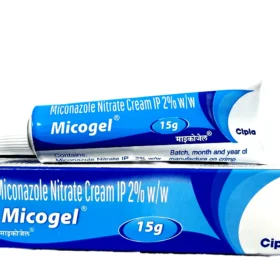
Micogel Cream
✅ Fungal infection treatment
✅ Yeast infection relief
✅ Athlete’s foot remedy
✅ Jock itch cure
✅ Ringworm treatment
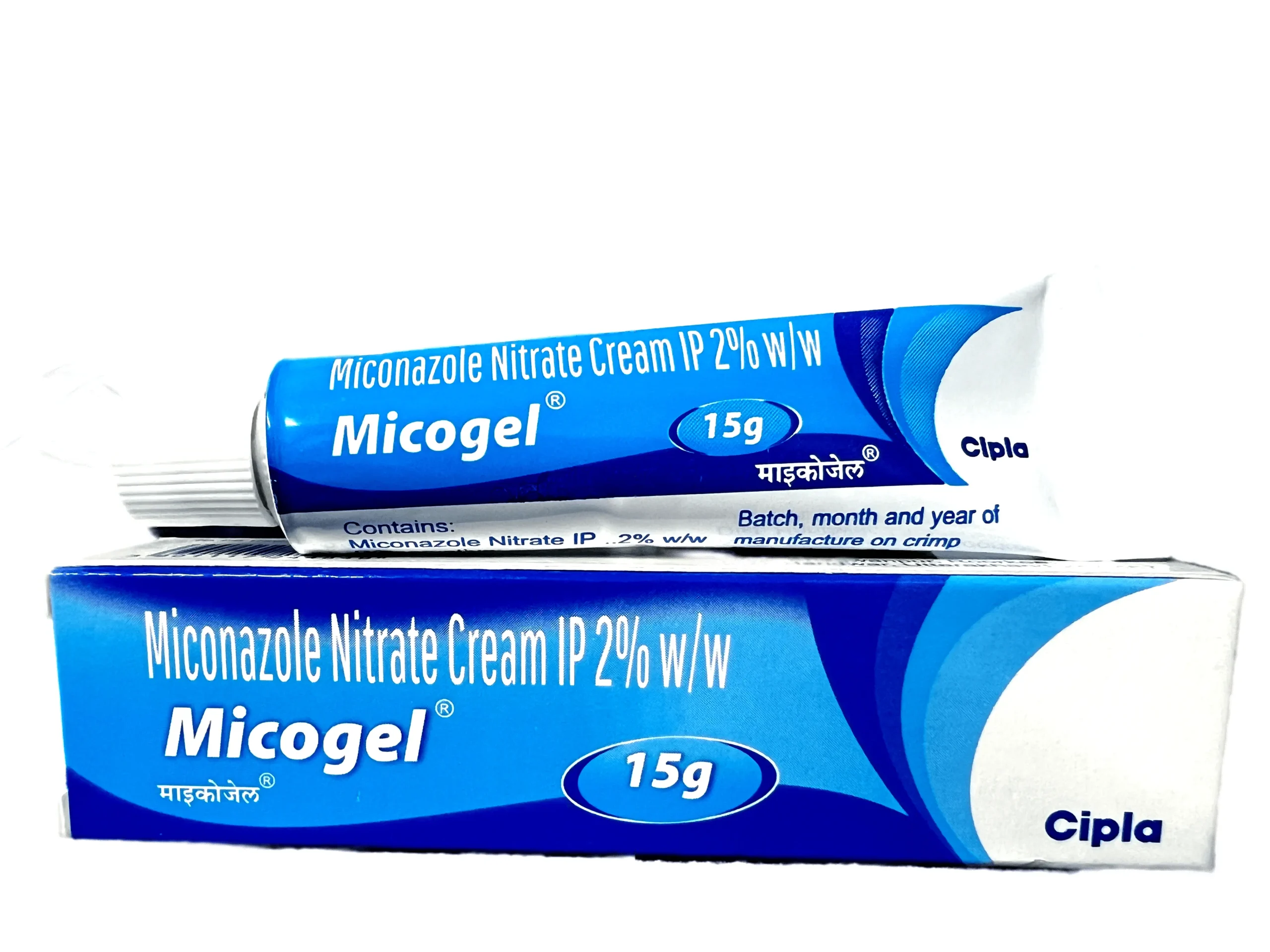
Micogel Cream contains Miconazole Nitrate.
✓ Medically reviewed by Morgan Ellis — Pharmacy Researcher · 8 years experience · Last reviewed: May 2026
⚡ Quick Answer — What is Micogel Cream?
Micogel Cream is a 2% miconazole topical antifungal used to treat athlete’s foot, ringworm, jock itch, and cutaneous candidiasis (including fungal nappy rash). Apply a thin layer to clean, dry skin twice daily. Most infections resolve within 2–4 weeks. Continue treatment for 7–10 days after symptoms clear to prevent recurrence.
WHO-GMP
certified manufacturer
📦 Every order is covered by our Reshipment Assurance Policy — if your parcel does not arrive within 20 business days, we reship it.
Why order from MedsBase
Our generic medications are sourced from WHO-GMP certified manufacturers and shipped worldwide in discreet, plain packaging — no medication name on the parcel exterior. Card payments are routed through a regulated processor (statement descriptors include a regulated card-payment processor — never “MedsBase” or any medication name). Crypto and SEPA bank transfer are also accepted. Every order is backed by our Reshipment Assurance Policy.
Discreet packaging
plain envelope
Worldwide shipping
to most countries
Micogel Cream is a miconazole nitrate 2% topical antifungal used to treat a wide range of superficial fungal and yeast infections of the skin. Each 15 g tube of Micogel delivers the same clinically proven active ingredient found in well-known international brands such as Monistat-Derm, Daktarin, and Desenex. Miconazole has been in clinical use for over 50 years and remains a first-line choice for dermatophyte and Candida infections thanks to its broad antifungal spectrum and excellent skin tolerance.
Applied twice daily to clean, dry skin, Micogel Cream begins relieving itch and irritation within the first few days and typically clears most fungal rashes within 2 to 4 weeks. Because the cream stays on the surface of the skin, systemic absorption is minimal and side effects are rare even with extended use.
What Is Micogel Cream?
Micogel Cream contains miconazole nitrate 2% in a smooth, water-miscible base that spreads easily and absorbs quickly without leaving a greasy residue. Miconazole is a synthetic imidazole antifungal that kills both dermatophyte moulds (which cause ringworm and athlete’s foot) and Candida yeasts (which cause thrush and intertrigo). It also has mild antibacterial activity against certain Gram-positive bacteria, making it useful for mixed fungal-bacterial skin infections.
Micogel Cream is most commonly used for:
- Athlete’s foot (tinea pedis) — itching, redness, scaling, cracking between the toes or on the soles
- Jock itch (tinea cruris) — red, ring-shaped rash with sharp borders in the groin
- Ringworm of the body (tinea corporis) — circular, scaly patches with central clearing
- Cutaneous candidiasis — red, moist rash in skin folds, under the breasts, in armpits or groin
- Nappy rash with secondary Candida infection
- Tinea versicolor — lighter or darker patches on the trunk
- Angular cheilitis (candidal cracking at the corners of the mouth)
How Does Micogel Cream Work?
Miconazole belongs to the azole antifungal family and acts at the fungal cell membrane:
- Fungal cells need ergosterol — an essential component of their outer membrane — to stay alive
- Ergosterol production depends on the enzyme lanosterol 14-α demethylase
- Miconazole binds to this enzyme and blocks ergosterol synthesis
- Without ergosterol, the fungal membrane becomes leaky and unstable
- Intracellular contents leak out, and the fungus either stops growing (fungistatic) or, at higher concentrations, dies (fungicidal)
Human skin cells produce cholesterol rather than ergosterol, so miconazole is highly selective for fungi and does not disrupt healthy skin cells at therapeutic concentrations.
Uses and Indications
- Tinea pedis (athlete’s foot) — between the toes, on the soles, or moccasin-type infection
- Tinea cruris (jock itch) — groin, inner thighs
- Tinea corporis (ringworm) — trunk, arms, legs
- Cutaneous candidiasis and intertrigo — skin folds, under breasts, armpits, beneath overhanging abdomen
- Nappy rash with candidal involvement — bright red rash with satellite lesions
- Tinea versicolor (pityriasis versicolor) — caused by Malassezia yeast
- Angular cheilitis — cracking at the corners of the mouth, when candidal in origin
- Paronychia (skin around nails) with candidal overgrowth
Micogel Cream Dosage and Application
| Condition | How Often | Typical Duration |
|---|---|---|
| Athlete’s foot (tinea pedis) | Twice daily (morning and night) | 2–6 weeks — continue 1 week after rash clears |
| Jock itch (tinea cruris) | Twice daily | 2–4 weeks |
| Ringworm (tinea corporis) | Twice daily | 2–4 weeks |
| Cutaneous candidiasis / intertrigo | Twice daily | 2–3 weeks |
| Tinea versicolor | Once or twice daily | 2–4 weeks |
| Nappy rash with Candida | At every nappy change | 7–14 days, or until resolved |
| Angular cheilitis | 2–3 times daily | 2–3 weeks |
How to Apply Micogel Cream
- Clean the affected area with a mild soap and lukewarm water
- Dry completely — fungi thrive in moisture
- Squeeze a thin layer onto the fingertip — a pea-sized amount covers an area about the size of the palm
- Rub in gently until absorbed
- Extend application about 2 cm beyond the visible rash, because fungi colonise skin that still looks normal
- Wash hands after application (unless the hands themselves are being treated)
- Continue for at least a week after the rash has cleared. Stopping early is the single biggest cause of recurrence
- Avoid tight, occlusive clothing over the treated area whenever possible — aim for breathable cotton fabrics
Side Effects of Micogel Cream
Topical miconazole is generally very well tolerated. Because only a very small amount is absorbed through intact skin, systemic side effects are essentially absent.
| Severity | Side Effect |
|---|---|
| Common (≥1 in 100) | Mild burning, stinging, or tingling at the site of application, transient redness, itching |
| Uncommon | Skin peeling, dryness, allergic contact dermatitis |
| Rare | Severe contact allergy, urticaria, eczematous reaction |
| Very rare | Anaphylaxis, angioedema |
If the area becomes more red, swollen, or starts weeping during treatment, discontinue use and seek medical advice — this can indicate contact allergy rather than the fungal infection worsening.
Warnings and Precautions
- External use only. Avoid contact with the eyes, mouth, nose, and inside the vagina or rectum (dedicated intravaginal or perianal miconazole formulations exist for those indications)
- Do not apply to open wounds or severely broken skin
- If there is no improvement after 2–4 weeks of consistent use, stop and see a clinician — the diagnosis may not be fungal, or a stronger systemic antifungal may be needed
- Avoid occlusive dressings (cling film, tight plastic) over the treated area unless specifically advised
- If you use both Micogel Cream and a topical corticosteroid on the same area, apply them at different times (ideally several hours apart) and confirm with your doctor that combined therapy is appropriate
- Stop and see a doctor if new lesions appear, the rash spreads rapidly, or you develop a fever
Pregnancy, Breastfeeding, and Paediatric Use
- Pregnancy: topical miconazole has extremely low systemic absorption, and its use in pregnancy is generally considered safe. Many obstetricians recommend miconazole as a first-line option for candidal rashes during pregnancy. Always confirm with your healthcare provider
- Breastfeeding: topical miconazole is considered compatible with breastfeeding. If treating nipple thrush, gently wipe off any residual cream before feeding
- Infants and children: miconazole is widely used in paediatrics, including for candidal nappy rash in infants from birth. It is one of the most paediatric-friendly topical antifungals available
Drug Interactions
Topical miconazole has very few clinically relevant drug interactions because systemic absorption is minimal. Key points:
- Warfarin: even small amounts of absorbed miconazole can slightly raise INR in highly sensitive patients. If you take warfarin and use large amounts of Micogel Cream over broken skin, mention this to your prescriber
- Other topical products: do not layer multiple antifungal creams on the same area unless specifically directed
- Topical corticosteroids: short-term combination can reduce inflammation quickly, but steroid use alone on a fungal rash can worsen or mask infection (tinea incognito)
- Alcohol-based aftershaves or astringents over Micogel-treated skin can increase irritation
Preventing Recurrence
Fungal skin infections are prone to recurrence, especially in warm or humid conditions. To reduce the risk of coming back:
- Dry thoroughly between the toes and in skin folds after bathing
- Change socks and underwear daily; favour cotton over synthetic fabrics
- Avoid walking barefoot in communal showers, gyms, and swimming-pool changing rooms
- Do not share towels, shoes, or bedding with someone who has a fungal infection
- Wash fungal-contaminated clothing at 60 °C where possible
- For recurrent athlete’s foot, treat shoes with antifungal powder periodically
- Keep diabetes well controlled — high blood sugar increases candidal skin infections
When to See a Doctor
- No improvement after 2–4 weeks of consistent treatment
- Rash spreads rapidly, becomes painful, or starts oozing pus
- You develop a fever or feel generally unwell
- You suspect involvement of the nails (onychomycosis) or scalp — usually require oral antifungals
- You have a weakened immune system (diabetes, HIV, chemotherapy, organ transplant)
- The rash appears in a child under 2 years of age without obvious cause
Storage Instructions
- Store below 25 °C in a dry place, away from direct sunlight
- Keep the tube tightly closed when not in use
- Keep out of reach of children
- Do not freeze
- Discard any cream that changes colour, odour, or texture
- Do not use after the printed expiry date
Related Antifungal Products on MedsBase
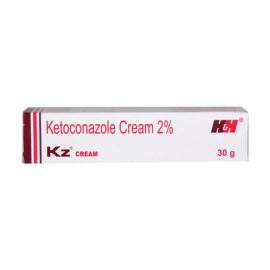
- KZ Cream (Ketoconazole 2%) — alternative azole antifungal with slightly different spectrum
- Nailrox Nail Lacquer — targeted treatment for fungal nail infections
- Ivrea Shampoo — antifungal shampoo for scalp conditions
- All Antifungal Medicines
Frequently Asked Questions
How quickly does Micogel Cream work?
Most people feel itch relief within the first 2–3 days. Visible improvement of the rash usually takes 1–2 weeks, and full clearance typically takes 2–4 weeks. Continue applying for at least one week after the skin looks normal to prevent relapse.
Is Micogel Cream the same as Daktarin?
Both contain miconazole nitrate 2% at the same strength. Micogel is the Indian-manufactured generic; Daktarin is the original Janssen brand. Clinical efficacy is identical.
Can I use Micogel Cream on my face?
Yes — Micogel Cream is safe for facial fungal infections such as ringworm on the cheek or candidal angular cheilitis. Apply a thin layer twice daily and avoid the eye area.
Can Micogel be used on babies?
Yes. Miconazole is one of the most widely used antifungals in infants, particularly for candidal nappy rash. Apply a thin layer at each nappy change.
Can Micogel Cream be used during pregnancy?
Topical miconazole is generally considered safe during pregnancy because systemic absorption is very low. Always confirm with your obstetrician or pharmacist.
What is the difference between Micogel Cream and KZ Cream?
Both are azole antifungals. Micogel contains miconazole — excellent against both dermatophytes and Candida, with a small anti-Gram-positive antibacterial effect. KZ Cream contains ketoconazole — particularly effective against Malassezia (the cause of seborrhoeic dermatitis and tinea versicolor). For general athlete’s foot or ringworm, either is appropriate.
Can I stop using Micogel Cream as soon as the itching stops?
No. Itching often resolves before the fungus is completely gone. Stopping early is the biggest reason for recurrence. Continue applying for at least 7 days after the skin looks normal.
Can I combine Micogel Cream with a steroid cream?
Only if specifically directed by a clinician. A short-term combination can help a very inflamed fungal rash, but prolonged steroid use alone on a fungal area can worsen or mask the infection.
Why is it important to extend the cream 2 cm past the rash?
Fungi colonise a margin of normal-looking skin around the visible rash. Applying past the edge stops the infection from creeping outward and reduces recurrence.
Can I use Micogel Cream inside the vagina or mouth?
No. Dedicated intravaginal pessaries, intravaginal creams, and oromucosal gels exist for those indications (for example, miconazole oral gel for thrush). The 2% topical cream is formulated for skin only.
Related Alternatives
Other products in General Health that customers also view:
More options in Anti Fungal
Ranked by recent MedsBase order volume — what other customers in this category are picking.
| Strength | 2% w/w 15 g |
|---|---|
| Quantity | 1 Tube/s, 2 Tube/s, 3 Tube/s, 6 Tube/s |
 Micogel Cream
Q & A
Micogel Cream
Related products





Reviews
There are no reviews yet