







Natamet Eye Drops
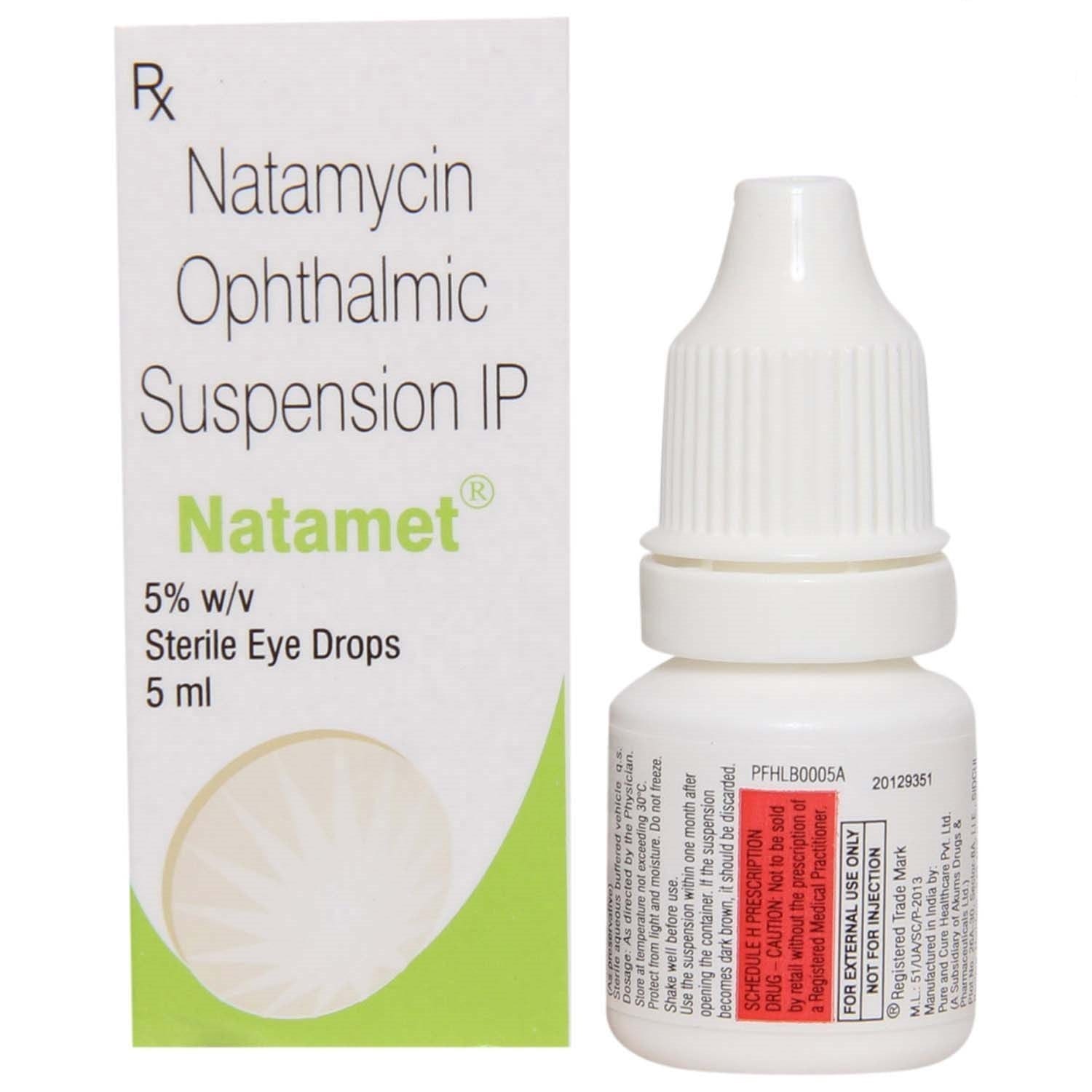
Natamet (natamycin 5%) — polyene antifungal eye drop. First-line for filamentous fungal keratitis (Fusarium, Aspergillus). Specialist therapy; never combine with steroids.
✓ Medically reviewed by Morgan Ellis — Pharmacy Researcher · 8 years experience · Last reviewed: May 2026
⚡ Quick Answer — What is Natamet Eye Drops?
Natamet Eye Drops is Natamycin 5%, an ophthalmic antifungal for fungal keratitis (corneal infection). Natamycin is first-line for filamentous fungi (Fusarium, Aspergillus). Fungal keratitis is a sight-threatening emergency requiring urgent ophthalmology review.
📦 Every order is covered by our Reshipment Assurance Policy — if your parcel does not arrive within 20 business days, we reship it.
Why order from MedsBase
Natamet Eye Drops is sourced from a WHO-GMP certified manufacturer and shipped worldwide in plain, discreet packaging. Every order is covered by our Reshipment Assurance Policy — if it has not arrived after 20 business days we reship at no extra cost. Backed by 1,400+ verified customer reviews.
What is Natamet Eye Drops?
Natamet Eye Drops is manufactured by Sun Pharma and contains Natamycin 5% as a sterile ophthalmic suspension. Natamycin is a polyene antifungal — the only FDA-approved topical antifungal eye drop for fungal keratitis. It is the first-line agent for filamentous fungi (Fusarium, Aspergillus, Curvularia) which are the dominant cause of fungal keratitis in tropical and agricultural settings.
How It Works
Natamycin binds ergosterol in the fungal cell membrane, forming pores that disrupt membrane integrity and lead to fungal cell death. The drug penetrates poorly through intact corneal epithelium, so debridement is often performed before instillation to improve drug delivery to deeper stromal infection.
Indications
- Fungal keratitis caused by Fusarium, Aspergillus, Curvularia (filamentous fungi)
- Fungal blepharitis with corneal involvement
- Empirical first-line when fungal keratitis is suspected pending culture results
Dosing
1 drop in affected eye(s) every 1–2 hours during the first 3–4 days, then 1 drop every 3–4 hours for the next 14–21 days. Total course typically 4–6 weeks. Shake well before each use because the suspension settles. Specialist supervision is required throughout — fungal keratitis often requires additional therapies (debridement, oral voriconazole, intrastromal injections, or therapeutic keratoplasty).
Side Effects
Local: stinging, burning, conjunctival hyperaemia, blurred vision, eye pain, foreign body sensation, white precipitate on the corneal surface (the suspension itself is opaque).
Systemic: minimal from topical use.
Warnings & Contraindications
- Hypersensitivity to polyene antifungals
- Concurrent topical steroids — strongly contraindicated in fungal keratitis (accelerates fungal proliferation)
- Pregnancy / breastfeeding — minimal topical absorption; discuss with prescriber
- Always under specialist supervision; fungal keratitis is not amenable to self-management
Storage
Store at 2–25°C protected from light. Shake well before each use. Discard 28 days after first opening or as labelled.
Frequently Asked Questions
What causes fungal keratitis?
Trauma involving plant or vegetative material is the classic cause (Fusarium, Aspergillus). Other risk factors: contact lens use with poor hygiene, prolonged topical steroid use, immunosuppression, ocular surface disease.
Why is fungal keratitis so dangerous?
Fungi penetrate deep into corneal stroma; antifungal drugs penetrate poorly through intact epithelium; courses are weeks not days; perforation risk is high. Many cases require therapeutic corneal transplant.
When should I suspect fungal keratitis?
Suspect after agricultural injury, vegetative trauma, in poor steroid-treatment response, or in any progressive corneal infiltrate not improving on antibacterial therapy. Feathery edges, satellite lesions, and a hypopyon (pus in the anterior chamber) are classic signs.
Why must I avoid steroids?
Steroids suppress the immune response that helps clear fungal infection, allowing fungi to proliferate unchecked. Adding steroid to fungal keratitis can devastate the cornea within days. Always confirm bacterial origin before any steroid eye drop.
How long is the treatment?
Typically 4–6 weeks. Fungi are slow-growing and antifungal drugs are slow-acting on them. Premature stopping is the leading cause of recurrence.
Why is the medication an opaque suspension?
Natamycin is poorly water-soluble and is formulated as an opaque microsuspension. Shake well before each use to redistribute the drug. The suspension may leave a white precipitate on the eye that resolves with washing.
Can I wear contact lenses during treatment?
No. Contact-lens-associated keratitis is a major fungal-keratitis risk factor. Stop lenses entirely and only resume after specialist clearance.
What is voriconazole and when is it added?
Voriconazole is an oral and topical triazole antifungal added when topical natamycin/fluconazole is inadequate. Specialist initiation only — voriconazole has significant drug interactions and requires therapeutic drug monitoring.
Is Natamet Eye Drops safe in pregnancy?
Topical absorption is minimal. Discuss with your prescriber. Fungal keratitis itself is sight-threatening and treatment is justified when the diagnosis is confirmed.
What if my eye gets worse on Natamet Eye Drops?
Same-day ophthalmology review. Possibilities include resistant species, mixed infection, need for debridement or intrastromal injection, or progression toward therapeutic keratoplasty.
Other Eye-Care Medications
Customers viewing this product also consider these alternatives in our Eye Care range:
- Natamet Eye Drops (natamycin)
- Zonat Eye Drop (natamycin)
- Flucomet Eye Drop (fluconazole)
- Zocon Eye Drop (fluconazole)
- Diflucor Eye Drops
Medical Disclaimer
The information on this page is for educational purposes only and is not a substitute for medical advice from a qualified ophthalmologist or optometrist. Eye conditions can rapidly threaten sight — sudden vision loss, severe pain, or trauma is an ophthalmology emergency. Always consult an eye-care professional before starting, stopping, or changing any treatment.
More options in Fungal Infection Treatment
Ranked by recent MedsBase order volume — what other customers in this category are picking.
| Strength | 5% w/v 5 ml |
|---|---|
| Quantity | 1 Bottle/s, 2 Bottle/s, 3 Bottle/s, 6 Bottle/s |
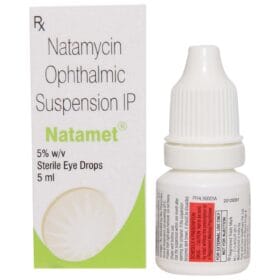 Natamet Eye Drops
Q & A
Natamet Eye Drops
Related products




Reviews
There are no reviews yet