







Nicip
✅ Relieves pain effectively
✅ Reduces inflammation
✅ Eases fever symptoms
✅ Fast-acting relief
✅ Improves mobility
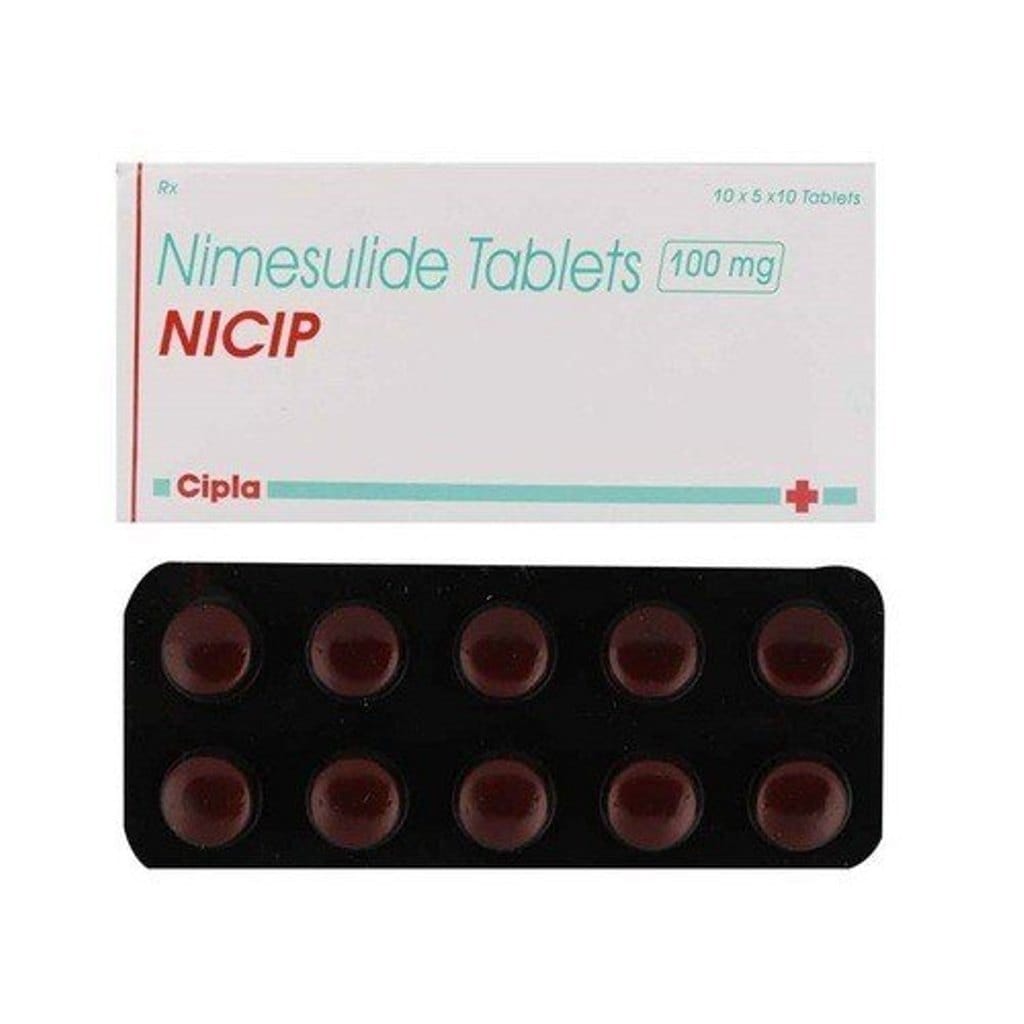
Nicip contains Nimesulide.
✓ Medically reviewed by Morgan Ellis — Pharmacy Researcher · 8 years experience · Last reviewed: May 2026
⚡ Quick Answer — What is Nicip?
Nicip is an oral tablet from Cipla containing nimesulide 100 mg — a preferential COX-2 inhibitor NSAID used for short-term symptomatic treatment of acute musculoskeletal pain, primary dysmenorrhoea, and osteoarthritis flare. Standard adult dose: 100 mg twice daily, taken with food, for the shortest necessary duration and a maximum of 15 days. Important regulatory context: nimesulide has been withdrawn from the market in the United States, United Kingdom, Spain, Finland, Israel, Singapore and never approved in Australia or Canada because of cases of fulminant (sometimes fatal) hepatotoxicity. It remains licensed in several European countries and parts of Asia and Latin America with strict use limits: baseline liver function tests before any course, maximum 15-day course, contraindicated in patients younger than 12 years, in pregnancy (especially third trimester), in significant hepatic impairment, in active alcohol use disorder, and in patients with a history of nimesulide-related hepatotoxicity. As with all NSAIDs, additional risks include GI bleed and ulcer, renal impairment, hypertension, and increased cardiovascular event risk. Paracetamol and ibuprofen are usually safer first-line analgesics; nimesulide should be reserved for short-term use when other NSAIDs have failed or are not tolerated.
📦 Every order is covered by our Reshipment Assurance Policy — if your parcel does not arrive within 20 business days, we reship it.
Why order from MedsBase
Our generic medications are sourced from WHO-GMP certified manufacturers and shipped worldwide in discreet, plain packaging — no medication name on the parcel exterior. Card payments are routed through a regulated processor (statement descriptors include a regulated card-payment processor — never “MedsBase” or any medication name). Crypto and SEPA bank transfer are also accepted. Every order is backed by our Reshipment Assurance Policy.
What Is Nicip?
Nicip is an oral tablet manufactured by Cipla containing nimesulide, a preferential cyclo-oxygenase-2 (COX-2) inhibitor in the sulfonanilide class of non-steroidal anti-inflammatory drugs. Nimesulide was first marketed in the late 1980s; it has analgesic, anti-inflammatory and antipyretic actions broadly similar to other NSAIDs, with relatively rapid onset of pain relief.
Nicip is Cipla's long-stocked branded nimesulide tablet — one of the most familiar names in the regional NSAID space. The 100 mg strength is the standard adult dose, taken twice daily for short-term symptomatic treatment (maximum 15-day course) of acute musculoskeletal pain, painful osteoarthritis flare and primary dysmenorrhoea.
Honest regulatory and safety framing. Nimesulide has had a complicated regulatory history. After clusters of severe and sometimes fatal hepatotoxicity in the early 2000s, several national regulators withdrew the drug from the market: the United States and Australia never approved it; the United Kingdom withdrew it in 1999; Spain in 2002; Finland in 2002; Israel in 2007; and Singapore in 2007. The European Medicines Agency reviewed nimesulide in 2007 and 2011 and confirmed it remained authorised in some European countries with restrictions: maximum 100 mg twice daily, maximum 15-day course, baseline LFTs, contraindicated in children under 12, in significant hepatic impairment, and in pregnancy. India has retained nimesulide on its market with broadly similar (though variably enforced) restrictions. The drug should always be regarded as a second-line analgesic — reserved for patients who have not had adequate response to or cannot tolerate paracetamol, ibuprofen, naproxen or diclofenac.
How Does Nicip Work?
Nimesulide preferentially inhibits the inducible cyclo-oxygenase-2 (COX-2) enzyme over the constitutive COX-1, blocking conversion of arachidonic acid to prostaglandin H2 and downstream prostaglandins (PGE2, PGI2). The result is reduced inflammation, reduced peripheral pain sensitisation, and reduced fever.
Additional mechanisms beyond COX-2 inhibition that may contribute to clinical effect:
- Inhibition of phosphodiesterase IV, raising intracellular cAMP and reducing inflammatory mediator release
- Direct scavenging of hypochlorous acid produced by activated neutrophils
- Inhibition of histamine release from mast cells
Onset of analgesic effect: 30–60 minutes after a single oral dose; peak effect at 2–3 hours. Plasma half-life: 2–5 hours. Twice-daily dosing maintains steady analgesic levels. Metabolised in the liver, principally by CYP2C9.
Uses and Indications
Within current regulatory restrictions, Nicip is licensed for short-term symptomatic treatment of:
- Acute musculoskeletal pain — sprains, strains, soft-tissue injury, low back pain
- Painful osteoarthritis flare — short-term relief while longer-term measures take effect
- Primary dysmenorrhoea — menstrual cramping pain unresponsive to first-line analgesia
- Acute postoperative or post-procedural pain — short courses
- Dental pain — short courses
Nicip is not appropriate for: routine analgesia, long-term pain management (max 15-day course), fever reduction (paracetamol is safer), pain in children under 12 (contraindicated), pain in pregnancy (contraindicated), or chronic inflammatory disease (other DMARDs and longer-acting NSAIDs are preferred).
Nicip Dosage and How to Take
Nicip is supplied at 100 mg. Standard adult dose is 100 mg twice daily, taken with food.
Dosing rules
| Parameter | Recommendation |
|---|---|
| Standard adult dose | 100 mg twice daily |
| Maximum daily dose | 200 mg/day |
| Maximum course duration | 15 days |
| Children under 12 | Contraindicated |
| Adolescents 12–17 | Use with caution; lower doses; specialist input preferred |
| Elderly | Lowest effective dose, shortest course; closer monitoring of renal and hepatic function |
| Mild renal impairment (eGFR 50–80) | Use with caution; avoid in moderate-severe impairment |
| Hepatic impairment | Contraindicated |
How to Take Nicip Properly
- Get baseline liver function tests before starting any course of Nicip, particularly if you have any history of liver problems, regular alcohol use, or are on other potentially hepatotoxic drugs (paracetamol high-dose, isoniazid, methotrexate, statins).
- Take with food — reduces gastric irritation and the risk of GI bleed.
- Swallow tablets whole with a full glass of water.
- Take 100 mg twice daily, no more. Do not exceed the maximum daily dose. Do not double up if a dose is missed.
- Stop at the first sign of liver-related warning — yellowing of the skin or whites of the eyes (jaundice), dark urine, pale stools, persistent right upper quadrant abdominal pain, severe loss of appetite, severe nausea, severe fatigue. Seek immediate medical review and request urgent LFTs.
- Stop after 15 days regardless of pain status. If pain persists, switch to an alternative analgesic or arrange specialist review for the underlying condition.
- Avoid alcohol during the course — alcohol significantly increases hepatotoxicity risk.
- Do not combine with other NSAIDs (ibuprofen, diclofenac, naproxen, mefenamic acid, aspirin) — combination raises GI bleed and renal toxicity risk without additional analgesic benefit.
- Stay well hydrated — dehydration substantially worsens NSAID nephrotoxicity, especially in older patients or those on diuretics or ACEi/ARB.
- Tell every prescriber and pharmacist you take Nicip, even though it is OTC in some markets — the interaction surface is meaningful.
Side Effects of Nicip
Nimesulide carries the standard NSAID side-effect profile plus a specific concern about hepatotoxicity. Side effects are dose- and duration-dependent.
Common (1–10%):
- Heartburn, nausea, dyspepsia
- Abdominal pain
- Diarrhoea or constipation
- Mild ALT/AST rise — usually transient and asymptomatic
- Dizziness, headache
- Skin rash, pruritus
- Mild fluid retention, rise in blood pressure
Uncommon (0.1–1%):
- Gastric or duodenal ulceration
- GI bleeding
- Renal function decline (rise in creatinine)
- Hyperkalaemia
- Worsening of hypertension or heart failure
- Bronchospasm in aspirin/NSAID-sensitive asthmatics
- Significant hepatic transaminase rise (> 3× upper limit of normal)
Rare but potentially fatal — the reason for the regulatory restrictions:
- Acute hepatitis — including fulminant hepatic failure requiring liver transplant or causing death. Estimated incidence in clinical trials: about 1 in 10,000 to 1 in 100,000 prescriptions, but real-world post-marketing surveillance has reported higher rates. Risk factors: pre-existing liver disease, alcohol use, female sex, age > 60, longer courses, combination with other hepatotoxic drugs.
- Severe cutaneous reactions — Stevens-Johnson syndrome, toxic epidermal necrolysis, DRESS
- Severe GI bleed or perforation
- Acute renal failure, especially in dehydrated, elderly, or co-administered ACEi/ARB + diuretic patients
- Severe asthma exacerbation in NSAID-sensitive asthmatics
- Anaphylaxis
- Acute haemolytic anaemia in G6PD deficiency
- Heart failure exacerbation, MI, stroke — small increased risk shared with all non-aspirin NSAIDs, particularly with prolonged use
Warning signs that mean STOP Nicip immediately:
- Yellow tinge to skin or whites of the eyes (jaundice)
- Dark (tea-coloured) urine
- Pale, putty-coloured stools
- Severe right upper quadrant abdominal pain
- Severe nausea or loss of appetite
- Vomiting fresh or coffee-ground material
- Black tarry stools (melaena)
- Severe widespread skin rash, blistering, or peeling
- Severe wheezing or breathlessness
- Marked reduction in urine output
Warnings and Precautions
- Hepatic disease — absolute contraindication for moderate-to-severe disease. Avoid even in mild disease unless no safer alternative exists. Get baseline LFTs before any course.
- Active alcohol use disorder, regular high alcohol intake — significantly raises hepatotoxicity risk; avoid combining.
- Recent or planned use of other hepatotoxic drugs (paracetamol high-dose, isoniazid, methotrexate, statins, anti-epileptics) — cumulative risk; consider alternative analgesic.
- Active or recent peptic ulcer disease, GI bleed history — relative contraindication; if essential, co-prescribe a PPI; consider COX-2-selective alternative (celecoxib) instead.
- Renal impairment — avoid in moderate-severe; use with caution and close monitoring in mild impairment. Stay hydrated.
- Hypertension, heart failure, ischaemic heart disease — avoid prolonged use; choose alternative analgesic where possible.
- Asthma, particularly aspirin-sensitive asthma — avoid; cross-reactivity with other NSAIDs is well documented.
- Pregnancy — contraindicated, especially in the third trimester (premature closure of ductus arteriosus, oligohydramnios, persistent pulmonary hypertension of the newborn). Avoid in first and second trimesters too.
- Breastfeeding — contraindicated; safer NSAID alternatives (ibuprofen) exist.
- Children under 12 years — contraindicated. For paediatric pain or fever, paracetamol or ibuprofen at standard paediatric doses are first-line.
- Elderly — far higher risk of GI bleed, renal toxicity, cardiovascular events, hepatotoxicity. Use lowest dose for shortest course; prefer paracetamol or topical NSAIDs.
- Concurrent anticoagulants or antiplatelets — sharp rise in GI bleed risk; co-prescribe a PPI; consider safer alternative.
- G6PD deficiency — relative contraindication (haemolysis risk).
Contraindications — Who Should NOT Take Nicip
- Known hypersensitivity to nimesulide or any tablet excipient
- Previous adverse hepatic reaction to nimesulide
- Significant hepatic impairment (active hepatitis, cirrhosis, raised baseline transaminases)
- Severe renal impairment (eGFR < 30)
- Severe heart failure
- Active or recent peptic ulcer disease, history of recurrent peptic ulcer or GI bleeding
- History of GI bleeding or perforation related to previous NSAID use
- Bleeding disorders (haemophilia, severe thrombocytopenia, anticoagulation with INR poorly controlled)
- NSAID/aspirin-sensitive asthma, severe rhinitis or angioedema after NSAID
- Pregnancy (especially third trimester)
- Breastfeeding
- Children under 12 years
- Active alcohol use disorder or chronic high alcohol intake
- Concurrent use of other hepatotoxic drugs without specialist supervision
Drug Interactions
| Combine with | Effect | What to do |
|---|---|---|
| Other NSAIDs and aspirin (analgesic dose) | Additive GI bleed and renal toxicity risk; no analgesic gain | Avoid combination. Low-dose cardioprotective aspirin is generally continued, but co-prescribe a PPI. |
| Anticoagulants (warfarin, DOACs) and antiplatelets (clopidogrel) | Major GI bleed risk; warfarin INR may rise | Avoid combination; if essential, co-prescribe a PPI and monitor INR closely. |
| ACE inhibitors, ARBs, diuretics (“triple whammy”) | Acute kidney injury risk — especially in dehydrated or older patients | Stay well hydrated; avoid in patients on the “triple whammy” combination. |
| Lithium | Raises lithium levels — toxicity risk | Check lithium level within 1 week; adjust dose if needed. |
| Methotrexate (high-dose, weekly) | Reduced methotrexate clearance — bone-marrow and hepatic toxicity | Avoid combination. Low-dose weekly methotrexate (≤ 15 mg/week) is usually safe with short NSAID courses but monitor. |
| SSRIs, SNRIs (sertraline, fluoxetine, venlafaxine, duloxetine) | Additive GI bleed risk | Co-prescribe a PPI; avoid prolonged combination. |
| Other hepatotoxic drugs (paracetamol high-dose, isoniazid, methotrexate, statins, anti-epileptics) | Cumulative hepatotoxicity | Avoid combination; choose alternative analgesic. |
| Cyclosporine, tacrolimus | Additive nephrotoxicity | Avoid combination; use paracetamol or topical NSAIDs. |
| Antihypertensives (all classes) | Reduced antihypertensive effect; raised BP | Monitor BP during the course; up-titrate antihypertensive if needed. |
| Sulfonylureas (glimepiride, gliclazide) | Hypoglycaemia risk via protein-binding displacement | Monitor capillary glucose more frequently; reduce sulfonylurea dose if hypoglycaemia develops. |
| Alcohol | Major additional hepatotoxicity risk | Avoid alcohol during the course. |
Storage Instructions
- Store at room temperature, below 25°C, protected from light and moisture.
- Keep tablets in the original blister pack until use.
- Do not store in the bathroom.
- Keep out of reach of children — nimesulide is contraindicated in children under 12 and accidental ingestion can be very harmful.
- Do not use after the expiry date on the pack.
- Return unused tablets to a pharmacy for disposal.
Related Alternatives on MedsBase
Other medications used in anti-inflammatory and autoimmune care stocked alongside this product:
- Barinat (baricitinib 2 / 4 mg) — JAK1/2 inhibitor for RA
- Tofe (tofacitinib 5 mg) — JAK1/3 inhibitor for RA, UC, PsA
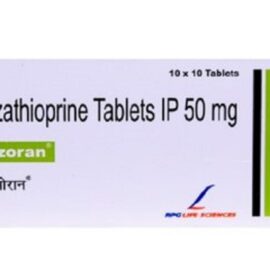
- Azoran (azathioprine 50 mg) — classic immunosuppressant DMARD
- Lefuheal (leflunomide) — oral DMARD for rheumatoid arthritis
- Conimune ME (cyclosporine) — calcineurin inhibitor
- Wysolone (prednisolone 5 / 10 / 20 mg) — oral corticosteroid
- Medrol (methylprednisolone 4 / 8 / 16 mg) — oral corticosteroid
- Predniheal (prednisolone) — oral corticosteroid
- Hisone (hydrocortisone) — physiologic replacement steroid
- Budez CR (budesonide) — gut-targeted corticosteroid for Crohn's
- Kenacort (triamcinolone) — systemic corticosteroid
Explore the full Anti-Inflammatory & Autoimmune Care category.
Frequently Asked Questions
Why is Nicip restricted to a 15-day course?
The maximum 15-day course is a regulatory requirement designed to limit cumulative hepatotoxicity risk. Cases of severe and sometimes fatal liver injury were reported in the early 2000s, particularly with longer courses, in patients with underlying liver disease, in heavy alcohol users, and in those on other hepatotoxic drugs. The 15-day cap, combined with baseline LFT screening and contraindications in liver-impaired patients, brings absolute risk down to a level the European and Indian regulators consider acceptable for short-term symptomatic use. If pain persists beyond 15 days, switch to an alternative analgesic and seek a diagnosis for the underlying condition.
Why is Nicip withdrawn from US/UK markets but still available elsewhere?
National regulators have weighed the same hepatotoxicity data and reached different conclusions, partly because of differences in baseline analgesic alternatives, prescribing patterns, and post-marketing surveillance systems. The US and Australia never approved nimesulide. The UK, Spain, Finland, Israel and Singapore withdrew it after specific case clusters. The European Medicines Agency reviewed it in 2007 and 2011 and decided that with restrictions (max 15-day course, baseline LFTs, multiple contraindications), the benefits in selected patients outweigh the risks. Indian, several European, Asian and Latin American markets have followed broadly similar restricted-use policies. The honest position: nimesulide can be useful for short-term pain when other NSAIDs have failed or are not tolerated, but paracetamol, ibuprofen, naproxen and diclofenac are usually safer first-line choices.
Should I get blood tests before taking Nicip?
Yes — baseline liver function tests (ALT, AST, ALP, bilirubin) are recommended before any course of nimesulide, especially if you have any history of liver problems, regular alcohol use, are on other hepatotoxic drugs, are over 65, or are about to take more than a few days’ supply. If your baseline LFTs are normal and you have no risk factors, a short course (3–5 days) of nimesulide is broadly safe; if any LFT is abnormal, choose an alternative analgesic. During the course, repeat LFTs are not routinely required for short courses but should be checked promptly if any liver-related warning sign develops.
Can I give Nicip to my child?
No — nimesulide is contraindicated in children under 12 years of age. Multiple national regulators have specifically prohibited paediatric use because of cases of severe hepatotoxicity in this age group. For paediatric pain or fever, paracetamol (15 mg/kg every 4–6 hours, max 60 mg/kg/day) and ibuprofen (5–10 mg/kg every 6–8 hours, max 40 mg/kg/day) at standard paediatric doses are the first-line analgesic options.
Can I take Nicip in pregnancy?
No — nimesulide is contraindicated in pregnancy. Third-trimester use carries risks of premature closure of the fetal ductus arteriosus, oligohydramnios, and persistent pulmonary hypertension of the newborn, shared with all non-selective NSAIDs. First and second trimester use is also avoided because of theoretical teratogenicity and renal effects. Paracetamol at standard adult doses is the analgesic of choice in pregnancy.
Can I drink alcohol on Nicip?
No. Alcohol significantly increases the risk of nimesulide hepatotoxicity and adds to the GI bleed risk shared by all NSAIDs. Avoid alcohol during the course and for several days afterward. Patients with active alcohol use disorder or chronic high alcohol intake should not be prescribed nimesulide at all — the absolute hepatotoxicity risk is too high.
What if I miss a dose?
Take it as soon as you remember, unless it is nearly time for the next dose — in which case skip the missed dose and take the next one at the normal time. Do not double up. If you have missed multiple doses, just resume the normal twice-daily schedule.
What are the warning signs of liver problems on Nicip?
Stop Nicip immediately and seek same-day medical review if you develop any of: yellowing of the skin or whites of the eyes (jaundice); dark, tea-coloured urine; pale, putty-coloured stools; severe pain in the upper right side of the abdomen; severe nausea or loss of appetite; severe fatigue; or unexpected bruising or bleeding. Request urgent liver function tests and inform the prescribing doctor that you were on nimesulide.
Are there safer alternatives to Nicip?
For most people, yes. Paracetamol at standard adult doses is the safest first-line analgesic for mild-to-moderate pain. Ibuprofen 200–400 mg three times daily, naproxen 250–500 mg twice daily, or diclofenac 50 mg three times daily provide NSAID-level anti-inflammatory effect with a more established safety profile. Topical NSAIDs (diclofenac gel, ibuprofen gel) carry far lower systemic absorption and are often appropriate for localised musculoskeletal pain. Celecoxib 100–200 mg/day is a COX-2-selective alternative with established safety, particularly when GI bleed risk is the limiting concern. Nimesulide should be reserved for short-term use when these alternatives have failed or are not tolerated.
Why order from MedsBase
Nicip is supplied through a WHO-GMP certified manufacturer with full COA documentation. We ship worldwide in plain, discreet packaging, and every order is covered by our Reshipment Assurance Policy. Your statement descriptor when paying by card shows the regulated payment processor (a regulated card-payment processor), never “MedsBase” or any medication name.
Other Anti-Inflammatory & Autoimmune Medications
If Nicip does not suit your situation, the following options are available in this category:
- Brufen (Ibuprofen 200/400/600 mg) — first-line OTC NSAID
- Voveran SR (Diclofenac SR 75/100 mg) — long-acting prescription NSAID
- Celeheal (Celecoxib 100/200 mg) — COX-2 selective, lower GI risk
- Meftal (Mefenamic acid 250/500 mg) — for menstrual pain and headache
- Wysolone (Prednisolone 5/10/20 mg) — corticosteroid for severe inflammation
More options in Anti Inflammatory & Autoimmune Care
Ranked by recent MedsBase order volume — what other customers in this category are picking.


| Strength | 100 mg |
|---|---|
| Quantity | 30 Tablet/s, 60 Tablet/s, 90 Tablet/s, 180 Tablet/s |
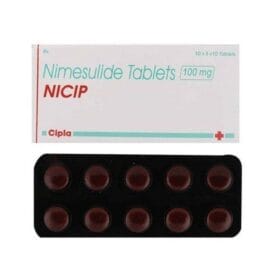 Nicip
Nicip
Q & A
Nicip
Related products



Reviews
There are no reviews yet