








Ocivox
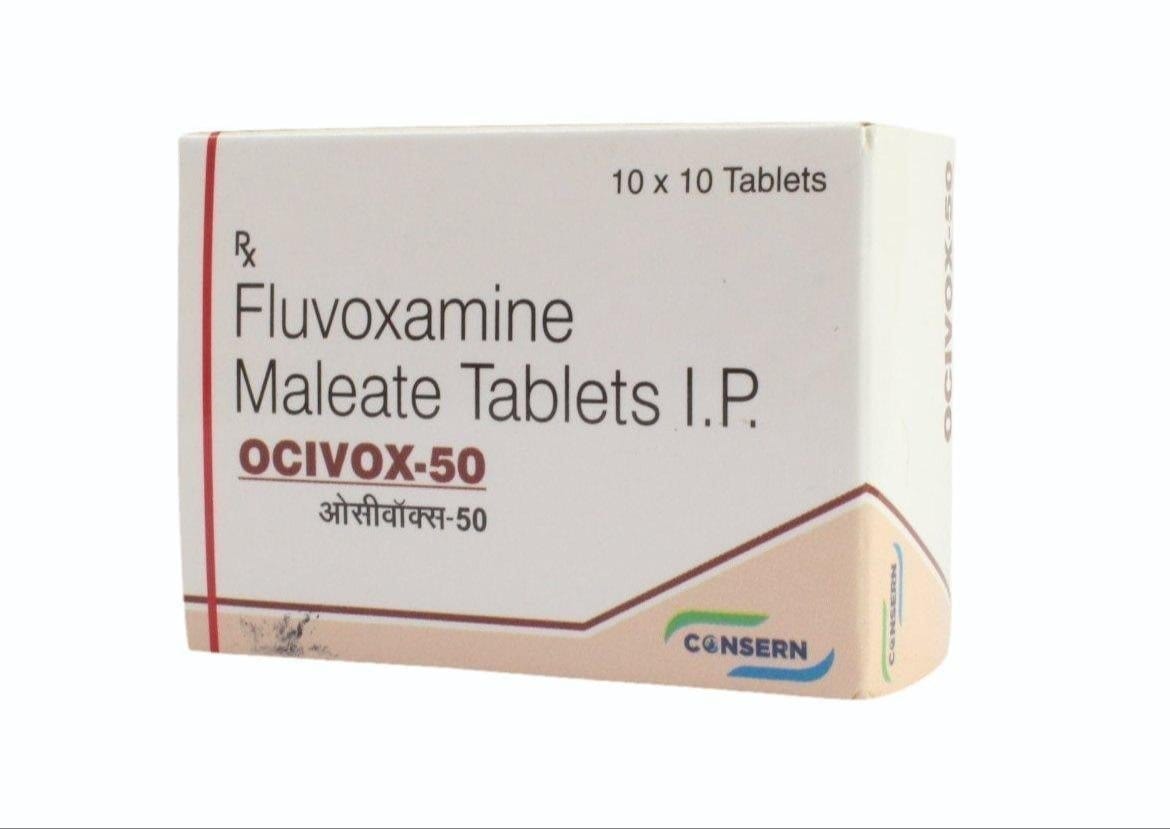
Ocivox (Fluvoxamine 50/100 mg) — OCD-preferred SSRI for OCD in adults and paediatrics from age 8. broadest CYP-inhibition profile of any SSRI.
✓ Medically reviewed by Morgan Ellis — Pharmacy Researcher · 8 years experience · Last reviewed: May 2026
⚡ Quick Answer
Ocivox (Fluvoxamine maleate 50 / 100 mg) is a selective serotonin reuptake inhibitor used for depression, anxiety, and related disorders. Onset of antidepressant effect is gradual — 4–6 weeks for a fair trial.
📦 Every order is covered by our Reshipment Assurance Policy — if your parcel does not arrive within 20 business days, we reship it.
Why order from MedsBase
Ocivox at MedsBase is supplied directly from a WHO-GMP certified manufacturer in plain, discreet packaging. Every order is covered by our Reshipment Assurance Policy — 20-business-day arrival window or we reship at no charge — and qualifies for our customer loyalty programme. Worldwide shipping is available to most destinations.
How Ocivox works
Ocivox is a Fluvoxamine maleate-containing SSRI tablet supplied by Sun Pharma. Available strengths: 50 / 100 mg. Take with or without food, at the same time each day for steady-state plasma levels.
SSRIs block the reuptake of serotonin (5-HT) at the presynaptic serotonin transporter (SERT), increasing synaptic serotonin availability. The therapeutic effect lags transporter blockade by 2–6 weeks — the delay reflects downstream adaptations in 5-HT autoreceptor sensitivity, BDNF expression, and hippocampal neurogenesis, not direct receptor effects. Patients who feel “nothing” at 2 weeks should not stop early; assess response at 4–6 weeks of an adequate dose.
Fluvoxamine is often the preferred SSRI for OCD, particularly in paediatrics (FDA-approved from age 8). It has minimal sexual side effects relative to other SSRIs and tends to be sedating — bedtime dosing helps both insomnia and tolerability. The “fluvoxamine for COVID-19” hypothesis from 2020–22 (sigma-1 anti-inflammatory action) remains unproven and should not influence prescribing decisions.
Indications and dosing
| Indication | Starting | Target | Max |
|---|---|---|---|
| OCD (adult) | 50 mg HS | 100–300 mg/day | 300 mg (split >100) |
| OCD (paediatric ≥8 y) | 25 mg HS | 50–200 mg/day | 200 mg |
| Social anxiety / GAD (off-label) | 50 mg HS | 100–200 mg/day | 300 mg |
| Hepatic impairment / older adults | 25 mg HS | 50–100 mg/day | by tolerability |
Important safety considerations
Fluvoxamine has the broadest and most clinically important CYP-inhibition profile of any SSRI. Significantly raises levels of: theophylline (toxicity at low doses), tizanidine (severe hypotension — absolute contraindication), clozapine (4–10× concentration rise; reduce clozapine dose by half), olanzapine, melatonin, caffeine (insomnia, palpitations), warfarin, propranolol, methadone, ramelteon. Always check for interactions before adding fluvoxamine to an existing regimen.
All SSRIs carry an FDA black-box warning for increased suicidal ideation in patients under 25, particularly in the first 4 weeks and at dose changes. This does not mean SSRIs are net-harmful in young people — meta-analyses show net benefit — but it does mean close clinical monitoring during initiation and titration in adolescents and young adults.
Combining Ocivox with other serotonergic agents can cause serotonin syndrome (tremor, hyperreflexia, clonus, hyperthermia, agitation). Avoid concurrent: MAOIs (14-day washout each direction; fluoxetine needs 5 weeks), tramadol, pethidine, dextromethorphan, linezolid, methylene blue, St John’s wort, MDMA. Triptan + SSRI is generally tolerated for migraine — the absolute risk is low.
Common side effects
- First 1–2 weeks: nausea, headache, jitteriness/anxiety surge, insomnia or somnolence, loose stools — usually self-limit.
- Persistent: sexual dysfunction (decreased libido, delayed orgasm/anorgasmia, erectile difficulty — affects up to 50% of men and women on SSRIs; the most common reason for discontinuation), weight changes (modest gain over 6–12 months), bruxism, dry mouth, sweating.
- Rare but important: hyponatraemia (SIADH, especially in older adults — check Na⁺ at 2 and 4 weeks if at risk), bleeding (additive with NSAIDs/anticoagulants — consider PPI cover), bone-density loss with long-term use.
Drug interactions
Beyond the sub-specific interactions above:
- NSAIDs / aspirin / anticoagulants — additive bleeding risk; use a PPI for older adults on chronic NSAID + SSRI.
- Other QT-prolonging drugs (amiodarone, sotalol, methadone, ondansetron, haloperidol, ziprasidone) — additive risk.
- Lithium — increased serotonin signal; monitor for serotonin syndrome and lithium toxicity.
- CNS depressants (alcohol, benzodiazepines, opioids) — additive sedation.
Pregnancy, breastfeeding, paediatric
Most SSRIs are category C in pregnancy with an acceptable risk-benefit profile when depression itself poses real harm. Paroxetine is the exception — first-trimester exposure linked to small absolute increases in cardiac malformations. Sertraline is generally regarded as the SSRI of choice in pregnancy and lactation. Late-third-trimester SSRI exposure can produce a transient neonatal adaptation syndrome (jitteriness, feeding difficulty) that typically resolves within 1–2 weeks. Discuss any change in pregnancy with the prescriber — abruptly stopping during pregnancy carries its own risk (relapse).
Storage
Store at 15–30 °C in a dry place, away from direct sunlight and out of reach of children.
Frequently Asked Questions
How long until Ocivox works?
Some patients notice early effects on sleep and anxiety within 1–2 weeks, but the full antidepressant or anti-anxiety effect typically takes 4–6 weeks at an adequate dose. Don’t conclude Ocivox isn’t working until you’ve had at least 4 weeks at a therapeutic dose.
Can I drink alcohol on Ocivox?
Alcohol does not chemically interact with SSRIs in a dangerous way at moderate consumption, but it worsens the underlying depression and amplifies SSRI sedation. Many psychiatrists advise minimising alcohol during the first 4–8 weeks while the effect is being established.
Will Ocivox change my personality?
No. Adequately-treated patients describe feeling more like themselves, not less. If you feel emotionally blunted, sexually disconnected, or detached after several weeks, raise this with your prescriber — it can be dose-related or medication-specific and is often manageable.
What if I miss a dose?
Take it as soon as you remember the same day. If it’s nearly time for the next dose, skip the missed one. Never double up. With short-half-life SSRIs (paroxetine, fluvoxamine), a missed dose can produce mild withdrawal — take it as soon as you remember.
Can I stop Ocivox when I feel better?
No — stopping after 4–6 weeks of feeling better is the most common cause of relapse. Most guidelines recommend continuing an effective antidepressant for at least 6–12 months after full remission of the first episode, longer for recurrent depression or anxiety. Always taper rather than stopping abruptly.
Does Ocivox cause weight gain?
Most SSRIs cause modest weight gain over 6–12 months (often 2–4 kg). Fluoxetine is the most weight-neutral or even mildly weight-reducing of the SSRIs in some studies. If weight gain is a major concern, this is worth discussing with the prescriber when choosing or switching.
Can Ocivox be combined with therapy?
Combination of an SSRI plus structured psychotherapy (CBT for depression and anxiety; ERP for OCD) consistently outperforms either alone in moderate-to-severe disease. Medication addresses biological dysregulation; therapy addresses cognitive and behavioural patterns.
How do I taper Ocivox?
For most SSRIs, taper over 4–8 weeks by halving the dose every 2 weeks. Paroxetine and fluvoxamine require slower tapers (often 8–12 weeks) because of their short half-lives. Some patients need hyperbolic tapering (10% reductions every 2–4 weeks) at the bottom end. The prescriber should plan this with you.
Is Ocivox addictive?
SSRIs are not addictive in the substance-use-disorder sense — there’s no euphoric effect, no compulsive use, and no escalating tolerance. They do produce physical dependence: abrupt cessation causes withdrawal (discontinuation syndrome). That dependence is not addiction; it is a predictable pharmacological adaptation that resolves with proper taper.
What if I want to switch antidepressants?
Most SSRI-to-SSRI switches use a direct cross-taper or short washout. Switching to or from an MAOI requires a strict washout (14 days; 5 weeks if coming off fluoxetine because of its long half-life) to avoid serotonin syndrome. Switching is a clinician-supervised decision.
Other Mental Health Medications
- Lexaheal (Escitalopram 5/10/20 mg)
- Flunil (Fluoxetine 20/40 mg)
- Pexep (Paroxetine 12.5–37.5 mg)
- Duvanta (Duloxetine SNRI)
- Mirtaz (Mirtazapine NaSSA)
More options in Mental Health and Psychiatric Medications
Ranked by recent MedsBase order volume — what other customers in this category are picking.
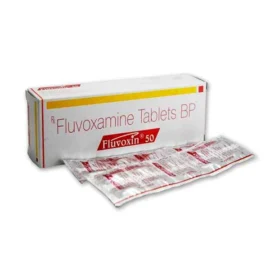
| Strength | 50 mg |
|---|---|
| Quantity | 30 Tablet/s, 60 Tablet/s, 90 Tablet/s, 180 Tablet/s |
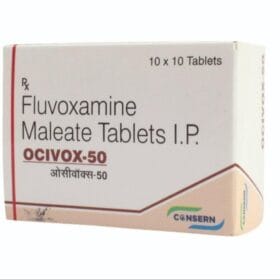 Ocivox
Q & A
Ocivox
Related products






Reviews
There are no reviews yet