








Orlicure
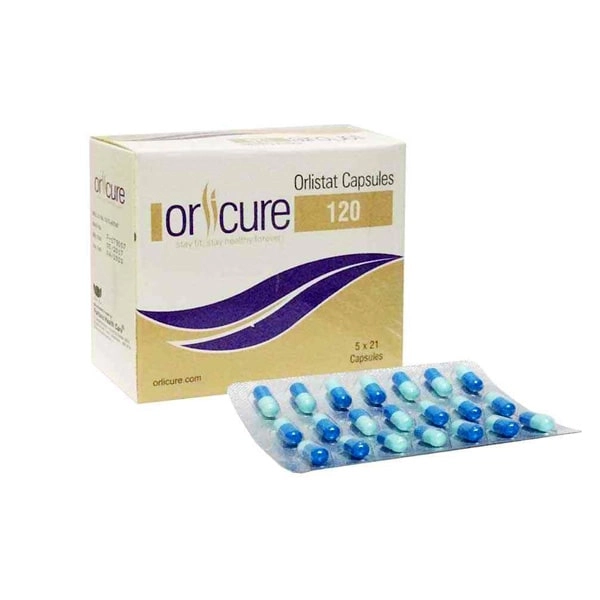
Orlicure (120 mg orlistat by Fortune) — pancreatic-lipase inhibitor for adults with BMI ≥ 30 (or ≥ 27 with comorbidity). Blocks ~30% of dietary fat absorption alongside diet and exercise.
✓ Medically reviewed by Morgan Ellis — Pharmacy Researcher · 8 years experience · Last reviewed: May 2026
Quick Answer
Orlicure contains orlistat, a pancreatic lipase inhibitor that blocks absorption of approximately 30% of the fat in each meal you eat. Available in 120 mg; standard adult dose is 120 mg with each main meal containing fat (max three doses per day). Typical weight loss is 3–5 kg over 12 months when combined with a reduced-calorie diet and regular exercise. Fortune Healthcare generic — the same manufacturer as Vidalista and Fildena. WHO-GMP credentials are well-established. Stocked in 21/42/63-capsule packs (1-week / 2-week / 3-week supplies at 120 mg TID).
📦 Discreet packaging
🌍 Worldwide shipping
👥 Trusted by 1,400+ customers — read reviews
📦 Every order is covered by our Reshipment Assurance Policy — if your parcel does not arrive within 20 business days, we reship it.
Why order from MedsBase
Our generic medications are sourced from WHO-GMP certified manufacturers and shipped worldwide in discreet, plain packaging — no medication name on the parcel exterior. Card payments are routed through a regulated processor (statement descriptors include a regulated card-payment processor — never “MedsBase” or any medication name). Crypto and SEPA bank transfer are also accepted. Every order is backed by our Reshipment Assurance Policy.
Why order from MedsBase
MedsBase sources Orlicure directly from Fortune Healthcare, a WHO-GMP-certified pharmaceutical manufacturer. Each strip ships in its original blister, untouched between dispatch and your door. Crypto, SEPA, and credit-card checkout are all available, and the Reshipment Assurance Policy above means a parcel that fails to arrive within 20 business days is reshipped at no extra cost.
How Orlicure works
Orlistat is a covalent inhibitor of gastric and pancreatic lipase — the enzymes that hydrolyse triglycerides in the gut lumen so dietary fat can be absorbed. By inactivating these lipases, orlistat prevents about 30% of the fat in each meal from being broken down and absorbed; the unabsorbed triglycerides pass through the gut and are excreted. The effect is local to the gastrointestinal tract — less than 1% of the orlistat dose enters the systemic circulation, which is why it has a relatively favourable systemic safety profile compared to centrally-acting weight-loss drugs.
Total energy reduction is therefore proportional to the fat content of the meal: a 600 kcal mainly-fat meal blocked at 30% removes roughly 180 kcal; the same meal eaten as carbohydrate or protein produces no energy reduction. This is why orlistat works best as part of a structured eating plan with regular fat-containing meals (around 15 g of fat per main meal is the textbook design point).
Indications and clinical evidence
Orlistat is licensed for the management of obesity and overweight in adults with:
- BMI ≥ 30 kg/m² (obesity), or
- BMI ≥ 27–28 kg/m² with weight-related comorbidity (type 2 diabetes, hypertension, dyslipidaemia, obstructive sleep apnoea).
The XENDOS trial (Torgerson 2004, Diabetes Care) randomised 3,305 obese non-diabetic adults to orlistat 120 mg TID + lifestyle versus placebo + lifestyle for 4 years. The orlistat arm achieved 5.8 kg vs 3.0 kg weight loss at year 4 and a 37% relative reduction in progression to type 2 diabetes in the IGT subgroup. NICE and most national guidelines recommend discontinuing orlistat at 12 weeks if weight loss is < 5% — non-responders are unlikely to benefit from longer use.
Dosing
| Indication | Orlicure dose | When |
|---|---|---|
| Standard adult (BMI ≥ 30, or ≥ 27 with comorbidity) | 120 mg orally TID | With or up to 1 hour after each main meal containing fat |
| OTC / lower-intensity (alli™ equivalent) | 60 mg orally TID | With or up to 1 hour after each main meal containing fat |
| Missed meal / fat-free meal | Skip the dose | Orlistat has no benefit if there is no dietary fat to inhibit |
| Multivitamin (mandatory) | One daily dose containing A, D, E, K | At bedtime, ≥ 2 hours separated from any orlistat dose |
Doses above 120 mg three times daily provide no additional benefit — the lipase inhibition saturates, and side effects increase. The 60 mg formulation is approved over the counter in many jurisdictions (sold as alli™ in the US/EU); the prescription-strength regimen uses 120 mg.
Side effects
The dominant side-effect profile is gastrointestinal and is a direct mechanical consequence of unabsorbed fat reaching the colon — not a systemic toxicity. Most people experience these symptoms in the first few weeks, particularly after high-fat meals; intensity falls as eating patterns adapt to lower-fat meals.
- Common (≥ 1 in 10): oily spotting, flatulence with discharge, faecal urgency, fatty/oily stools (steatorrhoea), increased bowel frequency.
- Uncommon (1 in 100–1 in 10): rectal pain, abdominal cramps, nausea, soft stool, faecal incontinence, gum and tooth disorders.
- Rare: hypersensitivity (rash, urticaria, angioedema, anaphylaxis), cholelithiasis, idiosyncratic hepatic injury, pancreatitis, oxalate nephropathy.
- Long-term: reduced absorption of fat-soluble vitamins (A, D, E, K) — mandatory bedtime multivitamin separated ≥ 2 hours from doses.
A 2010 FDA postmarket review identified rare cases of severe liver injury (cholestatic hepatitis, hepatic failure) attributed to orlistat. Stop the drug and seek medical review if jaundice, dark urine, anorexia, light-coloured stools, or right-upper-quadrant pain develop.
Drug interactions
| Drug / Class | Effect | Action |
|---|---|---|
| Ciclosporin | ~30% reduction in plasma levels — transplant rejection risk | Avoid. If unavoidable, separate by ≥ 3 hours and monitor levels closely |
| Levothyroxine | Reduced absorption — hypothyroid relapse | Separate doses by ≥ 4 hours; recheck TSH 6–8 weeks after starting orlistat |
| Warfarin | Reduced vitamin K absorption → INR rise | Monitor INR weekly for first month, then every 2–4 weeks |
| Anti-epileptics (valproate, lamotrigine, phenytoin, carbamazepine) | Reduced absorption → breakthrough seizures reported | Avoid combination if possible; monitor levels and seizure control |
| HIV antiretrovirals (NRTIs, NNRTIs, PIs) | Variable absorption changes; viral load rebound reported with efavirenz, tenofovir/emtricitabine, raltegravir | Avoid in HIV unless specialist agrees and viral load is monitored |
| Amiodarone | Reduced absorption | Monitor amiodarone effect; consider alternative weight-loss option |
| Hormonal contraceptives | Severe diarrhoea may compromise efficacy | Use additional barrier method during severe GI upset |
| Acarbose, oral hypoglycaemics | Additional weight-loss/glycaemic effect — monitor for hypoglycaemia | Adjust antidiabetic dose as weight falls |
Contraindications
- Pregnancy and breastfeeding (orlistat reduces fat-soluble vitamin absorption, with theoretical fetal/infant risk).
- Chronic malabsorption syndrome (coeliac disease without gluten control, post-bariatric malabsorptive surgery, chronic pancreatitis with insufficiency, Crohn’s disease with severe active inflammation).
- Cholestasis (any cause).
- Active eating disorder (anorexia nervosa, bulimia, binge-eating disorder — orlistat can be misused).
- Hypersensitivity to orlistat or any excipient.
- Concurrent ciclosporin (relative contraindication — see interactions table).
Storage
Store Orlicure in its original blister at room temperature (below 25°C / 77°F), protected from moisture and direct sunlight. Keep out of reach of children. Do not use after the expiry date printed on the strip. Do not transfer capsules to a pillbox without their original moisture-protective blister.
Frequently Asked Questions
Is Orlicure the same as Xenical or alli™?
The active ingredient is identical — orlistat. Xenical® (Roche) is the originator brand at 120 mg; alli™ (GSK) is the over-the-counter 60 mg presentation in the US, EU, and UK. Orlicure is a WHO-GMP-certified generic of the same molecule made by Fortune Healthcare — bioequivalent at matched strength.
How much weight will I lose on Orlicure?
Pooled clinical-trial data put the average orlistat-attributable weight loss at 2.7–3.2 kg over 12 months beyond what diet and exercise produce alone. Real-world results vary — people who follow a structured low-fat (around 30% energy from fat) reduced-calorie diet and exercise regularly typically lose 5–10% of body weight at 12 months. If you have lost less than 5% by week 12, NICE and the NHS recommend stopping and considering alternatives.
Why are the side effects so dramatic when I cheat on the diet?
By design. Orlistat blocks absorption of around 30% of dietary fat — the unabsorbed fat passes into the colon and produces oily stool, urgency, and flatulence with oily discharge. A high-fat meal (a takeaway pizza, a creamy dessert) overloads the system and produces strong symptoms within 24–48 hours. Many people use this as feedback: the side effects themselves drive lower-fat eating. Stick to about 15 g of fat per main meal (textbook design) and symptoms become mild.
Do I need a multivitamin?
Yes. Orlistat reduces absorption of fat-soluble vitamins A, D, E, and K in proportion to the fat it blocks. Take a daily multivitamin containing all four at bedtime, separated by ≥ 2 hours from any orlistat dose, so the vitamins are absorbed in a fat-load window the orlistat is not active in. This is non-negotiable for long-term use.
Can I take Orlicure with diabetes medications?
Yes — orlistat is one of the few weight-loss drugs with positive type 2 diabetes data (XENDOS, Diabetes Prevention Program orlistat substudy). However, as you lose weight your insulin sensitivity will improve, so metformin, sulfonylureas, SGLT-2 inhibitors, GLP-1 RAs, and insulin doses may all need to be reduced. Check fasting glucose at home weekly for the first month and discuss any pre-existing hypoglycaemia with your prescriber.
Is Orlicure safe long-term?
Orlistat has the longest safety record of any modern weight-loss drug — the XENDOS trial followed patients for 4 years on continuous therapy. Long-term issues are dominated by GI symptoms (which usually moderate over time as eating patterns adapt) and the fat-soluble vitamin deficiency risk (managed with bedtime multivitamin). Rare but serious risks include cholelithiasis, oxalate nephropathy, and idiosyncratic hepatotoxicity — report severe upper abdominal pain, dark urine, jaundice, or anuria immediately.
Can I take Orlicure during pregnancy or while breastfeeding?
No. Orlistat is contraindicated in pregnancy and breastfeeding because reduced absorption of fat-soluble vitamins (especially vitamin K and D) carries a theoretical risk to the developing fetus and infant. Stop Orlicure as soon as pregnancy is suspected.
How does Orlicure compare with GLP-1 injections (Ozempic, Wegovy, Mounjaro)?
GLP-1 receptor agonists (semaglutide, liraglutide) and the dual GIP/GLP-1 agonist tirzepatide produce 2–4× the weight loss of orlistat at full dose — STEP-1 (semaglutide 2.4 mg) achieved 14.9% mean weight loss at week 68; SURMOUNT-1 (tirzepatide 15 mg) reached 22.5%. Trade-offs: GLP-1 RAs are weekly subcutaneous injections, more expensive, and produce more central side effects (nausea, vomiting, slowed gastric emptying) plus rare risks (medullary thyroid carcinoma family-history exclusion, pancreatitis). Orlistat is oral, predictable, and works locally in the gut. See our Best Ozempic Alternatives 2026 guide for the full landscape.
Will I regain the weight when I stop?
Some — orlistat is a pharmacological aid, not a cure. The XENDOS open-label extension showed about 50% of lost weight regained at 1 year after orlistat discontinuation if lifestyle changes were not maintained. People who continued reduced-fat eating and regular activity retained more of the loss. Plan an explicit maintenance phase before stopping.
Can I take Orlicure if I’m vegetarian or vegan?
Yes — the orlistat capsule itself is gelatin-based in most generic brands (animal-derived). If you require a strictly plant-based capsule shell, check the specific Orlicure label for HPMC (vegetable-cellulose) capsules, or contact us before ordering and we’ll confirm with the manufacturer.
Other Weight Loss Medications
Medical disclaimer. The information on this page is provided for educational use and should not replace individualised medical advice. Pharmacological weight loss is most effective when combined with structured dietary change and physical activity, and is not appropriate for everyone — pregnancy, breastfeeding, eating disorders, chronic malabsorption, severe psychiatric illness, and uncontrolled cardiovascular disease change the appropriateness of any weight-loss drug. If your BMI is ≥ 40 (or ≥ 35 with significant weight-related comorbidity), discuss bariatric surgery with your GP.
More options in Weight Loss Medication
Ranked by recent MedsBase order volume — what other customers in this category are picking.

| Strength | 120 mg |
|---|---|
| Quantity | 21 Capsule/s, 42 Capsule/s, 63 Capsule/s |
| Pharma Form | Capsule/s |
| Manufacturer | Fortune Healthcare |
| Treatment | Obesity |
| Generic Brand | Orlistat |
 Orlicure
Q & A
Orlicure
Related products



Reviews
There are no reviews yet