







Tacroz Forte Ointment
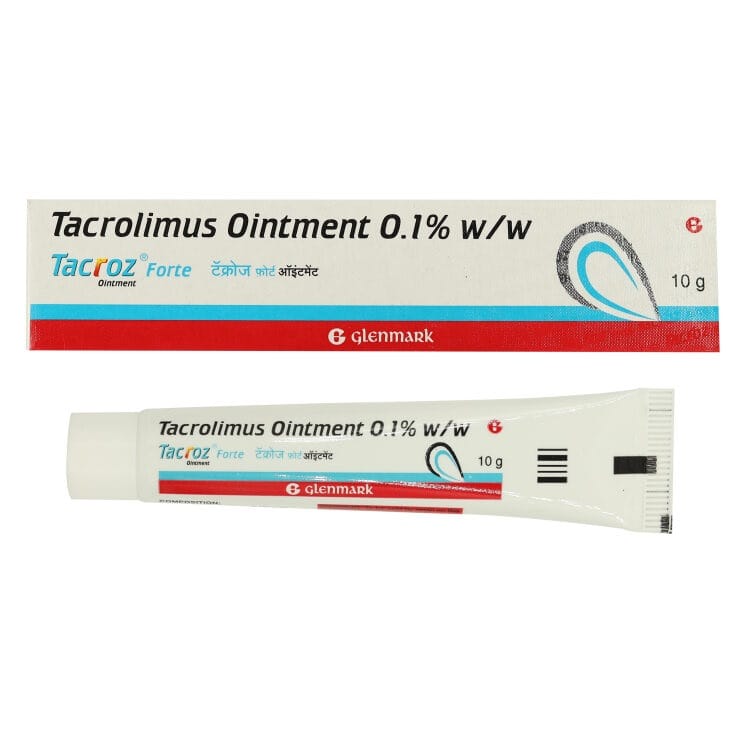
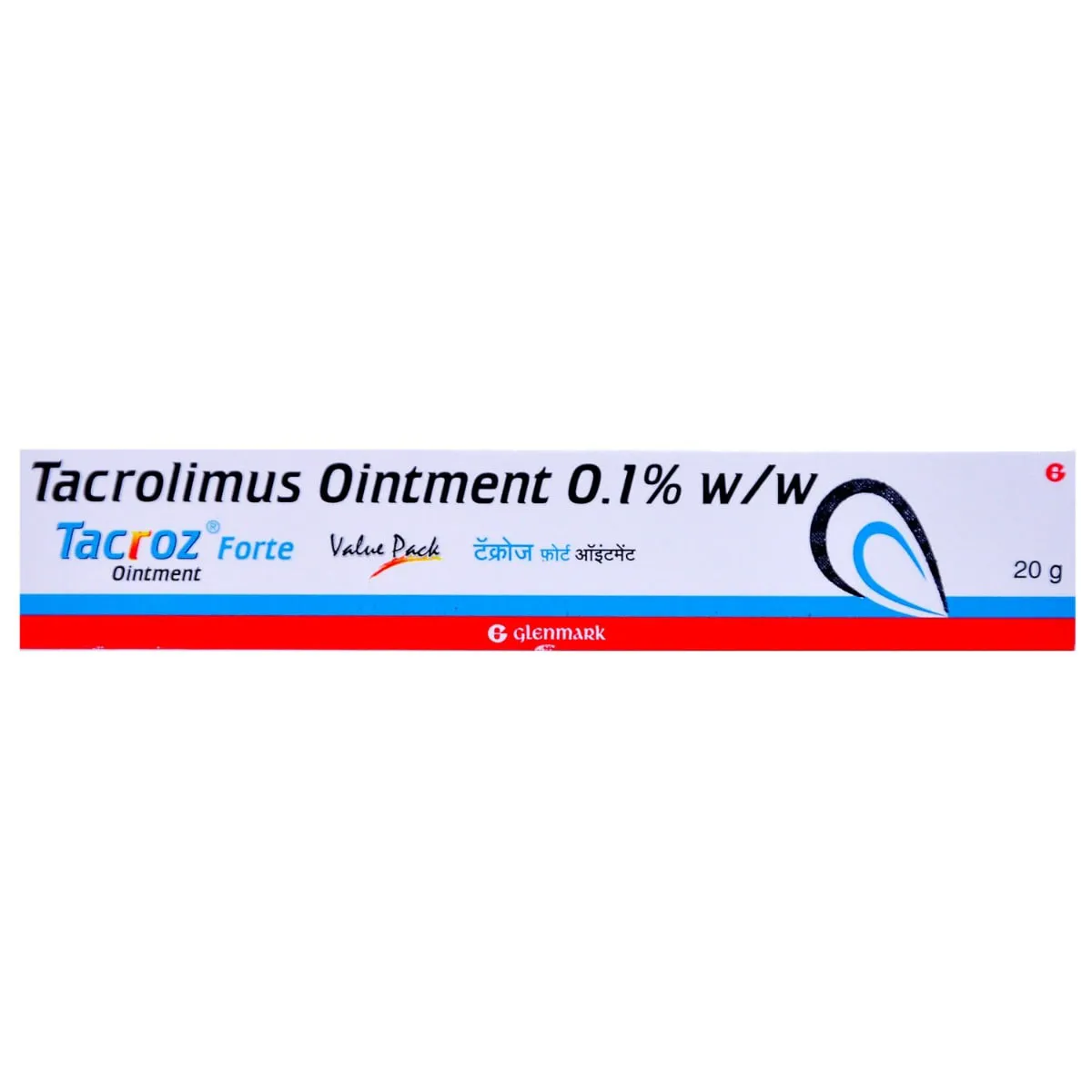
✅ Relieves skin inflammation
✅ Alleviates itching sensation
✅ Supports skin healing
✅ Manages eczema symptoms
✅ Restores skin health
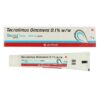
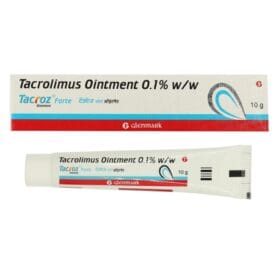
Tacroz Forte Ointment contains Tacrolimus.
✓ Medically reviewed by Morgan Ellis — Pharmacy Researcher · 8 years experience · Last reviewed: May 2026
⚡ Quick Answer — What is Tacroz Forte Ointment?
Tacroz Forte Ointment contains tacrolimus — a topical calcineurin inhibitor (TCI) used as a steroid-sparing alternative for moderate-to-severe atopic dermatitis (eczema), and off-label for vitiligo, oral lichen planus, and other steroid-responsive inflammatory skin conditions. Available as ointment in 0.1% (adult). Manufactured by Glenmark. Tacrolimus blocks T-cell activation by inhibiting calcineurin — producing similar anti-inflammatory effect to topical corticosteroids WITHOUT the side effects of steroid use (no skin atrophy, no telangiectasia, no HPA-axis suppression, no rebound on discontinuation). This makes it the preferred treatment for thin-skin areas (face, eyelids, neck, genital, intertriginous) and for long-term maintenance therapy where chronic steroid use is problematic. Apply a thin layer twice daily to affected skin until clear (typically 6 weeks), then continue twice-weekly maintenance to prevent flares. Common side effects: transient burning, stinging, or itching at application site (lasts 1-2 weeks then settles). Avoid alcohol around dosing time (facial flushing reaction). Avoid sun exposure and tanning beds (theoretical photocarcinogenicity concern from FDA box warning).
📦 Every order is covered by our Reshipment Assurance Policy — if your parcel does not arrive within 20 business days, we reship it.
Why order from MedsBase
Our generic medications are sourced from WHO-GMP certified manufacturers and shipped worldwide in discreet, plain packaging — no medication name on the parcel exterior. Card payments are routed through a regulated processor (statement descriptors include a regulated card-payment processor — never “MedsBase” or any medication name). Crypto and SEPA bank transfer are also accepted. Every order is backed by our Reshipment Assurance Policy.
What Is Tacroz Forte Ointment?
Tacroz Forte Ointment is a topical tacrolimus ointment from Glenmark, supplied at 0.1% w/w in 10 g and 20 g tubes. Tacrolimus is one of two topical calcineurin inhibitors (TCIs) in clinical use globally — the other is pimecrolimus (Elidel cream 1%). Both are non-steroidal topical immunomodulators developed in the late 1990s as alternatives to topical corticosteroids for chronic inflammatory skin conditions.
Internationally branded as Protopic (Astellas, US/EU), Prograf-T, and Talymus. Tacroz Forte Ointment is the Glenmark generic equivalent.
How Does Tacrolimus Work?
Tacrolimus is a macrolide immunosuppressant originally isolated from Streptomyces tsukubaensis in the 1980s. Its mechanism:
- Tacrolimus binds to an intracellular protein FKBP-12 (FK506-binding protein), forming a complex that inhibits the enzyme calcineurin.
- Inhibited calcineurin cannot dephosphorylate the transcription factor NFAT (nuclear factor of activated T-cells), blocking T-cell activation and the downstream production of pro-inflammatory cytokines (IL-2, IL-4, IL-5, TNF-α, IFN-γ).
- The result is local immunosuppression without the broad anti-inflammatory effect of topical steroids — and crucially, without steroid side effects (atrophy, striae, telangiectasia, perioral dermatitis, steroid rebound, HPA-axis suppression).
Topical tacrolimus has minimal systemic absorption when applied to intact skin (typical blood levels <0.5 ng/mL even with extensive use) — orders of magnitude below the therapeutic systemic level used for organ-transplant rejection prevention.
Onset of effect on inflammation is typically 3-7 days; peak benefit at 4-6 weeks. Maintenance with twice-weekly application can prevent flares indefinitely.
Uses and Indications
Licensed indications:
- Moderate-to-severe atopic dermatitis (eczema) in adults (0.1% w/w 0.1%) and children aged 2+ (0.03%) — for paediatric use, the 0.03% strength is preferred
- Atopic dermatitis on the face, eyelids, neck, and skin folds — preferred over potent steroids in these thin-skin areas where steroid atrophy is a real risk
- Maintenance therapy — twice-weekly application to previously affected sites prevents flares better than emollient alone (PETITE, EFTA studies)
Off-label uses (well-supported by evidence):
- Vitiligo — particularly facial and intertriginous vitiligo; commonly combined with phototherapy
- Oral lichen planus, vulvar lichen sclerosus (when potent steroids fail or atrophy is a concern)
- Seborrhoeic dermatitis (face, scalp ointment-form)
- Perioral dermatitis — useful when steroids have caused or worsened the condition
- Rosacea (selected cases)
- Discoid lupus erythematosus
- Cutaneous graft-vs-host disease, lichen simplex chronicus, allergic contact dermatitis
Tacroz Forte Ointment Dosage and How to Apply
Tacroz Forte Ointment comes in 10 g and 20 g tubes at 0.1% w/w.
Adults and children aged 16 and over: Tacroz Forte Ointment 0.1% — apply a thin layer twice daily. For paediatric use (ages 2-15), the 0.03% strength is preferred (sister product Tacroz 0.03% on this site).
How to Apply Tacroz Forte Ointment Properly
- Wash and dry the affected area first. The skin should be completely dry before application.
- Wash hands before and after applying.
- Apply a thin layer to the affected skin and rub in gently. A pea-sized amount per body region is usually enough.
- Do NOT cover with airtight bandages or dressings (occlusion increases systemic absorption).
- Apply twice daily until the skin is clear — typically 6 weeks for an acute flare. If no improvement after 2 weeks at the correct dose, see your doctor.
- Maintenance phase: once the skin is clear, transition to twice-weekly application (e.g. Mondays and Thursdays) to previously-affected sites to prevent flare recurrence. Maintenance therapy can be continued indefinitely.
- Wait 2 hours after application before swimming or showering.
- Sun protection: apply daily broad-spectrum SPF 30+ to all exposed skin while using tacrolimus, and minimise UV exposure (avoid tanning beds entirely). This addresses the FDA box-warning concern about theoretical photocarcinogenicity.
- Do not apply to: infected skin (HSV, varicella, HPV, fungal infections, impetigo, viral warts), open wounds, mucosal surfaces (mouth, eyes, vagina, urethra unless specifically directed by a dermatologist).
Side Effects
Common (often settles within 1-2 weeks):
- Application-site burning, stinging, itching, or warmth — affects 30-60% of users in the first week. Usually resolves as the skin barrier heals. Pre-cooling the ointment in the fridge for 10 minutes before use helps.
- Application-site flushing or redness — usually mild
- Folliculitis (pimples) — mild, often resolves with continued use
- Alcohol-related facial flushing — characteristic of TCIs; some patients flush dramatically when drinking alcohol within hours of application. Mitigate by applying at night.
- Increased sun sensitivity
Less common but important:
- Eczema herpeticum (HSV reactivation in eczematous skin) — rare but can be serious; tacrolimus does not cause it but can worsen it. Stop and seek medical care if vesicles, severe pain, or systemic symptoms develop.
- Reactivation of viral warts, molluscum contagiosum
- Increased susceptibility to bacterial or fungal skin infections
- Rare cases of localised lymphadenopathy
FDA box warning (2006): rare reports of malignancy (lymphoma, skin cancer) in patients using topical TCIs — based on theoretical concern from systemic tacrolimus use in transplant medicine and some animal studies. Long-term observational data over 20+ years has NOT confirmed an increased risk in clinical practice with topical use, but the warning remains. Practical implications: use the lowest effective dose for the shortest period needed; continuous long-term use should be balanced against benefit.
Contraindications and Warnings
- Hypersensitivity to tacrolimus or any excipient
- Children under 2 years (not licensed)
- Active untreated bacterial, fungal, or viral skin infection at the application site (treat the infection first)
- Pregnancy and breastfeeding — limited safety data, generally avoided unless benefit outweighs risk
- Netherton syndrome, ichthyosis, or other conditions with significantly compromised skin barrier — risk of significantly higher systemic absorption
- Erythroderma (generalised exfoliative dermatitis affecting >90% of body surface) — same risk
- Patients receiving systemic immunosuppression — additive risk; use only with specialist supervision
- Patients with congenital or acquired immunodeficiency — same
Drug Interactions
Topical tacrolimus has minimal systemic absorption and few clinically significant drug interactions. Notable considerations:
- Alcohol — characteristic facial flushing reaction (similar to disulfiram-like) within hours of dosing. Apply at night to minimise.
- Other topical immunosuppressants (pimecrolimus) — do not combine
- Topical corticosteroids — can be combined under dermatologist guidance; common in step-down protocols (steroid first, then taper to tacrolimus maintenance)
- Live vaccines — defer live vaccines (MMR, varicella, BCG, oral polio, yellow fever) until tacrolimus has been stopped for several weeks — theoretical concern. Inactivated vaccines (flu shot, pneumococcal, COVID-19) are fine.
- UV light, phototherapy, tanning beds — avoid during treatment (theoretical photocarcinogenicity)
- The systemic CYP3A4-substrate interaction profile of oral tacrolimus does NOT meaningfully apply at topical doses
How Tacroz Forte Ointment Compares to Topical Steroids
| Feature | Tacrolimus (Tacroz Forte Ointment) | Topical corticosteroids |
|---|---|---|
| Mechanism | Calcineurin inhibition (T-cell selective) | Glucocorticoid receptor (broad anti-inflammatory) |
| Skin atrophy / thinning | None | Yes (especially with potent/very-potent classes) |
| Telangiectasia / striae | No | Yes |
| HPA-axis suppression risk | No (negligible systemic absorption) | Yes (high-potency, large area, occluded) |
| Suitable for face / eyelids / folds | Yes (preferred) | Mild only; potent steroids contraindicated |
| Suitable for long-term maintenance | Yes | Limited (atrophy with prolonged continuous use) |
| Steroid rebound on stopping | No | Yes (with potent steroids stopped abruptly) |
| Burning / stinging on application | Common (first 1-2 weeks) | Uncommon |
| Speed of acute flare control | 3-7 days | 24-48 hours (faster) |
| Cost | More expensive | Cheaper (especially generic mild-moderate) |
Other relevant pages: Tenovate (clobetasol propionate 0.05%) — the most potent topical steroid for severe flares; Melacare cream for hyperpigmentation.
Storage and Shelf Life
Store Tacroz Forte Ointment below 25°C in the original tube. Do not freeze. Replace the cap tightly after each use. Keep out of reach of children. Use within 12 months of first opening, or before the printed expiry date, whichever is sooner.
Frequently Asked Questions
Is tacrolimus a steroid?
No — tacrolimus is a calcineurin inhibitor, a completely different drug class from corticosteroids. It produces similar anti-inflammatory effects without any of the steroid side effects (atrophy, telangiectasia, HPA-axis suppression, rebound). This is why it is preferred for thin-skin areas (face, eyelids, folds) and for long-term maintenance therapy.
Why does Tacroz Forte Ointment burn or sting when I apply it?
Application-site burning is the most common side effect of all topical calcineurin inhibitors — it affects 30-60% of patients in the first week and usually settles by week 2-3 as the skin barrier heals. Pre-cooling the ointment in the fridge for 10 minutes before application reduces the sensation. If burning is severe or persistent beyond 3-4 weeks, talk to your doctor — reducing the strength or alternating with an emollient may help.
Can I use Tacroz Forte Ointment on my face and eyelids?
Yes — this is one of the main advantages of tacrolimus over topical steroids. The face, eyelids, neck, and other thin-skin areas are particularly vulnerable to steroid-induced atrophy, telangiectasia, perioral dermatitis, and steroid-rosacea. Tacrolimus produces equivalent anti-inflammatory effect without any of these risks, making it the preferred treatment for facial and eyelid eczema.
Can I use Tacroz Forte Ointment long-term?
Yes — one of the principal advantages of TCIs is suitability for long-term and maintenance therapy. The recommended approach is: use twice daily during a flare for 6 weeks until clear, then transition to twice-weekly maintenance application to previously affected sites (proactive maintenance therapy). This approach is supported by major eczema guidelines and reduces flare frequency by 50-60% compared to reactive treatment alone.
What is the FDA black-box warning about?
In 2006 the FDA added a boxed warning about a theoretical risk of cancer (lymphoma, skin cancer) with topical calcineurin inhibitors. This was based on theoretical extrapolation from systemic tacrolimus use in organ-transplant patients (where high oral doses ARE associated with increased malignancy risk) plus some animal studies. Twenty years of post-marketing observational data with topical use has NOT confirmed an increased malignancy risk in humans. The 2006 warning remains in place but is widely considered overcautious by dermatology professional bodies. Practical implications: minimise UV exposure during treatment, use the lowest effective dose for the shortest period needed.
Why must I avoid alcohol around dosing time?
Topical tacrolimus characteristically causes a facial flushing reaction when alcohol is consumed within a few hours of dosing — a disulfiram-like response, mediated by aldehyde dehydrogenase inhibition in the skin. The reaction is harmless (similar to a niacin flush) but uncomfortable. Easiest fix: apply at night and avoid alcohol within 2-3 hours after.
Can I use Tacroz Forte Ointment during pregnancy or breastfeeding?
Topical tacrolimus has minimal systemic absorption but limited human pregnancy safety data. Generally avoided in the first trimester unless the benefit clearly outweighs risk. For breastfeeding mothers, do not apply to the nipple/areola region; otherwise topical tacrolimus is generally compatible with nursing. Discuss with your doctor before starting.
Can my child use Tacroz Forte Ointment?
This is the 0.1% adult strength. For children aged 2-15, the 0.03% paediatric strength is preferred (sister product Tacroz Ointment 0.03% on this site). Children under 2 are not licensed for tacrolimus — mild topical steroids or emollient-only management are preferred at that age.
Can I combine Tacroz Forte Ointment with my topical steroid?
Yes — commonly done in clinical practice. The standard approach is to use a moderate-potency topical steroid (e.g. mometasone, betamethasone valerate) for the acute flare for 1-2 weeks, then transition to tacrolimus for the rest of the flare and ongoing maintenance. This combines the fast acute control of steroids with the long-term safety of tacrolimus. Apply at different times of day if combining concurrently.
Where can I order Tacroz Forte Ointment online?
You can order Tacroz Forte Ointment from MedsBase in standard pack sizes (10 g and 20 g tubes). Orders ship worldwide with discreet packaging. Tacrolimus is restricted to specialist supervision in most countries.
Related Alternatives
Other products in Chronic Conditions that customers also view:
More options in Eczema & Psoriasis Treatment
Ranked by recent MedsBase order volume — what other customers in this category are picking.

| Strength | 0.1% w/w 10g, 0.1% w/w 20g |
|---|---|
| Quantity | 1 Tube/s, 2 Tube/s, 3 Tube/s, 6 Tube/s |
 Tacroz Forte Ointment
Q & A
Tacroz Forte Ointment
Related products


Reviews
There are no reviews yet