









Thioril
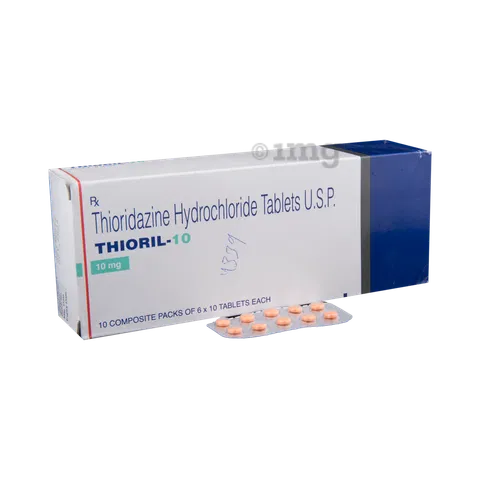
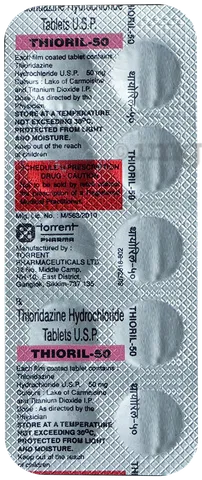

Thioril (Thioridazine 10/25/100 mg) — piperidine phenothiazine for treatment-refractory schizophrenia. last-resort second-line — FDA black-box for fatal QT prolongation.
✓ Medically reviewed by Morgan Ellis — Pharmacy Researcher · 8 years experience · Last reviewed: May 2026
⚡ Quick Answer
Thioril (Thioridazine 10 / 25 / 100 mg) is a first-generation phenothiazine antipsychotic. Reserved as last-resort second-line because of the FDA black-box QT warning.
📦 Every order is covered by our Reshipment Assurance Policy — if your parcel does not arrive within 20 business days, we reship it.
Why order from MedsBase
Thioril at MedsBase is supplied directly from a WHO-GMP certified manufacturer in plain, discreet packaging. Every order is covered by our Reshipment Assurance Policy — 20-business-day arrival window or we reship at no charge — and qualifies for our customer loyalty programme. Worldwide shipping is available to most destinations.
What Thioril is and how it works
Thioril is a Thioridazine tablet supplied by Sun Pharma. Available strengths: 10 / 25 / 100 mg.
Thioridazine is a piperidine phenothiazine. It carries an FDA black-box warning for fatal QT prolongation and torsades de pointes and is now reserved as a last-resort second-line antipsychotic — it was withdrawn or restricted in many jurisdictions in 2000–2005. Atypical antipsychotics are preferred for nearly all current indications.
Indications and dosing
Reserved for treatment-refractory schizophrenia where atypicals and other typicals have failed. Adult: 50–100 mg TID, max 800 mg/day. Pre-treatment ECG and electrolyte correction required. Some jurisdictions now require continuous QT monitoring during the first weeks.
Important safety considerations
Thioridazine carries an FDA black-box warning for dose-dependent QT prolongation and torsades de pointes. Reports of sudden cardiac death at therapeutic doses. Pre-treatment ECG mandatory. Contraindicated in known long QT, conduction abnormality, hypokalaemia, hypomagnesaemia, on other QT-prolonging therapy, in CYP2D6 poor metabolisers, and in concurrent strong CYP2D6 inhibitors (paroxetine, fluoxetine, bupropion, quinidine — all dramatically raise thioridazine levels). Many regulatory agencies have withdrawn thioridazine from the market or restricted to last-resort use; switch to a safer atypical wherever clinically possible.
All phenothiazines have meaningful anticholinergic, antihistamine, and α1-blocking activity. Particularly problematic in older adults — falls, delirium, urinary retention, and constipation are common. Avoid in dementia, BPH, narrow-angle glaucoma, severe hepatic disease.
Phenothiazines cause photosensitivity (severe sunburns) and, with long-term use, blue-grey skin pigmentation, and rare lens / corneal pigmentation (chlorpromazine particularly). Sun protection mandatory.
Common side effects
- Sedation — universal.
- Orthostatic hypotension — strong α1 blockade.
- Anticholinergic — dry mouth, constipation, urinary hesitancy, blurred vision.
- EPS / tardive dyskinesia — meaningful.
- Hyperprolactinaemia — strong.
- Weight gain — moderate.
- QT prolongation — present in both, severe in thioridazine.
- Photosensitivity — universal.
- Cholestatic hepatitis (rare, idiosyncratic) — chlorpromazine particularly.
Drug interactions
- Other QT-prolonging drugs — additive risk; avoid combinations.
- Strong CYP2D6 inhibitors (paroxetine, fluoxetine, bupropion, quinidine) — raise levels substantially; absolute contraindication for thioridazine.
- Antihypertensives — strong additive hypotension.
- Anticholinergics — additive burden.
- CNS depressants — additive sedation.
- Levodopa — antagonism; avoid in Parkinson’s.
Pregnancy, breastfeeding, paediatric
Pregnancy: limited data; chlorpromazine has historically been used in hyperemesis with caution. Breastfeeding: passes into milk; usually avoided. Paediatric: not first-line; chlorpromazine occasionally used at low doses for severe paediatric agitation under specialist input.
Storage
Store at 15–30 °C, away from light, in original packaging.
Frequently Asked Questions
Why is thioridazine considered second-line now?
Thioridazine carries an FDA black-box warning for dose-dependent fatal QT prolongation. Atypical antipsychotics achieve similar antipsychotic effect with much less cardiac risk, less anticholinergic burden, and lower TD rates. Thioridazine is therefore reserved for treatment-refractory schizophrenia where atypicals and other typicals have failed.
Is thioridazine safe in older adults?
Generally not preferred — anticholinergic burden, falls, orthostasis, and TD risk all rise with age. The Beers Criteria flag both as potentially inappropriate medications in older adults. If used, start at a low dose and review weekly.
Will thioridazine cause tardive dyskinesia?
Cumulative TD risk for typical antipsychotics is approximately 5%/year of exposure (atypicals approximately 1%/year). After 5 years of typical antipsychotic exposure, roughly 25% of patients develop some TD signs. Risk is higher with age and female sex. TD can be irreversible — switch to clozapine or a low-EPS atypical at the first signs.
Why does thioridazine cause sun sensitivity?
Phenothiazines deposit in skin and undergo photochemical damage on UV exposure — producing severe sunburns and, with long-term use, blue-grey pigmentation. Sunscreen, protective clothing, and limited UV exposure are mandatory.
Can thioridazine be stopped abruptly?
Taper over 2–4 weeks. Abrupt cessation produces cholinergic rebound (nausea, sweating, insomnia) and antipsychotic relapse. Withdrawal dyskinesia can also unmask TD that was suppressed by the medication.
Will thioridazine interact with my other medications?
Several important interactions: (1) other QT-prolonging drugs (additive); (2) strong CYP2D6 inhibitors like paroxetine and fluoxetine (raise levels substantially); (3) antihypertensives (additive orthostasis). Always review the full medication list with the prescriber.
Why thioridazine for hiccups?
Not commonly used for hiccups — chlorpromazine is the phenothiazine of choice for that off-label indication.
How long until thioridazine works?
Calming and sedating effect within hours. Antipsychotic effect over 1–2 weeks for positive symptoms. Full effect at 4–6 weeks.
Can thioridazine be used for short-term severe agitation?
No — thioridazine is not used for acute agitation. The QT risk and slower onset make it unsuitable.
Will thioridazine affect my driving?
Strong sedation in the first 1–2 weeks. Most patients on stable doses drive normally but the orthostatic hypotension and sedation can persist.
Other Mental Health Medications
- Aripicon (Aripiprazole — atypical, low EPS)
- Risdone (Risperidone)
- Olanzap (Olanzapine)
- Sulpitac (Amisulpride)
- Skizoril (Clozapine — refractory disease)
More options in Mental Health and Psychiatric Medications
Ranked by recent MedsBase order volume — what other customers in this category are picking.




| Strength | 10 mg, 50 mg |
|---|---|
| Quantity | 30 Tablet/s, 60 Tablet/s, 90 Tablet/s, 180 Tablet/s |
 Thioril
Q & A
Thioril
Related products




















Reviews
There are no reviews yet