







Udimax 300
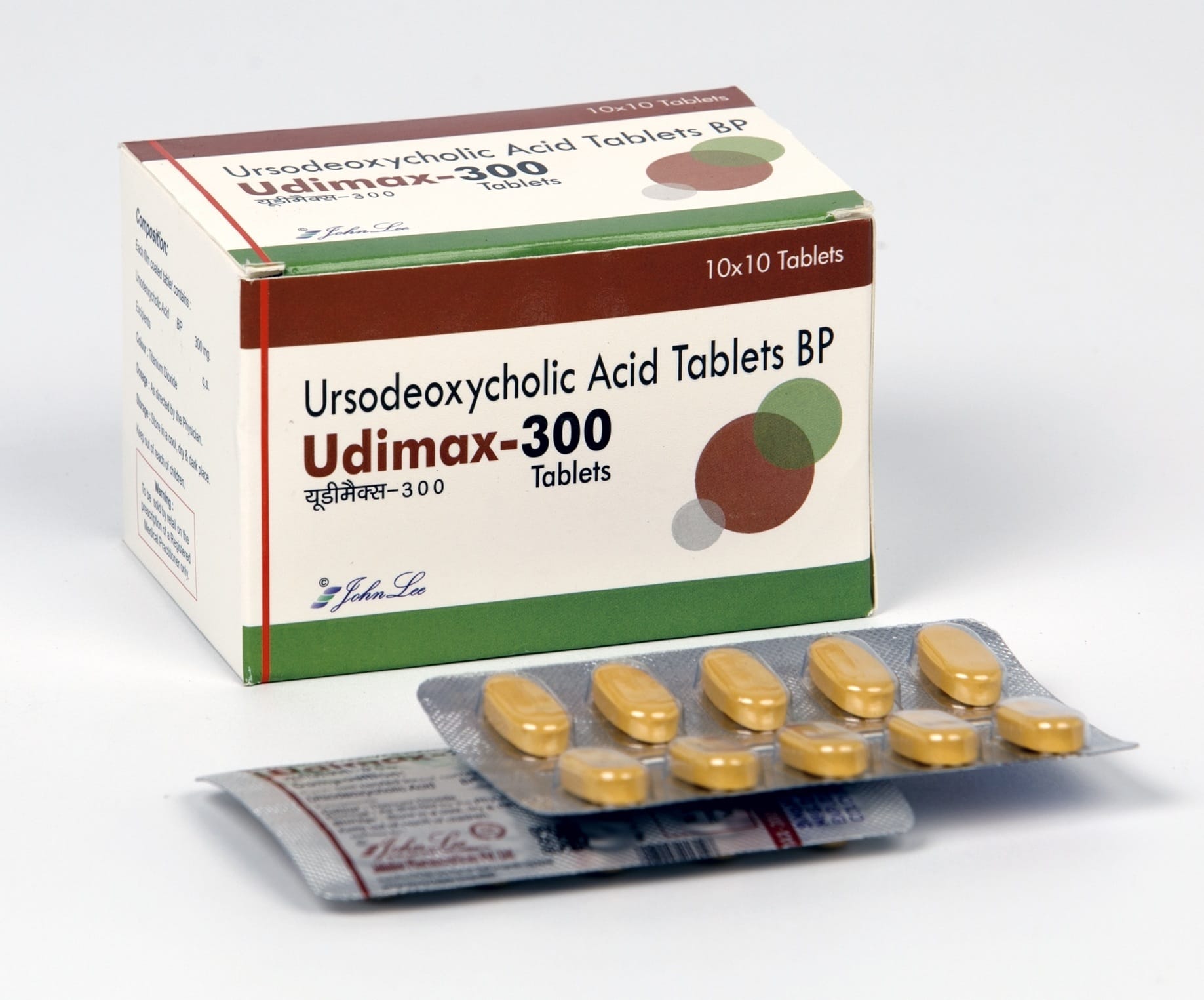
Udimax 300 (Ursodeoxycholic Acid 300 mg) — hydrophilic bile acid for primary biliary cholangitis, cholesterol gallstones, intrahepatic cholestasis of pregnancy, and bile-acid diarrhoea. WHO Essential Medicine for PBC. Worldwide shipping from MedsBase.
✓ Medically reviewed by Morgan Ellis — Pharmacy Researcher · 8 years experience · Last reviewed: May 2026
⚡ Quick Answer — What is Udimax 300?
Udimax 300 is ursodeoxycholic acid (UDCA) 300 mg — a hydrophilic bile acid that is the standard of care for primary biliary cholangitis (PBC), cholesterol gallstones in patients unfit for surgery, intrahepatic cholestasis of pregnancy (ICP), bile-acid diarrhoea, and pruritus of cholestatic liver disease. UDCA reduces cholesterol saturation in bile, replaces toxic hydrophobic bile acids in the bile-acid pool, exerts cytoprotective and anti-apoptotic effects on hepatocytes and cholangiocytes, and stimulates bicarbonate-rich choleresis. Standard adult doses range from 10–15 mg/kg/day for PBC and gallstones to 14–30 mg/kg/day for cholestasis of pregnancy. WHO-GMP certified manufacturer.
📦 Every order is covered by our Reshipment Assurance Policy — if your parcel does not arrive within 20 business days, we reship it.
Why order from MedsBase
Our generic medications are sourced from WHO-GMP certified manufacturers and shipped worldwide in discreet, plain packaging — no medication name on the parcel exterior. Card payments are routed through a regulated processor (statement descriptors include a regulated card-payment processor — never “MedsBase” or any medication name). Crypto and SEPA bank transfer are also accepted. Every order is backed by our Reshipment Assurance Policy.
Why order from MedsBase
Udimax 300 is supplied from a WHO-GMP certified manufacturer. Every order ships discreetly worldwide and is covered by our Reshipment Assurance Policy — if it does not arrive within 20 business days, we reship at no cost. UDCA has been on the WHO Essential Medicines List for decades and is the cornerstone of medical therapy for cholestatic liver disease.
Mechanism
UDCA is a naturally occurring hydrophilic 7β-hydroxy bile acid (“the bear bile acid”). When taken orally it enriches the bile-acid pool, replacing toxic hydrophobic acids (chenodeoxycholic, lithocholic) that damage cholangiocytes and hepatocytes in cholestasis. Three actions matter clinically: (1) it reduces biliary cholesterol saturation, dissolving cholesterol gallstones over months; (2) it exerts direct cytoprotective and anti-apoptotic effects on liver cells, reducing immune-mediated damage in PBC; (3) it stimulates a bicarbonate-rich “alkaline tide” choleresis, which protects cholangiocytes from the detergent action of hydrophobic bile acids. Onset of biochemical improvement in PBC is typically 2–6 months.
Indications & doses
| Indication | Dose | Notes |
|---|---|---|
| Primary biliary cholangitis (PBC) | 13–15 mg/kg/day in 1–2 divided doses | Lifelong |
| Cholesterol gallstones (radiolucent, non-calcified, < 15 mm, functioning gallbladder) | 8–10 mg/kg/day | 6–24 months; recurrence common after stopping |
| Intrahepatic cholestasis of pregnancy | 10–15 mg/kg/day, may rise to 25 mg/kg/day | Reduces pruritus, normalises bile acids; PITCHES trial showed mixed effect on stillbirth |
| Bile-acid diarrhoea | 250–500 mg twice daily (off-label) | Combine with bile-acid binders (cholestyramine) |
| PSC, cystic fibrosis liver disease, paediatric biliary atresia | 20–30 mg/kg/day | Specialist supervision; high-dose in PSC limited to 20 mg/kg/day after a 30 mg/kg trial showed harm |
Side effects
- Common: diarrhoea (dose-related), abdominal cramps, nausea
- Skin reactions (rash, pruritus — transient, opposite to its therapeutic effect on cholestatic itch)
- Calcified gallstones (rare; on long courses)
- Worsening ascites in advanced cirrhosis (rare)
Drug interactions
- Cholestyramine, colestipol, antacids (aluminium): bind UDCA and reduce absorption — separate by 2 hours.
- Combined OC pill, oestrogens, clofibrate: increase biliary cholesterol saturation and oppose the gallstone-dissolution effect.
- Ciclosporin: UDCA may improve ciclosporin absorption; monitor levels.
- Nitrendipine, dapsone: levels may fall on UDCA — monitor.
Frequently Asked Questions
How long until I see improvement?
In PBC, ALP and ALT begin to fall within 4–8 weeks; full biochemical response is judged at 12 months. Pruritus often improves within weeks. Gallstone dissolution takes 6–24 months and only works for cholesterol stones.
Will it dissolve all gallstones?
No. Only radiolucent, non-calcified, cholesterol stones < 15 mm in a functioning gallbladder will dissolve. Pigment stones, calcified stones, and cholecystitis will not respond. Recurrence after stopping is common (~50 percent in 5 years) so cholecystectomy remains preferred when feasible.
Is it safe in pregnancy?
Yes. UDCA is the recognised therapy for intrahepatic cholestasis of pregnancy (ICP), reducing maternal pruritus and bile-acid levels. Discuss with obstetric prescriber.
Can I drink alcohol on it?
Avoid heavy alcohol — it worsens any underlying liver disease. Light intake is acceptable in PBC at the prescriber’s discretion.
Why do I have diarrhoea?
Excess UDCA reaches the colon and acts as an osmotic / secretory laxative. Splitting the dose (e.g. 300 mg morning and evening rather than 600 mg once) usually helps. If persistent, dose reduction is reasonable in stone-dissolution use; in PBC, prioritise the dose for biochemical response.
Will I need it for life?
In PBC: yes. In gallstones: only until they dissolve (then stop, accept recurrence risk). In ICP: until delivery and normalisation of bile acids.
Should I take it with food?
Take with meals. Bile-acid recycling during the postprandial period maximises enterohepatic circulation and the therapeutic effect.
Can I take it with cholestyramine?
Yes, but separate by 2 hours — cholestyramine binds bile acids and would inactivate the dose if taken simultaneously.
Storage
Below 25°C, dry place. Keep tablets in the original blister.
What if I miss a dose?
Take it as soon as you remember. If close to the next dose, skip it. Do not double up.
Other Gastro Health Medications
- Maxiliv Injection — Glutathione (antioxidant)
- Liv 52 DS — Ayurvedic hepatoprotective
- Asacol — Mesalamine 400 mg (UC)
- Saaz — Sulfasalazine
- Budez CR — Budesonide CR (autoimmune hepatitis off-label)
- Browse all Gastro Health Medications
More options in Gastro Health
Ranked by recent MedsBase order volume — what other customers in this category are picking.


| Strength | 300 mg |
|---|---|
| Quantity | 30 Tablet/s, 60 Tablet/s, 90 Tablet/s, 180 Tablet/s |
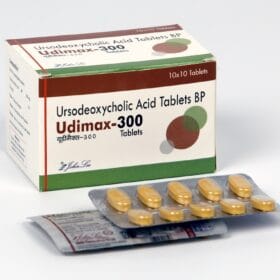 Udimax 300
Q & A
Udimax 300
Related products



Reviews
There are no reviews yet