







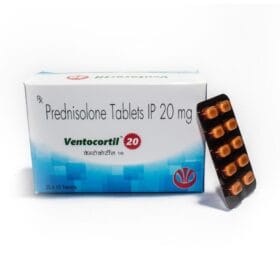
Ventocortil
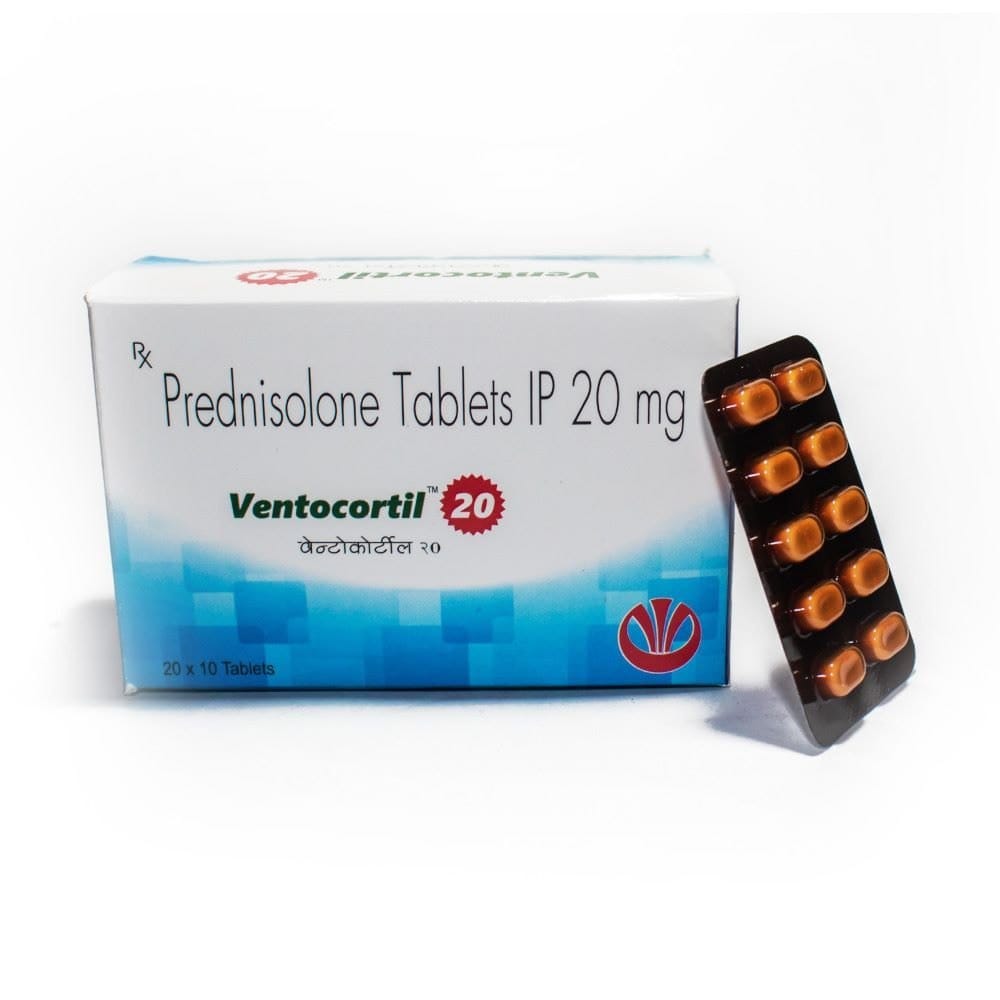
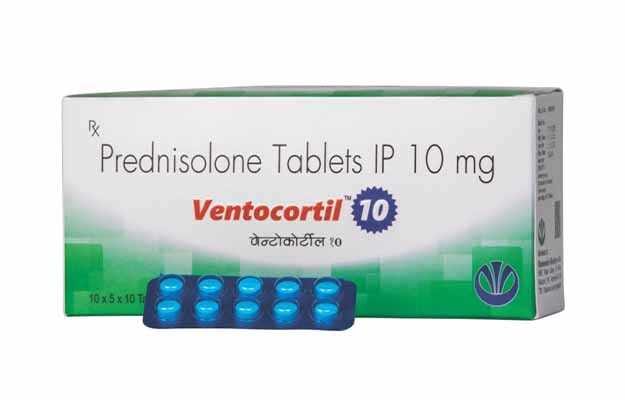
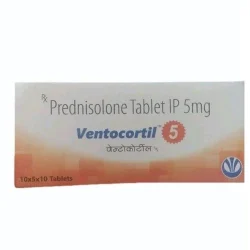

Ventocortil (prednisolone 5/10/20/40 mg) — intermediate-acting oral corticosteroid for rheumatoid arthritis, lupus, severe asthma, IBD, vasculitis, allergic reactions and transplant maintenance. Take with food, taper after 2+ weeks.
✓ Medically reviewed by Morgan Ellis — Pharmacy Researcher · 8 years experience · Last reviewed: May 2026
Quick Answer — What is Ventocortil?
Ventocortil is an oral corticosteroid containing prednisolone (typically 5 / 10 / 20 / 40 mg tablets) — an intermediate-acting glucocorticoid used to treat a broad range of inflammatory and autoimmune conditions including rheumatoid arthritis, lupus, vasculitis, severe asthma, allergic reactions, inflammatory bowel disease, and post-transplant immunosuppression. Standard adult anti-inflammatory dose is 5–60 mg/day, taken once daily in the morning to align with the body’s natural cortisol rhythm. Never stop abruptly after more than 2–3 weeks of daily use — HPA-axis suppression can precipitate adrenal crisis. Always taper under medical supervision.
📦 Every order is covered by our Reshipment Assurance Policy — if your parcel does not arrive within 20 business days, we reship it.
Why order from MedsBase
Our generic medications are sourced from WHO-GMP certified manufacturers and shipped worldwide in discreet, plain packaging — no medication name on the parcel exterior. Card payments are routed through a regulated processor (statement descriptors include a regulated card-payment processor — never “MedsBase” or any medication name). Crypto and SEPA bank transfer are also accepted. Every order is backed by our Reshipment Assurance Policy.
What Ventocortil Is
Ventocortil is a branded generic of prednisolone, a synthetic glucocorticoid that reproduces the anti-inflammatory and immunosuppressive effects of cortisol but with about four times the potency, a longer biological half-life (18–36 hours), and minimal mineralocorticoid (sodium-retaining) activity at standard doses. Prednisolone is the active form of the prodrug prednisone — in patients with normal liver function the two are clinically interchangeable, but prednisolone is preferred in severe hepatic impairment because it does not require hepatic activation.
Each tablet contains prednisolone in strengths designed to allow flexible dose titration. Ventocortil is suitable for short, high-dose “pulse” therapy of acute flares and for low-dose chronic maintenance in conditions such as polymyalgia rheumatica, giant cell arteritis or steroid-dependent asthma.
Indications
- Rheumatic and autoimmune disease — rheumatoid arthritis flares, polymyalgia rheumatica, giant cell arteritis, systemic lupus erythematosus, vasculitis, polymyositis, dermatomyositis.
- Respiratory disease — severe asthma exacerbations, COPD exacerbations, sarcoidosis, hypersensitivity pneumonitis.
- Allergic and dermatologic disease — severe allergic reactions, contact dermatitis, severe atopic eczema, pemphigus, severe drug reactions.
- Gastrointestinal disease — ulcerative colitis flares, Crohn’s disease flares (when budesonide is inadequate), autoimmune hepatitis.
- Haematology — immune thrombocytopenia (ITP), autoimmune haemolytic anaemia, acute lymphoblastic leukaemia (as part of combination chemotherapy).
- Renal disease — nephrotic syndrome (minimal change disease, focal segmental glomerulosclerosis).
- Transplant medicine — induction and maintenance immunosuppression after solid-organ transplant.
Dosage
| Indication | Typical adult dose |
|---|---|
| Acute asthma exacerbation | 40–60 mg OD × 5–7 days, no taper needed if < 2 weeks |
| Polymyalgia rheumatica | 15–20 mg OD, slow taper over 12–24 months |
| Giant cell arteritis | 40–60 mg OD (no visual symptoms) or 60–100 mg OD (visual symptoms), slow taper |
| Rheumatoid arthritis flare | 5–15 mg OD as bridge to DMARD response, then taper |
| SLE / vasculitis (severe) | 1 mg/kg/day initially (commonly 60 mg OD), then taper as second-line agent takes effect |
| UC / Crohn’s flare | 40 mg OD × 1–2 weeks, then taper by 5–10 mg/week |
| Nephrotic syndrome (minimal change) | 1 mg/kg/day (max 80 mg) until remission, then taper |
| Long-term maintenance (e.g. transplant) | 5–10 mg OD (target the lowest effective dose) |
Take Ventocortil once daily in the morning with food to minimise gastric irritation and align with the natural diurnal cortisol peak (which reduces HPA-axis suppression). For very high doses, your doctor may divide them into two or three doses per day during the acute phase only.
Tapering and HPA-Axis Suppression
Side Effects
The probability and severity of side effects are dose-dependent and time-dependent. Short courses (< 1 week) at < 40 mg/day rarely cause clinically significant problems beyond hyperglycaemia, mood change and insomnia.
- Common (any course): increased appetite, weight gain, fluid retention, heartburn, mood swings (irritability, insomnia, mild euphoria), raised blood glucose, raised blood pressure, easy bruising, acne.
- Long-term (> 3 months): Cushingoid appearance (moon face, buffalo hump, central obesity), proximal myopathy, osteoporosis and fracture risk, cataract and glaucoma, skin thinning, diabetes, hyperlipidaemia, opportunistic infection, growth retardation in children.
- Rare but serious: avascular necrosis (especially femoral head), severe psychiatric disturbance (psychosis, mania, severe depression), pancreatitis, peptic ulcer with perforation, oesophageal candidiasis, opportunistic infection (PCP, reactivated TB, herpes zoster), HPA-axis crisis on abrupt withdrawal.
Monitoring
| Test | Schedule |
|---|---|
| Blood pressure | Baseline, then every visit |
| Fasting blood glucose / HbA1c | Baseline, 4–6 weeks, then quarterly |
| Weight | Each visit |
| DEXA scan (bone density) | Baseline if course expected > 3 months at > 5 mg/day, then 1–2 yearly |
| Eye exam (cataract / glaucoma) | Annually if course > 6 months |
| Lipid profile | Baseline, then yearly |
| Latent TB / hep B screen | Before starting if anticipated > 1 month at > 15 mg/day |
Drug Interactions
- NSAIDs (ibuprofen, naproxen, diclofenac): additive risk of gastric ulcer and bleeding — consider gastroprotection (PPI).
- Live vaccines: contraindicated at immunosuppressive doses (> 20 mg/day for > 2 weeks). Inactivated vaccines are safe but may be less effective.
- Warfarin: unpredictable INR change — check INR within 1–2 weeks of starting, stopping, or changing dose.
- Diabetes medications: insulin and oral hypoglycaemics often need dose increase. Check fingerprick glucose more frequently in the first 1–2 weeks.
- CYP3A4 inducers (rifampicin, phenytoin, carbamazepine, phenobarbital): reduce prednisolone exposure — may need dose increase by 25–50 %.
- CYP3A4 inhibitors (ketoconazole, ritonavir, clarithromycin): raise exposure — watch for steroid side effects.
- Loop and thiazide diuretics: additive potassium loss — check serum potassium.
- Quinolone antibiotics (ciprofloxacin, levofloxacin): additive tendinopathy risk, especially Achilles — avoid the combination if possible in elderly patients.
Contraindications and Cautions
- Absolute: systemic fungal infection (unless treating it); known hypersensitivity to prednisolone.
- Strong caution: active untreated infection (especially TB, HSV keratitis, varicella in non-immune patient), recent live vaccine, active peptic ulcer, severe heart failure, uncontrolled diabetes, severe osteoporosis, untreated psychiatric illness, ocular herpes.
- Pregnancy and lactation: prednisolone crosses the placenta poorly (most is metabolised by 11β-HSD2 in placenta). Used in pregnancy when benefit clearly outweighs risk. Compatible with breastfeeding (low milk transfer); for doses > 40 mg/day, wait 4 hours after dose before nursing.
- Children: chronic use causes growth retardation — minimise dose and duration. Monitor growth velocity.
Storage
Store Ventocortil tablets at room temperature (15–30 °C) in their original blister, protected from light and moisture. Keep out of reach of children. Do not use after the expiry date printed on the pack.
Why order from MedsBase
Ventocortil is supplied through a WHO-GMP certified manufacturer with full COA documentation. We ship worldwide in plain, discreet packaging, and every order is covered by our Reshipment Assurance Policy. Your statement descriptor when paying by card shows the regulated payment processor (a regulated card-payment processor), never “MedsBase” or any medication name.
Frequently Asked Questions
Is Ventocortil the same as prednisolone or prednisone?
Ventocortil contains prednisolone — the active form. Prednisone is a prodrug that the liver converts to prednisolone. In patients with normal liver function the two are clinically equivalent, but prednisolone is preferred in severe liver disease.
When should I take it?
Once daily in the morning with food. The morning dose mimics the natural cortisol peak and reduces suppression of the body’s own adrenal axis. Avoid evening doses unless your doctor has specifically prescribed a divided regimen during an acute flare.
Can I stop taking it suddenly?
Only if the course was very short (< 1 week at low dose). Any longer course must be tapered — abrupt withdrawal after 2–3 weeks of daily use can cause adrenal crisis, which is potentially fatal. Always follow the taper schedule given by your doctor.
Will I gain weight?
Common at doses above 10–15 mg/day for more than a few weeks. Drivers are increased appetite, fluid retention and central fat redistribution. Weight typically reverses on tapering, though it can take months. A low-salt, lower-carbohydrate diet helps reduce fluid retention and central deposition.
Do I need a steroid card?
Yes, if you have been on any oral corticosteroid for more than 3 weeks, or after IM/IV pulse therapy in the previous 6 weeks. The card alerts emergency clinicians and anaesthetists that you may have HPA-axis suppression and may need stress-dose steroid cover.
What about vaccines?
Inactivated vaccines (flu, pneumococcal, COVID-19, hepatitis B) are safe but may be less effective at high steroid doses — have them anyway. Live vaccines (MMR, yellow fever, oral typhoid, varicella, BCG, oral polio) are contraindicated at immunosuppressive doses (> 20 mg/day for > 2 weeks) and for 3 months after stopping. Plan ahead.
Can I drink alcohol?
Modest alcohol is acceptable in most patients. Avoid heavier intake — it raises peptic ulcer risk, blood sugar and liver toxicity, all of which prednisolone also raises.
What about pregnancy?
Prednisolone is one of the safer corticosteroids in pregnancy because it is largely inactivated by the placenta. Used when benefits outweigh risks (severe asthma, lupus flare, organ rejection). First-trimester use carries a small relative increase in oral cleft risk; this risk is much lower than the risks of leaving severe maternal disease untreated.
Can I have surgery while on Ventocortil?
Yes — tell the anaesthetist you are on a steroid, and bring your steroid card. Patients on chronic doses > 5 mg/day usually need stress-dose IV hydrocortisone cover at induction, especially for major surgery. Do not stop the tablet on the day of surgery.
How long can I stay on Ventocortil?
Some conditions (PMR, GCA, RA, transplant maintenance, autoimmune hepatitis, polymyositis) require years of low-dose prednisolone. Goal is always the lowest effective dose with bone-protection and side-effect monitoring. Many patients on 5–7.5 mg/day for years remain stable with appropriate care.
Medical disclaimer: this information is educational and is not a substitute for personalised medical advice. Use only under the supervision of a qualified clinician.
Other Anti-Inflammatory & Autoimmune Medications
If Ventocortil does not suit your situation, the following options are available in this category:
- Wysolone (Prednisolone 5/10/20 mg, Wyeth) — most-prescribed prednisolone brand
- Predniheal (Prednisolone 5/10/20/40 mg, Healing Pharma) — full strength range
- Kidpred Syrup (Prednisolone oral solution, Cipla) — paediatric liquid formulation
- Medrol (Methylprednisolone 4/8/16 mg, Pfizer) — slightly more potent, less mineralocorticoid
- Kenacort (Triamcinolone 4 mg, Abbott) — fluorinated, no fluid retention
More options in Anti Inflammatory & Autoimmune Care
Ranked by recent MedsBase order volume — what other customers in this category are picking.


| Strength | 5 mg, 10 mg, 20 mg |
|---|---|
| Quantity | 30 Tablet/s, 60 Tablet/s, 90 Tablet/s, 180 Tablet/s |
 Ventocortil
Q & A
Ventocortil
Related products

Reviews
There are no reviews yet