









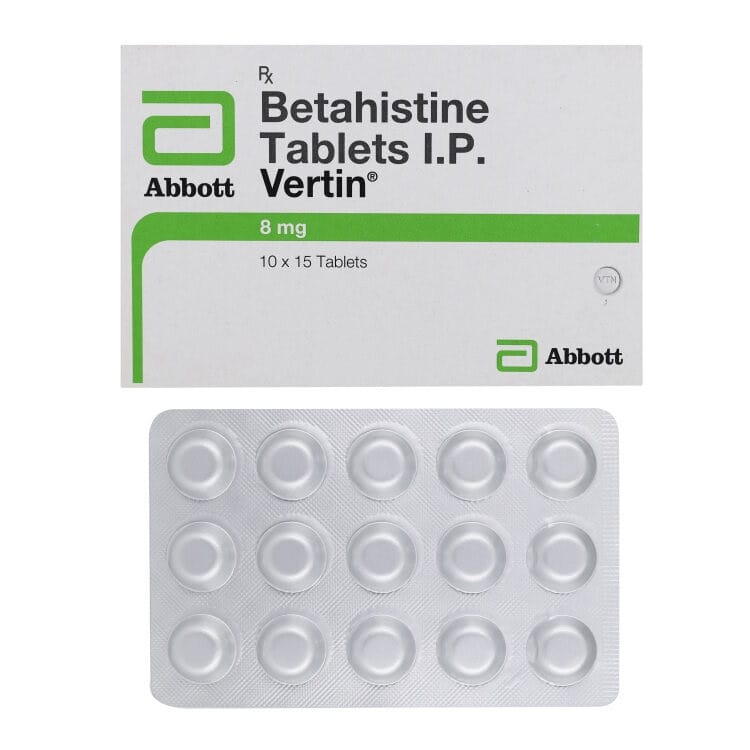
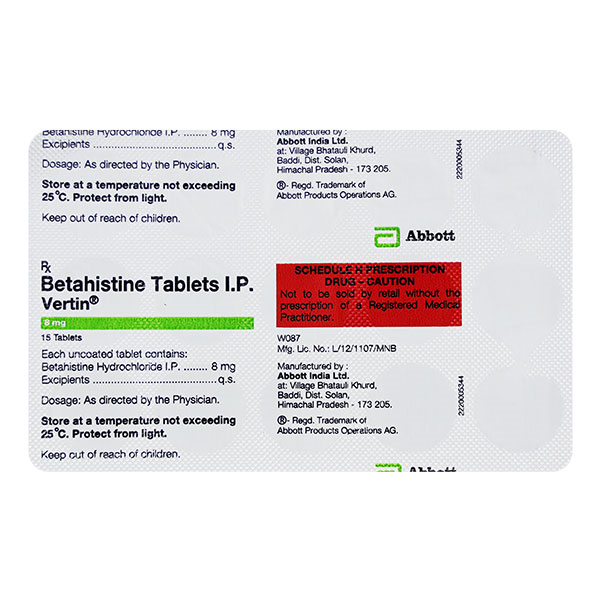
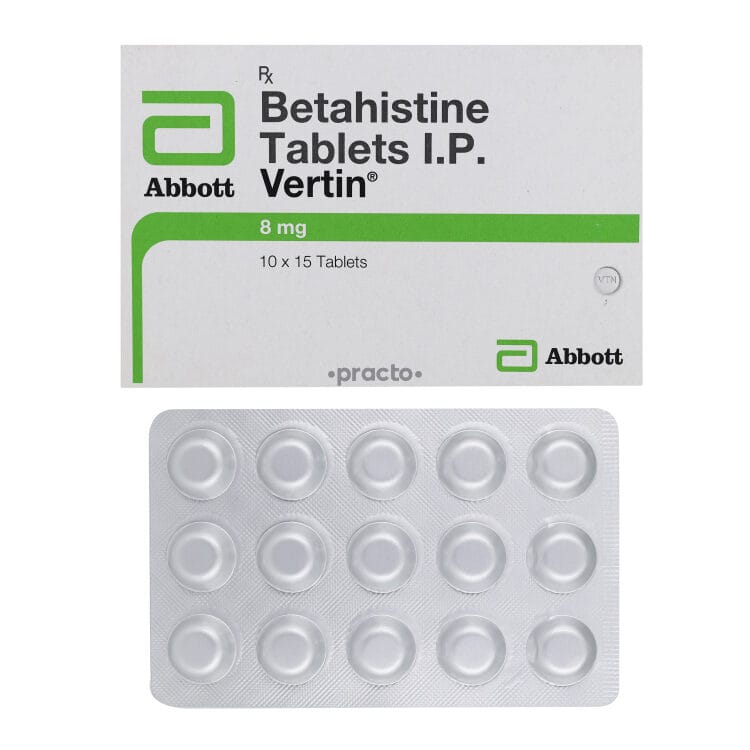
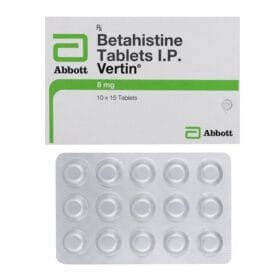
Vertin


✅ Reduces vertigo symptoms
✅ Improves balance
✅ Minimizes nausea
✅ Alleviates dizziness
✅ Enhances inner ear function
Vertin contains Betahistine.
✓ Medically reviewed by Morgan Ellis — Pharmacy Researcher · 8 years experience · Last reviewed: May 2026
⚡ Quick Answer — What is Vertin?
Vertin is a betahistine dihydrochloride 8 mg tablet used to treat peripheral vertigo, tinnitus, and hearing loss associated with Ménière’s disease. It is a histamine analogue that improves inner-ear microcirculation. Typical dose is 8–16 mg three times daily with food. Not primarily for motion sickness or general dizziness — those respond better to cinnarizine, prochlorperazine, or dimenhydrinate.
Why order from MedsBase
📦 Every order is covered by our Reshipment Assurance Policy — if your parcel does not arrive within 20 business days, we reship it.
Vertin is Abbott’s betahistine dihydrochloride 8 mg tablet, used specifically for peripheral vestibular vertigo and the classic triad of Ménière’s disease: episodic vertigo, sensorineural hearing loss, and tinnitus. Betahistine is a weak histamine analogue that has been in clinical use since the 1960s and remains the most widely prescribed specific treatment for Ménière’s worldwide.
Vertin is distinct from the drugs used for motion sickness (cinnarizine, dimenhydrinate, meclizine) or from anti-emetics used for acute vertigo episodes (prochlorperazine, promethazine). Understanding the difference matters because the wrong drug for the wrong type of vertigo achieves little.
What Is Vertin?
Vertin is a vasoactive histamine analogue with weak H₁ agonist and moderate H₃ antagonist effects. It is used primarily for conditions where inner-ear microcirculation and endolymphatic pressure are thought to drive symptoms.
Vertin is indicated for:
- Ménière’s disease — the classic indication; reduces frequency and severity of vertigo episodes, may modestly improve tinnitus and hearing fluctuation
- Peripheral vestibular vertigo — recurrent episodes of rotational dizziness attributed to inner ear or vestibular nerve origin
- Vestibular neuritis (recovery phase) — as part of a rehabilitation strategy
- BPPV (benign paroxysmal positional vertigo) — adjunctive only; canalith-repositioning manoeuvres (Epley) remain first-line
Vertin is not typically used for motion sickness, lightheadedness, non-specific dizziness, or central (brain-origin) vertigo.
How Does Vertin Work?
Betahistine’s exact mechanism in the inner ear is still debated, but several actions have been characterised:
- Vasodilation of stria vascularis microcirculation in the inner ear, thought to reduce endolymphatic pressure in Ménière’s
- H₃ receptor antagonism in vestibular nuclei, which increases histamine turnover and may aid vestibular compensation
- Weak H₁ agonism at postsynaptic sites
- Improves vestibular nerve output symmetry during recovery from unilateral vestibular injury
Onset of clinical benefit is gradual — most patients need several weeks of continuous treatment before experiencing reduced vertigo episode frequency.
Vertin Dosage and Administration
| Scenario | Dose | Notes |
|---|---|---|
| Ménière’s disease (standard) | 8–16 mg three times daily | Target 24–48 mg total daily; up-titrate if partial response |
| Initial dosing | 8 mg three times daily | Increase after 2–4 weeks if needed |
| High-dose regimen | 16 mg three times daily (48 mg/day) | Supported by BEMED trial and European guidance |
| Maintenance | 8 mg three times daily once control is established | Continue for months; taper under medical guidance |
| Elderly | Standard dose | No routine reduction |
| Pregnancy | Avoid unless essential | Limited data |
| Maximum daily dose | 48 mg | Divided into three doses |
How to Take Vertin Properly
- Swallow the tablet whole with water, preferably with or after a meal to reduce gastric upset
- Space doses evenly through the day (morning, afternoon, evening)
- Allow at least 4–6 weeks at an adequate dose before judging efficacy
- Continue salt restriction, adequate hydration, and caffeine/alcohol moderation — Ménière’s lifestyle measures amplify drug benefit
- Do not stop abruptly if you have been taking it for months — gradual taper is typically prescribed
- Record episode frequency in a diary — the primary marker of response is how many vertigo attacks you have per month
Side Effects of Vertin
| Severity | Side Effect |
|---|---|
| Common | Mild nausea, dyspepsia, headache |
| Uncommon | Skin rash, pruritus, urticaria, flushing |
| Rare | Bronchospasm in asthmatics, angioedema, severe hypersensitivity |
Seek medical attention for breathing difficulty, widespread rash, or facial swelling.
Warnings and Precautions
- Phaeochromocytoma. Contraindicated — histamine analogues can provoke catecholamine surge
- Bronchial asthma. Use cautiously — monitor for bronchospasm, particularly in severe disease
- Peptic ulcer disease. Betahistine can worsen gastric irritation — take with food and use with caution
- Pregnancy and breastfeeding. Limited human data — avoid unless clearly needed
- Alcohol. Can worsen balance / coordination symptoms — limit strictly during active vertigo
- BPPV. Vertin does not treat BPPV mechanically — the Epley or Semont canalith-repositioning manoeuvre is definitive; vertin is adjunctive at best
Contraindications — Who Should NOT Take Vertin
- Phaeochromocytoma
- Known hypersensitivity to betahistine or any excipient
- Children (safety data limited)
- Severe active peptic ulcer disease
Drug Interactions
| Drug / Class | Interaction |
|---|---|
| H₁ antihistamines (cetirizine, loratadine, diphenhydramine) | Antagonise betahistine’s effect — avoid routine co-use |
| MAOIs (phenelzine, tranylcypromine, moclobemide) | May inhibit betahistine metabolism — raise levels; avoid or monitor |
| β₂-agonists (salbutamol) | No clinically relevant interaction |
| Diuretics | Often co-prescribed in Ménière’s management (typically thiazide) — no adverse interaction |
| Alcohol | Can worsen vestibular symptoms — limit |
Storage Instructions
- Store below 25 °C in a dry place, away from direct sunlight
- Keep in the original blister packaging
- Keep out of reach of children
- Do not use after the expiry date
Related Alternatives on MedsBase
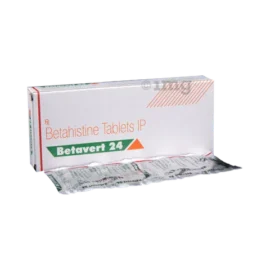
- Betavert — alternative betahistine brand
- Stemetil — prochlorperazine, for acute vertigo symptoms and nausea
- Browse all Travel Sickness and motion-sickness tablets →
Frequently Asked Questions
What is Vertin used for?
Vertin (betahistine) is used primarily for Ménière’s disease and other forms of peripheral vestibular vertigo. It reduces the frequency and severity of vertigo episodes and may modestly improve accompanying tinnitus and hearing-fluctuation symptoms.
How fast does Vertin work?
Benefit builds gradually — allow 4–6 weeks at an adequate dose before judging effect. Betahistine reduces the frequency of future vertigo episodes; it does not acutely abort an episode in progress.
Can I use Vertin for motion sickness?
No — betahistine is not effective for motion sickness. For that, use cinnarizine, dimenhydrinate, meclizine, or a scopolamine patch.
Can I use Vertin for BPPV?
BPPV (benign paroxysmal positional vertigo) responds best to canalith-repositioning manoeuvres such as the Epley or Semont manoeuvre — these physically relocate the inner-ear crystals that cause BPPV. Medication is adjunctive only.
Does Vertin help tinnitus?
In Ménière’s patients, tinnitus often improves alongside vertigo control. For isolated tinnitus without vertigo, evidence of benefit is weaker and other approaches (sound masking, tinnitus retraining therapy, cognitive-behavioural therapy) are preferred.
How long should I take Vertin?
Ménière’s is a chronic condition; patients often continue Vertin for months to years depending on episode frequency. Your clinician will guide taper attempts if you have extended periods without attacks.
Can I take Vertin during pregnancy?
Limited human data — usually avoided unless clearly needed. Discuss with your doctor.
What should I do during an acute vertigo attack?
Vertin is a preventive drug; it does not abort an acute attack. During an attack, sit or lie still in a quiet dark room, avoid sudden head movements, and if severely symptomatic, an anti-emetic such as prochlorperazine (Stemetil) or ondansetron can be used short-term.
Does Vertin cause drowsiness?
Less than antihistamines like cinnarizine — betahistine is not markedly sedating, but some users still experience mild drowsiness or headache initially.
What lifestyle measures help with Ménière’s?
Low-salt diet (<2 g sodium/day), steady hydration, limiting caffeine and alcohol, avoiding MSG, managing stress, and vestibular rehabilitation exercises. These measures augment Vertin’s benefit and in some patients control symptoms without additional medication.
Vertin (betahistine) treats vestibular-origin vertigo and Meniere’s via histamine modulation rather than antagonism, so for the situational motion-sickness end of the spectrum — car, sea, coach, air — the right tool is the H1-antagonist Avimax (promethazine 25 mg) taken 30 to 60 minutes before travel.
Other Vertigo & Motion Sickness Treatments
- Betavert (betahistine 8 / 16 mg, Sun Pharma)
- Betavert Tab (betahistine 24 mg)
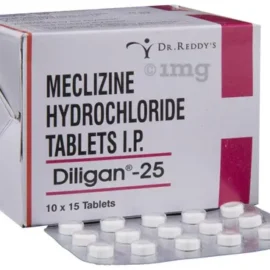
- Diligan (meclizine 25 mg) — for motion sickness and acute vertigo first 48–72 h
- Stemetil (prochlorperazine 5 mg) — acute vertigo / nausea rescue
- Avomine (promethazine 25 mg) — sedating antihistamine for motion sickness
More options in Vertigo & Motion Sickness Treatment
Ranked by recent MedsBase order volume — what other customers in this category are picking.
| Strength | 8 mg |
|---|---|
| Quantity | 30 Tablet/s, 60 Tablet/s, 90 Tablet/s, 180 Tablet/s |
 Vertin
Q & A
Vertin
Related products




Reviews
There are no reviews yet