







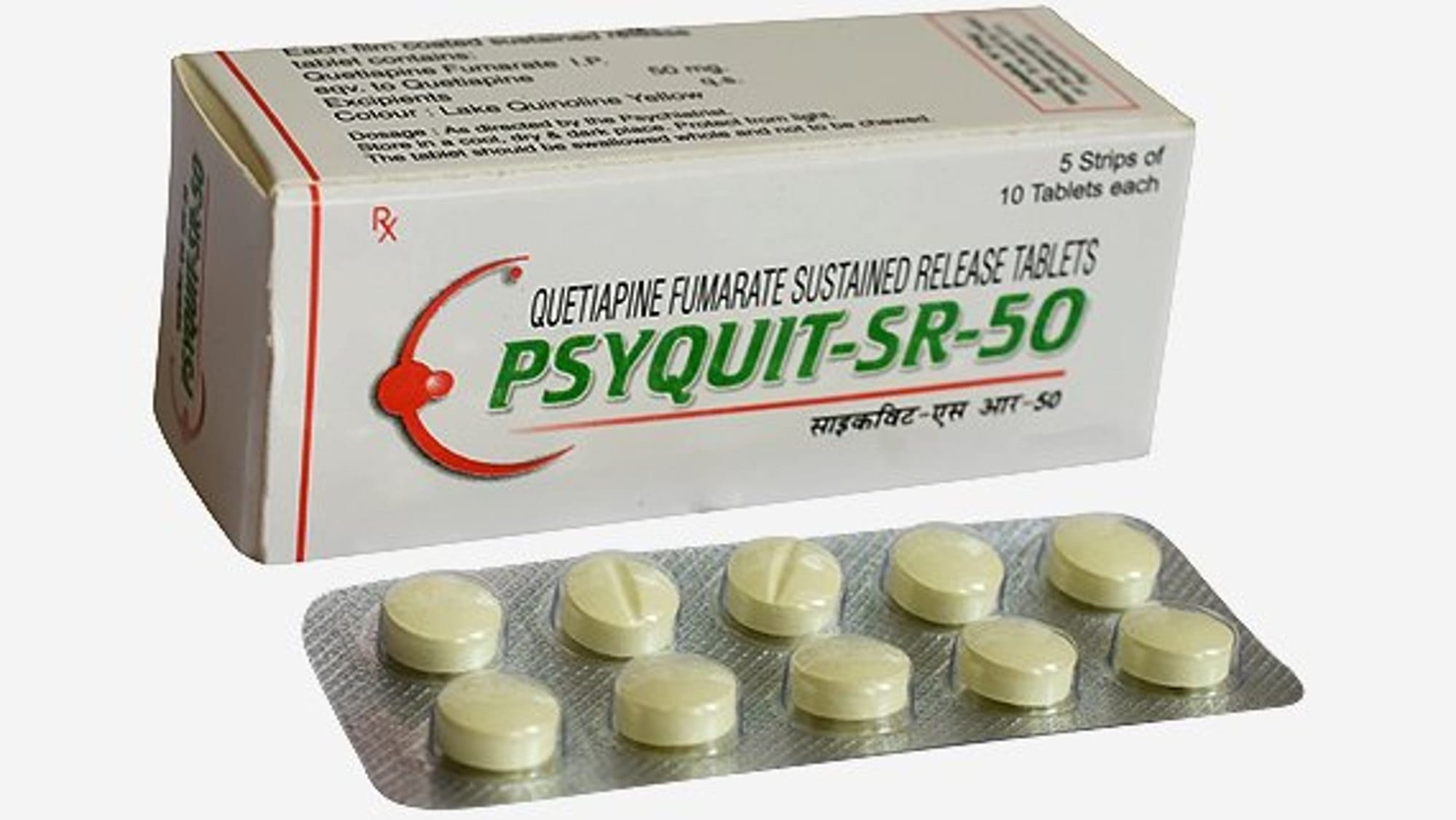
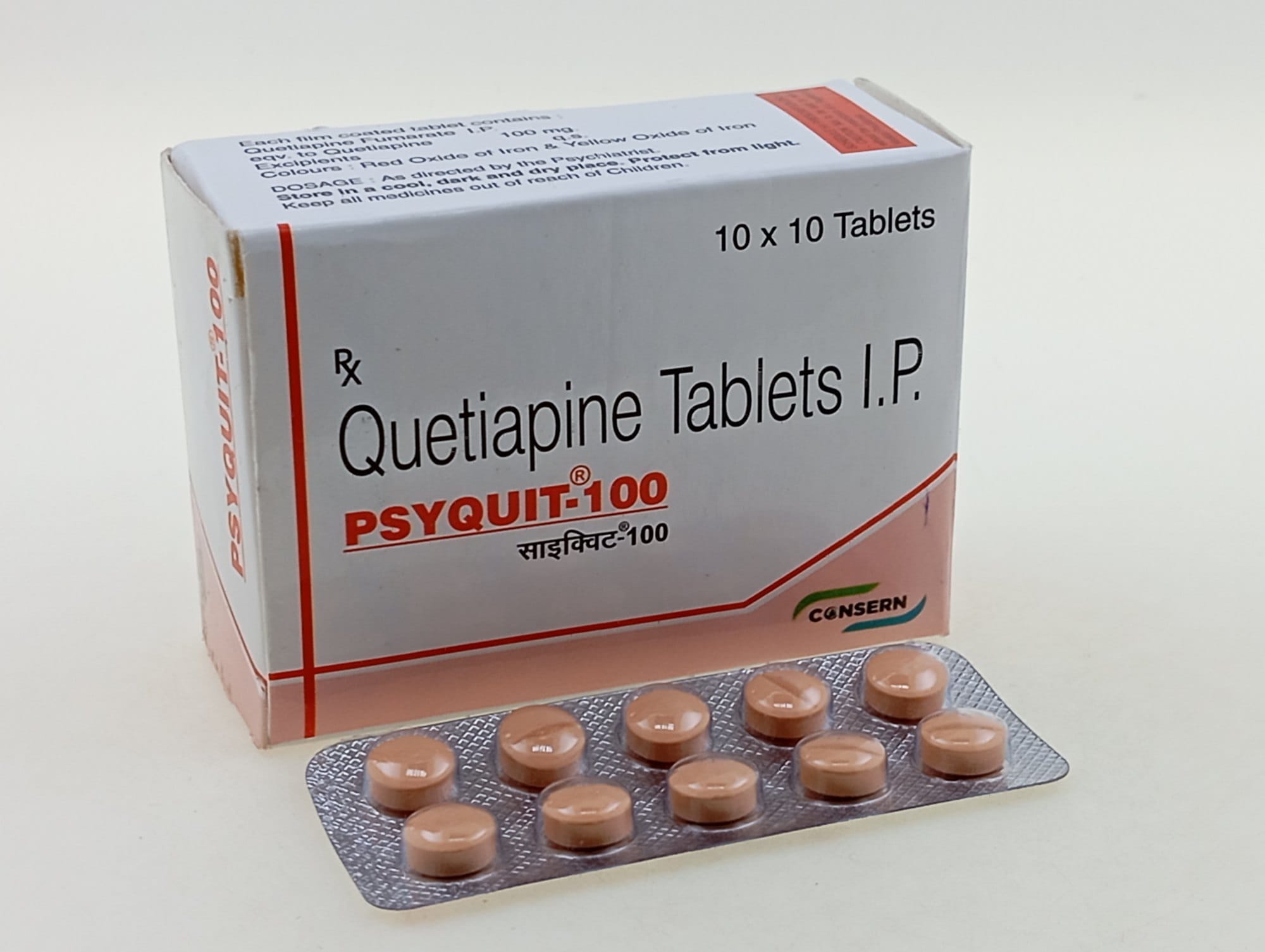
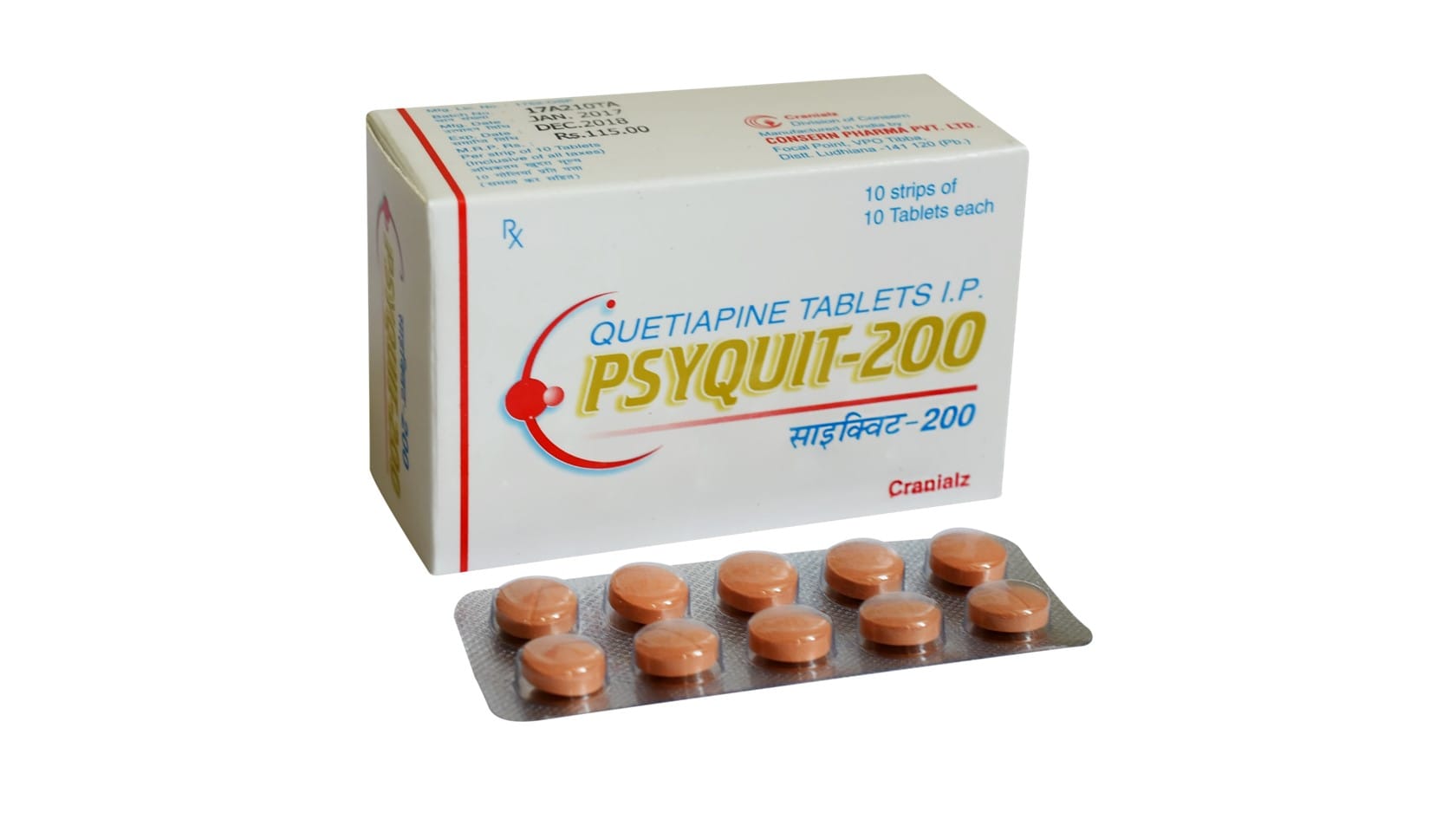
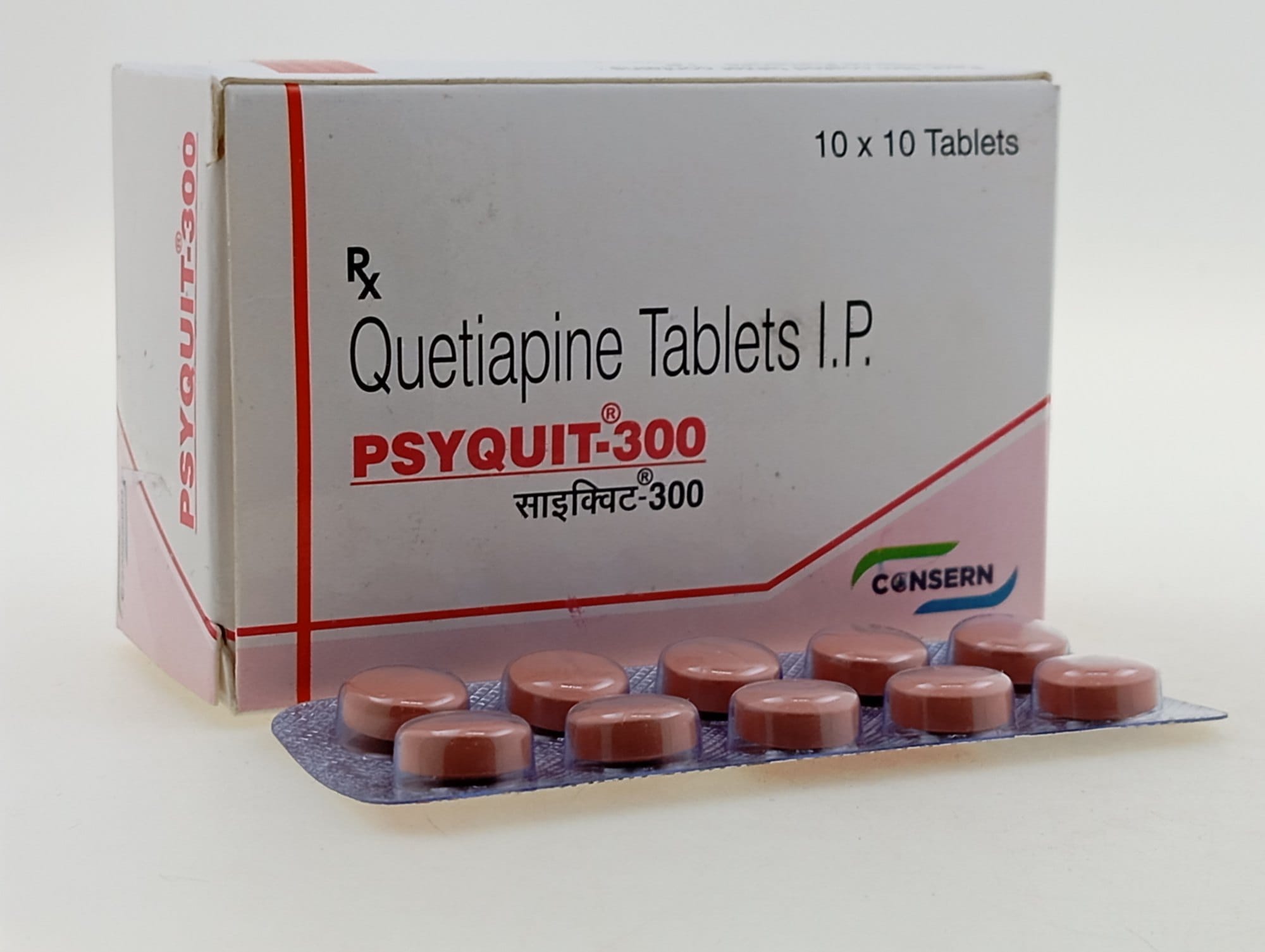
Psyquit



✅ Manages schizophrenia
✅ Treats bipolar disorder
✅ Controls major depression
✅ Reduces anxiety symptoms
✅ Improves sleep quality
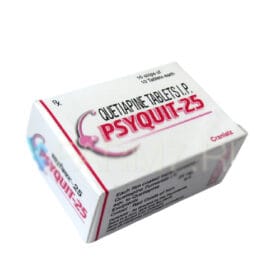
Psyquit contains Quetiapine
✓ Medically reviewed by Morgan Ellis — Pharmacy Researcher · 8 years experience · Last reviewed: May 2026
⚡ Quick Answer — What is Psyquit?
Psyquit contains quetiapine 25 / 100 / 200 mg (immediate-release) from a WHO-GMP certified manufacturer (Sun Pharma) — an atypical antipsychotic with broad use across schizophrenia, bipolar disorder, and treatment-resistant depression. Mechanism: D2 + 5-HT2A antagonism plus prominent H1 antihistamine action (heavy sedation) plus alpha-1 blockade (orthostasis). Doses span a huge range by indication: 25–100 mg HS (off-label insomnia, anxiety adjunct — controversial), 300–800 mg/day (schizophrenia, bipolar mania), 150–300 mg/day (bipolar depression, MDD adjunct). Major class warnings: metabolic syndrome (weight, glucose, lipids — class effect), heavy sedation, orthostatic hypotension, QT prolongation, EPS (lower than first-generation antipsychotics), and FDA black box for elderly dementia mortality.
📦 Every order is covered by our Reshipment Assurance Policy — if your parcel does not arrive within 20 business days, we reship it.
Why order from MedsBase
Our generic medications are sourced from WHO-GMP certified manufacturers and shipped worldwide in discreet, plain packaging — no medication name on the parcel exterior. Card payments are routed through a regulated processor (statement descriptors include a regulated card-payment processor — never “MedsBase” or any medication name). Crypto and SEPA bank transfer are also accepted. Every order is backed by our Reshipment Assurance Policy.
What Is Psyquit?
Psyquit is an oral immediate-release tablet of quetiapine fumarate 25 / 100 / 200 mg manufactured by Sun Pharma. Quetiapine (US brand Seroquel IR / Seroquel XR) is an atypical (second-generation) antipsychotic launched by AstraZeneca in 1997. It is a D2 and 5-HT2A antagonist with strong H1 antihistamine and moderate alpha-1 antagonist activity. The H1 blockade drives the prominent sedation; the alpha-1 blockade drives orthostatic hypotension; the 5-HT2A antagonism reduces extrapyramidal side-effect risk compared with first-generation antipsychotics.
The IR (immediate-release) formulation reaches peak plasma in 1–2 hours, producing prompt sedation. Dose timing matters — sedation 1–3 hours after the dose can be either useful (insomnia adjunct) or limiting (daytime fatigue).
Approved Indications
- Schizophrenia — acute and maintenance
- Bipolar mania — acute (monotherapy or with lithium / valproate)
- Bipolar depression — one of the few drugs FDA-approved for this; first-line in bipolar I depression
- Bipolar maintenance — with lithium or valproate
- Adjunctive treatment of MDD — XR formulation, 150–300 mg/day with an antidepressant
- Off-label: insomnia (low dose 25–50 mg), anxiety (controversial — metabolic risk for non-psychotic anxiety), agitation in dementia (used with caution given black-box warning)
Dosing by indication
| Indication | Start | Target | Maximum | Notes |
|---|---|---|---|---|
| Schizophrenia (IR) | 50 mg BID | 400–800 mg/day | 800 mg/day | Titrate over 4–7 days; XR allows once-daily HS dosing |
| Bipolar mania (acute) | 100 mg/day × day 1, increase by 100 mg/day | 400–800 mg/day | 800 mg/day | Rapid titration to control mania |
| Bipolar depression | 50 mg HS × day 1, then 100, 200, 300 | 300 mg/day at bedtime | 300 mg/day | Standard maximum for this indication |
| MDD adjunct (XR only) | 50 mg HS | 150–300 mg/day | 300 mg/day | Add to existing antidepressant; sedation often dose-limiting |
| Off-label insomnia | 25–50 mg HS | 25–50 mg HS | 100 mg HS | Controversial — metabolic risk for sleep dose makes this a poor first choice; reserve for patients who have failed multiple alternatives |
| Elderly | 25–50 mg/day, slower titration | — | Consider 200–300 mg/day max | Greater sedation and orthostasis — falls risk |
Side Effects
Side-effect profile by mechanism
| Mechanism | Effects | Notes / management |
|---|---|---|
| Metabolic (5-HT2C + H1 appetite drive) | Weight gain (often significant), increased blood glucose / new-onset diabetes, dyslipidaemia | Class warning — baseline weight, BP, fasting glucose, lipids; reassess at 3 months and annually |
| H1 blockade | Heavy sedation, drowsiness | Useful at bedtime; often limiting during the day. Less peak sedation with XR |
| Alpha-1 blockade | Orthostatic hypotension, dizziness | Slow titration; check lying / standing BP |
| Anticholinergic (mild) | Dry mouth, constipation | Less than olanzapine |
| D2 blockade | Extrapyramidal symptoms (akathisia, parkinsonism, dystonia) | Lower than first-generation antipsychotics; akathisia at higher doses |
| Other | QT prolongation | Baseline ECG; caution with other QT-prolonging drugs |
| Rare | Tardive dyskinesia | Lower risk than typical antipsychotics but real with long-term use |
| Rare | Neuroleptic malignant syndrome | Hyperthermia, rigidity, autonomic instability — emergency |
| Rare | Hyperprolactinaemia | Less than risperidone |
| Rare | Cataracts | Lens monitoring controversial; some clinicians order 6-monthly slit-lamp exam |
Drug Interactions
CYP3A4 substrate: levels rise with strong inhibitors (ketoconazole, ritonavir, clarithromycin) — reduce dose. Levels fall with strong inducers (rifampin, phenytoin, carbamazepine) — loss of efficacy.
Additive sedation: alcohol, benzodiazepines, opioids, sedating antidepressants.
QT prolongation: caution with citalopram (high dose), methadone, ondansetron, fluoroquinolones, ziprasidone.
Antihypertensives: additive orthostasis with alpha-blockers, ACE inhibitors, diuretics.
Anticholinergic burden: additive with diphenhydramine, oxybutynin.
Metabolic Monitoring
All atypical antipsychotics carry a class warning for metabolic syndrome — weight gain, dyslipidaemia, and impaired glucose tolerance. Quetiapine sits in the higher-risk group (with olanzapine and clozapine). Standard monitoring: baseline + 3 months + annually: weight / BMI, waist circumference, fasting glucose or HbA1c, fasting lipid panel, blood pressure. Consider a switch to a lower-metabolic-risk agent (aripiprazole, lurasidone, ziprasidone) if weight / glucose deteriorates.
Frequently Asked Questions
How long does Psyquit take to work?
Acute psychosis or mania symptoms often respond within days; full benefit at 4–6 weeks. Bipolar depression response typically appears at 1–3 weeks at the 300 mg target.
Why is Psyquit used for sleep?
Quetiapine 25–50 mg HS produces heavy sedation through H1 blockade. Off-label sleep use has become widespread but is controversial — metabolic side effects accumulate even at low dose, and safer hypnotics exist.
Will Psyquit make me gain weight?
Likely yes — quetiapine is one of the more weight-gain-prone atypicals. Average weight gain at therapeutic doses is 4–7 kg over 12 months; some patients gain considerably more. Lifestyle interventions help; switching to aripiprazole or lurasidone may be needed if weight becomes problematic.
Is Psyquit safe in elderly patients with dementia?
FDA black-box warning for increased mortality in elderly with dementia-related psychosis or behavioural disturbance. Use only when behavioural and non-pharmacological strategies have failed and the symptoms are severe; lowest dose, shortest duration, with informed consent of family.
Can I drink alcohol on Psyquit?
Avoid — additive sedation and orthostasis. Even moderate alcohol substantially increases sedation and falls risk.
What is the difference between IR and XR quetiapine?
IR peaks at 1–2 hours; XR peaks at ~6 hours and allows once-daily dosing. IR has more peak sedation just after the dose; XR has a smoother profile. Daily AUC is similar at equivalent doses.
Will Psyquit cause extrapyramidal side effects?
Quetiapine has the lowest EPS risk among atypicals along with clozapine. Akathisia at higher doses is the most common motor side effect; tardive dyskinesia risk exists with long-term use but is much lower than first-generation antipsychotics.
Is Psyquit safe in pregnancy?
Limited data — quetiapine is one of the better-studied atypicals in pregnancy. Continuation is reasonable when needed for serious mental illness; first-trimester exposure does not appear to increase major malformation rates above baseline.
Can I stop Psyquit abruptly?
Better to taper, especially after long-term use — abrupt discontinuation can produce withdrawal dyskinesia, insomnia, nausea, sweating, and rebound psychosis or mania. Reduce by 25–50 mg every 1–2 weeks.
How should Psyquit be stored?
Store at 15–30 °C in the original blister packaging, away from moisture and sunlight. Keep out of reach of children.
Related Alternatives
Other products in Chronic Conditions that customers also view:
More options in Situational Anxiety Treatment
Ranked by recent MedsBase order volume — what other customers in this category are picking.


| Strength | 25 mg, 50 mg, 100 mg, 200 mg, 300 mg |
|---|---|
| Quantity | 30 Tablet/s, 60 Tablet/s, 90 Tablet/s, 180 Tablet/s |
 Psyquit
Q & A
Psyquit
Related products






Reviews
There are no reviews yet