







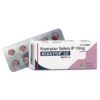
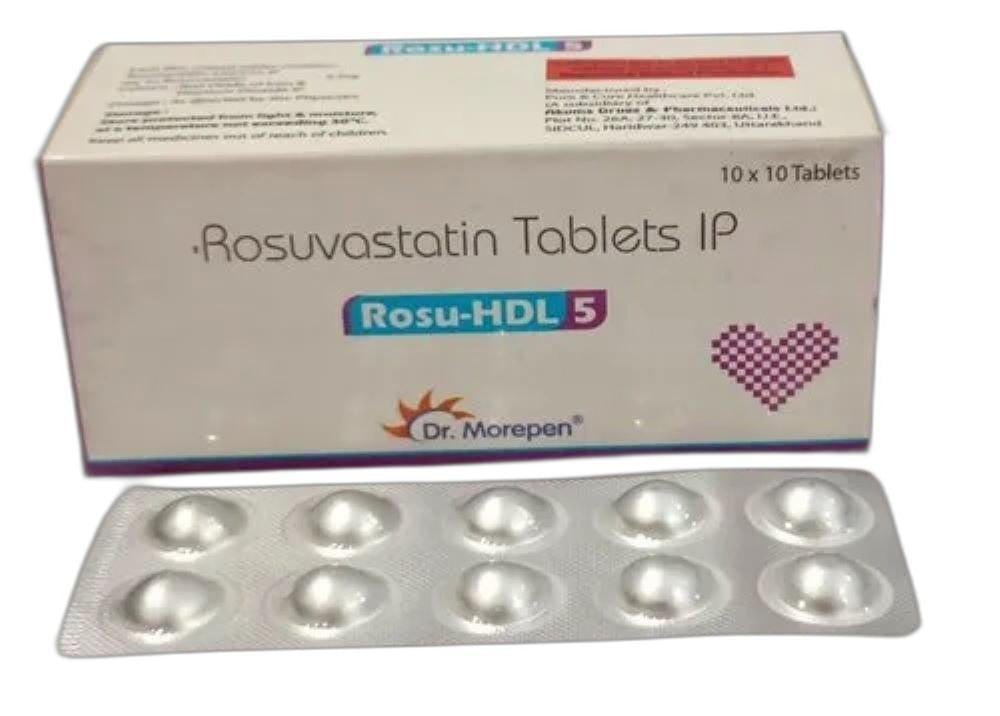
Rosu-HDL
✅ Lowers cholesterol effectively
✅ Increases “good” HDL cholesterol
✅ Reduces heart disease risk
✅ Protects blood vessels
✅ Enhances cardiovascular health
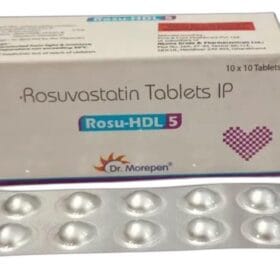
Rosu-HDL contains Rosuvastatin.
✓ Medically reviewed by Morgan Ellis — Pharmacy Researcher · 8 years experience · Last reviewed: May 2026
⚡ Quick Answer — What is Rosu-HDL?
Rosu-HDL is a brand of rosuvastatin (5 mg), a statin (HMG-CoA reductase inhibitor) used to lower LDL (“bad”) cholesterol and reduce cardiovascular events — heart attack, stroke, and CV death — in people with raised cholesterol or established cardiovascular disease. Statins have the strongest outcome-trial evidence of any lipid-lowering drug class: roughly a 22% reduction in major vascular events per 1 mmol/L LDL-C reduction (CTT meta-analysis, > 170,000 patients). High-intensity at 20–40 mg/day (lowers LDL-C by ~50–60%). Moderate-intensity at 5–10 mg/day (~35–48% LDL reduction). The most potent statin, with minimal drug interactions. Hydrophilic, so lower risk of CNS side effects (sleep, mood) than simvastatin. Outcome data from JUPITER (primary prevention in low-LDL, high-CRP patients), GALAXY, and many secondary-prevention trials. First-line choice for high-risk primary and secondary prevention in modern guidelines. Main side effects: muscle aches (5–10%, usually mild), mild transaminase elevation, small new-onset diabetes signal in at-risk patients. Rare but serious: rhabdomyolysis, immune-mediated necrotising myopathy. Avoid in pregnancy (category X). Can be taken at any time of day because of the long half-life — timing consistency matters more than specific time.
📦 Every order is covered by our Reshipment Assurance Policy — if your parcel does not arrive within 20 business days, we reship it.
Why order from MedsBase
Our generic medications are sourced from WHO-GMP certified manufacturers and shipped worldwide in discreet, plain packaging — no medication name on the parcel exterior. Card payments are routed through a regulated processor (statement descriptors include a regulated card-payment processor — never “MedsBase” or any medication name). Crypto and SEPA bank transfer are also accepted. Every order is backed by our Reshipment Assurance Policy.
What Is Rosu-HDL?
Rosu-HDL is an oral lipid-lowering medicine containing rosuvastatin (5 mg), manufactured by WHO-GMP certified manufacturer. Supplied in packs of 30, 60, 90 or 180 tablets. Originator brand: Crestor (AstraZeneca, 2003).
rosuvastatin belongs to the statin class (HMG-CoA reductase inhibitors), the most widely prescribed and best-evidenced cholesterol-lowering drugs in the world. Statins are on the WHO Essential Medicines List and are first-line therapy in virtually every modern cardiovascular prevention guideline (ACC/AHA, ESC/EAS, NICE, CCS). High-intensity at 20–40 mg/day (lowers LDL-C by ~50–60%). Moderate-intensity at 5–10 mg/day (~35–48% LDL reduction).
What Is Rosu-HDL Used For?
- Primary prevention of atherosclerotic cardiovascular disease (ASCVD) in people at elevated 10-year risk (typically ≥ 7.5–10% or with multiple risk factors)
- Secondary prevention after myocardial infarction, stroke/TIA, symptomatic peripheral artery disease, or revascularisation — these patients need high-intensity statin therapy regardless of baseline LDL
- Familial hypercholesterolaemia (heterozygous and, with add-ons, homozygous)
- Type 2 diabetes with additional risk factors — statin is typically added from diagnosis
- Chronic kidney disease (CKD) — most guidelines recommend statin ± ezetimibe in CKD stages 3–5 not on dialysis
- Some forms of mixed dyslipidaemia (with raised LDL and triglycerides)
How Does Rosu-HDL Work?
rosuvastatin is a competitive inhibitor of HMG-CoA reductase, the rate-limiting enzyme in cholesterol biosynthesis in the liver. Blocking this enzyme has several downstream effects:
- Reduces intracellular cholesterol in hepatocytes
- Upregulates LDL receptors on the hepatocyte surface — the liver pulls more LDL out of the blood
- Lowers plasma LDL-C by 25–60% depending on statin and dose
- Modestly lowers triglycerides (10–30%) and raises HDL-C (5–10%)
- Stabilises atherosclerotic plaques — pleiotropic effects on inflammation, endothelial function, and platelet reactivity (partly LDL-independent)
Pharmacokinetics: Minimal CYP metabolism (< 10%). Eliminated largely unchanged in bile and (~10%) via the kidneys. This makes rosuvastatin the lowest-interaction statin. Half-life: ~19 hours (longest of the statins). Can be taken at any time of day because of the long half-life — timing consistency matters more than specific time.
Clinical effect: LDL-C falls within 2 weeks, reaches near-maximum by 4–6 weeks. Check a lipid panel and ALT 6–12 weeks after starting or titrating.
Dosage and Administration
Start 5–10 mg once daily. Titrate at 4-weekly intervals. Usual range 5–40 mg/day. Maximum 40 mg/day (reserved for high-risk patients not at LDL goal).
- Take with or without food.
- Miss a dose — take as soon as you remember. Skip if close to the next dose; do not double up.
- Ethnic considerations: Ethnic adjustment: Asian patients (Chinese, Japanese, Korean, Indian, Filipino, Vietnamese) have higher systemic exposure — start at 5 mg/day and limit to 20 mg/day in most Asian patients.
- Lifestyle is additive. Even at maximum statin dose, dietary improvement (Mediterranean or DASH pattern), weight loss, and regular exercise add 5–15% LDL reduction on top of the drug.
- Adherence is everything. Statins only work while you take them; stopping after remission of “normal” cholesterol results in LDL rising back to pre-treatment levels within weeks, and CV-event risk follows.
Side Effects
Statins are generally well tolerated. In large randomised trials, the excess side-effect rate over placebo is small.
Common:
- Muscle symptoms (SAMS — statin-associated muscle symptoms) — aching, stiffness, mild weakness. Reported by 5–10% of users in open-label observational data; randomised trials (SAMSON, StatinWISE) show that the majority of muscle symptoms attributed to statins are not actually caused by them (nocebo effect). Real statin-related myalgia does occur and usually resolves on stopping; try a different statin or lower dose.
- Mild transaminase elevation (ALT/AST up to 3× ULN) — typically asymptomatic, often resolves without stopping.
- GI upset, headache, dizziness
- Sleep disturbance (more with lipophilic statins like simvastatin)
Uncommon but important:
- New-onset type 2 diabetes — small absolute increase (~1 extra case per 200 patient-years) in those with pre-existing diabetes risk factors. CV benefit outweighs the diabetes risk in all risk groups that warrant a statin.
- Rhabdomyolysis — very rare (< 0.1%). Severe muscle pain + dark urine + markedly raised CK. Stop the drug and seek medical help.
- Immune-mediated necrotising myopathy — rare autoimmune muscle disease triggered by statin exposure; persists after stopping and needs immunosuppression. Anti-HMGCR antibodies positive.
- Severe liver injury — very rare.
- Peripheral neuropathy — rare
- Cognitive complaints (memory fog) — reported but not confirmed as causal in large trials
Drug Interactions
Very few clinically significant interactions. Cyclosporine — raises rosuvastatin levels 7-fold; contraindicated or limit to 5 mg/day. Gemfibrozil — raises rosuvastatin levels; avoid or limit to 10 mg/day. HIV protease inhibitors — variable effect; often dose-limit. Warfarin — modest INR rise; monitor. No interaction with grapefruit, amlodipine, amiodarone, or diltiazem.
Who Should Not Take Rosu-HDL?
- Pregnancy (category X) — stop before conception; statins are not cholesterol-of-pregnancy drugs
- Breastfeeding — avoid
- Active liver disease or persistent unexplained transaminase elevation > 3× ULN
- Known hypersensitivity to statins
- History of statin-induced myopathy or rhabdomyolysis
- Severe renal impairment — needs dose adjustment (particularly rosuvastatin)
- Some alcohol-related liver disease
- Concomitant strictly-contraindicated drugs (varies by statin — see Drug Interactions)
Storage
Store Rosu-HDL below 25°C in a dry place, in the original blister. Keep out of reach of children.
Frequently Asked Questions
Is Rosu-HDL the same as rosuvastatin?
Yes — Rosu-HDL contains the active ingredient rosuvastatin. Bioequivalence to the originator brand (Crestor (AstraZeneca, 2003)) is required by regulatory authorities, so clinical effect is the same at the same dose.
Rosuvastatin vs atorvastatin — which is better?
For LDL-lowering per milligram, rosuvastatin is more potent (rosuvastatin 10 mg ≈ atorvastatin 20 mg). Rosuvastatin has fewer drug interactions (minimal CYP metabolism vs atorvastatin’s CYP3A4). Atorvastatin has a larger outcome-trial dataset but both are clinically equivalent for CV event reduction at comparable intensities. For patients on HIV therapy, amiodarone, cyclosporine, or many calcium-channel blockers, rosuvastatin is usually preferred. Atorvastatin may be preferred in advanced renal impairment (rosuvastatin has some renal clearance).
When should I take Rosu-HDL — morning or evening?
Can be taken at any time of day because of the long half-life — timing consistency matters more than specific time.
Do I need to take Rosu-HDL for life?
In most cases, yes. Statins work only while you take them. For secondary prevention (post-heart-attack, stroke, stenting) they are essentially lifelong. For primary prevention, they can sometimes be stopped if lifestyle changes achieve a sustained 40–50% LDL reduction and 10-year risk drops substantially, but stopping after risk is controlled usually results in LDL rising back to pre-treatment levels within weeks.
What about statins and muscle aches?
About 5–10% of statin users report muscle aches, but SAMSON (2020) and StatinWISE (2021) — elegant N-of-1 trials with blinded statin/placebo crossovers — showed that roughly 90% of muscle symptoms attributed to statins are actually placebo-independent (they happen equally on placebo). Real statin-related myalgia does exist; if it’s genuine, switching to a different statin, lowering the dose, or alternate-day dosing usually resolves it. Measure CK if severe; stop immediately and seek care if muscle pain is severe with dark urine (rhabdomyolysis).
Should I take CoQ10 with Rosu-HDL?
Statins do lower circulating CoQ10 levels, but randomised trials of CoQ10 supplementation (200 mg/day) have not consistently shown benefit for statin-related muscle symptoms. It is safe but cheap supplementation is not a substitute for properly investigating persistent muscle pain.
Can I drink alcohol on Rosu-HDL?
Moderate alcohol (1–2 units/day) is acceptable. Heavy drinking raises liver-enzyme elevation risk and should be avoided. Discuss honestly with your clinician; alcohol is a bigger driver of liver problems than the statin.
What if I forget to take Rosu-HDL?
Take it as soon as you remember. If it is close to your next scheduled dose, skip and continue as normal — do not double up.
Where can I buy Rosu-HDL online?
You can order Rosu-HDL (5 mg) from MedsBase in packs of 30, 60, 90 or 180 tablets. We ship worldwide with discreet packaging and genuine WHO-GMP certified manufacturer stock.
Related Cholesterol Medications
- Crestor — Rosuvastatin 5/10/20 mg (AstraZeneca)
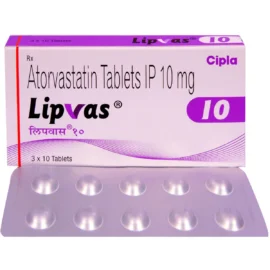
- Lipvas — Atorvastatin
- Atorvatin — Atorvastatin
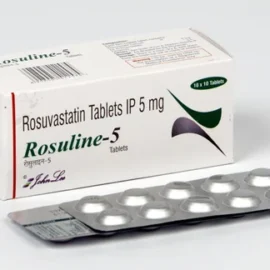
- Rosuline — Rosuvastatin
- Pivasta — Pitavastatin 4 mg (interaction-clean statin)
- Ezedoc — Ezetimibe (add-on to statin)
- Lipicard — Fenofibrate (triglyceride-lowering)
- Browse all High Cholesterol Medications
Why order from MedsBase
Rosu-HDL is supplied through a WHO-GMP certified manufacturer with full COA documentation. We ship worldwide in plain, discreet packaging, and every order is covered by our Reshipment Assurance Policy. Your statement descriptor when paying by card shows the regulated payment processor (a regulated card-payment processor), never “MedsBase” or any medication name.
Related Alternatives
Other products in Chronic Conditions that customers also view:
More options in High Cholesterol Treatments
Ranked by recent MedsBase order volume — what other customers in this category are picking.
| Strength | 5 mg |
|---|---|
| Quantity | 30 Tablet/s, 60 Tablet/s, 90 Tablet/s, 180 Tablet/s |
 Rosu-HDL
Q & A
Rosu-HDL
Related products



Reviews
There are no reviews yet