







T-Bact Ointment
✅ Kills harmful bacteria
✅ Treats skin infections
✅ Prevents bacterial growth
✅ Reduces inflammation
✅ Promotes wound healing
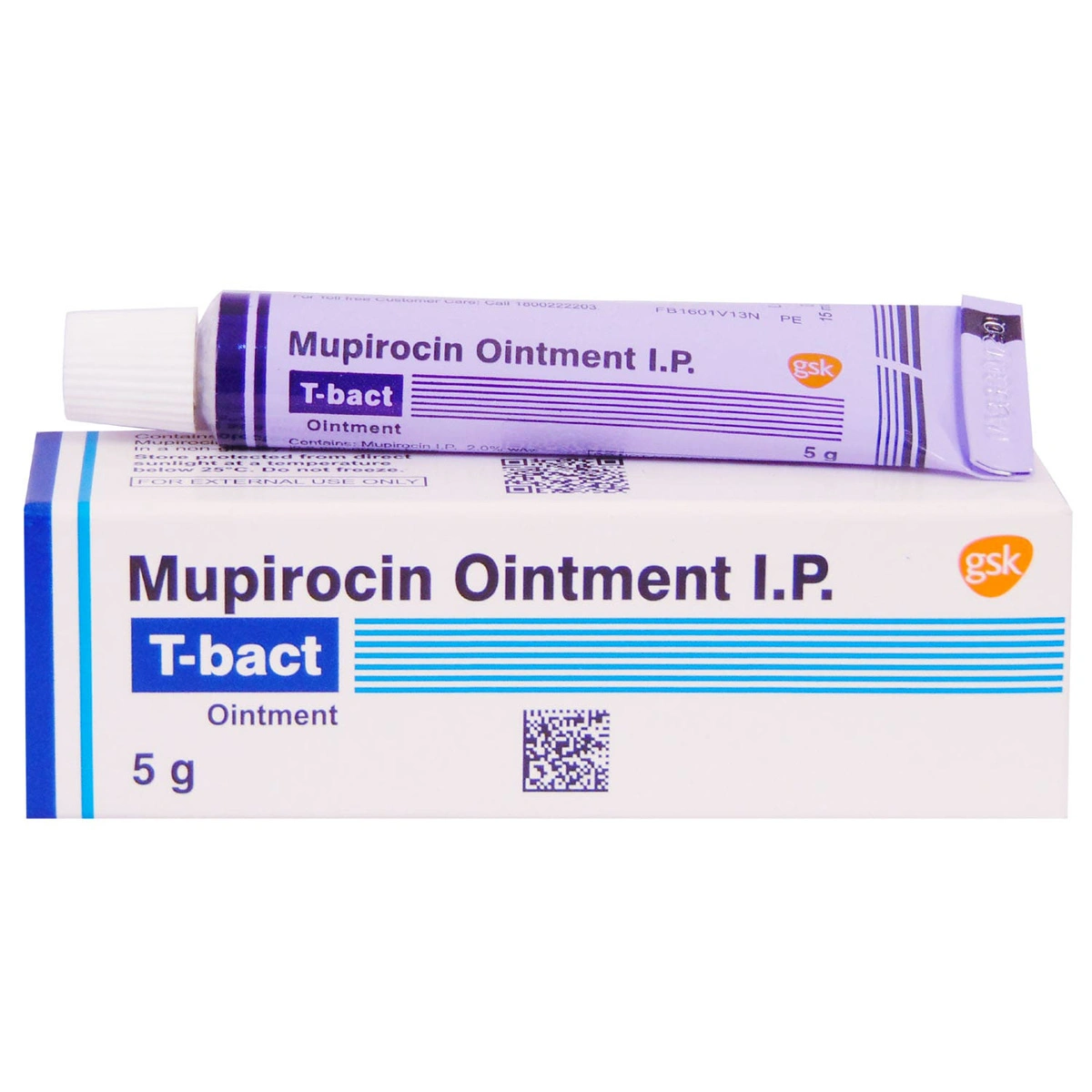
T-Bact Ointment contains Mupirocin.
✓ Medically reviewed by Morgan Ellis — Pharmacy Researcher · 8 years experience · Last reviewed: May 2026
⚡ Quick Answer — What is T-Bact Ointment?
T-Bact Ointment contains mupirocin 2% w/w as a topical ointment from GlaxoSmithKline — a unique-class antibiotic used for the treatment of impetigo, secondary infection of minor wounds and cuts, infected eczema, folliculitis, and for nasal MRSA decolonisation. Mupirocin’s mechanism (inhibition of bacterial isoleucyl-tRNA synthetase) is unique — no cross-resistance with any other antibiotic class. This makes it a precious resource against multi-drug-resistant organisms including methicillin-resistant Staphylococcus aureus (MRSA). Apply a thin film 2-3 times daily for a maximum of 7-10 days. Beyond 10 days, the risk of resistance development rises substantially — mupirocin should NOT be used for long-term wound dressing or chronic skin colonisation without microbiological confirmation. Most common side effects: mild burning, stinging, or itching at the application site. Mupirocin is for cutaneous use only — do not apply to mucous membranes, the eye, or use the skin formulation in the nose (a separate nasal-formulation mupirocin exists for MRSA decolonisation).
📦 Every order is covered by our Reshipment Assurance Policy — if your parcel does not arrive within 20 business days, we reship it.
Why order from MedsBase
Our generic medications are sourced from WHO-GMP certified manufacturers and shipped worldwide in discreet, plain packaging — no medication name on the parcel exterior. Card payments are routed through a regulated processor (statement descriptors include a regulated card-payment processor — never “MedsBase” or any medication name). Crypto and SEPA bank transfer are also accepted. Every order is backed by our Reshipment Assurance Policy.
What Is T-Bact Ointment?
T-Bact Ointment is a topical mupirocin 2% w/w ointment from GlaxoSmithKline, supplied in a 5 g tube. Mupirocin (formerly known as pseudomonic acid A) was originally isolated from Pseudomonas fluorescens in 1971 and entered clinical use in 1985. Internationally branded as Bactroban (GSK), Centany (Medimetriks), Eismycin, Mupirox, Mupiderm, Foban, and many generic versions.
How Does Mupirocin Work?
Mupirocin has a unique mechanism of action not shared by any other antibiotic class:
- Inhibits bacterial isoleucyl-tRNA synthetase (IleRS) — the enzyme that charges tRNA with isoleucine for protein synthesis. Without functional IleRS, bacterial protein synthesis halts and the cell dies.
- Selective for bacterial IleRS — mammalian IleRS is structurally different and is not affected at clinical doses, giving mupirocin an excellent safety margin.
- Bactericidal at therapeutic concentrations against susceptible Gram-positives (Staphylococcus aureus including MRSA, Streptococcus pyogenes) and some Gram-negatives. Limited activity against anaerobes and Gram-negative enterics.
- No cross-resistance with beta-lactams, macrolides, fluoroquinolones, tetracyclines, glycopeptides, or any other antibiotic class — this is mupirocin’s great clinical strength against MRSA.
Mupirocin is rapidly inactivated in serum (half-life <30 min) and has minimal systemic absorption from intact skin — it is purely a topical antibiotic. Visible improvement of skin infection typically begins within 2-3 days; full clearance over the 7-10 day treatment course.
When T-Bact Ointment Is Used
Licensed indications:
- Impetigo (caused by Staphylococcus aureus or Streptococcus pyogenes) — first-line topical antibiotic for limited-extent impetigo
- Secondary infection of minor wounds, cuts, abrasions, lacerations, and burns
- Infected dermatoses — secondarily-infected eczema, contact dermatitis
- Folliculitis (bacterial)
- Furunculosis (boils) — uncomplicated
Off-label / specialist uses:
- MRSA / MSSA nasal decolonisation — using the dedicated 2% nasal ointment formulation (NOT this skin formulation), 2-3× daily for 5 days. Standard pre-operative protocol for cardiac, orthopaedic, and other high-risk surgeries.
- Recurrent furunculosis prevention — nasal decolonisation + intermittent topical to colonised skin sites
- Outbreak control in healthcare settings (NICU, dialysis units)
Mupirocin is NOT for: deep abscesses (need surgical drainage), cellulitis (needs systemic antibiotic), erysipelas, infected diabetic foot ulcers (multi-organism, needs systemic + culture-guided therapy), or fungal/viral skin infections.
T-Bact Ointment Dosage and How to Apply
- Wash hands before and after applying.
- Clean the affected area gently with mild soap and water; pat dry with a clean towel.
- Apply a small amount of T-Bact Ointment (a pea-sized blob covers a 2-3 cm lesion) to the infected area; rub in gently.
- Cover with a sterile dressing if needed — particularly for impetigo on exposed skin (face, hands) to prevent transmission and reduce auto-inoculation.
- Apply 2-3 times daily for up to 7-10 days.
- If no improvement after 3-5 days, see your doctor — the infection may be caused by a mupirocin-resistant organism, may be a different microbiological process (fungal, viral), or may need systemic antibiotics.
- Do NOT use beyond 10 days — resistance development risk rises sharply. If chronic colonisation is the issue, discuss longer-term decolonisation strategies with your doctor (alternating antiseptics, behavioural measures).
Children: safe from age 2 months under medical supervision. Same dosing schedule.
Pregnancy: minimal systemic absorption; generally considered safe. Breastfeeding: do not apply to nipples without specialist advice.
MRSA Resistance & Stewardship
Mupirocin is one of the few topical antibiotics with reliable activity against methicillin-resistant Staphylococcus aureus (MRSA) — including community-acquired (CA-MRSA) and hospital-acquired (HA-MRSA) strains. This makes it valuable but also vulnerable to misuse-driven resistance.
Mupirocin resistance comes in two forms:
- Low-level resistance (MIC 8-256 μg/mL) — from chromosomal point mutations in IleRS. Treatment may still succeed but with higher failure rates.
- High-level resistance (MIC >512 μg/mL) — from acquired plasmid-borne mupA gene encoding an alternative IleRS. Treatment usually fails. High-level resistance prevalence has risen from <1% in the 1990s to 5-25% in some hospital settings now.
Stewardship principles for mupirocin use:
- Use only when topical antibiotic is genuinely indicated — not for routine prophylaxis on every cut or scratch
- Restrict each course to 7-10 days maximum
- Do not use as long-term wound-care dressing
- Reserve for confirmed or strongly-suspected staphylococcal infection
- For MRSA decolonisation, follow institutional protocols — not freelance long courses
Side Effects
- Common (mild): burning, stinging, itching at application site (often related to the polyethylene glycol base)
- Less common: dry skin, contact dermatitis, erythema
- Rare: allergic contact dermatitis, generalised hypersensitivity reactions
- Very rare: Stevens-Johnson syndrome, systemic toxicity from extensive use over large surface areas (the polyethylene glycol vehicle can be absorbed through extensively damaged skin)
Contraindications & Warnings
- Hypersensitivity to mupirocin or any excipient (including polyethylene glycol)
- Application to mucous membranes (eyes, mouth, vagina, urethra)
- Use of the skin formulation in the nasal cavity (use the dedicated nasal-formulation mupirocin instead)
- Application to extensive areas of damaged or burned skin (potential systemic absorption of the polyethylene glycol base in patients with renal impairment)
- Severe renal impairment (relative contraindication for extensive use, due to PEG accumulation concerns)
Drug Interactions
Topical mupirocin has minimal systemic absorption and no clinically significant drug interactions. Local interactions to manage:
- Other topical preparations — do not apply different topicals to the same area at the same time; separate by at least 30 minutes
- Other topical antibiotics — do not combine; redundant and increases resistance pressure
How T-Bact Ointment Compares to Alternatives
| Topical antibiotic | Best for |
|---|---|
| Mupirocin 2% (T-Bact Ointment) | Impetigo, MRSA-positive infections, focused short courses |
| Fusidic acid 2% | Same indications as mupirocin; rising resistance in some regions; reserved for narrower use in some guidelines |
| Retapamulin 1% | Newer alternative; limited availability; for impetigo >9 months |
| Bacitracin / polymyxin / neomycin combinations | OTC options for minor wounds; high sensitisation rate (especially neomycin, see Betnovate-N) |
| Topical clindamycin (Clincitop) | Acne (specifically targeted to C. acnes); not for impetigo |
| Oral flucloxacillin / cephalexin / clindamycin | Extensive impetigo, cellulitis, systemic-symptom infections |
Storage and Shelf Life
Store T-Bact Ointment below 25°C in the original tube. Replace cap tightly. Keep out of reach of children. Use within 12 months of first opening or before the printed expiry date.
Frequently Asked Questions
Why is T-Bact Ointment limited to 7-10 days?
Mupirocin is a precious resource against MRSA and other resistant Gram-positives because of its unique mechanism. Long courses select for resistant organisms (low-level chromosomal mutation, then high-level mupA plasmid acquisition) and can render mupirocin useless when you really need it. The 7-10 day ceiling preserves mupirocin’s clinical utility for the long-term population. If your skin infection has not cleared in 7-10 days of mupirocin, the next step is microbiological culture + susceptibility, NOT another mupirocin course.
Can I use T-Bact Ointment on my child’s impetigo?
Yes — topical mupirocin is the first-line treatment for limited-extent impetigo in children from age 2 months under medical supervision. For extensive impetigo (more than a few small lesions), or impetigo with systemic symptoms (fever, malaise), oral flucloxacillin or cephalexin is more appropriate. See your doctor for severe or extensive cases.
Can T-Bact Ointment treat MRSA?
Yes — mupirocin retains activity against most strains of MRSA and is one of the few topical antibiotics with reliable MRSA coverage. However, high-level mupirocin resistance is now present in 5-25% of MRSA isolates in some hospital settings; treatment failure should prompt culture + susceptibility testing. For nasal MRSA decolonisation, use the dedicated 2% nasal ointment formulation (a different product from this skin ointment) per institutional protocols.
Should I use T-Bact Ointment on every cut?
No — routine prophylaxis on minor cuts and scratches is not appropriate use. Most minor wounds heal cleanly with simple wound care (clean with mild soap, apply petroleum jelly or simple dressing, keep clean and dry). Reserve mupirocin for infections that have actually developed (visible pus, crusting, redness expanding beyond the wound, warmth) or for high-risk wounds in immunocompromised patients. Overuse of topical antibiotics drives resistance.
What if my impetigo doesn’t clear after 7 days?
See your doctor. Failure to clear after a proper 7-day course suggests one of: (a) mupirocin-resistant organism — needs culture + alternative agent; (b) wrong diagnosis — what looks like impetigo may be eczema herpeticum, tinea, or autoimmune blistering disease; (c) extensive or systemic infection needing oral antibiotics; (d) immunocompromised host. Do NOT just continue applying mupirocin beyond 10 days — resistance pressure rises sharply.
Can I use T-Bact Ointment inside my nose for cold sores?
No — cold sores are caused by herpes simplex virus, not bacteria; mupirocin has no antiviral activity. For nasal MRSA decolonisation, use the dedicated 2% nasal-formulation mupirocin (a different product) per medical advice. The skin-formulation ointment should not be used in the nose because the polyethylene glycol base can cause local irritation in the nasal mucosa.
Can I use T-Bact Ointment on my burn or large wound?
For minor first-degree or small second-degree burns once initial wound care is done, short-course mupirocin can be appropriate if there is evidence of bacterial infection. For large burns or extensive wounds, see a doctor — the polyethylene glycol base of skin-formulation mupirocin can be systemically absorbed through extensively damaged skin and cause toxicity in patients with renal impairment.
Where can I order T-Bact Ointment online?
You can order T-Bact Ointment from MedsBase in standard pack sizes (5 g tube). Orders ship worldwide with discreet packaging. Topical mupirocin should be used under clinical supervision.
Related Alternatives
Other products in General Health that customers also view:
More options in Beauty & Skin Care
Ranked by recent MedsBase order volume — what other customers in this category are picking.


| Strength | 2%w/w 5g |
|---|---|
| Quantity | 1 Tube/s, 2 Tube/s, 3 Tube/s, 6 Tube/s |
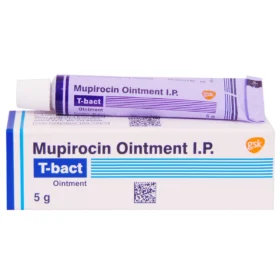 T-Bact Ointment
Q & A
T-Bact Ointment
Related products


Reviews
There are no reviews yet