








Thalix
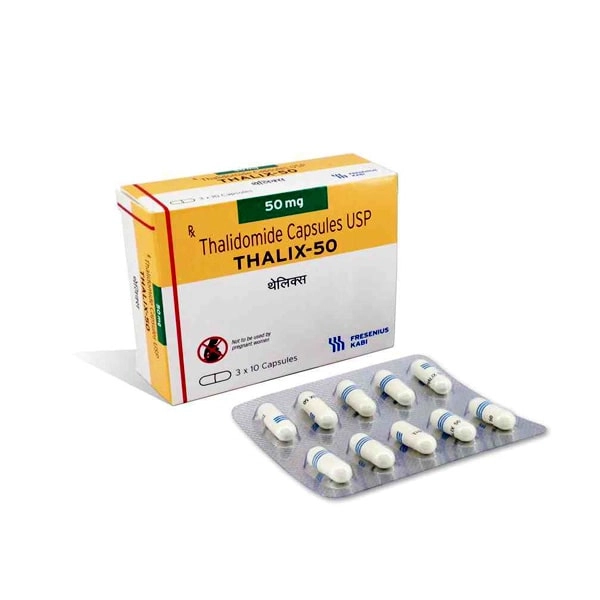
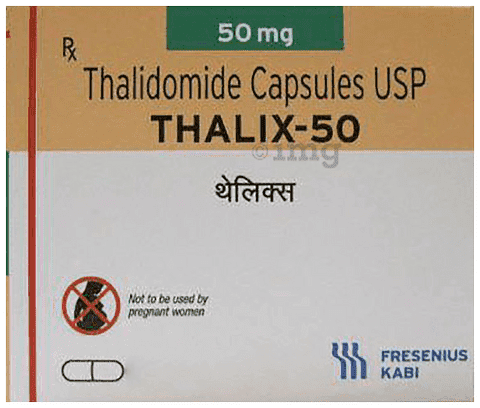
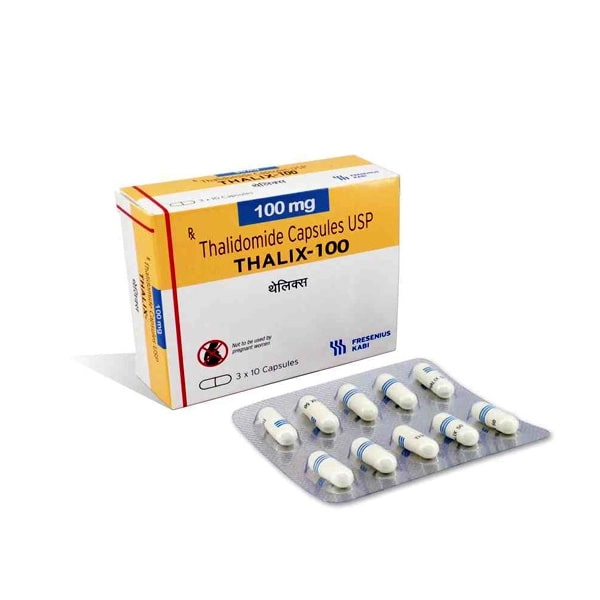
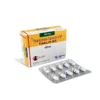
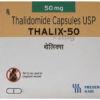
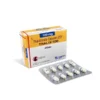
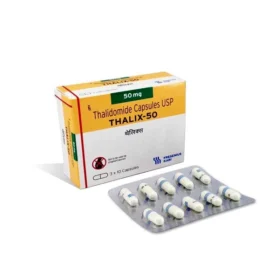
Thalix (Thalidomide 50/100 mg) — first-generation IMiD for multiple myeloma and erythema nodosum leprosum. Notoriously teratogenic; strict pregnancy prevention.
✓ Medically reviewed by Morgan Ellis — Pharmacy Researcher · 8 years experience · Last reviewed: May 2026
Quick Answer
Thalix — Thalidomide 50/100 mg (WHO-GMP certified manufacturer). First-generation IMiD — for multiple myeloma, erythema nodosum leprosum (Type 2 lepra reaction), and refractory inflammatory conditions. Notoriously teratogenic — strict pregnancy-prevention programme mandatory.
What you get with MedsBase:
- WHO-GMP certified manufacturer
- Discreet plain-envelope packaging
- Worldwide shipping
- Rated by 1,400+ customers (read reviews)
📦 Reshipment Assurance: if your order has not arrived 20 business days after dispatch, we reship it at no extra cost. Read the policy.
Why order from MedsBase
Thalix ships from a WHO-GMP certified manufacturer in plain packaging, billed through a regulated payment processor (the statement descriptor reads a regulated card-payment processor — never MedsBase or any medication name). Every order carries our 20-business-day Reshipment Assurance.
⚠️ Specialist-supervised cancer therapy — this medication is started, monitored, and stopped by an oncologist or haematologist. Dosing depends on tumour type, stage, body surface area, organ function, and concomitant therapy. Self-treatment is not appropriate; the information below is educational and supports informed conversations with your specialist.
All IMiDs are severely teratogenic (thalidomide most notoriously — phocomelia). Mandatory pregnancy-prevention programme (REMS/iCare equivalent): pregnancy testing before, during, and after; two effective contraceptive methods; counselling for both partners; no blood donation during therapy or for 4 weeks after. Even one dose during pregnancy can cause severe malformations.
IMiDs carry significantly elevated risk of deep vein thrombosis and pulmonary embolism, especially in combination with corticosteroids or doxorubicin. Mandatory thromboprophylaxis: low-dose aspirin (low-risk), or LMWH/warfarin/DOAC (higher-risk patients). Specialist-determined.
Thalidomide causes dose-related peripheral neuropathy (often irreversible) and significant sedation. Take in the evening. Reassess neuropathy at every visit; stop or dose-reduce if grade 2+ develops. Avoid in pre-existing significant neuropathy.
Frequently Asked Questions
When is this used?
First-generation IMiD — for multiple myeloma, erythema nodosum leprosum (Type 2 lepra reaction), and refractory inflammatory conditions. Notoriously teratogenic — strict pregnancy-prevention programme mandatory.
How is it taken?
Once daily, typically in cycles (e.g., 21 days on, 7 days off for lenalidomide). Specific dose and schedule are myeloma-protocol-specific (Rd, RVd, KRd, etc.). Specialist-determined by tumour response and tolerability.
Pregnancy prevention?
Mandatory programme: monthly pregnancy tests, two effective contraceptive methods, partner contraception, counselling. Even one dose during pregnancy causes severe malformations. No blood donation during therapy or for 4 weeks after stopping.
Common side effects?
IMiD class: VTE, fatigue, rash, GI (constipation, diarrhoea), myelosuppression. Lenalidomide: less neuropathy than thalidomide. Pomalidomide: often better tolerated than thalidomide; renal-friendly. Thalidomide: peripheral neuropathy, sedation.
Drug interactions?
Anticoagulants — adjust based on VTE prophylaxis strategy. Digoxin levels may rise. Erythropoietin agents + IMiD — increased thrombosis risk; use only with mandatory thromboprophylaxis.
Renal monitoring?
Lenalidomide: dose-adjust by CrCl (significant renal accumulation). Pomalidomide: less renal effect but still monitor. Thalidomide: renally cleared metabolite — monitor renal function.
What if I miss a dose?
Take when you remember if <12 hours late; otherwise skip and resume — do not double up. Notify oncology team if multiple doses missed.
Vaccination?
Inactivated vaccines OK; live vaccines contraindicated during IMiD therapy. Optimise vaccinations before starting if possible.
Long-term complications?
IMiD therapy: secondary primary malignancies (especially with extended use), cumulative VTE risk, neuropathy (thalidomide especially).
When is treatment stopped?
Specialist-determined: response duration, toxicity, planned treatment break, transition to maintenance therapy. IMiD maintenance therapy is now standard in myeloma — typically lenalidomide post-autologous stem cell transplant continued for 2-3 years or until intolerance.
Other Cancer Medications
- Xeloda — capecitabine 500 mg — oral 5-FU prodrug for breast/colorectal/gastric cancers
- Altraz — anastrozole 1 mg — aromatase inhibitor for post-menopausal breast cancer
- Xbira — abiraterone 250 mg — CYP17 inhibitor for metastatic prostate cancer
- Zoldria — zoledronic acid IV — for bone metastases and hypercalcaemia
- Actorise — darbepoetin alfa — for chemotherapy-induced anaemia
More options in Anti Cancer Medication
Ranked by recent MedsBase order volume — what other customers in this category are picking.
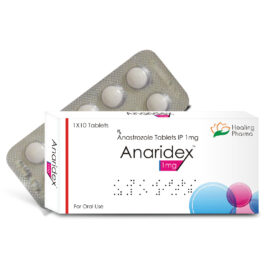

| Strength | 50 mg, 100 mg |
|---|---|
| Quantity | 30 Capsule/s, 60 Capsule/s, 90 Capsule/s |
| Pharma Form | Capsule/s |
| Manufacturer | Fresenius Kabi |
| Treatment | Multiple myeloma, Lepra reaction |
| Generic Brand | Thalidomide |
 Thalix
Q & A
Thalix
Related products







Reviews
There are no reviews yet