







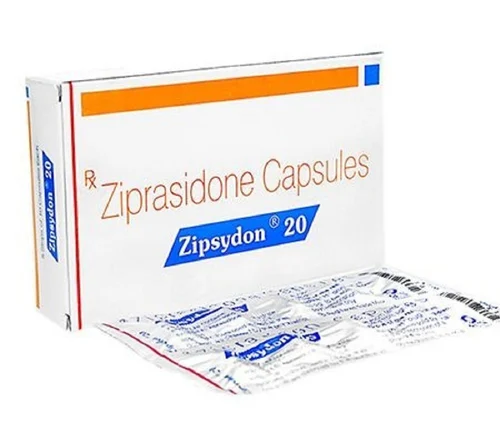
Zipsydon
✅ Manages psychotic disorders
✅ Reduces hallucinations
✅ Controls mood swings
✅ Improves cognitive function
✅ Minimizes anxiety symptoms
Zipsydon contains Ziprasidone.
✓ Medically reviewed by Morgan Ellis — Pharmacy Researcher · 8 years experience · Last reviewed: May 2026
⚡ Quick Answer — What is Zipsydon?
Zipsydon contains ziprasidone from a WHO-GMP certified manufacturer (Sun Pharma) — an atypical antipsychotic distinguished from peers by lower metabolic side-effect burden (less weight gain, less glucose / lipid impact than olanzapine, quetiapine, or risperidone) but highest QT prolongation of the atypicals. Crucial dosing rule: must be taken with a ≥ 500-calorie meal — bioavailability doubles with food. Empty-stomach dosing roughly halves drug exposure and is a common cause of treatment failure. Standard adult dose: 40–80 mg twice daily with food (range 40–160 mg/day). Schizophrenia (FDA-approved for adults), bipolar mania. Pre-existing QT prolongation, recent MI, uncompensated heart failure, and concurrent QT-prolonging drugs are absolute contraindications. Baseline ECG and electrolyte check before starting.
📦 Every order is covered by our Reshipment Assurance Policy — if your parcel does not arrive within 20 business days, we reship it.
Why order from MedsBase
Our generic medications are sourced from WHO-GMP certified manufacturers and shipped worldwide in discreet, plain packaging — no medication name on the parcel exterior. Card payments are routed through a regulated processor (statement descriptors include a regulated card-payment processor — never “MedsBase” or any medication name). Crypto and SEPA bank transfer are also accepted. Every order is backed by our Reshipment Assurance Policy.
What Is Zipsydon?
Zipsydon is an oral capsule of ziprasidone hydrochloride manufactured by Sun Pharma. Ziprasidone (US brand Geodon) was launched by Pfizer in 2001 as an atypical antipsychotic with a distinctive favourable metabolic profile. It is a D2 and 5-HT2A antagonist with potent 5-HT1A partial agonist activity, plus serotonin / norepinephrine reuptake inhibition (the SNRI-like component). The favourable metabolic profile is the main advantage; the QT prolongation and food-dependent absorption are the main limitations.
Approved Indications
- Schizophrenia — adults; acute and maintenance
- Bipolar I disorder, acute mania or mixed episodes — monotherapy or with lithium / valproate
- Acute agitation in schizophrenia — intramuscular formulation (not oral)
- Off-label: bipolar maintenance, treatment-resistant depression augmentation, autism spectrum irritability (less evidence than risperidone)
Dosing
| Indication | Start | Target | Maximum | Notes |
|---|---|---|---|---|
| Schizophrenia | 20 mg BID with food | 40–80 mg BID | 100 mg BID (200 mg/day) | Always with ≥ 500-calorie meal; titrate over several days |
| Bipolar mania | 40 mg BID with food (day 1: 80 mg/day) | 60–80 mg BID | 80 mg BID (160 mg/day) | Faster titration than schizophrenia; with food |
| Maintenance | 40–80 mg BID | 40–80 mg BID | 100 mg BID | Sustained response usually requires upper-end doses |
| Hepatic impairment | Reduce dose, slower titration | — | — | Limited data — halve increments |
The Food Requirement — Why It Matters So Much
Ziprasidone bioavailability is approximately 60% with a 500-calorie meal but only 30% on an empty stomach. Taking the dose without food halves the active drug exposure — a leading cause of treatment failure. Patients counselled to take ziprasidone with breakfast and dinner (substantive meals, not snacks) have far better treatment trajectories. This is the single most important counselling point for ziprasidone.
QT Prolongation — Cardiac Considerations
Ziprasidone has the highest QT-prolongation effect of the commonly used atypical antipsychotics — mean QTc increase ~10 ms at therapeutic dose, more in some patients. Clinical implications:
- Absolute contraindications: history of QT prolongation (including congenital long QT syndrome), recent acute MI, uncompensated heart failure, concurrent treatment with other QT-prolonging drugs
- Baseline workup: ECG (QTc), serum potassium, magnesium — correct hypokalaemia and hypomagnesaemia before starting
- Monitor: repeat ECG if QT-prolonging interaction starts, dose escalates significantly, or syncope / palpitations develop
- Stop if: QTc > 500 ms or persistent > 60 ms increase from baseline
Side Effects
Side-effect profile
| Frequency | Effect | Notes |
|---|---|---|
| Common | Sedation | Moderate — less than quetiapine; some patients alert |
| Common | Akathisia (restless agitation) | Often dose-related — reduce dose if intolerable |
| Common | Headache, dizziness | Transient |
| Common | Nausea, dyspepsia | Usually subsides; food helps |
| Less common (vs other atypicals) | Weight gain | Modest — major advantage over olanzapine, quetiapine |
| Less common (vs other atypicals) | Metabolic effects (glucose, lipids) | Modest — one of the metabolic-friendly atypicals |
| Less common (vs other atypicals) | Hyperprolactinaemia | Less than risperidone |
| Important | QT prolongation | Class-leading among atypicals — baseline ECG mandatory |
| Less common | Extrapyramidal symptoms | Less than risperidone or first-generation; akathisia is the main motor side effect |
| Rare | Tardive dyskinesia | Long-term risk |
| Rare | Neuroleptic malignant syndrome | Emergency |
| Rare | Severe rash (DRESS / Stevens-Johnson) | Stop and seek care for any new significant rash with systemic features |
Drug Interactions
Absolute contraindications — QT prolongation: dofetilide, sotalol, quinidine, thioridazine, mesoridazine, chlorpromazine, droperidol, pimozide, sparfloxacin, gatifloxacin, moxifloxacin, halofantrine, mefloquine, pentamidine, arsenic trioxide, levomethadyl, dolasetron, methadone (high dose).
CYP3A4 substrate: caution with strong inhibitors (ketoconazole, ritonavir) and inducers (rifampin, carbamazepine).
Additive sedation: alcohol, benzodiazepines, opioids.
Antihypertensives: additive orthostasis.
Frequently Asked Questions
How long does Zipsydon take to work?
Acute psychosis or mania symptoms often respond within days. Full benefit in schizophrenia at 4–6 weeks. Patients on incomplete dosing (low dose, taken without food) often appear non-responsive when the real problem is sub-therapeutic exposure.
Why must I take Zipsydon with food?
Bioavailability roughly halves on an empty stomach (30% vs 60% with a 500-calorie meal). Taking ziprasidone without food cuts effective drug exposure in half — a common cause of treatment failure. Always take with a substantive meal, not a snack.
Will Zipsydon cause weight gain?
Less than other atypicals — ziprasidone is one of the most metabolic-friendly antipsychotics, alongside aripiprazole and lurasidone. Many patients see no significant weight gain. This is the main reason ziprasidone is chosen over olanzapine or quetiapine.
Is Zipsydon safer than other atypicals for the heart?
No — the opposite. Ziprasidone has the highest QT-prolongation effect of the commonly used atypicals. Patients with pre-existing QT prolongation, recent MI, or uncompensated heart failure should not take ziprasidone.
What is QT prolongation and why does it matter?
QT is the time the heart’s electrical system takes to recharge between beats, measured on an ECG. Prolonged QT raises the risk of a dangerous arrhythmia (torsades de pointes) that can cause sudden cardiac death. Most QT prolongation is asymptomatic but the risk is real with stacking effects from other QT-prolonging drugs or low potassium / magnesium.
Can I take Zipsydon with other antidepressants?
Yes — ziprasidone is sometimes added to SSRIs / SNRIs in treatment-resistant depression. Avoid combinations with citalopram > 20 mg, methadone, or fluoroquinolones — additive QT effect.
Will Zipsydon cause sexual side effects?
Less than risperidone — ziprasidone causes minimal hyperprolactinaemia. Sexual side effects are uncommon at the molecular level but the underlying psychiatric illness and other medications often contribute.
Is Zipsydon safe in pregnancy?
Limited data — not first-line. If continuing for serious mental illness, individualised risk-benefit discussion with prescriber.
Can I drink alcohol on Zipsydon?
Avoid — additive sedation. Heavy alcohol also raises QT risk.
How should Zipsydon be stored?
Store at 15–30 °C in the original blister packaging away from moisture and sunlight. Keep out of reach of children.
Related Alternatives
Other products in Chronic Conditions that customers also view:
More options in Situational Anxiety Treatment
Ranked by recent MedsBase order volume — what other customers in this category are picking.


| Strength | 20 mg |
|---|---|
| Quantity | 30 Capsule/s, 60 Capsule/s, 90 Capsule/s, 180 Capsule/s |
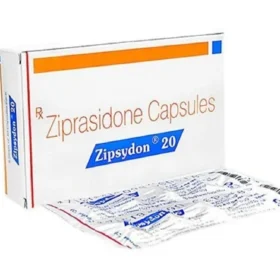 Zipsydon
Q & A
Zipsydon
Related products





Reviews
There are no reviews yet