







✓ Medically reviewed by · Last reviewed: May 2026
Pharmacy Researcher · 8 years experience
Pharmacy researcher with 8 years reviewing clinical drug information, generic formulation equivalence, and international pharmaceutical standards. Focuses on patient-facing accuracy in medication education.
isotretinoin for acne — Isotretinoin for Acne: How It Works, Dosing, Side Effects, and What to Ask First. Read on for an evidence-backed guide covering everything you need to know.
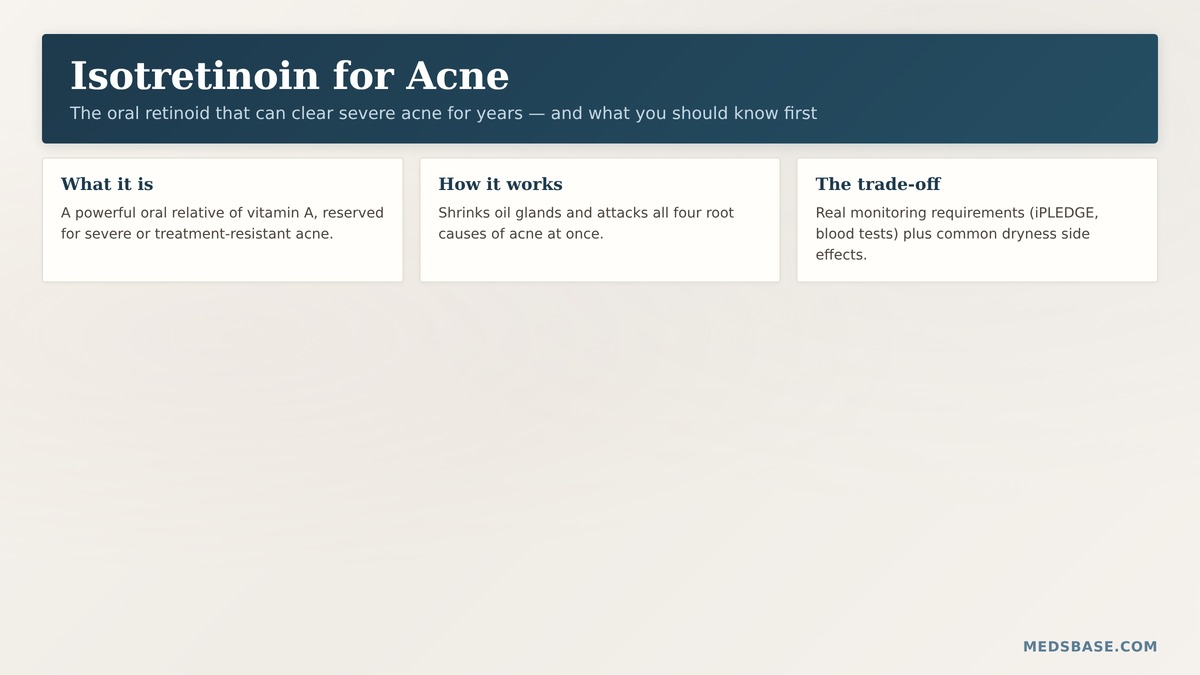
- Isotretinoin for acne is the single most effective treatment available, capable of clearing severe acne for years — and often permanently — after one supervised course.
- It works by shrinking sebaceous (oil) glands and attacking all four root causes of acne at once, which is why no cream or antibiotic compares.
- It is not a first-line option for mild acne, and it carries serious risks — most importantly, severe birth defects if taken during pregnancy.
- Side effects are common but usually dose-dependent and manageable: dry lips, dry skin, dry eyes and occasional muscle aches.
- The biggest predictor of long-term remission is hitting a total cumulative dose of roughly 120–150 mg/kg over the course.
- What Is Isotretinoin for Acne?
- How Does Isotretinoin for Acne Work?
- When Is Isotretinoin for Acne Used?
- How Is Isotretinoin for Acne Dosed?
- Safety Profile & Side Effects
- What Does the Research Say About Isotretinoin for Acne?
- Isotretinoin for Acne vs Other Treatments
- How to Start Isotretinoin for Acne, Step by Step
- Related Reading
- Frequently Asked Questions
- The Bottom Line
You have probably tried benzoyl peroxide, salicylic acid washes, and a course or two of oral antibiotics, and your acne keeps coming back with the same stubborn force. If that sounds familiar, you have almost certainly heard of isotretinoin for acne — the medication some people call “the closest thing to a cure.” That reputation is largely earned: used correctly, isotretinoin for acne can clear even severe, nodular, scarring acne for years, often permanently. But it is also one of the most tightly regulated medicines in existence, and the horror stories you have read online are not entirely invented. By the end of this guide you will understand what it actually does, how it is dosed, the exact risks, and the right questions to ask a dermatologist before you commit.
One side effect of this drug surprises almost everyone and shapes the entire treatment — we’ll get to it in the safety section.
What Is Isotretinoin for Acne?
Quick answer: Isotretinoin for acne is a powerful oral retinoid — a synthetic relative of vitamin A — used to treat severe, stubborn acne that has not responded to other treatments. It is taken daily for about four to five months and works by dramatically shrinking the skin’s oil glands.
Isotretinoin for acne is reserved for the most troublesome cases, not for the occasional breakout. Dermatologists typically consider it when a person has severe nodular or cystic acne, moderate acne that has resisted antibiotics and topical treatment, or acne that is actively causing scarring. It belongs to the retinoid family, the same class as topical tretinoin, but it works systemically, from the inside out. The StatPearls clinical reference summarises it as an oral retinoid used where other options have been inadequate.
How Does Isotretinoin for Acne Work?
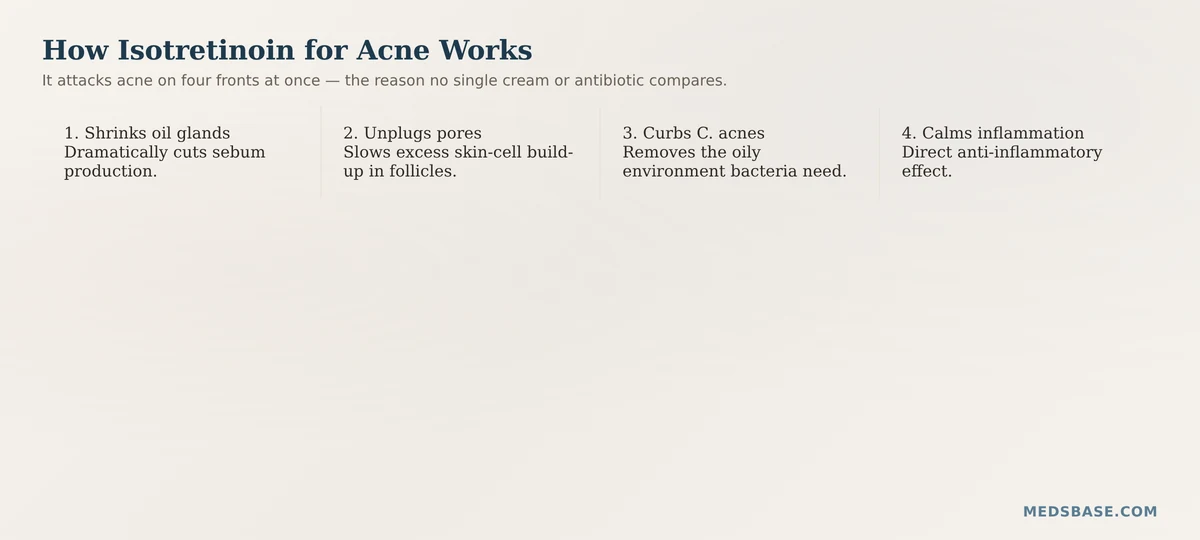
What makes isotretinoin for acne so effective is that it attacks acne on every front at once, rather than a single one. Acne is driven by four overlapping problems — too much oil, clogged pores, a specific bacterium, and inflammation — and isotretinoin hits all four.
First, it shrinks the sebaceous glands, cutting oil production dramatically; this is the single most important effect and the reason dry skin is almost universal. Second, it slows the overproduction of skin cells inside the follicle, so pores are less likely to plug. Third, by removing the oily environment, it makes the skin less hospitable to Cutibacterium acnes, the bacterium linked to acne. Fourth, it has direct anti-inflammatory effects that calm the red, swollen lesions. Because no other treatment addresses all four mechanisms simultaneously, isotretinoin for acne clears acne where combination therapies fail.
When Is Isotretinoin for Acne Used?
Isotretinoin for acne is not a first stop. The usual sequence is topical treatments and, for inflammatory acne, a short course of oral antibiotic. Isotretinoin is generally reserved for:
- Severe nodular or cystic acne that does not respond to other treatment.
- Moderate acne that is refractory — meaning it keeps returning despite antibiotics and topicals.
- Acne with a high risk of permanent scarring, where early, decisive treatment prevents lifelong marks.
It is also sometimes used at lower doses for persistent adult acne or acne linked to oiliness, though the classic indication remains severe, treatment-resistant disease.
- Who it’s for: people with severe, nodular, or scarring acne that has not responded to antibiotics and topicals, who understand and can comply with the monitoring and pregnancy-prevention requirements.
- Who should avoid it (or reconsider): anyone pregnant, planning pregnancy, or unwilling to use reliable contraception (the birth-defect risk is severe); people with significant liver disease or very high blood fats; and anyone with a history of certain psychiatric illness, which requires careful discussion first. A dermatologist must make this call individually.
How Is Isotretinoin for Acne Dosed?
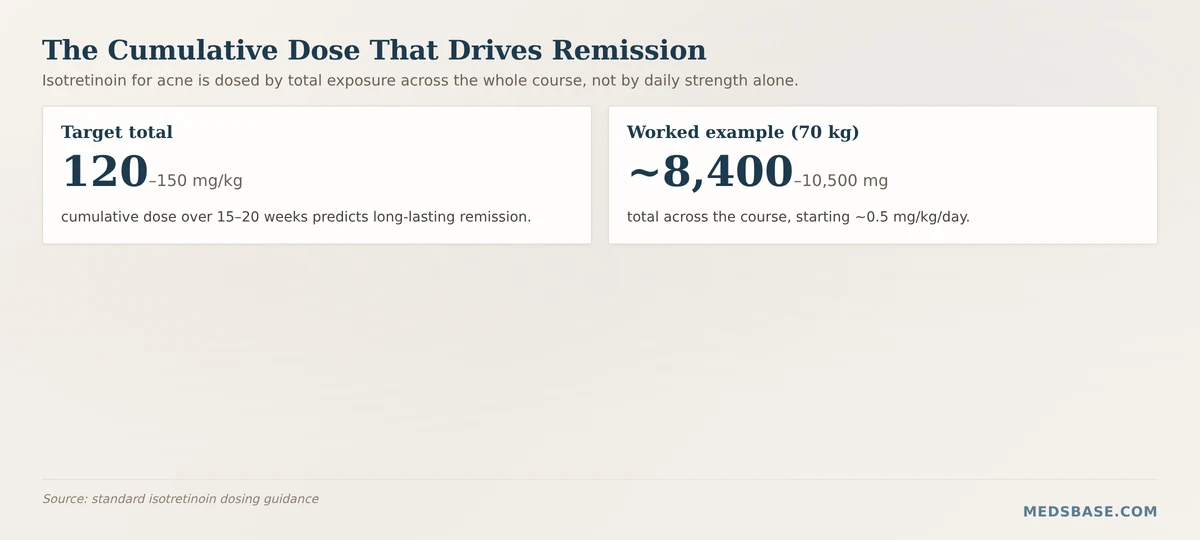
The detail that matters most for your long-term result is the cumulative dose. Isotretinoin for acne is not dosed by “how high can we go per day” but by a total target across the whole course. The standard aim is a cumulative total of roughly 120–150 mg per kilogram of body weight over 15–20 weeks, typically starting at about 0.5 mg/kg/day and titrating up to around 1.0 mg/kg/day as tolerated. A practical way to think about it: reaching that total is a stronger predictor of long-lasting remission than the daily dose itself.
This is also where the low-dose strategy comes in. A systematic review of low-dose isotretinoin for acne found that lower daily doses can still be effective for many people, sometimes with fewer side effects — though the course is often extended. Your dermatologist will balance effectiveness against how well you tolerate dryness and other effects. The clinical update on isotretinoin dosing and adverse effects reinforces that dose, baseline lipids and liver tests, and ongoing surveillance are the pillars of safe prescribing.
Safety Profile & Side Effects
Here is the honest picture, because the horror stories deserve straight answers. Isotretinoin for acne carries two boxed warnings in many countries: severe birth defects if taken during pregnancy, and a possible link to depression and other mood changes.
The birth-defect risk is the reason the whole treatment is so regulated. If taken during pregnancy, isotretinoin causes severe, predictable birth defects. In the United States this is managed through a strict program called iPLEDGE, which requires anyone who can become pregnant to use two forms of contraception and pass monthly pregnancy tests before each prescription. This is non-negotiable.
The most common everyday side effects are dose-dependent and mostly annoying rather than dangerous: dry lips (nearly universal), dry skin, dry eyes, nosebleeds, and occasional muscle or joint aches. These are usually managed with moisturisers, lip balm, and — in some cases — a temporary dose adjustment. Less common but worth watching for are elevated blood fats and liver enzymes, which is why regular blood tests are part of treatment. The MedlinePlus drug information for isotretinoin lists the full profile, and sums up the key point: monitoring is as important as the medication itself.
| Effect | Frequency | Severity | What To Do |
|---|---|---|---|
| Dry lips / cheilitis | Nearly universal | Mild | Lip balm, hydrate; tell your doctor if severe |
| Dry skin / eyes | Very common | Mild–moderate | Moisturiser, artificial tears |
| Nosebleeds | Common | Mild | Humidifier, moisturisers |
| Muscle/joint aches | Common | Mild–moderate | Report to doctor; may guide dose |
| Raised blood fats / liver enzymes | Common | Usually mild | Requires routine blood tests |
| Mood changes | Uncommon but serious | Variable | Report immediately |
The mood question deserves care: the link between isotretinoin and depression is still debated, but because acne itself is strongly associated with depression, the safest approach is to monitor mood openly and report any change promptly rather than dismiss it.
What Does the Research Say About Isotretinoin for Acne?
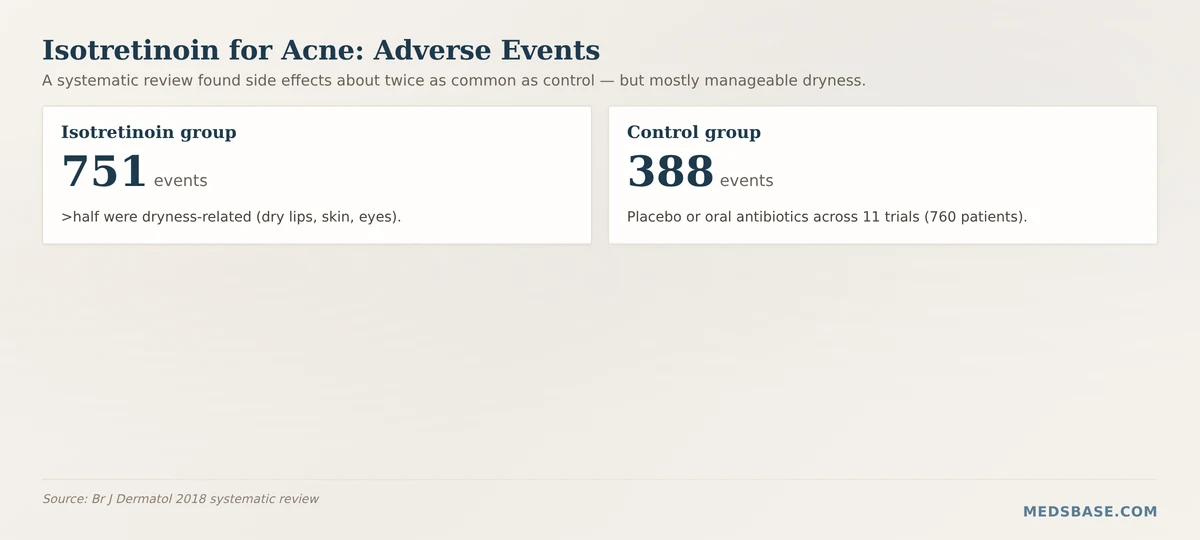
The evidence base is unusually consistent for a dermatology drug. A systematic review of isotretinoin trials published in the British Journal of Dermatology pulled together eleven randomised controlled trials totalling 760 patients and found that isotretinoin consistently reduced acne lesion counts by more than any control, including oral antibiotics. The same review provided the honest caveat: adverse events were about twice as frequent with isotretinoin (751 events) as with control treatments (388 events) — but more than half of those were the predictable dryness-related effects, and serious events were rare.
In short, the research confirms what clinicians already knew: isotretinoin for acne is markedly more effective than antibiotics and topicals, at the cost of more side effects that are, for the most part, predictable and manageable.
| Finding | Outcome | Source |
|---|---|---|
| Lesion reduction | Always greater than control (placebo/antibiotics) | Br J Dermatol 2018 (PMID 28542914) |
| Adverse events | ~2× more common, mostly dryness | Br J Dermatol 2018 (PMID 28542914) |
| Low-dose viability | Effective for many, fewer side effects | Dermatol Ther 2021 (PMID 33085149) |
| Safe prescribing | Dose + baseline lipids/LFTs + surveillance | Expert Rev Clin Pharmacol 2020 (PMID 32744074) |
What this means for you: the decision is less “does it work” and more “am I ready to manage the dryness and follow the monitoring rules.” For severe, scarring acne, the effectiveness is not really in question.
Isotretinoin for Acne vs Other Treatments
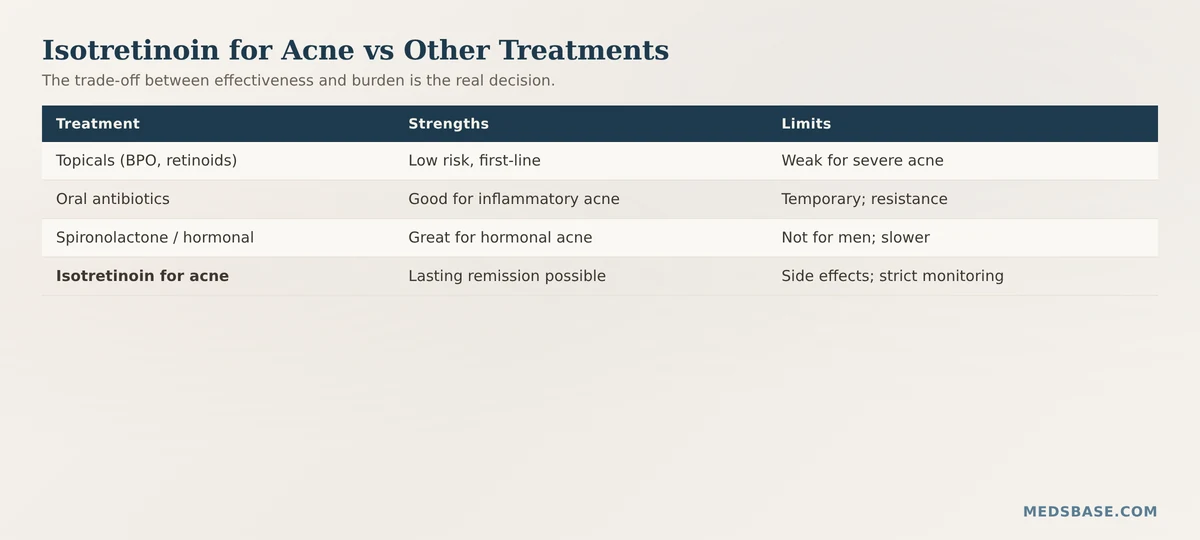
Seeing it next to the alternatives makes the trade-off clearer.
| Treatment | How it works | Strengths | Limits |
|---|---|---|---|
| Topicals (BPO, retinoids, salicylic acid) | Unblock pores, kill bacteria | Low risk, first-line | Weak for severe/nodular acne |
| Oral antibiotics (e.g. doxycycline) | Reduce bacteria + inflammation | Good for inflammatory acne | Temporary; resistance; not a cure |
| Spironolactone / hormonal | Block androgen effects | Great for hormonal acne in women | Not for men; slower |
| Isotretinoin for acne | Shrinks oil glands; hits all 4 causes | Can produce lasting remission | Side effects; strict monitoring |
The honest verdict: if your acne is mild or moderate and responding to topicals, start there. If it is severe, scarring, or relentlessly recurs despite antibiotics, isotretinoin for acne is the option most likely to give you a lasting result — and the side-effect and monitoring burden is the price of that result. If you are weighing a milder route first, review the full range of acne treatment options to compare strengths and limits before deciding.
How to Start Isotretinoin for Acne, Step by Step
The process is structured, and that structure exists to keep you safe.
- See a dermatologist. Isotretinoin is prescription-only for good reason; a specialist should assess severity, rule out pregnancy, and review your history.
- Register with iPLEDGE (where applicable). If you can become pregnant, this step — including contraception commitments — must be in place first.
- Complete baseline blood tests. Your lipids and liver function are checked before you start so changes can be tracked.
- Start the dose and take it with fat. Isotretinoin absorbs better with a meal containing fat, so take it with food for full effect.
- Attend monthly follow-ups. Blood tests, tolerability review, and (where required) pregnancy testing happen every month before the next prescription.
If you are considering isotretinoin for hormonal-pattern acne, you may also want to compare against spironolactone for acne, which targets a different mechanism, before making your choice.
Related Reading
Frequently Asked Questions
Q: Does isotretinoin cure acne permanently?
A: For many people, yes — one properly dosed course of isotretinoin for acne produces clearing that lasts for years, and a substantial minority never needs treatment again. It is the closest thing to a cure acne medicine has, though some people need a second course.
Q: What are the most common side effects of isotretinoin for acne?
A: The most common are dose-related dryness — dry lips, dry skin, dry eyes and occasional nosebleeds — along with muscle or joint aches in some people. These are usually manageable with moisturisers and are generally reversible once treatment stops.
Q: How long does isotretinoin for acne take to work?
A: Most people notice improvement within the first one to two months, but the full benefit requires completing the entire 15–20 week course to reach the cumulative dose. Some people even see a temporary flare in the first weeks before improvement begins.
Q: Who should not take isotretinoin?
A: Anyone who is pregnant or could become pregnant without reliable contraception, because of the severe risk of birth defects. People with significant liver disease or very high blood fats, and those with certain psychiatric histories, also need careful individual assessment before starting.
Q: What is the iPLEDGE program?
A: iPLEDGE is a mandatory risk-management program (in the US) designed to prevent pregnancy during isotretinoin treatment. Anyone who can become pregnant must use two forms of contraception and pass a monthly pregnancy test before each prescription is issued.
Q: Is isotretinoin for acne safe?
A: It is effective but not risk-free, which is why it is tightly regulated and monitored. Taken under proper supervision with monthly blood tests and pregnancy prevention, it is considered an appropriate option for severe, treatment-resistant acne — but the risks must be weighed individually.
Q: How much isotretinoin should I take for acne?
A: The dose is individualised, but the goal is usually a cumulative total of 120–150 mg per kilogram of body weight, typically starting around 0.5 mg/kg/day and titrating up to about 1.0 mg/kg/day over 15–20 weeks. Your dermatologist sets this based on your weight, tolerance and response.
Q: Can isotretinoin make acne worse at first?
A: Yes, some people experience an initial flare in the first few weeks as the drug begins working. This is temporary and usually settles; your dermatologist can help manage it and, if needed, briefly slow the dose escalation.
The Bottom Line
Isotretinoin for acne is the most effective treatment available — an oral retinoid that attacks every root cause of severe acne and can deliver the kind of lasting clearance that creams and antibiotics simply cannot. But that power comes with real obligations: pregnancy prevention, monthly blood tests, and a tolerance for dryness that most people experience. Your immediate action, if you have severe or stubbornly recurring acne, is simple but specific: book a dermatologist consultation and ask, directly, whether isotretinoin for acne is appropriate for your skin after a full risk review. Wondering how other everyday treatment decisions are weighed? Read how we broke down a different kind of step-change in rectal cancer immunotherapy, or compare two heart drugs in losartan vs valsartan.

Written by
Sophie ChenPharmaceutical Content Researcher · 8 years experience
Sophie Chen is a pharmaceutical content researcher with 8 years covering generic medication access and clinical pharmacology. She specialises in international regulatory frameworks, bioequivalence standards, and patient-facing education on therapeutic drug classes. She is not a clinician.