







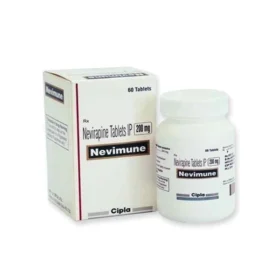
Nevimune
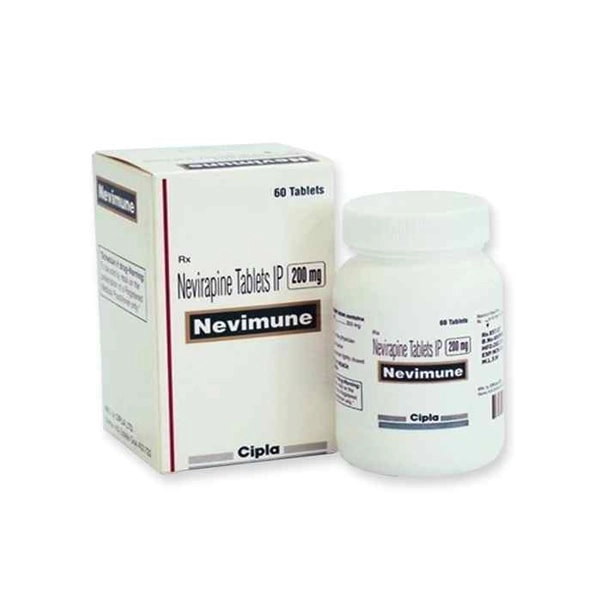
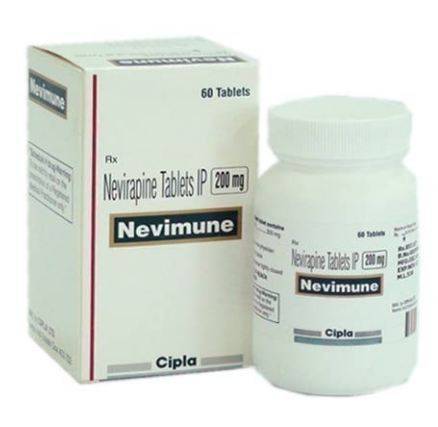
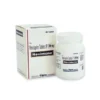
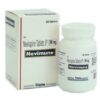
Nevimune (Nevirapine 200 mg) — Cipla NNRTI for HIV-1. Lead-in dose 200 mg/day × 14 days then 200 mg BID. Black-box severe hepatotoxicity and rash warning especially in higher CD4.
✓ Medically reviewed by Morgan Ellis — Pharmacy Researcher · 8 years experience · Last reviewed: May 2026
Quick Answer
Nevimune — Nevirapine 200 mg (Cipla Inc). NNRTI for HIV. Lead-in dose 200 mg/day × 14 days then 200 mg BID. Black-box for severe hepatotoxicity and rash, especially in CD4 >250 women, >400 men.
What you get with MedsBase:
- WHO-GMP certified manufacturer
- Discreet plain-envelope packaging
- Worldwide shipping
- Rated by 1,400+ customers (read reviews)
📦 Reshipment Assurance: if your order has not arrived 20 business days after dispatch, we reship it at no extra cost. Read the policy.
Why order from MedsBase
Nevimune ships from a WHO-GMP certified manufacturer in plain packaging, billed through a regulated payment processor (the statement descriptor reads a regulated card-payment processor — never MedsBase or any medication name). Every order carries our 20-business-day Reshipment Assurance.
First-generation NNRTIs (nevirapine, efavirenz) have a low genetic barrier — a single point mutation (K103N for efavirenz; Y181C for nevirapine) confers high-level resistance. Strict >95% adherence is mandatory. Resistance to one NNRTI confers cross-resistance across the class.
Nevirapine carries an FDA black-box for severe hepatotoxicity (especially in CD4 >250 women, >400 men), severe rash, Stevens-Johnson syndrome, and DRESS. Lead-in dose (200 mg/day × 14 days, then 200 mg BID) reduces but does not eliminate risk. Stop immediately on rash + systemic features or LFT >5× ULN.
How NNRTIs work
Non-nucleoside reverse transcriptase inhibitors bind a hydrophobic pocket on HIV reverse transcriptase, distinct from the NRTI active site. They allosterically distort the enzyme. NNRTIs are non-competitive and do NOT need intracellular phosphorylation.
NNRTI-based regimens (typically with two NRTIs) were a mainstay of first-line ART globally for many years. Modern guidelines now favour integrase strand transfer inhibitors (INSTIs) as first-line, with NNRTIs as alternatives in cost-constrained settings or where INSTIs are unavailable.
Frequently Asked Questions
Why has NNRTI use declined?
Modern guidelines prefer integrase strand transfer inhibitors (dolutegravir, raltegravir, bictegravir) as first-line ART because they have higher genetic barrier to resistance, better tolerability, and fewer drug interactions. NNRTIs remain widely used in resource-limited settings and where INSTIs are unavailable.
Side effects?
Class: rash (10-20%, often mild but can be severe), CNS effects (efavirenz), liver enzyme rises, GI upset. Specific: efavirenz vivid dreams, depression; nevirapine severe rash + hepatotoxicity; rilpivirine well-tolerated but PPIs contraindicated.
What about resistance?
NNRTIs have a low genetic barrier — a single mutation can confer class-wide resistance. Strict adherence is critical.
Drug interactions?
Most NNRTIs are CYP3A4 inducers (efavirenz, nevirapine) or substrates (rilpivirine). Many interactions: rifampicin requires dose adjustment, PPIs contraindicated with rilpivirine, methadone requires dose increase with efavirenz.
Pregnancy?
Efavirenz is generally safe in pregnancy (after years of caution about neural tube defects, pooled data show no increased risk). Nevirapine is safe but limited use in resource-rich settings due to severe rash/hepatotoxicity risk in CD4 >250 women. Rilpivirine has reasonable pregnancy data.
Adherence?
>95% required. Missed doses with NNRTIs rapidly select resistance because of low genetic barrier. Always discuss adherence challenges with your HIV team early — alternative regimens are available.
What if I miss a dose?
Take it when you remember if <6 hours late. If >6 hours late, skip and resume normal schedule — do not double up.
HBV co-infection?
NNRTIs do not treat HBV. The NRTI backbone (TDF + FTC or 3TC) treats both HIV and HBV — keep this combination if HBV co-infected. Stopping abruptly can flare HBV.
Lifelong therapy?
Yes. Stopping ART allows viral rebound within weeks. Consistent therapy gives near-normal life expectancy and U=U (Undetectable = Untransmittable).
When should I see my HIV team?
Routine HIV care: viral load + CD4 every 3-6 months once stable, annual STI screening, vaccination updates, lipid/glucose/renal screening. Earlier if symptoms suggest treatment failure or side-effect.
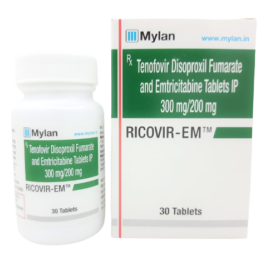
Nevimune (nevirapine) is the NNRTI in WHO second-line ART; the NRTI backbone it pairs with most often is Ricovir-EM (tenofovir DF 300 mg + emtricitabine 200 mg) — the same tenofovir/FTC fixed-dose combination used for HIV PrEP.
Other HIV & Antiviral Medications
- Trioday — TDF + 3TC + EFV — single-tablet regimen by Cipla
- Triomune — d4T + 3TC + NVP — older 3-in-1 (stavudine-based)
- Zepdon — raltegravir 400 mg — integrase inhibitor
- Abamune L — abacavir + lamivudine — alternative NRTI backbone
- Tenvir L — tenofovir + lamivudine — alternative NRTI backbone
More options in HIV Medication
Ranked by recent MedsBase order volume — what other customers in this category are picking.
| Strength | 200 mg |
|---|---|
| Quantity | 60 Tablet/s, 120 Tablet/s, 180 Tablet/s |
| Pharma Form | Tablet/s |
| Manufacturer | Cipla Inc |
| Treatment | HIV Infection |
| Generic Brand | Nevirapine |
 Nevimune
Q & A
Nevimune
Related products




Reviews
There are no reviews yet