








✓ Medically reviewed by · Last reviewed: May 2026
Pharmacy Researcher · 8 years experience
Pharmacy researcher with 8 years reviewing clinical drug information, generic formulation equivalence, and international pharmaceutical standards. Focuses on patient-facing accuracy in medication education.
prednisone vs prednisolone — Prednisone vs Prednisolone: 7 Key Differences That Determine Which One Your Doctor Prescribes. Read on for an evidence-backed guide covering everything you need to know.
Key Takeaways
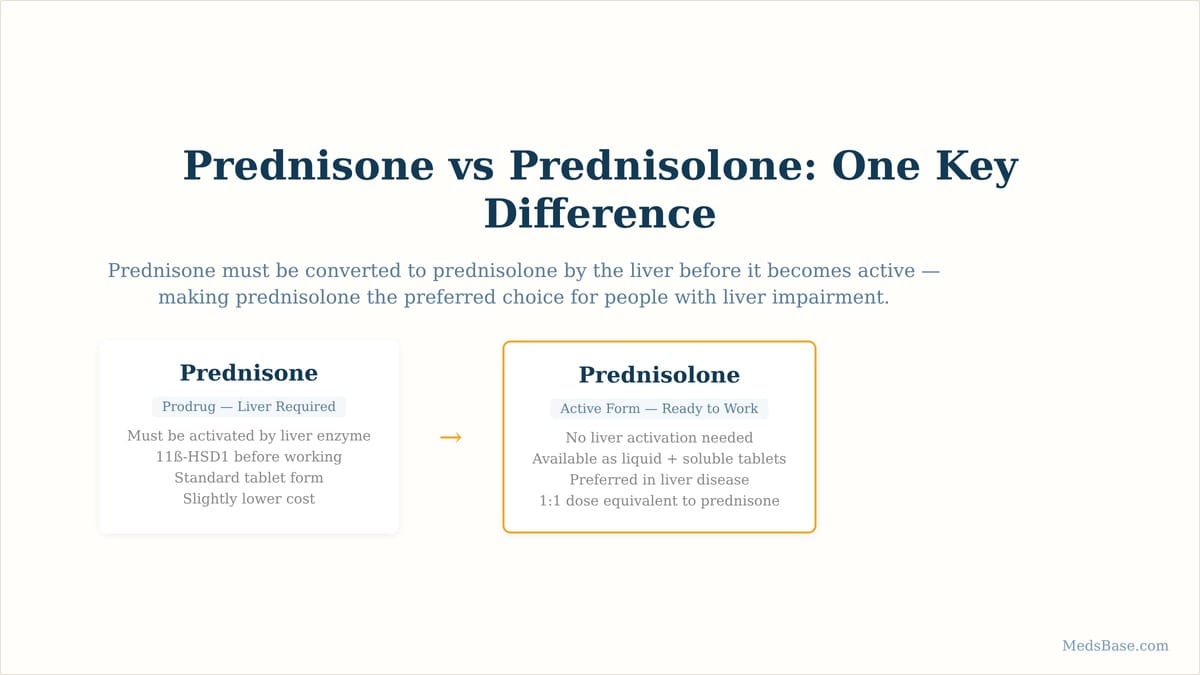
- Prednisone is a prodrug — your liver must convert it into prednisolone before it works. Prednisolone is the active form that works immediately.
- For someone with normal liver function, 5 mg of prednisone and 5 mg of prednisolone produce the same clinical effect — they are dose-equivalent.
- The single biggest reason to choose prednisolone over prednisone is liver impairment, because a damaged liver may not convert prednisone efficiently.
- Prednisolone is available as soluble/dispersible tablets and liquid — an advantage for children, elderly patients, and anyone who has difficulty swallowing pills.
- Both medications require careful tapering — stopping abruptly after more than a few weeks can cause adrenal crisis, a potentially life-threatening condition.
Table of Contents
- What Are Prednisone and Prednisolone?
- Prednisone vs Prednisolone: The Liver Activation Difference
- Conditions Treated — When Either Medication Works
- Side Effects: Do Prednisone and Prednisolone Differ?
- Dosing, Conversion, and Tapering
- Full Comparison: Prednisone vs Prednisolone at a Glance
- What the Research Says About Prednisone vs Prednisolone
- Frequently Asked Questions
- The Bottom Line
Prednisone vs Prednisolone: 7 Key Differences That Determine Which One Your Doctor Prescribes
Prednisone vs prednisolone — most people assume that if two medications have almost the same name, they must be almost the same drug. When it comes to prednisone vs prednisolone, that assumption is both right and dangerously wrong — depending on one factor most patients have never been told about: their liver function.
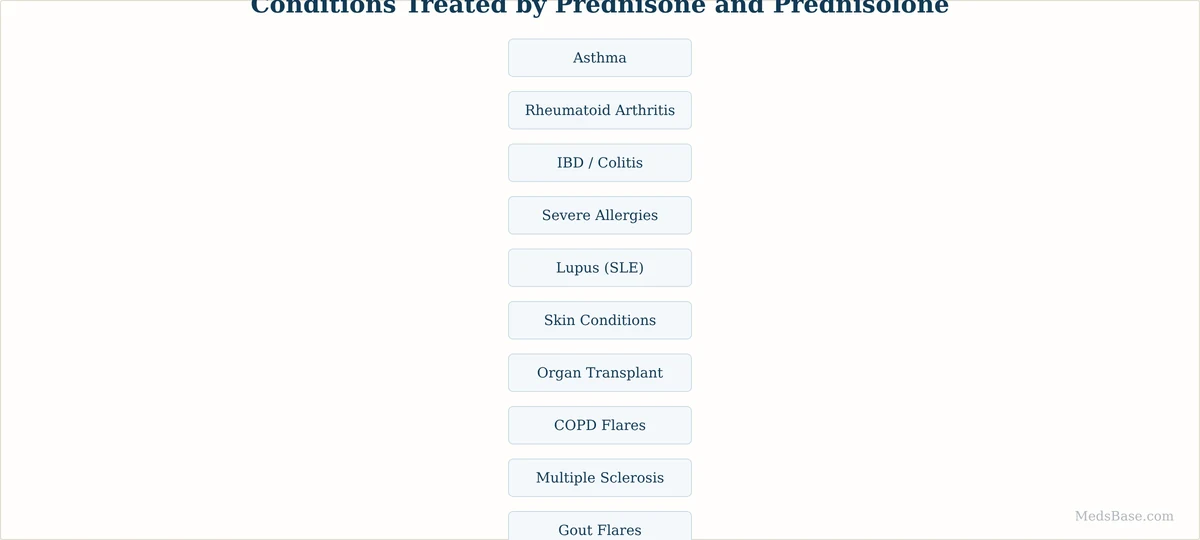
Prednisone vs prednisolone — prednisone and prednisolone are indeed close relatives. They belong to the same class of medications — corticosteroids — and they treat the same conditions: asthma, rheumatoid arthritis, inflammatory bowel disease, severe allergies, lupus, and dozens of other inflammatory and autoimmune disorders. At equivalent doses, they produce nearly identical anti-inflammatory effects. And in many countries, they are prescribed interchangeably.
Prednisone vs prednisolone — but here is the difference that actually matters. Prednisone is a prodrug — an inactive molecule that must be converted by your liver into prednisolone before it can do anything. Prednisolone is already the active form. For someone with a healthy liver, the conversion happens automatically, and the two drugs are effectively the same. For someone with liver disease, that conversion can fail — meaning prednisone may not work, or may work unpredictably, while prednisolone works exactly as expected.
Prednisone vs prednisolone — by the end of this article, you will know the seven differences that actually matter for treatment decisions, when and why your doctor might choose one over the other, how to convert between doses, and the tapering rules that apply equally to both.
Prednisone vs prednisolone — one piece of advice from clinical practice surprises many patients — we will cover it in the safety section.
What Are Prednisone and Prednisolone?
Prednisone and prednisolone are synthetic corticosteroids — medications that mimic cortisol, the body’s natural stress hormone produced by the adrenal glands. At therapeutic doses, they powerfully suppress inflammation and modulate the immune system. This makes them effective for a wide range of conditions, from acute allergic reactions to chronic autoimmune diseases, but it also means they carry significant risks when used long-term or stopped abruptly.
Both medications have been in clinical use for more than 60 years. Both appear on the World Health Organization’s Model List of Essential Medicines, which identifies the most effective, safe, and cost-effective medicines for a basic health system. They are among the most widely prescribed medications in the world.
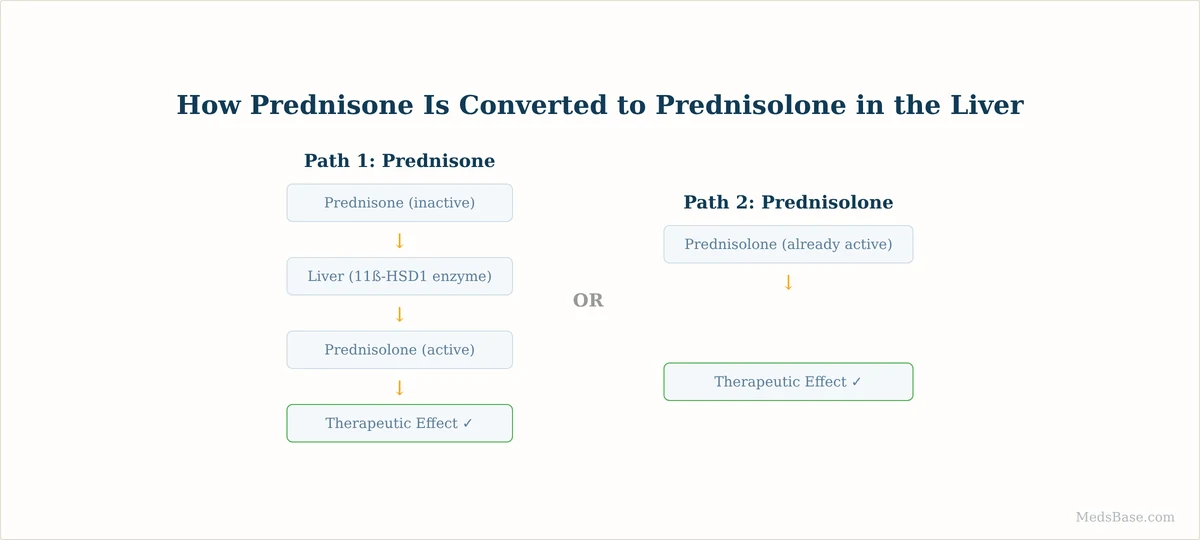
The comparison of prednisone vs prednisolone starts with their chemistry. Prednisone has a ketone group (C=O) at the 11-position of its steroid structure. Prednisolone has a hydroxyl group (OH) at the same position. The conversion from prednisone to prednisolone — replacing that ketone with a hydroxyl — is performed by an enzyme in the liver called 11β-hydroxysteroid dehydrogenase type 1 (11β-HSD1). Without this enzyme, prednisone remains inactive.
Prednisolone skips this step entirely. It is already in the active hydroxyl form, which means it can bind directly to glucocorticoid receptors and begin exerting its anti-inflammatory and immunosuppressive effects without any liver processing.
Prednisone vs Prednisolone: The Liver Activation Difference
Here is where the comparison of prednisone vs prednisolone gets clinically important.
In a person with normal liver function, prednisone is rapidly and efficiently converted to prednisolone after oral administration. Blood levels of prednisolone peak within 1 to 2 hours whether you take prednisone or prednisolone directly. The therapeutic effect is the same.
But in a person with significant liver disease — advanced cirrhosis, severe acute hepatitis, or hepatic failure — the 11β-HSD1 enzyme may not function adequately. In these patients, prednisone conversion can be impaired, leading to lower-than-expected blood levels of active prednisolone and reduced therapeutic effect. This is why most clinical guidelines and prescribing references, including the NHS, recommend prednisolone rather than prednisone for patients with hepatic impairment.
This does not mean prednisone is unsafe for liver patients — serious toxicity from unconverted prednisone is not the concern. The issue is efficacy: if your liver cannot convert prednisone to prednisolone, you are essentially taking an inactive pill. Prednisolone bypasses this uncertainty entirely.
There is one additional nuance. Some medications can inhibit or induce the liver enzymes involved in prednisone metabolism. Drugs that induce liver enzymes (like rifampicin, phenytoin, and carbamazepine) may accelerate prednisone clearance, potentially reducing its duration of action. This is typically more relevant to prednisone than prednisolone because prednisolone is not dependent on a single hepatic activation step. If you are on any of these medications, your doctor will factor this into the prednisone vs prednisolone decision.
Conditions Treated — When Either Medication Works
For practical clinical purposes, prednisone and prednisolone are used for exactly the same conditions. The choice between them is driven by patient factors — not by the diagnosis.
Common conditions treated with both prednisone and prednisolone:
- Respiratory: Asthma exacerbations, COPD flares, severe allergic rhinitis, hypersensitivity pneumonitis
- Rheumatologic: Rheumatoid arthritis, polymyalgia rheumatica, giant cell arteritis, systemic lupus erythematosus, gout flares
- Gastrointestinal: Inflammatory bowel disease (Crohn’s disease, ulcerative colitis), autoimmune hepatitis
- Dermatologic: Severe eczema, pemphigus, severe contact dermatitis, drug reactions
- Neurologic: Multiple sclerosis relapses, myasthenia gravis
- Oncologic: As part of chemotherapy regimens for lymphomas and leukemias, management of brain edema from tumors
- Transplant: Immunosuppression to prevent organ rejection
- Allergic: Severe acute allergic reactions, anaphylaxis (as adjunctive therapy), angioedema
In all of these conditions, prednisone vs prednisolone is a formulation choice, not a therapeutic one. The anti-inflammatory effect at equivalent doses is the same.
Conditions where one may be preferred:
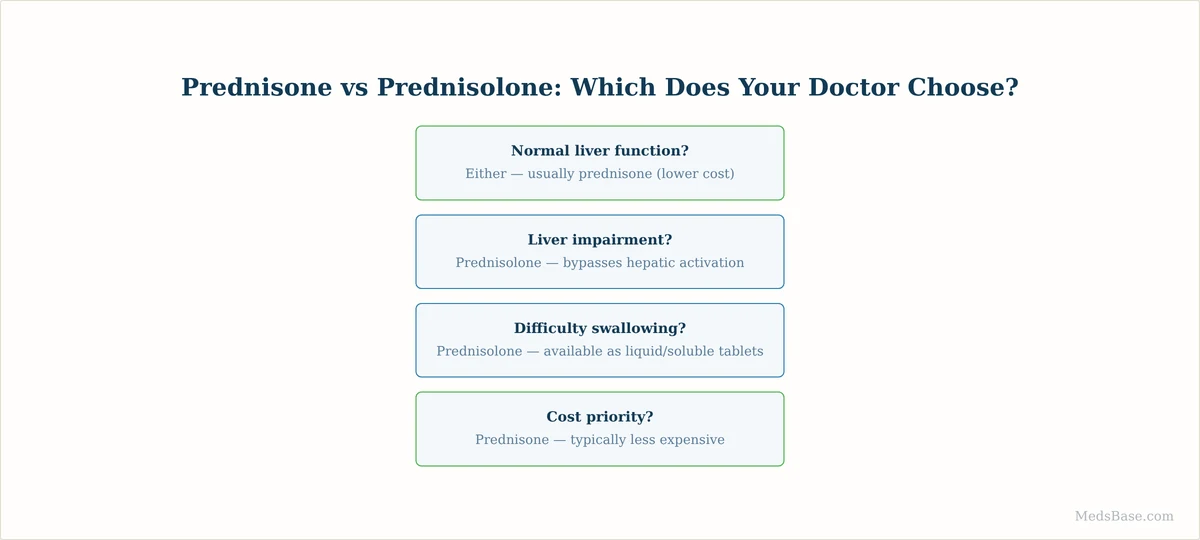
- Liver disease (any cause): Prednisolone is preferred — bypasses the hepatic activation step entirely.
- Pediatric patients: Prednisolone is often preferred because it is available as a liquid and as soluble tablets, making dosing easier and more accurate for children who cannot swallow pills.
- Elderly patients with difficulty swallowing: Prednisolone soluble tablets or liquid offer a practical advantage.
- Cost-sensitive prescribing: Prednisone is typically slightly less expensive. In health systems where cost is a priority and liver function is normal, prednisone may be the default.
Who Should Avoid Both? People with untreated systemic fungal infections or known hypersensitivity to either drug. Both should be used with extreme caution — and generally only when clearly necessary — in people with uncontrolled diabetes (steroids raise blood sugar), uncontrolled hypertension (steroids raise blood pressure), active peptic ulcer disease, osteoporosis, glaucoma, or psychiatric conditions that may be exacerbated by corticosteroids.
If you have been prescribed either medication for a chronic inflammatory condition, MedsBase offers a range of treatments across multiple therapeutic categories, including commonly prescribed corticosteroids and their adjunctive therapies.
Side Effects: Do Prednisone and Prednisolone Differ?
The short answer is no — prednisone and prednisolone share the same side effect profile because prednisone is converted into prednisolone in the body. At equivalent doses, the side effects are indistinguishable.
| Side Effect | Short-Term Use (days to ~3 weeks) | Long-Term Use (months to years) | What to Do |
|---|---|---|---|
| Increased appetite / weight gain | Very common; often noticeable within days | Can lead to significant weight gain, particularly central/truncal obesity | Plan meals; prioritize protein and vegetables; avoid high-calorie snacks; the appetite increase is real but controllable |
| Insomnia / sleep disturbance | Common; worse with evening dosing | May persist | Take the full dose in the morning (before 8 AM) to mimic natural cortisol rhythm |
| Mood changes | Euphoria, irritability, or emotional lability; usually transient | Depression or anxiety can develop; less commonly, steroid-induced psychosis | Warn family members; mood changes are a known drug effect, not a personal failing; discuss with your doctor if severe |
| Elevated blood sugar | Common, especially in people with diabetes or prediabetes | Can unmask latent diabetes or worsen existing diabetes control | Monitor blood glucose if you have diabetes; your diabetes medication doses may need temporary adjustment |
| Fluid retention / swelling | Common; puffy face (“moon face”) and ankle swelling | May persist; moon face is one of the most visible long-term changes | Reduce dietary sodium; the fluid retention usually reverses when the dose is lowered or stopped |
| Increased infection risk | Modest increase | Significant — steroids suppress the immune system; increased risk of bacterial, viral, and fungal infections | Report any fever, persistent sore throat, or signs of infection promptly |
| Osteoporosis | Not a concern with short courses | Significant risk with prolonged use; bone density loss can be rapid | Calcium + vitamin D supplementation often prescribed alongside long-term steroids; bone density monitoring recommended |
| Adrenal suppression | Can begin after just 2–3 weeks of continuous use | Universal with sustained use; the adrenal glands stop producing their own cortisol | NEVER stop abruptly after more than 2–3 weeks — this is the most dangerous steroid-related error. Taper slowly. |
Dosing, Conversion, and Tapering
Dose Equivalency
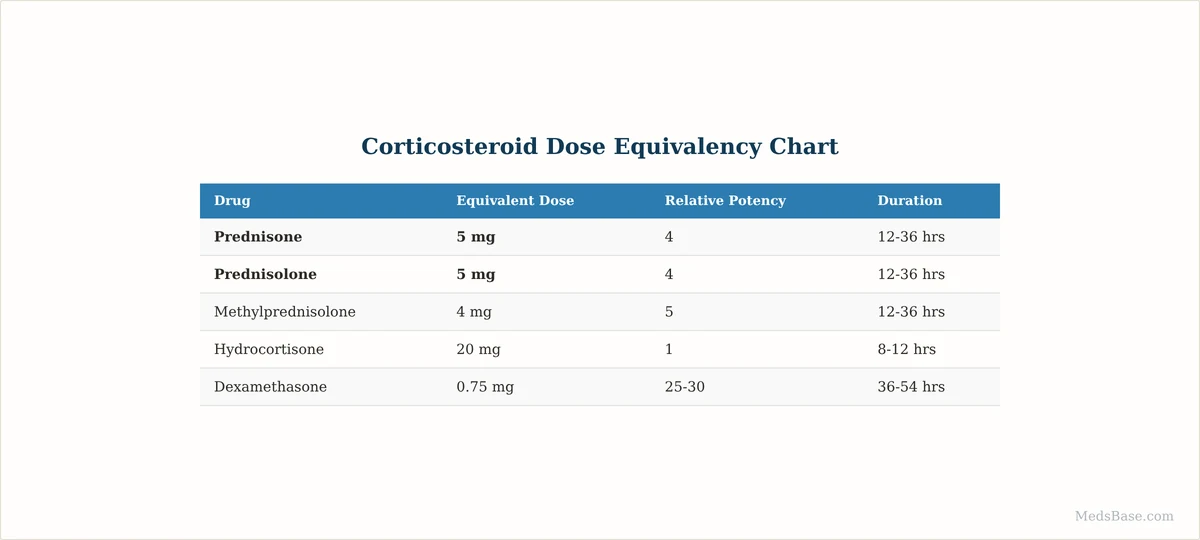
The anti-inflammatory potency of prednisone vs prednisolone is identical. Five milligrams of prednisone equals 5 mg of prednisolone — a straightforward 1:1 conversion.
For context against other corticosteroids:
| Corticosteroid | Equivalent Anti-Inflammatory Dose | Relative Glucocorticoid Potency | Duration of Action |
|---|---|---|---|
| Prednisone | 5 mg | 4 | Intermediate (12–36 hours) |
| Prednisolone | 5 mg | 4 | Intermediate (12–36 hours) |
| Methylprednisolone | 4 mg | 5 | Intermediate |
| Hydrocortisone | 20 mg | 1 | Short (8–12 hours) |
| Dexamethasone | 0.75 mg | 25–30 | Long (36–54 hours) |
Typical Dosing Ranges
- Low dose: 2.5–7.5 mg daily (maintenance therapy for chronic conditions)
- Moderate dose: 10–40 mg daily (acute flares of chronic conditions)
- High dose: 40–100 mg daily (severe acute inflammation, initial treatment of serious autoimmune flares)
- Pulse therapy: 500–1,000 mg IV methylprednisolone daily for 3–5 days (life-threatening flares — hospital setting only)
The Tapering Rule — Applies Equally to Both
This is the most important safety rule for both prednisone and prednisolone and it cannot be overstated: if you have been taking either medication for more than 2 to 3 weeks continuously, you must taper the dose gradually — never stop abruptly.
The reason is adrenal suppression. When you take corticosteroids, your adrenal glands detect the external source of cortisol-like activity and reduce or stop their own production. After as little as 2 to 3 weeks of continuous use, the adrenal glands can become partially or fully suppressed. If you suddenly stop the medication, your body has no cortisol — not from the drug, and not from your own glands — and you can experience an adrenal crisis.
Symptoms of adrenal crisis (adrenal insufficiency) include: severe weakness, nausea, vomiting, low blood pressure, confusion, and in severe cases, cardiovascular collapse and death. This is a medical emergency.
A typical taper reduces the dose by 2.5–5 mg every 3 to 7 days, though the exact schedule depends on the starting dose, duration of treatment, and individual patient factors. Your doctor will provide a specific taper plan — never design your own.
Full Comparison: Prednisone vs Prednisolone at a Glance
| Feature | Prednisone | Prednisolone | Verdict |
|---|---|---|---|
| Drug class | Corticosteroid (glucocorticoid) | Corticosteroid (glucocorticoid) | Same class |
| Active form? | No — prodrug, requires liver conversion | Yes — active as taken | Prednisolone wins on simplicity |
| Dose equivalency | 5 mg = 5 mg prednisolone | 5 mg = 5 mg prednisone | Identical 1:1 |
| Use in liver disease | Not preferred — conversion may be impaired | Preferred — no hepatic activation needed | Prednisolone wins for liver patients |
| Available forms | Tablets (1, 2.5, 5, 10, 20, 50 mg) | Tablets (1, 2.5, 5, 10, 25 mg), soluble tablets, oral liquid, rectal forms | Prednisolone offers more options |
| Taste | Generally neutral; tablets are small | Often described as bitter; soluble forms may have added flavoring | Prednisone wins on palatability |
| Onset of action | ~1–2 hours (after liver conversion) | ~1–2 hours (direct absorption) | Clinically equivalent in healthy liver |
| Side effect profile | Identical to prednisolone | Identical to prednisone | No difference |
| Cost | Generally lower | Slightly higher in most markets | Prednisone wins on cost |
| Tapering required? | Yes — if used >2–3 weeks | Yes — if used >2–3 weeks | Same requirement |
What the Research Says About Prednisone vs Prednisolone
| Study / Source | Year | Key Finding | Source |
|---|---|---|---|
| Corticosteroid equivalency review | Multiple | 5 mg prednisone = 5 mg prednisolone in anti-inflammatory potency. Prednisone conversion to prednisolone is rapid and near-complete in normal liver function. | PubMed |
| NICE clinical guidance — corticosteroids (oral) | Current | Recommends prednisolone over prednisone in hepatic impairment; notes both are dose-equivalent with the same monitoring requirements | NICE |
| NHS — Prednisolone patient information | Current | Standard NHS prescribing guidance for prednisolone; covers uses, side effects, and tapering requirements | NHS |
| WHO Model List of Essential Medicines | 2023 | Both prednisolone and prednisone are listed as essential medicines; prednisolone is the core listing with prednisone noted as an alternative | WHO |
| MedlinePlus — Prednisone | Current | Authoritative patient monograph covering prednisone uses, side effects, precautions, and tapering requirements | MedlinePlus |
What this means for you: The clinical evidence is clear and consistent. For someone with normal liver function, the choice between prednisone and prednisolone is primarily about availability, formulation, cost, and prescriber familiarity — not about clinical efficacy, which is identical at equivalent doses. The one genuinely important therapeutic distinction is hepatic impairment, where prednisolone is the safer and more reliable choice. Both medications are backed by decades of clinical use and appear on the WHO essential medicines list.
Related Reading
- Metformin Gastrointestinal Side Effects: 8 Proven Strategies to Stop the Stomach Issues (if you are managing steroid-induced hyperglycemia alongside diabetes)
- Potassium and Blood Pressure: 9 Proven Ways the Right Balance Lowers Your Numbers (corticosteroids can raise blood pressure — learn how to manage it with diet)
- Chronic Conditions: Browse MedsBase Treatment Options (explore the full range of medications for inflammatory and autoimmune conditions)
Frequently Asked Questions
Q: Is prednisone the same as prednisolone?
A: Almost. Prednisone is a prodrug — your liver must convert it into prednisolone before it becomes active. Prednisolone is already the active form. Once prednisone is converted, the two drugs are pharmacologically identical, and 5 mg of either produces the same anti-inflammatory effect. For most people with normal liver function, the clinical difference is negligible — which is why many healthcare systems use them interchangeably.
Q: Which is stronger, prednisone or prednisolone?
A: Neither. At equivalent doses — 5 mg of prednisone = 5 mg of prednisolone — they have identical anti-inflammatory potency. The idea that one is “stronger” is a common misconception. The only scenario where prednisolone could be considered more reliable is in liver disease, where prednisone conversion may be impaired — but that is about reliability of activation, not inherent potency.
Q: Why would a doctor prescribe prednisolone instead of prednisone?
A: The most common reasons are: (1) the patient has liver disease, where prednisone-to-prednisolone conversion may be unreliable; (2) the patient cannot swallow tablets and needs a liquid or soluble formulation (prednisolone is more widely available in these forms); (3) pediatric dosing, where prednisolone liquid allows precise weight-based dosing; and (4) in some countries, prednisolone is simply the standard formulary option and prednisone is not stocked.
Q: Can prednisone be used in liver disease?
A: It can, but it is not the preferred choice. In mild liver impairment, prednisone conversion to prednisolone may still be adequate, but in moderate-to-severe liver disease — especially cirrhosis — conversion can be reduced by 30–50%, leading to unpredictable and potentially subtherapeutic drug levels. Clinical guidelines from NICE and other bodies recommend prednisolone over prednisone in patients with hepatic impairment to remove this uncertainty.
Q: How do you convert prednisone to prednisolone?
A: The dose conversion is 1:1 — 5 mg of prednisone equals 5 mg of prednisolone. If you are switching from one to the other, no dose adjustment is needed. However, this conversion is only relevant when switching between the two medications under medical supervision. Never switch medications or adjust doses on your own.
Q: Do prednisone and prednisolone have different side effects?
A: No. Because prednisone is converted into prednisolone in the body, the side effect profiles are identical. Both can cause increased appetite and weight gain, insomnia, mood changes (irritability, euphoria, or depression), elevated blood sugar, fluid retention, increased infection risk, and — with long-term use — osteoporosis, adrenal suppression, cataracts, and thinning of the skin. The side effects depend on the dose and duration, not on which of the two drugs you take.
Q: Can I switch from prednisone to prednisolone or vice versa?
A: Yes, at the same milligram dose — the conversion is 1:1. This switch is sometimes done when a patient develops difficulty swallowing tablets (moving to prednisolone liquid or soluble tablets), when liver function declines (moving to prednisolone to bypass hepatic activation), or when cost or availability considerations favor one over the other. The switch should always be done under medical supervision, and you should continue the same dosing schedule and taper plan.
Q: What happens if I stop prednisone or prednisolone suddenly?
A: If you have been taking either medication for more than 2 to 3 weeks continuously, stopping suddenly can cause adrenal crisis — a potentially life-threatening condition where your body has no cortisol. Symptoms include severe weakness, nausea and vomiting, low blood pressure, confusion, and cardiovascular collapse. Both medications suppress your adrenal glands’ natural cortisol production, and the glands need time to recover. A gradual taper — reducing the dose by small increments over days to weeks — is essential. Never stop either medication abruptly without your doctor’s explicit instruction and a written taper plan.
The Bottom Line
When you strip away the pharmacology, the comparison of prednisone vs prednisolone comes down to one clinically meaningful difference and several practical ones.
The meaningful difference: if your liver function is anything less than fully normal, prednisolone is the safer and more reliable choice because it does not depend on hepatic activation. If your liver is healthy, the two drugs are functionally identical — 5 mg of either delivers the same anti-inflammatory effect, the same side effects, and the same need for careful tapering.
The practical differences: prednisolone comes in more formulations (liquid, soluble tablets), which matters for children, elderly patients, and anyone with swallowing difficulties. Prednisone is typically the lower-cost option and is the default in many healthcare systems. Taste is a minor factor but a real one — prednisolone, particularly the liquid and soluble forms, is often described as more bitter.
The most important rule — the one that applies equally to both medications — is this: if you have been on either drug for more than 2 to 3 weeks, you must taper, not stop. Adrenal crisis from abrupt steroid withdrawal is preventable and potentially fatal. Your doctor will give you a taper schedule. Follow it exactly.
If you are managing a chronic inflammatory condition and exploring treatment options, MedsBase’s chronic conditions category includes a range of medications that may be part of your treatment plan, alongside the corticosteroids your doctor prescribes.
What to read next: Corticosteroids commonly raise blood sugar — if you are also managing diabetes, read our guide to metformin gastrointestinal side effects for strategies to stay on your diabetes medication comfortably. And because steroids can also raise blood pressure, see how improving your potassium and blood pressure balance can support your cardiovascular health alongside treatment.
Reviewed by Medical Professional | Last updated: 2026-08-21

Written by
Sophie ChenPharmaceutical Content Researcher · 8 years experience
Sophie Chen is a pharmaceutical content researcher with 8 years covering generic medication access and clinical pharmacology. She specialises in international regulatory frameworks, bioequivalence standards, and patient-facing education on therapeutic drug classes. She is not a clinician.