








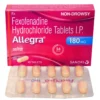
Allegra
✅ Relieves Allergy Symptoms
✅ Controls Hay Fever
✅ Minimizes Itching
✅ Non-Drowsy Formula
✅ Oral Medication Option
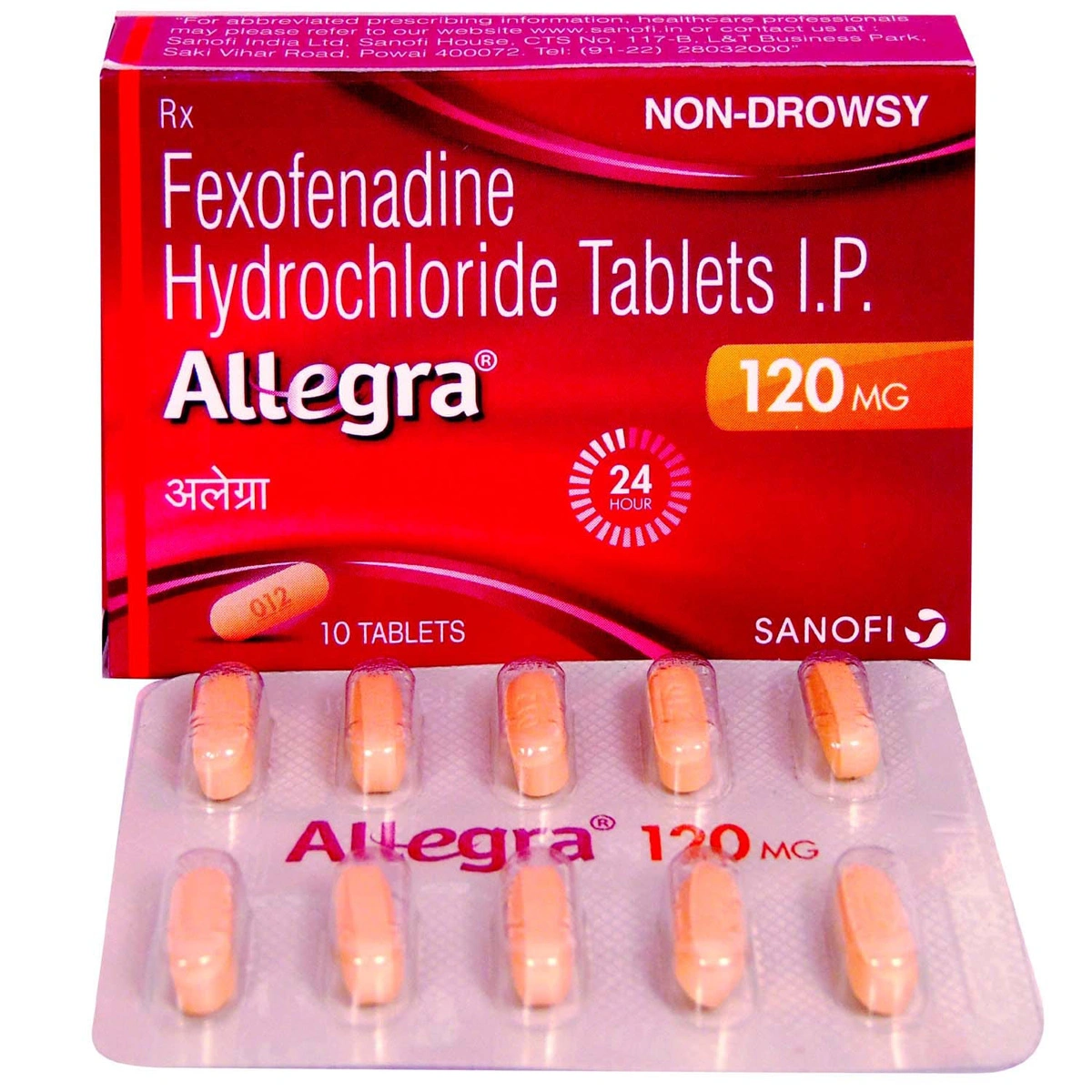
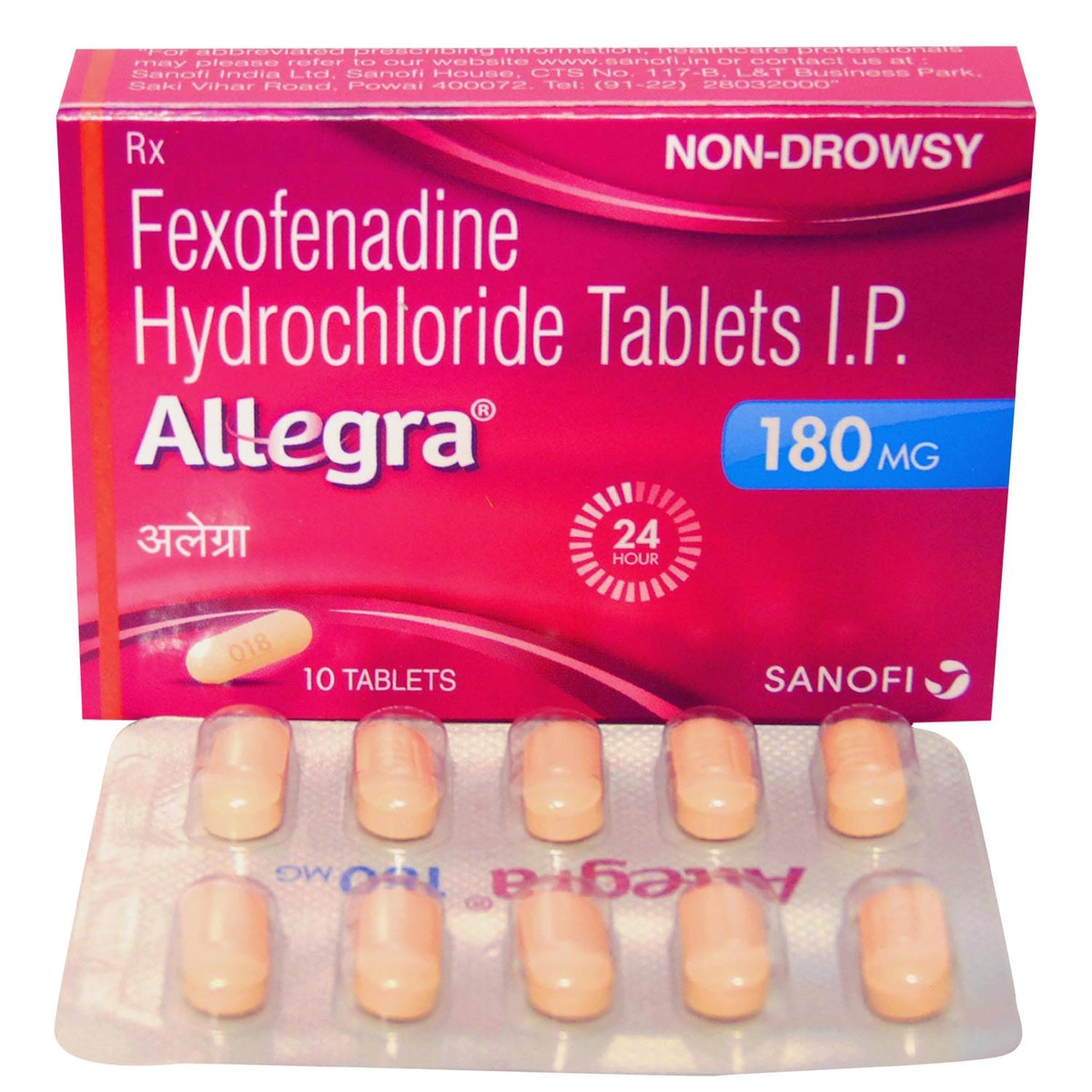
Allegra contains Fexofenadine.
✓ Medically reviewed by Morgan Ellis — Pharmacy Researcher · 8 years experience · Last reviewed: May 2026
⚡ Quick Answer — What is Allegra?
Allegra is a brand of fexofenadine (120 mg or 180 mg), a second-generation, non-sedating oral antihistamine used for hay fever (allergic rhinitis), chronic idiopathic urticaria (hives), itchy skin, and allergic conjunctivitis. It blocks histamine H1 receptors in the peripheral tissues that drive allergy symptoms — sneezing, runny nose, itchy eyes, skin hives — without crossing the blood-brain barrier meaningfully, so it does not make most people drowsy. Onset: 60 minutes; duration: 12–24 hours. Once-daily dosing. The most non-sedating antihistamine available — preferred for drivers, pilots, and anyone who cannot afford any drowsiness. Do not take with fruit juice (grapefruit, orange, apple) — juice reduces absorption by ~30–40% via OATP inhibition. Safe for long-term daily use (months to years) in most adults. Common side effects: mild headache, dry mouth, fatigue. Avoid in known hypersensitivity; dose-reduce in significant renal impairment.
📦 Every order is covered by our Reshipment Assurance Policy — if your parcel does not arrive within 20 business days, we reship it.
Why order from MedsBase
Our generic medications are sourced from WHO-GMP certified manufacturers and shipped worldwide in discreet, plain packaging — no medication name on the parcel exterior. Card payments are routed through a regulated processor (statement descriptors include a regulated card-payment processor — never “MedsBase” or any medication name). Crypto and SEPA bank transfer are also accepted. Every order is backed by our Reshipment Assurance Policy.
What Is Allegra?
Allegra is an oral antihistamine containing fexofenadine (120 mg or 180 mg), supplied as tablets. Manufactured by Sanofi, in packs of 30, 60, 90 or 180 tablets. Originator brand: Allegra / Telfast (Sanofi, 1996).
fexofenadine belongs to the second-generation (non-sedating) H1 antihistamine class — developed to keep the allergy-blocking effect of older drugs like diphenhydramine or pheniramine while removing the sedation, dry mouth, and cognitive impairment caused by their passage into the brain. Second-generation agents are the first-line oral antihistamines for allergic rhinitis and chronic urticaria in every major allergy guideline (ARIA, EAACI, AAAAI).
What Is Allegra Used For?
- Seasonal allergic rhinitis (hay fever) — sneezing, runny nose, itchy nose, itchy/watery eyes caused by pollens (tree, grass, weed)
- Perennial allergic rhinitis — year-round symptoms from dust mites, pet dander, mould
- Chronic idiopathic urticaria (hives) — recurring itchy welts lasting > 6 weeks
- Allergic conjunctivitis — itchy, watery, red eyes from allergens
- Mild allergic skin reactions — pruritus (itch), insect bite reactions, mild contact urticaria
It is not a treatment for anaphylaxis (use adrenaline/epinephrine auto-injector), asthma (use inhaled corticosteroid + bronchodilator), or allergic food reactions beyond mild skin symptoms.
How Does Allegra Work?
When you are exposed to an allergen (pollen, dust, animal dander), mast cells and basophils in the skin and mucosa release histamine. Histamine binds H1 receptors and causes the classic allergy cascade: vasodilation, vascular leakage, itch, sneeze, increased mucus secretion, and smooth-muscle contraction.
fexofenadine is a selective inverse agonist at H1 receptors. It stabilises the receptor in its inactive state, reducing signalling even at baseline histamine levels. Key features of the second-generation class:
- Peripheral H1 selectivity — strong binding in nose, skin, conjunctiva; minimal binding in the brain
- Poor blood-brain barrier penetration — so little to no sedation
- Minimal anticholinergic activity — unlike 1st-gen agents, no dry mouth, urinary retention, or constipation at therapeutic doses
- No tachyphylaxis — effect does not fade over weeks of daily use (a common misconception)
Dosage and Administration
Standard dose: 120 mg once daily for seasonal allergic rhinitis, or 180 mg once daily for chronic urticaria, in adults and children aged 12+. Children 6–11: 30 mg twice daily. Reduce in renal impairment.
- Onset of action: 60 minutes.
- Peak effect: 2–3 hours.
- Duration: 12–24 hours — so once-daily dosing is sufficient for most patients.
- Miss a dose? Take it as soon as you remember unless your next dose is due within a few hours; do not double up.
- Seasonal use. Start 1–2 weeks before your usual pollen trigger season for best effect; continue daily through the season.
- Chronic urticaria. Guidelines allow up-dosing to 2–4× standard dose if symptoms are not controlled — done under medical supervision.
Side Effects
Essentially no sedation — fexofenadine has the lowest brain penetration of any 2nd-generation antihistamine and is specifically approved by aviation authorities for use by pilots in many jurisdictions.
Common (< 5% in most trials):
- Mild headache
- Dry mouth
- Fatigue
- Nausea or abdominal discomfort
Uncommon:
- Dizziness, sleep disturbance
- QT-interval effects at supratherapeutic doses (exceedingly rare at standard doses; more relevant historically for the withdrawn agents terfenadine and astemizole, not for current second-generation antihistamines)
- Hypersensitivity reactions, rash
- Transient transaminase elevation
Drug Interactions
- Alcohol and CNS depressants — additive drowsiness (minor for non-sedating agents; avoid high-dose combinations).
- Ketoconazole, erythromycin, clarithromycin, ritonavir — may modestly raise plasma levels of loratadine/desloratadine/ebastine via CYP3A4 inhibition. Clinical effect usually small.
- Fruit juice (grapefruit, orange, apple) — significantly reduces fexofenadine absorption (~30–40%). Take with water.
- Antacids containing aluminium/magnesium — reduce fexofenadine absorption; separate by 2 hours.
- Pimozide, QT-prolonging drugs — caution; avoid high-dose combinations.
Use in Pregnancy and Children
Pregnancy: Limited human data — loratadine and cetirizine have more outcome data and are usually preferred in pregnancy.
Breastfeeding: second-generation antihistamines pass into breast milk in tiny amounts and are considered compatible with breastfeeding. Loratadine and cetirizine have the most data.
Children: Approved from age 6 months (30 mg oral suspension) in many markets; 120 mg / 180 mg tablets from age 12.
Who Should Not Take Allegra?
- Known hypersensitivity to fexofenadine or other antihistamines in the same class
- Severe renal impairment without dose adjustment
- End-stage renal disease on haemodialysis (dose per nephrology guidance)
- Severe hepatic impairment — dose reduction recommended for some molecules
- Children below the age cutoff for the formulation
- Pregnancy / breastfeeding — use only under medical advice; loratadine and cetirizine are preferred where choice exists
Storage
Store Allegra below 25°C in a dry place, in the original blister. Keep out of reach of children.
Frequently Asked Questions
Is Allegra the same as fexofenadine?
Yes — Allegra contains the active ingredient fexofenadine. Bioequivalence to the originator brand (Allegra / Telfast (Sanofi, 1996)) is required by regulatory authorities, so clinical effect is the same at the same dose.
Why does fruit juice interact with fexofenadine?
Grapefruit, orange, and apple juice contain compounds (flavonoids) that inhibit intestinal OATP (organic anion transporting polypeptide) — the transporter fexofenadine uses to cross into the bloodstream. Taking fexofenadine with fruit juice can reduce plasma levels by 30–40%, weakening its effect. Take with water and separate any fruit juice by at least 4 hours.
Will Allegra make me drowsy?
Essentially no sedation — fexofenadine has the lowest brain penetration of any 2nd-generation antihistamine and is specifically approved by aviation authorities for use by pilots in many jurisdictions. If you do feel drowsy, take your dose in the evening, or switch to fexofenadine (the least-sedating 2nd-generation antihistamine).
Is it safe to take Allegra every day for months or years?
Yes — long-term daily use of 2nd-generation antihistamines is well-studied and safe for most adults. There is no tachyphylaxis (the effect does not fade), no cumulative organ toxicity, and no withdrawal syndrome. Chronic urticaria patients often take an antihistamine daily for years.
Can I take Allegra with other allergy medications?
Yes, in most cases. Combining an oral antihistamine with an intranasal corticosteroid (e.g. mometasone, fluticasone) is the standard combination for moderate hay fever. Eye drops (olopatadine, ketotifen) can be added for eye symptoms. Avoid combining two oral antihistamines at the same time without medical advice.
How quickly does Allegra work?
Onset is usually 60 minutes, with peak effect at 2–3 hours. For seasonal hay fever, starting 1–2 weeks before your usual trigger season gives the best control.
What happens if I take more than the recommended dose?
Single-dose overdoses of 2nd-generation antihistamines rarely cause serious harm at a few multiples of the standard dose, but can cause drowsiness, tachycardia, and (rarely) QT prolongation. Seek medical advice if more than 5× the standard dose has been taken, especially in children.
Where can I buy Allegra online?
You can order Allegra (120 mg or 180 mg) from MedsBase in packs of 30, 60, 90 or 180 tablets. We ship worldwide with discreet packaging and genuine WHO-GMP certified manufacturer stock.
Related Allergy Medications
- Allegra — Fexofenadine (least-sedating antihistamine)
- Xyzal — Levocetirizine (cetirizine’s active enantiomer)
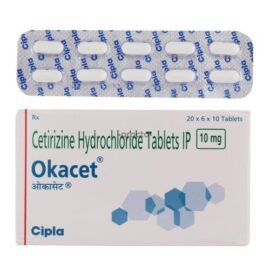
- Okacet — Cetirizine (generic Zyrtec)
- Lorfast Meltab — Loratadine orally dissolving
- Dazit — Desloratadine
- Meta Spray — Mometasone intranasal corticosteroid
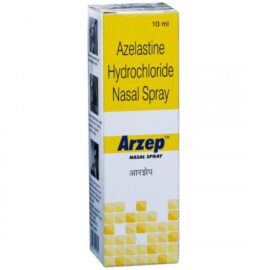
- Arzep — Azelastine + Fluticasone nasal spray
- Browse all Hay Fever & Allergy Medications
Related Alternatives
Other products in Chronic Conditions that customers also view:
More options in Hay Fever/Allergies Treatment
Ranked by recent MedsBase order volume — what other customers in this category are picking.


| Strength | 120 mg, 180 mg |
|---|---|
| Quantity | 30 Tablet/s, 60 Tablet/s, 90 Tablet/s, 180 Tablet/s |
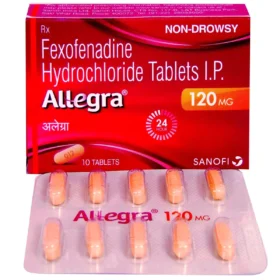 Allegra
Q & A
Allegra
Related products

Reviews
There are no reviews yet