








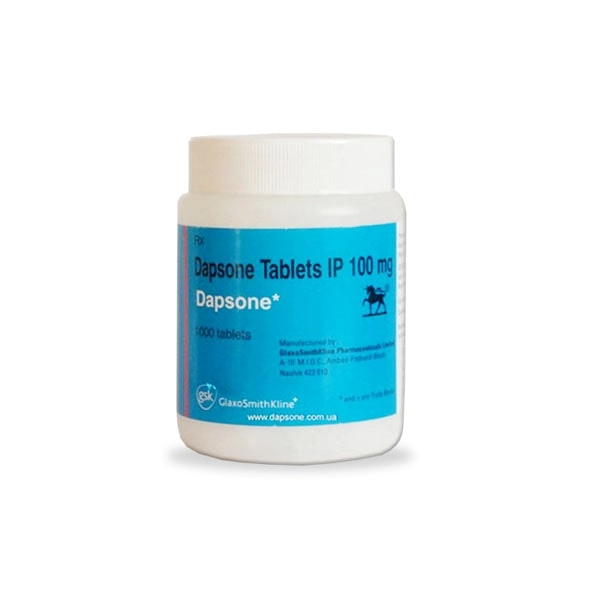
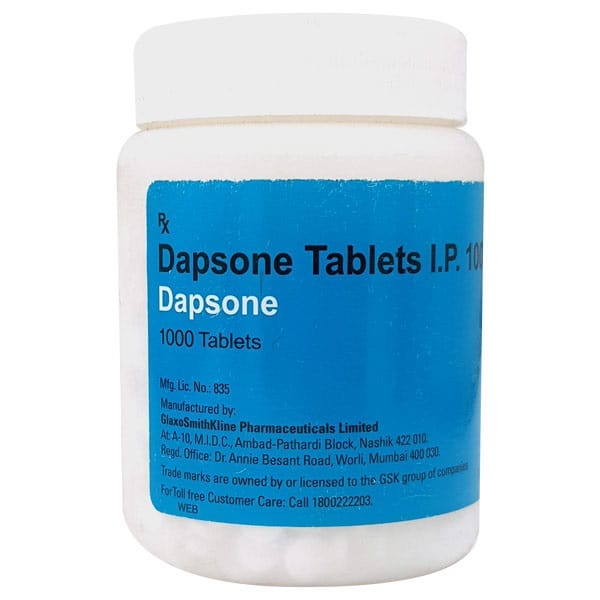
Dapsone Tablets
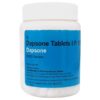
✅ Treats leprosy effectively
✅ Manages acne effectively
✅ Reduces acne redness
✅ Improves skin appearance
contains Dapsone
✓ Medically reviewed by Morgan Ellis — Pharmacy Researcher · 8 years experience · Last reviewed: May 2026
⚡ Quick Answer — What is Dapsone Tablets?
Dapsone Tablets contains dapsone (4,4′-diaminodiphenyl sulfone, DDS) 100 mg — a sulfone-class antibacterial and anti-inflammatory drug from Abbott India. Dapsone is on the WHO Model List of Essential Medicines as the cornerstone of multi-drug therapy (MDT) for leprosy (Hansen’s disease); it is also first-line for dermatitis herpetiformis (the skin manifestation of coeliac disease), and is widely used as second-line PCP prophylaxis (in HIV / immunocompromised patients allergic to co-trimoxazole), and off-label for severe inflammatory acne (acne fulminans, hidradenitis suppurativa). Standard dosing: Leprosy MDT — 100 mg/day (multibacillary 12 months; paucibacillary 6 months). Dermatitis herpetiformis — 50-300 mg/day titrated to symptom control. PCP prophylaxis — 100 mg/day. CRITICAL safety steps before starting: screen for G6PD deficiency (dose-dependent severe haemolysis if deficient); obtain baseline FBC, reticulocyte count, methaemoglobin, and LFTs; counsel patient on dapsone hypersensitivity syndrome (DHS) which can be fatal in the first 6 weeks. Dapsone is restricted to specialist supervision in most contexts — this is not a self-treatment medication.
📦 Every order is covered by our Reshipment Assurance Policy — if your parcel does not arrive within 20 business days, we reship it.
Why order from MedsBase
Our generic medications are sourced from WHO-GMP certified manufacturers and shipped worldwide in discreet, plain packaging — no medication name on the parcel exterior. Card payments are routed through a regulated processor (statement descriptors include a regulated card-payment processor — never “MedsBase” or any medication name). Crypto and SEPA bank transfer are also accepted. Every order is backed by our Reshipment Assurance Policy.
What Is Dapsone Tablets?
Dapsone Tablets is an oral preparation of dapsone (DDS) 100 mg manufactured by Abbott India, supplied in pack sizes of 1000 / 2000 / 3000 tablets. The large pack sizes reflect dapsone’s primary use in WHO leprosy MDT programmes (12-month courses for multibacillary disease, treating large patient cohorts) and in chronic dermatology (dermatitis herpetiformis, hidradenitis suppurativa, lupus-related dermatoses) where therapy may continue for years.
Dapsone has been in continuous clinical use since 1937 (introduced for streptococcal infection by Domagk), repurposed for leprosy by Faget in 1941, and remains a cornerstone of dermatology and infectious-disease pharmacology nearly a century later.
How Does Dapsone Work?
Dapsone has two distinct mechanisms that explain its very wide range of indications:
- Antibacterial action — competitive inhibition of bacterial dihydropteroate synthase (the same enzyme target as sulphonamides), blocking folate synthesis and bacterial growth. Active against Mycobacterium leprae, Plasmodium falciparum (combined with proguanil for malaria prophylaxis historically), and Pneumocystis jirovecii.
- Anti-inflammatory action — inhibits neutrophil chemotaxis and the myeloperoxidase / hypochlorous-acid pathway. This is the mechanism that makes dapsone useful in neutrophilic dermatoses (dermatitis herpetiformis, hidradenitis suppurativa, pyoderma gangrenosum, leucocytoclastic vasculitis, bullous pemphigoid).
Dapsone is well-absorbed orally (peak 2-8 hours), highly protein-bound, metabolised by the liver to N-acetyl-dapsone (CYP-independent) and dapsone-hydroxylamine (CYP2C9/CYP2C19/CYP3A4). The hydroxylamine metabolite drives the haematological side effects (haemolysis, methaemoglobinaemia). Half-life ~30 hours allows once-daily dosing.
Indications & Standard Regimens
| Indication | Standard adult dose | Duration |
|---|---|---|
| Multibacillary leprosy (MB-MDT) | 100 mg/day + rifampicin 600 mg monthly + clofazimine 50 mg/day & 300 mg monthly | 12 months |
| Paucibacillary leprosy (PB-MDT) | 100 mg/day + rifampicin 600 mg monthly + clofazimine 50 mg/day & 300 mg monthly (WHO 2018 update) | 6 months |
| Dermatitis herpetiformis | 50 mg/day starter, titrate up by 25-50 mg every 1-2 weeks; usual maintenance 50-200 mg/day; max 300 mg/day | Years (alongside gluten-free diet, which is the curative therapy) |
| PCP prophylaxis (HIV / immunocompromised) | 100 mg/day OR 50 mg twice daily (second-line after co-trimoxazole) | Until CD4 count >200 for 3+ months |
| Hidradenitis suppurativa (off-label) | 50-200 mg/day | 3-12 months trial |
| Severe acne fulminans (off-label) | 50-150 mg/day, usually combined with oral steroid taper | Weeks to months |
| Bullous pemphigoid, pyoderma gangrenosum, leucocytoclastic vasculitis (off-label) | 50-200 mg/day, often with steroid | Months |
Take with food to reduce gastrointestinal upset. Once-daily dosing is standard.
CRITICAL: Pre-Treatment Screening
Mandatory baseline tests before starting dapsone:
- Quantitative or qualitative G6PD assay
- Full blood count (FBC)
- Reticulocyte count
- Methaemoglobin level (if available)
- Liver function tests (LFTs)
- Renal function (creatinine, eGFR)
Monitoring during treatment: FBC and reticulocytes weekly for the first month, then monthly for 6 months, then quarterly. LFTs monthly for 3 months then quarterly. Methaemoglobin if cyanosis or breathlessness develops.
Side Effects
Common (1 in 10 or more):
- Mild dose-dependent haemolysis (some haemoglobin drop is expected even in G6PD-normal patients; usually 1-2 g/dL)
- Methaemoglobinaemia — usually subclinical; clinical features (cyanosis, breathlessness, headache) at levels >15-20%
- Nausea, abdominal discomfort, anorexia
- Headache, dizziness
- Insomnia
- Mild rash
Less common but serious:
- Dapsone Hypersensitivity Syndrome (DHS) — see dedicated section below
- Severe haemolysis in undiagnosed G6PD deficiency — can be fatal
- Agranulocytosis — rare but life-threatening; typically in the first 3 months
- Aplastic anaemia, thrombocytopenia
- Peripheral neuropathy (motor or sensory; often partly reversible)
- Hepatitis, cholestatic jaundice
- Toxic psychosis, depression
- Stevens-Johnson syndrome / toxic epidermal necrolysis (rare but reported)
- “Dapsone lung” — eosinophilic pneumonitis (rare)
Dapsone Hypersensitivity Syndrome (DHS)
DHS is the most feared complication of dapsone therapy. It is a delayed (DRESS-like) hypersensitivity reaction occurring in 0.5-3% of dapsone users, typically 2-8 weeks after starting. Mortality is approximately 10% if not recognised and treated promptly.
Classical triad:
- Fever (often the first sign)
- Skin rash — morbilliform, urticarial, exfoliative, or full SJS/TEN spectrum
- Internal organ involvement — lymphadenopathy, hepatitis (often the leading cause of death), interstitial nephritis, eosinophilia, atypical lymphocytosis
Genetic risk: the HLA-B*13:01 allele dramatically increases DHS risk. Pre-treatment HLA-B*13:01 screening is now recommended for patients of Asian (especially Chinese, Korean, Indonesian, Thai) ancestry where the allele frequency is 5-15%. Allele-positive patients should not receive dapsone.
Recognition and management: any new fever or rash in the first 8 weeks of dapsone therapy should be considered DHS until proven otherwise. Stop dapsone immediately, take FBC + LFTs urgently, refer to emergency care. Treatment: high-dose systemic corticosteroids, supportive care, monitor for liver failure.
Contraindications and Warnings
- Documented G6PD deficiency (or untested in high-prevalence populations) — absolute contraindication unless benefit demonstrably outweighs risk under specialist supervision
- HLA-B*13:01 positive patients (where tested)
- Hypersensitivity to dapsone or sulphonamides
- Severe anaemia
- Severe cardiopulmonary disease (poor tolerance of methaemoglobinaemia)
- Significant hepatic impairment
- Porphyria
- Hypersensitivity to dapsone metabolites or to sulphonamides (cross-reactivity rare but reported)
Pregnancy: dapsone has been used in pregnancy for leprosy and dermatitis herpetiformis without evidence of major teratogenicity. Foetal haemolysis is possible if the foetus is G6PD-deficient. Use only if benefit clearly outweighs risk and with specialist obstetric and dermatology / infectious-disease input.
Breastfeeding: dapsone is excreted in breast milk; risk of haemolysis in G6PD-deficient infants. Specialist advice required.
Drug Interactions
- Trimethoprim — significantly increases dapsone levels and methaemoglobinaemia risk; combination is sometimes used clinically (PCP prophylaxis) but requires close monitoring
- Other oxidising drugs (rasburicase, primaquine, quinolones, nitrofurantoin) — additive risk of haemolysis and methaemoglobinaemia
- Probenecid — inhibits dapsone renal elimination, increasing levels
- Rifampicin — CYP induction reduces dapsone levels (though combination is the standard MDT regimen for leprosy — the dosing accounts for this)
- Co-trimoxazole, sulphasalazine, sulphonamides — potential cross-hypersensitivity; additive haemolysis
- Anti-retrovirals — multiple interactions in HIV patients on PCP prophylaxis; consult a clinical pharmacist
How Dapsone Tablets Compares to Alternatives
For most dapsone indications there are alternatives, each with their own profile:
- Leprosy MDT — the dapsone + rifampicin + clofazimine combination is the WHO-standard. No equivalent alternative.
- Dermatitis herpetiformis — the underlying gluten-free diet is curative over months-to-years; dapsone provides rapid symptom control while the diet takes effect, then can usually be tapered. Alternative if dapsone not tolerated: sulphasalazine (much weaker effect).
- PCP prophylaxis — co-trimoxazole is first-line; dapsone is the second-line option in patients with sulpha allergy or co-trimoxazole intolerance. Atovaquone is the third-line option.
- Acne fulminans / hidradenitis suppurativa — oral isotretinoin, biologics (adalimumab for HS), oral antibiotics are alternatives.
Storage and Shelf Life
Store Dapsone Tablets tablets below 25°C in the original pack. Protect from light and moisture. Keep out of reach of children. Use before the printed expiry date.
Frequently Asked Questions
Why must I be tested for G6PD deficiency before starting Dapsone Tablets?
G6PD-deficient red cells lack the enzyme that protects against oxidative stress. Dapsone (via its hydroxylamine metabolite) is a potent oxidiser. G6PD-deficient patients exposed to dapsone develop severe acute haemolysis — the haemoglobin can drop 4-5 g/dL within days, with fatigue, jaundice, dark urine, and in severe cases shock and death. Pre-treatment G6PD testing is mandatory; the test costs little and prevents a potentially-fatal complication.
What is dapsone hypersensitivity syndrome (DHS)?
DHS is a delayed allergic reaction (DRESS-spectrum) that develops 2-8 weeks after starting dapsone. The classical triad is fever + rash + internal organ involvement (hepatitis, lymphadenopathy, eosinophilia). Mortality is around 10% if not recognised early. The HLA-B*13:01 allele is a strong genetic risk factor (especially in East/Southeast Asian populations). Any new fever or rash in the first 8 weeks of dapsone treatment should be considered DHS until proven otherwise — stop dapsone immediately and seek emergency medical care.
Why do my fingertips look blue on dapsone?
This is dapsone-induced methaemoglobinaemia. Dapsone’s hydroxylamine metabolite oxidises haemoglobin’s iron from Fe2+ (functional) to Fe3+ (non-functional, methaemoglobin). Methaemoglobin appears chocolate-brown and gives a bluish-grey tint to the skin (cyanosis). Mild methaemoglobinaemia (5-15%) is common on dapsone and usually asymptomatic. Levels >20% cause breathlessness, headache, fatigue. Levels >30% are dangerous and require treatment with methylene blue. Stop dapsone and seek medical care if you notice persistent blue/grey discolouration with breathlessness.
Can I take dapsone with food?
Yes — take with food to reduce nausea and gastric upset. Food does not significantly affect dapsone absorption.
How long do I need to stay on dapsone?
Depends on indication. Leprosy MDT: 6 months (paucibacillary) or 12 months (multibacillary). Dermatitis herpetiformis: years (alongside the curative gluten-free diet, which takes 1-2 years to fully suppress disease). PCP prophylaxis: until CD4 >200 for 3+ months. Hidradenitis suppurativa / acne fulminans: 3-12 month trials. Long-term dapsone has its own monitoring requirements (FBC + LFTs at least quarterly).
Is dapsone safe in pregnancy?
Dapsone has been used in pregnancy for leprosy and dermatitis herpetiformis without evidence of major teratogenicity. The main concern is foetal haemolysis if the foetus is G6PD-deficient. Use only if the maternal benefit clearly outweighs the foetal risk, with specialist obstetric, dermatology, and/or infectious-disease input.
Can I drink alcohol on dapsone?
Moderate alcohol does not directly interact with dapsone. However, both dapsone and alcohol are metabolised by the liver and both can cause hepatitis — combined chronic exposure increases liver-injury risk. Minimise alcohol while on long-term dapsone.
Where can I order Dapsone Tablets online?
You can order Dapsone Tablets from MedsBase in pack sizes of 1000 / 2000 / 3000 tablets. Orders ship worldwide with discreet packaging. Dapsone requires specialist supervision worldwide and baseline G6PD testing and monitoring — please ensure you have specialist supervision before ordering.
Related Alternatives
Other products in General Health that customers also view:
More options in Beauty & Skin Care
Ranked by recent MedsBase order volume — what other customers in this category are picking.


| Strength | 100 mg |
|---|---|
| Quantity | 1000 Tablet/s, 2000 Tablet/s, 3000 Tablet/s |
| Pharma Form | Tablet/s |
| Manufacturer | Abbott India Pvt Ltd |
| Treatment | Acne, Leprosy |
| Generic Brand | Glycolic Acid + Arbutin + Kojic Acid |
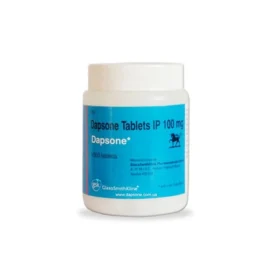 Dapsone Tablets
Q & A
Dapsone Tablets
Related products





Reviews
There are no reviews yet