









Divaine
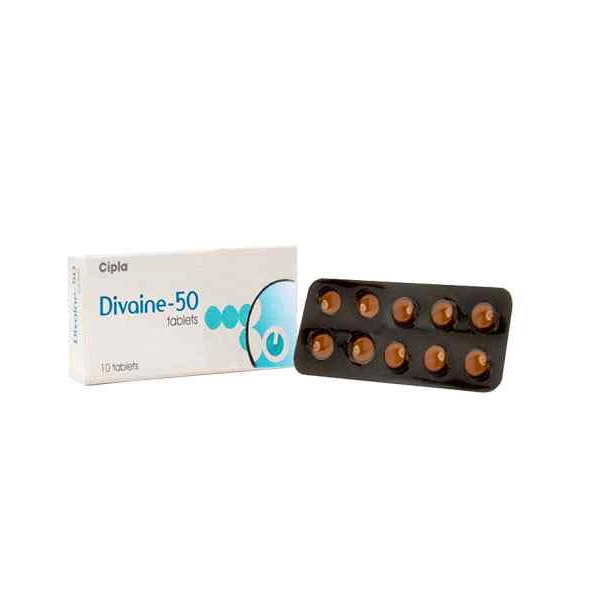

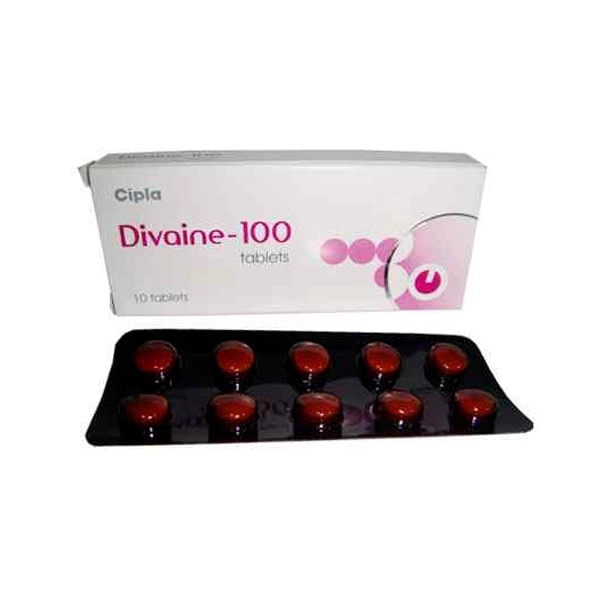
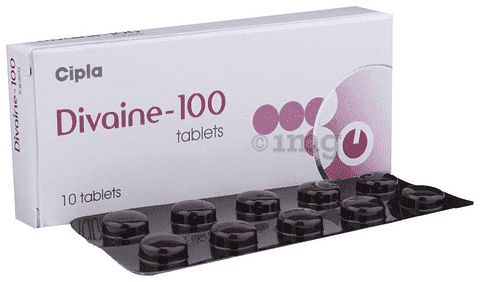
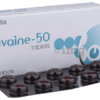

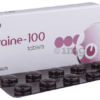
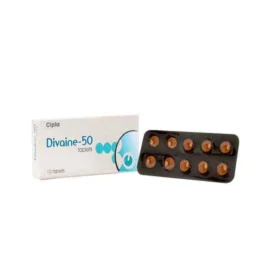
Divaine (Minocycline 50/100 mg, Cipla) — second-generation tetracycline for moderate-severe acne, rosacea, atypical mycobacterial skin infection, and Lyme arthritis. Greater vestibular and autoimmune side effects than doxycycline. Worldwide shipping from MedsBase.
✓ Medically reviewed by Morgan Ellis — Pharmacy Researcher · 8 years experience · Last reviewed: May 2026
⚡ Quick Answer — What is Divaine?
Divaine is minocycline 50 mg or 100 mg tablet from Cipla — a second-generation tetracycline antibiotic. Its strongest evidence is in moderate-to-severe acne vulgaris, rosacea, atypical mycobacterial skin infection, Lyme arthritis (when doxycycline cannot be used), and rifamycin-resistant leprosy. Minocycline has greater CNS and sebaceous-gland penetration than doxycycline but a worse adverse-effect profile (vestibular side effects, hyperpigmentation, drug-induced lupus). Standard adult dose: 100 mg once or twice daily depending on indication. WHO-GMP certified manufacturer.
📦 Every order is covered by our Reshipment Assurance Policy — if your parcel does not arrive within 20 business days, we reship it.
Why order from MedsBase
Our generic medications are sourced from WHO-GMP certified manufacturers and shipped worldwide in discreet, plain packaging — no medication name on the parcel exterior. Card payments are routed through a regulated processor (statement descriptors include a regulated card-payment processor — never “MedsBase” or any medication name). Crypto and SEPA bank transfer are also accepted. Every order is backed by our Reshipment Assurance Policy.
Why order from MedsBase
Divaine is supplied from a WHO-GMP certified manufacturer. Every order ships discreetly worldwide and is covered by our Reshipment Assurance Policy — if it does not arrive within 20 business days, we reship at no cost. Minocycline retains a place in moderate-severe acne, atypical mycobacterial skin infection, and rifamycin-resistant leprosy — situations where its tissue penetration and unusual spectrum are useful.
Mechanism
Minocycline reversibly binds the 30S bacterial ribosomal subunit, blocking aminoacyl-tRNA attachment to the A-site and halting protein synthesis. Bacteriostatic. Compared to doxycycline it is more lipophilic, with greater penetration into CNS, sebaceous glands, prostate, and brain abscess cavities — explaining its dermatology and CNS-infection use. The trade-off is more vestibular side effects and more autoimmune adverse events.
Indications
- Moderate-to-severe acne vulgaris (when doxycycline ineffective or not tolerated)
- Rosacea (papulopustular, ocular)
- Periorificial dermatitis
- Atypical mycobacterial skin infection (M. marinum, M. fortuitum)
- Lyme disease, Lyme arthritis (alternative when doxycycline cannot be used)
- Multibacillary leprosy (rifampicin-substitute in some regimens)
- Hidradenitis suppurativa adjunct
- Brain abscess in penicillin-allergic patient (CNS penetration)
Dose
Adults: 100 mg once or twice daily depending on indication. Acne: 100 mg once daily for 6–12 weeks (or 50 mg BD modified-release). Severe infection: 100 mg twice daily for 7–14 days. Children > 8 years: 4 mg/kg/day in 1–2 divided doses. Hepatic impairment: caution. CrCl: no reduction needed. Take with a full glass of water and remain upright 30 minutes; can be taken with food (modest reduction in absorption, much less than with older tetracyclines).
Side effects (some specific to minocycline)
- Vestibular: dizziness, vertigo, ataxia, nausea (10 percent — worst on first 3–5 days, often resolves with continued use)
- Pigmentation: blue-grey skin patches (acne scars, sun-exposed skin, gums, sclera, nails) with prolonged use
- Drug-induced lupus: arthralgia, fever, ANA / anti-histone positivity (months-years of use; reversible on stopping)
- Autoimmune hepatitis (rare)
- Benign intracranial hypertension (rare)
- DRESS / hypersensitivity syndrome (rare; eosinophilia, organ involvement)
- Photosensitivity (less than doxycycline)
- Tooth staining if used in children < 8 or pregnancy after 18 weeks
- Vaginal thrush, oesophagitis, C. difficile
Drug interactions
- Antacids, iron, zinc, calcium, dairy, sucralfate, bismuth: chelate minocycline — separate by 2 hours.
- Warfarin: INR rise — monitor.
- Methoxyflurane: nephrotoxicity — avoid.
- Combined OC pill: small theoretical risk — modern guidelines do not require extra contraception for short courses.
- Carbamazepine, phenytoin, barbiturates: induce metabolism — reduce levels.
- Methotrexate: may raise levels.
- Isotretinoin: additive intracranial hypertension risk — avoid combination.
Frequently Asked Questions
Why am I dizzy on this drug?
Vestibular side effects are common with minocycline (10 percent) and worst in the first few days. Take it at bedtime to sleep through the worst. If symptoms persist beyond a week, switch to doxycycline.
Will it stain my skin?
Blue-grey skin pigmentation can develop with long courses (more than 3–6 months), particularly in old acne scars and sun-exposed areas. The change is slow but can be permanent. Doxycycline does not cause this.
How is it different from doxycycline?
Both tetracyclines. Minocycline has greater CNS / sebaceous-gland penetration but more vestibular side effects, more pigmentation, and a higher risk of drug-induced lupus and autoimmune hepatitis. Doxycycline is generally preferred unless minocycline-specific advantages are needed.
How long can I take it for acne?
Aim for the shortest effective course — typically 3 months. After 6 months, the risk of drug-induced lupus, hepatitis, and pigmentation rises. Combine with topical retinoid + benzoyl peroxide for ongoing control.
Why does it appear in a gastro category?
Historical product placement. Minocycline does not have a major established gastrointestinal indication. For gut infection, choose ciprofloxacin, clarithromycin, doxycycline, rifaximin, or metronidazole instead.
Is it safe in pregnancy?
No after 18 weeks (tooth staining and skeletal development effects). Avoid throughout pregnancy unless specifically indicated.
Can I drink alcohol?
Light alcohol is acceptable. Heavy alcohol increases hepatotoxicity risk — particularly relevant given minocycline’s autoimmune-hepatitis association.
How do I take it?
With a full glass of water, upright for 30 minutes after, ideally not within 2 hours of dairy / antacids / iron. Modern minocycline is less affected by food than older tetracyclines but consistency is sensible.
What if I notice joint pain or rash on long-term use?
Stop the drug and seek medical advice — drug-induced lupus presents with joint pain, fever, fatigue, and ANA / anti-histone positivity. Reversible on stopping.
Storage
Below 25°C in a dry place. Keep tablets in the original blister.
Other Gastro Health Medications
- Cendox — Doxycycline (preferred for most tetracycline indications)
- Synclar — Clarithromycin
- Ciplox — Ciprofloxacin
- Rcifax — Rifaximin
- Rifagut — Rifaximin
- Browse all Gastro Health Medications
More options in Rosacea Treatment
Ranked by recent MedsBase order volume — what other customers in this category are picking.

| Strength | 50 mg, 100 mg |
|---|---|
| Quantity | 30 Tablet/s, 60 Tablet/s, 90 Tablet/s |
| Pharma Form | Tablet/s |
| Manufacturer | Cipla Inc |
| Treatment | Gastro Health |
| Generic Brand | Minocycline |
 Divaine
Q & A
Divaine
Related products




Reviews
There are no reviews yet