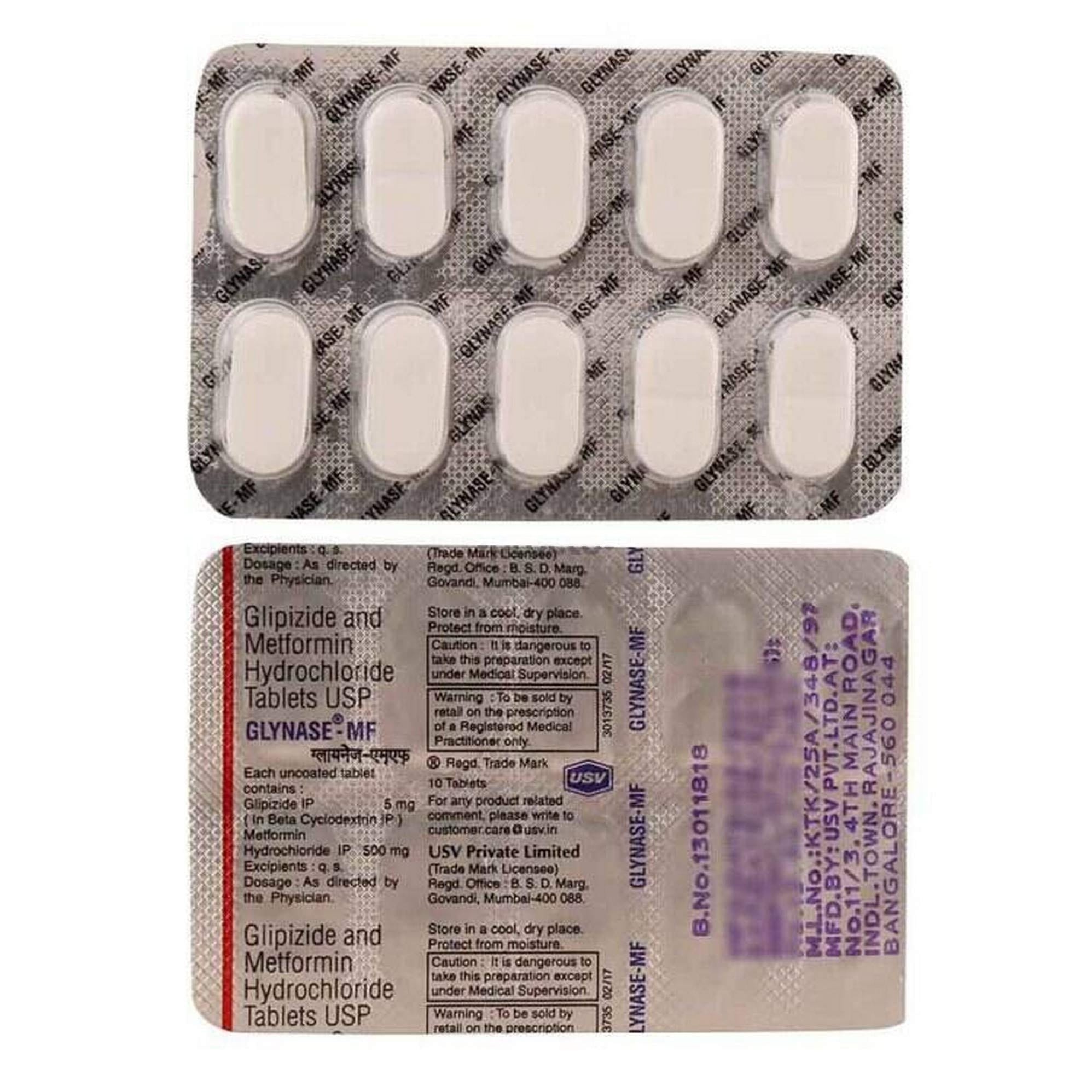
Glynase-MF
✅ Controls blood sugar
✅ Manages diabetes effectively
✅ Combats insulin resistance
✅ Reduces glucose levels
✅ Enhances insulin sensitivity
Glynase-MF contains Glipizide and Metformin.
✓ Medically reviewed by Morgan Ellis — Pharmacy Researcher · 8 years experience · Last reviewed: May 2026
⚡ Quick Answer — What is Glynase-MF?
Glynase-MF is a fixed-dose combination tablet containing Glipizide (5 mg) and metformin (500 mg) for the treatment of type 2 diabetes. It combines two complementary mechanisms in a single tablet: metformin reduces the liver’s glucose output and improves insulin sensitivity, while glipizide stimulates the pancreas to release more insulin. Usual dose is one tablet twice daily with breakfast and dinner. Typical HbA1c reduction: 1.5–2.0 percentage points. Main side effects: GI upset from metformin (first 1–2 weeks) and hypoglycaemia from the sulfonylurea. Glipizide has inactive metabolites and a shorter duration than glibenclamide — a safer sulfonylurea profile for most patients. Avoid in severe renal impairment (eGFR < 30), decompensated heart failure, acute illness with dehydration, and sulfa allergy.
📦 Every order is covered by our Reshipment Assurance Policy — if your parcel does not arrive within 20 business days, we reship it.
Why order from MedsBase
Our generic medications are sourced from WHO-GMP certified manufacturers and shipped worldwide in discreet, plain packaging — no medication name on the parcel exterior. Card payments are routed through a regulated processor (statement descriptors include a regulated card-payment processor — never “MedsBase” or any medication name). Crypto and SEPA bank transfer are also accepted. Every order is backed by our Reshipment Assurance Policy.
What Is Glynase-MF?
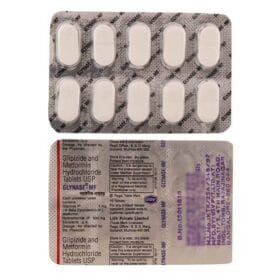
Glynase-MF is a fixed-dose combination (FDC) oral antidiabetic medicine containing two active ingredients: Glipizide (5 mg) and metformin hydrochloride (500 mg), manufactured by USV Pharma. Available in packs of 30, 60, 90 or 180 tablets.
Combination tablets simplify the regimen (one tablet instead of two), improve adherence, and are typically less expensive than the two components bought separately. Glynase-MF is usually prescribed when metformin monotherapy is not achieving HbA1c targets.
How Does Glynase-MF Work?
The two components attack hyperglycaemia from different angles — this is why combination therapy is more effective than up-titrating either drug alone:
- Metformin — reduces hepatic glucose production (by up to one third), improves peripheral insulin sensitivity in muscle and fat, and modestly slows intestinal glucose absorption. It does not stimulate insulin release and does not cause hypoglycaemia on its own.
- Glipizide — closes ATP-sensitive potassium channels on pancreatic beta cells, depolarising them and triggering calcium-mediated insulin release. This works only while the beta cells still produce insulin (early-to-mid type 2 diabetes).
Together, the two mechanisms produce an HbA1c fall of 1.5–2.0 percentage points, substantially more than metformin monotherapy.
Dosage and Administration
Starting dose: One tablet of Glynase-MF with the main meal (breakfast). If glycaemia is not controlled after 2–4 weeks, increase to one tablet twice daily — with breakfast and dinner.
- Take with or immediately after food — reduces metformin GI side effects and matches the sulfonylurea’s action to the post-meal glucose rise.
- Titrate slowly. Gradual dose increases reduce both GI upset and hypoglycaemia.
- Do not double up on a missed dose. Skip the missed dose; take the next at the normal time.
- Before surgery, IV contrast, or acute illness — hold the medicine and contact your doctor.
Side Effects
From the metformin component (usually in the first 1–2 weeks):
- Diarrhoea, nausea, abdominal cramps, flatulence
- Metallic taste in the mouth
- Loss of appetite
From the sulfonylurea component:
- Hypoglycaemia — shakiness, sweating, palpitations, hunger, confusion. Treat with 15 g fast-acting carbohydrate. Higher risk in older adults, missed meals, and renal impairment.
- Modest weight gain (1–3 kg)
- Occasional skin rash
Uncommon but serious:
- Lactic acidosis (from metformin) — very rare, almost always in the setting of acute kidney injury, sepsis, or hypoxia
- Vitamin B12 deficiency (long-term metformin) — check annually
- Severe hypoglycaemia — may require medical intervention, especially in elderly or renal impairment
Drug Interactions
Raise hypoglycaemia risk: insulin, other antidiabetics, alcohol (especially binge), trimethoprim/sulfamethoxazole, fluconazole, clarithromycin, ACE inhibitors, high-dose salicylates, non-selective beta-blockers (which also mask hypo symptoms), MAOIs.
Raise lactic acidosis risk (metformin): IV iodinated contrast, carbonic anhydrase inhibitors (acetazolamide, topiramate), cationic drugs (cimetidine, dolutegravir, ranolazine).
Reduce glucose-lowering effect: corticosteroids, thiazide diuretics, thyroid hormones, phenytoin, rifampicin, atypical antipsychotics, oral contraceptives.
Who Should Not Take Glynase-MF?
- Type 1 diabetes mellitus, diabetic ketoacidosis
- Severe renal impairment (eGFR < 30 mL/min/1.73 m²)
- Acute or unstable heart failure
- Severe hepatic impairment
- Sulfonamide (sulfa) allergy
- Acute illness with risk of tissue hypoxia — sepsis, respiratory failure, recent MI
- Pregnancy and breastfeeding — insulin is preferred
- Before and 48 hours after IV iodinated contrast imaging (if eGFR < 60)
Storage
Store Glynase-MF below 25°C in a dry place, in the original blister pack. Keep out of reach of children.
Frequently Asked Questions
Is Glynase-MF the same as taking metformin and glipizide separately?
Clinically, yes — the fixed-dose combination delivers the same active ingredients at the same doses as the two tablets taken together. The advantage is fewer pills, better adherence, and typically lower cost. The trade-off is less dose flexibility: if either component needs changing, the FDC has to be swapped for the separate tablets.
When is Glynase-MF usually added to a diabetes regimen?
When metformin monotherapy at maximum tolerated dose is no longer controlling HbA1c. Most guidelines (ADA, EASD, NICE) recommend adding a second agent when HbA1c is > 7.5% on metformin alone. A sulfonylurea is a widely used second-line option because it is inexpensive and effective, although DPP-4 inhibitors and SGLT-2 inhibitors are now preferred in people with cardiovascular or renal comorbidities.
Can Glynase-MF cause low blood sugar (hypoglycaemia)?
Yes — because it contains a sulfonylurea. Skipping meals, unusual exercise, alcohol, and certain drug interactions raise the risk. Always take Glynase-MF with food and carry fast-acting carbohydrate. Severe or prolonged hypoglycaemia needs medical review.
Will Glynase-MF cause weight gain?
Modest weight gain (1–3 kg) is common because of the sulfonylurea component. Metformin is weight-neutral or slightly weight-reducing, so the FDC usually causes less gain than sulfonylurea monotherapy.
Can I drink alcohol while taking Glynase-MF?
Moderate alcohol with food is generally safe. Avoid binge drinking and alcohol on an empty stomach — both raise hypoglycaemia risk (from the sulfonylurea) and lactic acidosis risk (from metformin).
Do I still need to check my blood sugar?
Yes, particularly in the first 2–4 weeks, after dose changes, or during illness. HbA1c should be checked every 3–6 months.
Where can I buy Glynase-MF online?
You can order Glynase-MF (5 mg + 500 mg) from MedsBase in packs of 30, 60, 90 or 180 tablets. We ship worldwide, with discreet packaging and genuine WHO-GMP certified manufacturer stock.
Related Diabetes Medications
- Glycomet SR — Metformin sustained-release
- Amaryl — Glimepiride 1/2/4 mg (Sanofi)
- Januvia — Sitagliptin (DPP-4 inhibitor)
- Jardiance — Empagliflozin (SGLT-2 inhibitor)
- Forxiga — Dapagliflozin (SGLT-2 inhibitor)
- Janumet — Sitagliptin + Metformin combo
- Browse all Diabetes Medications
If you want the standard ADA/EASD step-up sequence — metformin first, then metformin + sulfonylurea — bundled in one shipment, our Diabetes Starter Pack (Glycomet SR 1000 mg + Glycomet-GP) offers both molecules at matched 1, 3, or 6-month tiers, sourced from the most-prescribed Glycomet line.
When the glipizide component of Glynase-MF is discontinued and metformin monotherapy continued, Glycomet SR (metformin hydrochloride 500–1000 mg SR) is the natural extended-release step-down option, maintaining the same insulin-sensitising mechanism without the sulphonylurea component.
Related Alternatives
Other products in Chronic Conditions that customers also view:
More options in Diabetes
Ranked by recent MedsBase order volume — what other customers in this category are picking.

| Strength | 5+500 mg |
|---|---|
| Quantity | 30 Tablet/s, 60 Tablet/s, 90 Tablet/s, 180 Tablet/s |
Q & A
 Glynase-MF
Related products