







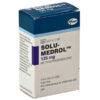
Ivepred
✅ Inflammation reduction
✅ Allergy symptom relief
✅ Immune system suppression
✅ Asthma management
✅ Rheumatic disorder treatment
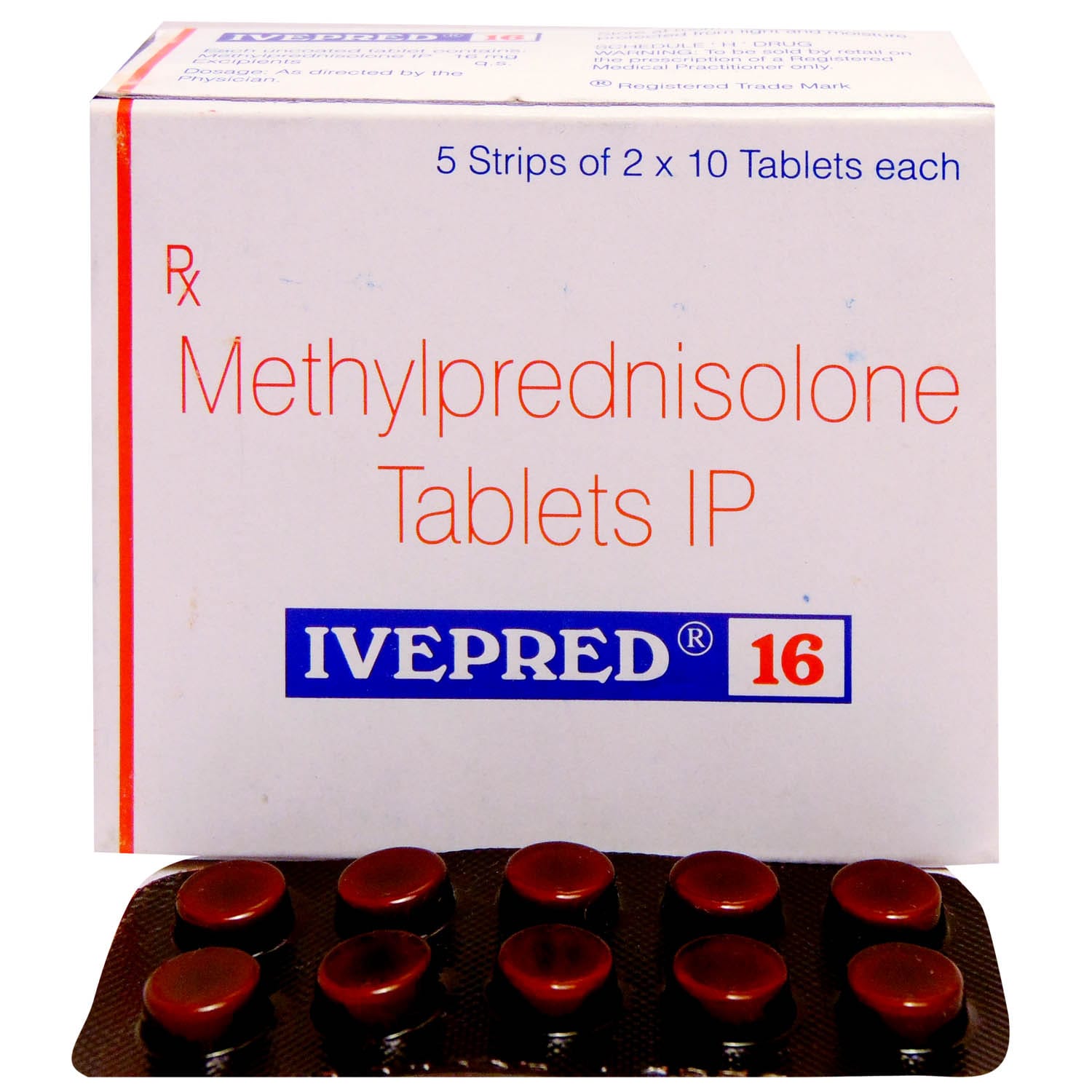
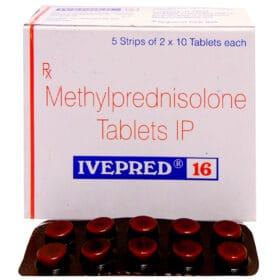
Ivepred contains Methylprednisolone.
✓ Medically reviewed by Morgan Ellis — Pharmacy Researcher · 8 years experience · Last reviewed: May 2026
⚡ Quick Answer — What is Ivepred?
Ivepred is a brand of methylprednisolone (16 mg), an oral systemic corticosteroid approximately 5 times more potent than hydrocortisone. It is used for a wide range of inflammatory, allergic, autoimmune, and rheumatic conditions — including severe allergic reactions, asthma flare-ups, rheumatoid arthritis, lupus, inflammatory bowel disease, sarcoidosis, some dermatoses, and certain nephrotic syndromes. Not a first-line or daily treatment for hay fever — intranasal corticosteroids (mometasone, fluticasone) and oral antihistamines control allergic rhinitis far more safely. Oral methylprednisolone is reserved for severe flares or conditions that require systemic anti-inflammatory therapy. Dose is individualised — commonly 4–48 mg/day, often tapered. Do not stop abruptly after courses > 1–2 weeks (adrenal-suppression risk). Side effects from prolonged or high-dose use are extensive — weight gain, raised blood sugar and blood pressure, osteoporosis, cataracts, infection risk, mood change.
📦 Every order is covered by our Reshipment Assurance Policy — if your parcel does not arrive within 20 business days, we reship it.
Why order from MedsBase
Our generic medications are sourced from WHO-GMP certified manufacturers and shipped worldwide in discreet, plain packaging — no medication name on the parcel exterior. Card payments are routed through a regulated processor (statement descriptors include a regulated card-payment processor — never “MedsBase” or any medication name). Crypto and SEPA bank transfer are also accepted. Every order is backed by our Reshipment Assurance Policy.
What Is Ivepred?
Ivepred is an oral glucocorticoid (systemic corticosteroid) tablet containing methylprednisolone (16 mg), manufactured by WHO-GMP certified manufacturer. Supplied in packs of 10, 30, 60 or 90 tablets. Methylprednisolone is a synthetic analogue of cortisol (the body’s natural stress steroid) with approximately 5× the anti-inflammatory potency of hydrocortisone and minimal mineralocorticoid (sodium-retaining) effect.
Originator brand: Medrol (Pfizer/Pharmacia-Upjohn). In clinical use since 1957.
What Is Ivepred Used For?
Methylprednisolone is used in dozens of inflammatory, allergic, and autoimmune conditions. The main groups are:
- Severe allergic reactions — angioedema, serum sickness, drug reactions (short course, often with antihistamines)
- Severe asthma exacerbation — oral course 30–50 mg/day for 5–7 days
- Severe atopic dermatitis or contact dermatitis flare — short tapered course
- Rheumatoid arthritis, lupus (SLE), polymyalgia rheumatica, vasculitis
- Inflammatory bowel disease (Crohn’s, ulcerative colitis) — induction of remission
- Sarcoidosis, interstitial lung disease
- Certain nephrotic syndromes
- Neurological conditions — multiple sclerosis relapses (usually IV), myasthenia gravis
- Haematological conditions — immune thrombocytopenia, haemolytic anaemia
- Transplant rejection prophylaxis (with other immunosuppressants)
Important: methylprednisolone is not a first-line treatment for seasonal hay fever or chronic allergic rhinitis. For routine allergic rhinitis, intranasal corticosteroids (mometasone, fluticasone) plus oral 2nd-generation antihistamines (loratadine, cetirizine, fexofenadine) are far safer and more effective. Oral steroids are reserved for severe allergic emergencies or when inhaled/topical therapy has failed.
How Does Ivepred Work?
Methylprednisolone binds intracellular glucocorticoid receptors in virtually every cell type. The receptor-drug complex translocates into the nucleus and alters the transcription of hundreds of genes:
- Suppresses pro-inflammatory cytokines (IL-1, IL-2, IL-6, TNF-α), prostaglandins, and leukotrienes via inhibition of phospholipase A2 and NF-κB
- Reduces immune-cell activation, migration, and proliferation — fewer lymphocytes, eosinophils, and monocytes in circulation
- Stabilises vascular permeability, reducing tissue oedema
- Induces anti-inflammatory proteins (lipocortin-1, IL-10)
The anti-inflammatory effect is dose-related and remarkably broad — which is both its strength (works for dozens of conditions) and its weakness (same effect on healthy tissues causes the long list of side effects).
Dosage and Administration
Doses are highly individualised by condition and severity. Typical ranges:
- Severe allergy / asthma flare: 24–48 mg/day for 5–7 days, with or without a brief taper
- Chronic inflammatory conditions: 4–16 mg/day maintenance, tapered to the lowest effective dose
- Lupus / rheumatoid disease: 4–48 mg/day depending on activity
- Induction of IBD remission: 40–60 mg/day tapered over 4–6 weeks
- High-dose “pulse” therapy: 500–1000 mg IV daily for 3 days for severe flares (specialist only; not this oral tablet)
Administration:
- Take with or immediately after food — reduces stomach upset.
- If once daily, take in the morning (mimics the natural cortisol peak and reduces insomnia).
- Miss a dose — take as soon as you remember; if close to the next dose, skip. Do not double up.
- Never stop abruptly after courses > 1–2 weeks or high doses — HPA-axis suppression can cause adrenal insufficiency (fatigue, low blood pressure, crisis). Always taper under medical supervision.
Side Effects
Short-term (days to weeks):
- Increased appetite, weight gain, fluid retention
- Raised blood sugar (especially in diabetes)
- Raised blood pressure
- Insomnia, mood change (euphoria, irritability, occasionally psychosis at high doses)
- Dyspepsia, raised risk of peptic ulcer — use a PPI for prolonged courses
- Increased infection risk (even short courses)
Long-term (months or more):
- Cushingoid appearance — moon face, central adiposity, buffalo hump, skin thinning, easy bruising, striae
- Osteoporosis and increased fracture risk — calcium + vitamin D supplementation and bisphosphonate cover for courses > 3 months are standard
- Cataracts and raised intraocular pressure / glaucoma
- Muscle wasting (steroid myopathy) — proximal muscle weakness
- Skin changes — thinning, striae, acne, delayed wound healing
- Diabetes induction or worsening
- Suppressed growth in children — monitor height and weight
- Avascular necrosis of bone (especially femoral head) — rare but serious
- HPA-axis suppression — adrenal insufficiency on abrupt withdrawal
- Reactivation of latent infections (TB, hepatitis B, strongyloides)
Drug Interactions
- NSAIDs, aspirin — additive peptic ulcer / GI-bleed risk. Consider PPI cover.
- Anticoagulants — variable INR change; monitor more often.
- Diabetes medicines — corticosteroids raise blood glucose; dose-up diabetes therapy as needed.
- Live vaccines — avoid during immunosuppressive doses (> 20 mg/day prednisolone equivalent).
- Rifampicin, phenytoin, carbamazepine, barbiturates — accelerate steroid metabolism (CYP3A4 induction); higher doses may be needed.
- Ketoconazole, clarithromycin, ritonavir — slow steroid metabolism; may require dose reduction.
- Potassium-depleting drugs (loop/thiazide diuretics, amphotericin) — additive hypokalaemia risk.
- Vaccines (inactivated) — usual schedule appropriate, but response may be reduced during immunosuppression.
Who Should Not Take Ivepred?
- Systemic fungal infection (unless treating adrenal insufficiency with cover)
- Active untreated systemic infection (bacterial, viral, TB, herpes)
- Known hypersensitivity to methylprednisolone
- Live or attenuated virus vaccines at immunosuppressive doses
- Peptic ulcer disease — use PPI cover and weigh risk/benefit
- Severe psychiatric history — monitor; lower doses preferred
- Pregnancy — use only when benefits outweigh risks; prednisolone is often preferred
Storage
Store Ivepred below 25°C in a dry place, in the original blister. Keep out of reach of children.
Frequently Asked Questions
Is Ivepred a good treatment for hay fever?
No — not for routine hay fever. Oral systemic corticosteroids are effective but have a large side-effect burden. For routine allergic rhinitis, intranasal corticosteroids (mometasone, fluticasone) plus oral 2nd-generation antihistamines are much safer and equally effective. Oral methylprednisolone is reserved for severe allergic episodes, anaphylaxis recovery, or severe inflammatory conditions where the risk/benefit justifies systemic therapy.
How is methylprednisolone different from prednisolone?
Methylprednisolone (4 mg) is approximately equivalent to prednisolone (5 mg) in anti-inflammatory potency. Methylprednisolone has slightly less sodium-retaining effect than prednisolone, which can be an advantage in heart-failure or hypertensive patients. Clinical effect is otherwise very similar.
Why can’t I just stop Ivepred suddenly?
After > 1–2 weeks of daily dosing, or at higher doses, your adrenal glands reduce their own cortisol production because the medicine is doing their job. Stopping abruptly leaves you with too little cortisol — this is acute adrenal insufficiency, which can cause severe fatigue, low blood pressure, vomiting, and (rarely) adrenal crisis. Tapering down gradually (over days to weeks) gives the adrenals time to restart.
What can I do to reduce side effects?
- Take in the morning to reduce insomnia
- Take with food to reduce stomach upset
- Ask about PPI cover if the course is > 1–2 weeks or you’re also on NSAIDs
- Calcium + vitamin D supplementation for courses > 3 months; consider bone-density monitoring
- Limit added sugar and salt; monitor blood pressure and blood glucose
- Stay up to date with vaccines (avoid live vaccines during immunosuppression)
- Alert all clinicians and dentists that you are on a corticosteroid, especially before any surgery
Where can I buy Ivepred online?
You can order Ivepred (16 mg) from MedsBase in packs of 10, 30, 60 or 90 tablets. We ship worldwide with discreet packaging and genuine WHO-GMP certified manufacturer stock.
Related Allergy and Anti-Inflammatory Medications
- Meta Spray — Mometasone nasal spray (first-line for hay fever)
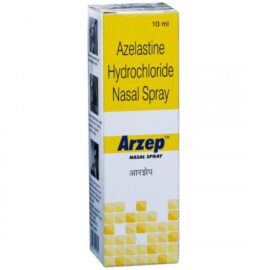
- Arzep — Azelastine + Fluticasone nasal spray
- Allegra — Fexofenadine (oral non-sedating)
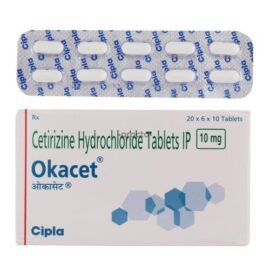
- Okacet — Cetirizine
- Loratin — Loratadine
- Xyzal — Levocetirizine
- Browse all Hay Fever & Allergy Medications
Related Alternatives
Other products in Chronic Conditions that customers also view:
More options in Hay Fever/Allergies Treatment
Ranked by recent MedsBase order volume — what other customers in this category are picking.


| Strength | 16 mg |
|---|---|
| Quantity | 30 Tablet/s, 60 Tablet/s, 90 Tablet/s, 180 Tablet/s |
 Ivepred
Q & A
Ivepred
Related products


Reviews
There are no reviews yet