







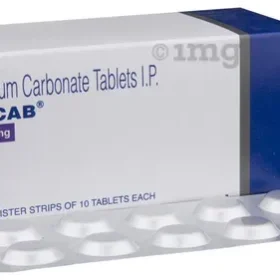
Licab
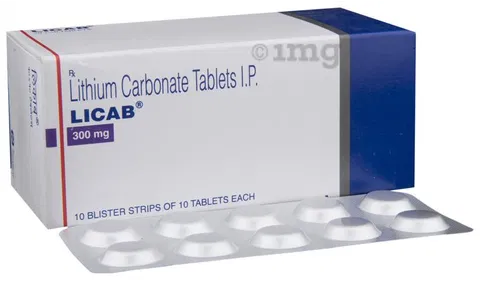
Licab (Lithium carbonate 300 mg) — gold-standard mood stabiliser for bipolar disorder maintenance and mania. only psychiatric drug proven to reduce suicide rate (~60%).
✓ Medically reviewed by Morgan Ellis — Pharmacy Researcher · 8 years experience · Last reviewed: May 2026
⚡ Quick Answer
Licab (Lithium carbonate 300 mg, immediate-release) is the gold-standard mood stabiliser for bipolar disorder. The only mood stabiliser with reproducible evidence for reducing suicide rate. Narrow therapeutic index — mandatory serum-level monitoring.
📦 Every order is covered by our Reshipment Assurance Policy — if your parcel does not arrive within 20 business days, we reship it.
Why order from MedsBase
Licab at MedsBase is supplied directly from a WHO-GMP certified manufacturer in plain, discreet packaging. Every order is covered by our Reshipment Assurance Policy — 20-business-day arrival window or we reship at no charge — and qualifies for our customer loyalty programme. Worldwide shipping is available to most destinations.
What Licab is and how it works
Licab is a lithium carbonate immediate-release tablet supplied by Intas. Available strengths: 300 mg. Lithium is a monovalent cation that has been used in bipolar disorder for over 70 years (Cade, 1949). Its mechanism is multi-modal: inhibition of inositol monophosphatase (IMPase), inhibition of GSK-3β, modulation of glutamate transmission, and effects on circadian-clock genes. The clinical translation: prophylaxis against both manic and depressive episodes, antidepressant augmentation, and a reproducible reduction in suicide rate (~ 60% in long-term studies).
Therapeutic range: 0.6–1.2 mEq/L for maintenance (acute mania up to 1.2). Toxicity begins at 1.5 mEq/L; severe toxicity (confusion, seizures, renal failure, death) at 2.0+ mEq/L. Check level: 12 hours post-dose at trough. Schedule: 5–7 days after every dose change, then 6-monthly when stable. Plus baseline and 6-monthly TSH, creatinine/eGFR, calcium.
Indications and dosing
| Indication | Starting | Target dose | Target level |
|---|---|---|---|
| Bipolar mania (acute) | 600–900 mg/day in divided doses | 900–1800 mg/day | 0.8–1.2 mEq/L |
| Bipolar maintenance | — | 600–1200 mg/day | 0.6–1.0 mEq/L |
| Bipolar depression / unipolar augmentation | — | 600–900 mg/day | 0.4–0.8 mEq/L |
| Older adults / renal impairment | 150–300 mg/day | by level | 0.4–0.8 mEq/L |
XR formulations are dosed once or twice daily (smoother level curve, lower peak side effects). IR formulations are typically dosed BID-TID.
Important safety considerations
After 10–20 years of lithium therapy, approximately 20% of patients develop a chronic interstitial nephritis with progressive eGFR decline. Mandatory creatinine / eGFR at baseline, 3 months, 6 months, then 6-monthly. Stop or reduce dose if eGFR drops below 60 with otherwise unexplained progression.
Lithium concentrates in the thyroid and inhibits hormone release. Hypothyroidism develops in 20–30% of long-term users; mandatory TSH at baseline, 3 months, 6 months, then 6-monthly. Add levothyroxine if symptomatic — usually no need to stop lithium.
Lithium can produce mild hyperparathyroidism with hypercalcaemia. Check calcium at baseline and 6-monthly.
Most lithium toxicity in clinic comes from dose-stable patients whose lithium clearance dropped because of: (1) dehydration (D&V, fever, hot weather, vigorous exercise without fluid replacement); (2) NSAID initiation; (3) ACE inhibitor or ARB initiation; (4) thiazide diuretic initiation; (5) sudden low-sodium diet. Counsel patients explicitly about each. Hold lithium for 24–48 h during D&V and check level on resolution.
Lithium has historically been associated with cardiac malformation (particularly Ebstein anomaly of the tricuspid valve) on first-trimester exposure. Modern studies suggest absolute risk is small but real (approximately 1.2–7%). Ideally switch before pregnancy; if not, fetal echocardiography at 20 weeks. Late-pregnancy and post-partum lithium are generally safer than first-trimester. Lithium passes into milk in significant amounts — usually avoided in breastfeeding.
Common side effects
- Tremor — fine postural tremor in most users; coarse tremor at high levels (toxicity sign).
- Polyuria, polydipsia — nephrogenic diabetes insipidus, partial in most cases.
- Weight gain — typically 4–7 kg over 12 months.
- GI upset — nausea, diarrhoea, often dose-related (lessened by XR formulation).
- Hypothyroidism — common; manage with levothyroxine.
- Renal decline — cumulative; monitor.
- Cognitive blunting — some patients describe “feeling slow” — often dose-related.
- Acne, psoriasis — exacerbations described.
Drug interactions
- NSAIDs — reduce renal lithium clearance; can raise levels 30–50%; avoid or check level frequently.
- ACE inhibitors / ARBs — reduce clearance; same caveats.
- Thiazide diuretics — reduce clearance; level rises predictably.
- Loop diuretics — variable effect.
- SSRIs — additive serotonergic effect; usually compatible.
- Antipsychotics — additive risk of NMS (rare).
Pregnancy, breastfeeding, paediatric
Pregnancy: small but real teratogenic risk first trimester (Ebstein anomaly); switch ahead of pregnancy where possible. Late pregnancy: dose adjustments needed because of expanded volume of distribution. Breastfeeding: lithium concentrates in milk; usually avoided. Paediatric: licensed from 12 in many jurisdictions; specialist supervision.
Storage
Store at 15–30 °C in original packaging.
Frequently Asked Questions
Why does lithium need blood-level monitoring?
Lithium has a narrow therapeutic window (0.6–1.2 mEq/L) — toxic at 1.5 and severely toxic at 2.0+. Tiny dose changes, fluid shifts, or interactions can swing levels into toxicity. Monitoring is what makes lithium safe. Skipping levels is not safe.
Why does lithium reduce suicide rate?
Lithium is the only psychiatric medication with reproducible long-term evidence for reducing suicide rate (approximately 60% reduction in pooled studies). The mechanism is uncertain — likely a combination of better mood stabilisation, reduced impulsivity, and direct effects on serotonergic and circadian systems. The effect appears specific to lithium and is not seen with other mood stabilisers.
How does lithium toxicity present?
Early: coarse tremor (different from fine tremor of normal therapy), GI upset, ataxia, slurred speech, confusion. Late: seizures, renal failure, cardiac arrhythmia, coma. Always present to emergency for level + electrolytes if any of these appear. Common precipitants: D&V, dehydration, new NSAID/ACEi/thiazide.
Why does lithium cause polyuria?
Lithium produces a partial nephrogenic diabetes insipidus by interfering with vasopressin signalling in the renal collecting duct. Most patients have polyuria of 2–4 L/day; severe polyuria (> 5 L) suggests reducing dose or switching. Long-term, the polyuria can become irreversible.
How long until lithium works?
Acute mania response within 1–2 weeks. Maintenance prophylaxis effect builds over 6–12 months — the antisuicidal effect appears around 6–12 months of stable therapy. Patients who stop lithium and restart often have less effect on second exposure (possible kindling).
Can I drink alcohol on lithium?
Light alcohol use is usually tolerated. Heavy or binge drinking is a major risk because it produces dehydration and reduced lithium clearance — toxicity is the predictable consequence. Many lithium patients limit alcohol to occasional and modest amounts.
Why does my hand shake on lithium?
Fine postural tremor is dose-related and present in most users. It is usually mild and worsens with caffeine and stress. Coarse tremor or worsening tremor is a toxicity sign — get a level check.
Can lithium be stopped abruptly?
Generally not — taper over 2–4 weeks where possible. Abrupt discontinuation produces a meaningful spike in relapse and suicide risk in bipolar disorder; this is one of the strongest signals in psychiatric pharmacology. Even patients who have been stable for years should not stop lithium impulsively.
Why monitor my thyroid?
Lithium concentrates in the thyroid and inhibits hormone release. About 20–30% of long-term users develop hypothyroidism. The fix is straightforward (add levothyroxine) — but it needs to be detected before symptoms appear, hence the routine monitoring.
Will lithium make me gain weight?
Yes — typically 4–7 kg over 12 months. Less than olanzapine, more than aripiprazole. Diet/exercise from initiation helps.
Other Mental Health Medications
- Torvate (Sodium valproate — alternative mood stabiliser)
- Qutan SR 400 (Quetiapine — bipolar maintenance)
- Olanzap (Olanzapine — bipolar mania)
- Aripicon (Aripiprazole — bipolar mania)
- Atlura (Lurasidone — bipolar depression)
More options in Mental Health and Psychiatric Medications
Ranked by recent MedsBase order volume — what other customers in this category are picking.
| Strength | 300 mg |
|---|---|
| Quantity | 30 Tablet/s, 60 Tablet/s, 90 Tablet/s, 180 Tablet/s |
 Licab
Licab
Q & A
Licab
Related products




Reviews
There are no reviews yet