







Meloset (Melatonin)
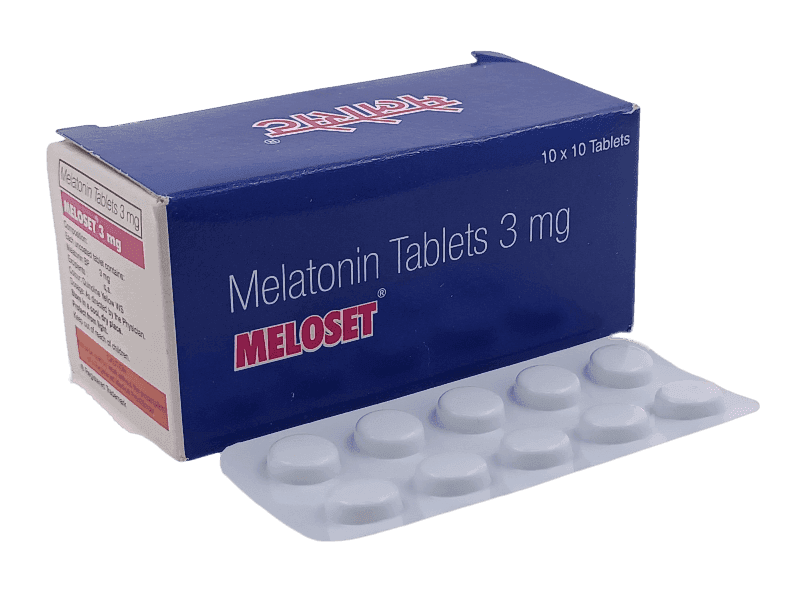
Meloset (melatonin 3 mg) — Sun Pharma pharmaceutical-grade tablet for short-term insomnia, jet lag, and shift-work sleep disorder. Non-addictive, no next-day cognitive impairment, predictable dose vs OTC gummies.
✓ Medically reviewed by Morgan Ellis — Pharmacy Researcher · 8 years experience · Last reviewed: May 2026
Quick Answer
Meloset contains melatonin 3 mg (Sun Pharma) — the standard adult dose of the body’s natural sleep-onset hormone. Used for short-term insomnia, jet lag, shift-work sleep disorder, and delayed sleep-phase disorder. Take 30–60 minutes before bedtime. Non-addictive, no rebound insomnia, no next-day cognitive impairment at this dose.
Onset: 30–60 minutes. Compared to higher-dose melatonin: 3 mg is as effective as 5–10 mg in most adult insomnia trials, with less morning grogginess and fewer vivid dreams. Not for: chronic insomnia (CBT-I is first-line), pregnancy or breastfeeding without specialist input, active autoimmune disease.
📦 Discreet packaging
🌍 Worldwide shipping
⭐ 1,400+ customer reviews
📦 Every order is covered by our Reshipment Assurance Policy — if your parcel does not arrive within 20 business days, we reship it.
Why order from MedsBase
- WHO-GMP certified manufacturer — quality-controlled finished tablets, batch-traceable.
- Discreet packaging — plain envelope, no medication or pharmacy text on the outside.
- Reshipment Assurance — every order covered (see policy for terms).
- Worldwide shipping with multiple courier options.
- 1,400+ customer reviews across 8 years of trading.
How melatonin works
Melatonin is a hormone secreted by the pineal gland in response to darkness. It binds to MT1 and MT2 receptors in the suprachiasmatic nucleus (SCN) — the master circadian pacemaker in the hypothalamus. MT1 activation reduces wake drive (sleep onset), MT2 activation phase-shifts the circadian clock. Unlike GABA-A agonists (Z-drugs, benzodiazepines), melatonin does not produce general CNS depression, does not impair memory consolidation, does not cause physical dependence, and does not impair next-day cognitive performance at standard doses.
The phase-shifting role is why timing matters. Melatonin taken at bedtime advances onset (helps with falling asleep). Melatonin taken in the late afternoon advances the entire circadian phase (helps with delayed sleep-phase disorder and eastward jet lag). Taken in the early morning, it delays the phase (helps with westward jet lag and advanced sleep-phase disorder).
Dosing by indication
| Indication | Dose | Timing | Duration |
|---|---|---|---|
| Short-term insomnia (typical adult) | 3 mg | 30–60 min before bed | 1–2 weeks |
| Insomnia age 55+ | 3 mg (titrate up if needed) | 1 hour before bed | up to 13 weeks (NICE) |
| Delayed sleep-phase disorder | 0.5–3 mg (titrate) | 4–6 hours before desired sleep onset | specialist-led |
| Eastward jet lag (≥ 5 time zones) | 3 mg | local bedtime at destination, 2–4 nights | until adapted |
| Shift-work sleep disorder | 3 mg | before daytime sleep period | while on rotation |
| Mild adolescent DSPD (specialist-led) | 0.5–3 mg | 4–6 hours before target sleep | specialist-led |
If 3 mg gives inadequate response after 1 week of correct timing and good sleep hygiene, our higher-dose option is Restfine (Melatonin 10 mg).
Side effects
Common (typically mild and self-limiting): drowsiness or grogginess on waking, headache, mild dizziness, nausea. Daytime sleepiness suggests the dose was taken too late — try moving 30–60 minutes earlier.
Less common: vivid dreams (more dose-related at 5–10 mg than at 3 mg), low mood transient, reduced libido, mild gastrointestinal upset, irritability.
Rare but important: seizures (lowered threshold reported in epilepsy — specialist input), allergic skin reactions, autoimmune flare in patients with active rheumatoid arthritis or lupus.
Drug interactions
| Drug class | Interaction | Action |
|---|---|---|
| Fluvoxamine (SSRI) | CYP1A2 inhibition raises melatonin levels 17-fold | avoid combination |
| Warfarin | case reports of raised INR | monitor INR after starting or stopping |
| Diabetes medication | melatonin reduces insulin secretion overnight | monitor fasting glucose |
| Immunosuppressants | melatonin has immunostimulant effects | avoid in transplant or active autoimmune disease |
| Combined oral contraceptive | raises melatonin levels mildly | usually no change needed |
| Benzodiazepines, Z-drugs, alcohol, opioids | additive sedation | avoid combining |
| Anticonvulsants | may lower seizure threshold (case reports) | specialist input in epilepsy |
Contraindications and cautions
- Pregnancy and breastfeeding — safety not established.
- Active autoimmune disease — specialist input required.
- Solid-organ transplant on immunosuppression — avoid.
- Severe hepatic impairment — reduce dose or avoid.
- Epilepsy — specialist input.
- Children and adolescents under 18 — only under specialist paediatric supervision.
- Driving — do not drive within 5 hours of dose, particularly in the first few nights.
- Alcohol — avoid.
Storage
Store at 15–30°C in the original blister, away from direct sunlight, heat, and humidity. Do not refrigerate. Keep out of reach of children. Do not use after the expiry date printed on the strip.
Frequently Asked Questions
How does Meloset compare with higher-dose melatonin?
For typical adult insomnia, 3 mg is as effective as 5–10 mg with less morning grogginess. Higher doses (5–10 mg, our Restfine) make sense for delayed sleep-phase disorder under specialist input, severe shift work, age 55+ with confirmed low endogenous melatonin, or non-responders to 3 mg.
How long does Meloset take to work?
30–60 minutes for sleep onset. Peak plasma concentration is roughly 60 minutes after an oral immediate-release dose; half-life is 30–50 minutes. The circadian phase-shift effect builds over several nights.
Is Meloset habit-forming?
No. Melatonin does not cause physical dependence, tolerance, or rebound insomnia in standard short-term use. This is its main advantage over benzodiazepines and Z-drugs (zolpidem, zopiclone, zaleplon). Periodic review is sensible for use beyond 3 months.
Can I take Meloset with alcohol?
No. Alcohol fragments sleep architecture and suppresses REM — the opposite of what melatonin is trying to do. The combination produces additive next-day grogginess without improving sleep quality.
Does Meloset help with chronic insomnia?
Modestly at best for chronic insomnia (more than 3 months). The most effective long-term treatment is cognitive-behavioural therapy for insomnia (CBT-I), not pharmacotherapy. Online CBT-I programmes are widely available. If insomnia persists, a sleep-medicine review can identify contributors (sleep apnoea, restless legs, depression, perimenopause, hyperthyroidism).
Does Meloset work for jet lag?
Yes — particularly eastward travel across 5+ time zones. Take 3 mg at local bedtime at the destination for 2–4 nights. Westward travel responds less to melatonin (the body adapts more easily to delaying than advancing the clock). Combine with bright daylight exposure on arrival.
Can I take Meloset for shift work?
Yes — 3 mg before the daytime sleep period helps shift workers consolidate sleep. Avoid taking before driving home from a night shift — wait until you are at home and ready for bed.
What is the difference between Meloset and OTC melatonin gummies?
Meloset is a Sun Pharma pharmaceutical-grade tablet manufactured to WHO-GMP standards with controlled melatonin content. Independent testing of OTC US gummies (Erland 2017, JAMA) found 26% had measured melatonin more than 50% above the labelled dose, and many contained serotonin contaminants. Pharmaceutical-grade tablets give predictable dose.
Can I take Meloset every night long term?
NICE guidance covers melatonin up to 13 weeks for short-term insomnia in adults aged 55+. Beyond that, evidence is thinner — periodic review with your doctor is sensible to confirm continued benefit and rule out underlying causes.
Will Meloset interact with my SSRI antidepressant?
Most SSRIs are safe with melatonin. The exception is fluvoxamine, which inhibits CYP1A2 and raises melatonin levels 17-fold — avoid the combination. If your SSRI is sertraline, citalopram, escitalopram, paroxetine, or fluoxetine, no melatonin dose change is needed.
Other sleep aids and hypnotic medications
Medications below treat the same indication via different mechanisms. Choice depends on age, comorbid depression or anxiety, and how short-term or long-term the use will be.
- Restfine (Melatonin 10 mg) — higher-dose melatonin for delayed sleep-phase disorder and shift work.
- Trazalon (Trazodone 50 mg) — off-label low-dose hypnotic — most-prescribed off-label sleep aid globally.
- Mirzacan (Mirtazapine 30 mg) — sedating tetracyclic antidepressant — useful when depression and insomnia coexist.
- Spectra (Doxepin) — low-dose doxepin (3–6 mg) for sleep-maintenance insomnia in older adults.
- Atarax (Hydroxyzine 25 mg) — sedating antihistamine for short-term anxiety-related insomnia.
Medical disclaimer
This page is for educational purposes and does not replace personalised medical advice. Persistent insomnia (more than 3 months) warrants evaluation for underlying causes — depression, anxiety, sleep apnoea, restless legs, chronic pain, perimenopause, hyperthyroidism. Cognitive-behavioural therapy for insomnia (CBT-I) is the most effective long-term intervention. Speak with your healthcare provider before starting, stopping, or combining sleep aids — particularly if you take warfarin, diabetes medication, immunosuppressants, fluvoxamine, or oral contraceptives, or if you have an autoimmune condition. If insomnia is paired with persistent low mood, hopelessness, or thoughts of self-harm, contact a crisis line (US 988, UK Samaritans 116 123, or findahelpline.com).
More options in Sleeping Tablets
Ranked by recent MedsBase order volume — what other customers in this category are picking.
| Strength | 3 mg |
|---|---|
| Quantity | 30 Tablet/s, 60 Tablet/s, 90 Tablet/s, 180 Tablet/s |
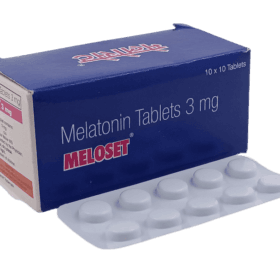 Meloset (Melatonin)
Q & A
Meloset (Melatonin)
Related products


Reviews
There are no reviews yet