







Mozep
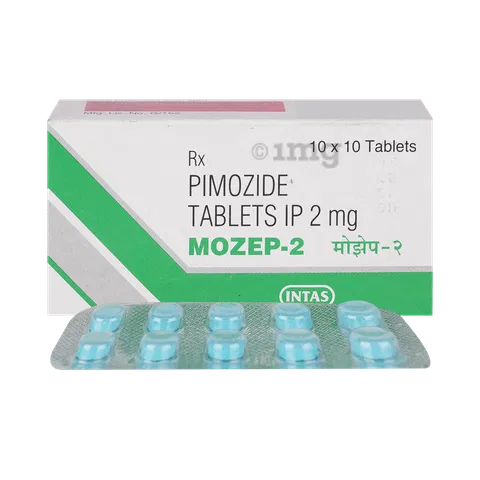
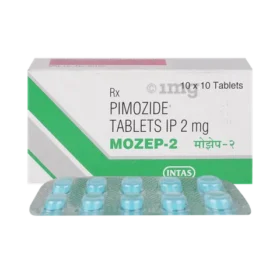
Mozep (Pimozide 2 mg) — butyrophenone antipsychotic for refractory Tourette syndrome and delusional disorder. strong dose-dependent QT — pre-treatment ECG mandatory.
✓ Medically reviewed by Morgan Ellis — Pharmacy Researcher · 8 years experience · Last reviewed: May 2026
⚡ Quick Answer
Mozep (Pimozide 2 mg) is a butyrophenone first-generation antipsychotic. Modern use is restricted to refractory Tourette syndrome (with motor and vocal tics) and treatment-resistant delusional disorder. Strong dose-dependent QT prolongation and torsades risk — pre-treatment ECG mandatory.
📦 Every order is covered by our Reshipment Assurance Policy — if your parcel does not arrive within 20 business days, we reship it.
Why order from MedsBase
Mozep at MedsBase is supplied directly from a WHO-GMP certified manufacturer in plain, discreet packaging. Every order is covered by our Reshipment Assurance Policy — 20-business-day arrival window or we reship at no charge — and qualifies for our customer loyalty programme. Worldwide shipping is available to most destinations.
What Mozep is and how it works
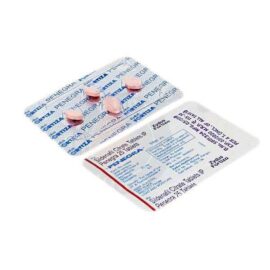
Mozep is a pimozide tablet supplied by Sun Pharma. Available strengths: 2 mg. Pimozide is a butyrophenone (related to haloperidol) with selective D2 antagonism, modest 5-HT2A antagonism, and meaningful calcium-channel blockade — the latter is the basis for the QT-prolonging effect that limits its use.
Modern indications: refractory Tourette syndrome (FDA approval), monosymptomatic delusional disorder (e.g. delusions of parasitosis, somatic delusions), and rare schizophrenia cases unresponsive to other agents.
Indications and dosing
| Indication | Starting | Target | Max |
|---|---|---|---|
| Tourette syndrome (adult) | 1 mg HS | 1–10 mg/day | 0.2 mg/kg or 10 mg |
| Tourette syndrome (paediatric ≥ 12 y) | 0.05 mg/kg HS | 0.2 mg/kg/day | 0.2 mg/kg or 10 mg |
| Monosymptomatic delusional disorder | 2 mg OD | 2–4 mg/day | — |
| Schizophrenia (refractory) | 1 mg BID | 2–10 mg/day | 20 mg |
| CYP2D6 poor metaboliser / inhibitor | halve dose | — | — |
Important safety considerations
All atypical antipsychotics carry an FDA black-box warning for increased mortality (mostly cardiovascular and infectious) when used to treat behavioural disturbance in older adults with dementia. Atypicals are not approved for dementia-related psychosis or agitation. Use in this population is off-label, last-resort, time-limited, and requires explicit risk-benefit conversation.
Pimozide carries a strong dose-dependent QT signal. Pre-treatment ECG required; check QTc at every dose increase; stop if QTc > 500 ms or rises > 60 ms from baseline. Absolute contraindications: known long QT, congenital arrhythmia syndrome, recent MI, uncompensated heart failure, hypokalaemia/hypomagnesaemia (correct before starting), concurrent QT-prolonging drugs, and concurrent strong CYP3A4 inhibitors (azoles, clarithromycin, ritonavir, grapefruit juice — all raise pimozide levels and the QT signal substantially).
Pimozide is metabolised by both CYP3A4 and CYP2D6. Strong inhibitors of either enzyme raise levels and amplify QT risk. Strong CYP2D6 inhibitors (paroxetine, fluoxetine, bupropion, quinidine) and strong CYP3A4 inhibitors are absolute contraindications.
As a butyrophenone, pimozide produces meaningful EPS, akathisia, acute dystonia (particularly in young men), and cumulative tardive dyskinesia. Anticholinergic adjunct (procyclidine, benztropine) sometimes used acutely.
Common side effects
- QT prolongation — dose-dependent, monitored continuously.
- EPS, akathisia, dystonia — common.
- Sedation — moderate.
- Hyperprolactinaemia — strong.
- Anticholinergic — dry mouth, constipation, urinary hesitancy.
- Weight gain — modest.
- Tardive dyskinesia — cumulative.
Drug interactions
- Strong CYP3A4 inhibitors (azoles, clarithromycin, ritonavir, grapefruit juice) — absolute contraindication.
- Strong CYP2D6 inhibitors (paroxetine, fluoxetine, bupropion, quinidine) — absolute contraindication.
- Other QT-prolonging drugs — absolute or relative contraindication depending on agent.
- Other antipsychotics — additive QT, EPS, prolactin risk.
- Sertraline / escitalopram — these are the safer SSRIs to combine with pimozide if absolutely necessary (less CYP2D6 inhibition than paroxetine/fluoxetine).
Pregnancy, breastfeeding, paediatric
Pregnancy: limited data; not first-line. Breastfeeding: passes into milk; usually avoided. Paediatric: licensed from 12 (Tourette syndrome).
Storage
Store at 15–30 °C in original packaging.
Frequently Asked Questions
Why is Mozep so restricted in modern psychiatry?
Pimozide’s strong dose-dependent QT prolongation, dual CYP3A4/CYP2D6 metabolism, and dense interaction profile mean it carries a higher cardiac-risk burden than most modern antipsychotics. Its modern niche is therefore narrow — refractory Tourette syndrome and monosymptomatic delusional disorder where other agents have failed.
Why is Mozep useful for delusional parasitosis?
Monosymptomatic delusional disorder (delusions of parasitosis, somatic delusions, delusions of body odour) responded particularly well to pimozide in older case series — possibly because of the strong selective D2 blockade. Modern practice often prefers a low-dose atypical (risperidone, olanzapine) but pimozide retains a niche where atypicals have failed.
Why pre-treatment ECG?
Pimozide’s QT prolongation is the dose-limiting toxicity. A baseline ECG defines the patient’s starting QTc; the prescriber checks QTc at every dose increase. Stop or dose-reduce if QTc > 500 ms or rises > 60 ms from baseline. This is non-negotiable.
Why avoid grapefruit juice?
Grapefruit juice strongly inhibits intestinal CYP3A4 — pimozide levels rise several-fold, amplifying the QT signal into the dangerous range. Grapefruit and grapefruit juice are absolute contraindications during pimozide therapy.
Can Mozep be combined with an SSRI?
Most SSRIs are absolute or relative contraindications because of CYP2D6 inhibition (paroxetine, fluoxetine, bupropion). Sertraline and escitalopram are the safer SSRIs if combination is necessary, but ECG monitoring is still required.
How long until Mozep works?
Tic reduction often visible within 1–2 weeks of titration. Full effect at 4–6 weeks. Delusional disorder: 4–8 weeks.
Can Mozep be stopped abruptly?
Taper over 2–4 weeks. Cholinergic rebound and tic rebound (in Tourette) can be problematic on abrupt cessation.
Will Mozep cause weight gain?
Modest — typically 1–3 kg over 6 months.
What about driving on Mozep?
Sedation is moderate. Most patients on stable doses drive normally; first 1–2 weeks of titration can impair reaction time.
Are there alternatives to Mozep for Tourette?
Yes — aripiprazole, risperidone, and clonidine/guanfacine are commonly used. Most patients respond to one of these without needing pimozide. Pimozide is reserved for refractory cases.
Other Mental Health Medications
- Aripicon (Aripiprazole — atypical, low EPS)
- Risdone (Risperidone)
- Olanzap (Olanzapine)
- Sulpitac (Amisulpride)
- Skizoril (Clozapine — refractory disease)
More options in Mental Health and Psychiatric Medications
Ranked by recent MedsBase order volume — what other customers in this category are picking.

| Strength | 2 mg |
|---|---|
| Quantity | 30 Tablet/s, 60 Tablet/s, 90 Tablet/s, 180 Tablet/s |
 Mozep
Mozep
Q & A
Mozep
Related products



Reviews
There are no reviews yet