








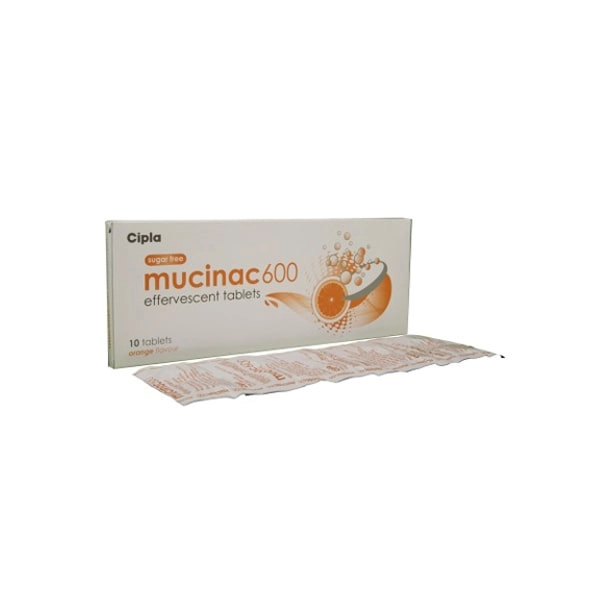
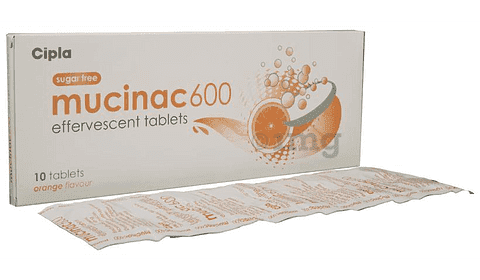
Mucinac Effervescent
✅ Thins mucus effectively
✅ Eases chest congestion
✅ Convenient effervescent format
✅ Improved respiratory comfort
contains Acetylcysteine
✓ Medically reviewed by Morgan Ellis — Pharmacy Researcher · 8 years experience · Last reviewed: May 2026
⚡ Quick Answer — What is Mucinac Effervescent?
Mucinac Effervescent contains acetylcysteine (N-acetylcysteine, NAC), a mucolytic and antioxidant that thins thick airway mucus by breaking disulphide bonds in mucoprotein chains. Used for chronic bronchitis, COPD with mucus hypersecretion, cystic fibrosis, and idiopathic pulmonary fibrosis as adjunct therapy. Effervescent tablets are dissolved in water and drunk. Each tablet contains 600 mg of acetylcysteine. Manufactured by Cipla.
📦 Every order is covered by our Reshipment Assurance Policy — if your parcel does not arrive within 20 business days, we reship it.
Why order from MedsBase
Our generic medications are sourced from WHO-GMP certified manufacturers and shipped worldwide in discreet, plain packaging — no medication name on the parcel exterior. Card payments are routed through a regulated processor (statement descriptors include a regulated card-payment processor — never “MedsBase” or any medication name). Crypto and SEPA bank transfer are also accepted. Every order is backed by our Reshipment Assurance Policy.
What Is Mucinac Effervescent?
Mucinac Effervescent contains 600 mg of acetylcysteine per tablet. Acetylcysteine is a thiol-containing precursor of glutathione (the body’s main intracellular antioxidant). Internationally sold as Fluimucil (Zambon) and Mucomyst.
How Does Acetylcysteine Work?
- Mucolytic: the free thiol group breaks disulphide bonds in mucoprotein, reducing mucus viscosity.
- Glutathione precursor: raises intracellular glutathione, which scavenges reactive oxygen species. Useful in lung diseases with oxidative stress (COPD, IPF).
- Anti-inflammatory: modulates NF-κB and AP-1 signalling, reducing airway inflammation.
- Paracetamol antidote (IV): intravenous NAC is the antidote for paracetamol overdose; oral effervescent NAC is for chronic respiratory use.
Uses and Indications
- Chronic bronchitis — long-term use reduces exacerbations
- COPD with chronic mucus hypersecretion
- Cystic fibrosis — adjunct for thick airway secretions
- Bronchiectasis
- Idiopathic pulmonary fibrosis — adjunct (mixed evidence)
- Acute productive cough with thick sputum
Mucinac Dosage
| Patient | Dose | Frequency |
|---|---|---|
| Adults — chronic bronchitis | 600 mg (1 tablet) | Once or twice daily |
| Adults — high-dose for IPF | 600 mg | Three times daily |
| Children 2–6 yr | 200 mg | Twice daily |
| Children 6–14 yr | 400 mg | Twice daily |
How to Take Mucinac Effervescent
- Drop one tablet into half a glass of water; wait until completely dissolved (2–3 minutes; the tablet fizzes as carbon dioxide is released).
- Drink immediately or within 2 hours. Best taken with meals — reduces stomach upset.
- Increase fluid intake during the day — water helps thin mucus and supports the mucolytic effect.
- Do not take effervescent and other tablets within 30 minutes of each other (effervescent solutions can affect absorption).
Side Effects
- Mild nausea, dyspepsia
- Mild diarrhoea
- Sulphurous taste (the thiol group)
- Mild headache
- Rarely: skin rash, urticaria, bronchospasm in atopic individuals
Serious:
- Severe allergic reaction (rare)
- Bronchospasm in asthmatic patients (rare)
Warnings and Precautions
- Asthma: rare risk of bronchospasm; if wheeze or chest tightness develops, stop.
- Peptic ulcer: use cautiously — the thiol group can mildly aggravate gastric mucosa.
- Pregnancy and breastfeeding: low risk; widely used.
- Diabetic patients: note effervescent tablets contain sodium salts and small carbohydrate amounts.
- Increase fluid intake alongside use — hydration is essential for effective mucolysis.
Contraindications
- Hypersensitivity to acetylcysteine
- Active peptic ulcer disease (relative)
- Phenylketonuria — some effervescent formulations contain aspartame
Drug Interactions
- Antibiotics (especially tetracyclines, aminoglycosides) — separate dosing by 2 hours; NAC can inactivate them in solution
- Activated charcoal — reduces NAC absorption
- Nitrates — possible enhanced vasodilation
Storage
- Store below 25°C in a cool, dry place away from direct sunlight.
- Keep in original packaging until use to protect from moisture and light.
- Do not use after the expiry date printed on the strip.
- Keep out of reach of children.
Related Alternatives on MedsBase
- Asthalin Inhaler — salbutamol reliever
- Budecort Inhaler — budesonide ICS preventer
- Foracort Inhaler — budesonide + formoterol ICS-LABA
- Montair — montelukast LTRA tablet
- Tiova Inhaler — tiotropium LAMA for COPD
Frequently Asked Questions
How is Mucinac different from a cough syrup?
Mucinac thins mucus chemically, making productive cough more effective at clearing the airways. Most cough syrups either suppress cough (dextromethorphan) or have weaker mucolytic effects (guaifenesin, ambroxol, bromhexine).
How fast does Mucinac work?
Mucus thinning is noticeable within 2–4 days of regular use. Long-term benefit on COPD exacerbations builds over months.
Why does it taste of sulphur?
The thiol (-SH) group is sulphur-containing — that gives the characteristic “rotten egg” taste. Drinking with a chilled fizzy fruit drink masks it.
Can I take it long-term?
Yes — long-term daily use in chronic bronchitis and COPD has been shown to reduce exacerbations (BRONCUS trial).
Can children take Mucinac?
Yes from age 2 in age-appropriate doses.
Is Mucinac safe in pregnancy?
Yes — widely used in pregnancy without major signals.
Can I crush the tablet instead of dissolving?
No — the tablet is designed to fizz and dissolve; crushing leaves an unpleasant gritty solution.
How is NAC used as a paracetamol antidote?
IV NAC is the antidote for paracetamol overdose — it replenishes glutathione, which detoxifies the toxic NAPQI metabolite. The oral effervescent form is not used for overdose; emergency treatment is always IV.
Can I take Mucinac with my inhaler?
Yes — Mucinac is an adjunct, not a replacement, for inhaled bronchodilators or steroids in COPD.
More options in Asthma/COPD Treatment
Ranked by recent MedsBase order volume — what other customers in this category are picking.


| Strength | 600 mg |
|---|---|
| Quantity | 30 Tablet/s, 60 Tablet/s, 90 Tablet/s |
| Pharma Form | Tablet/s |
| Manufacturer | Cipla Inc |
| Treatment | Mucolytic (loosen mucus in the airways) |
| Generic Brand | Acetylcysteine |
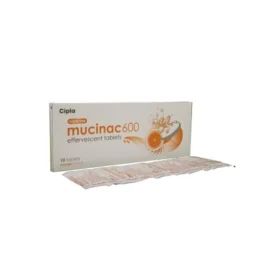 Mucinac Effervescent
Q & A
Mucinac Effervescent
Related products


Reviews
There are no reviews yet