







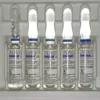

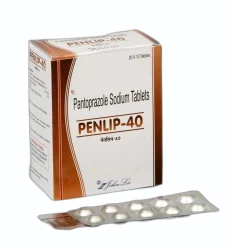
Penlip
✅ Reduces stomach acid
✅ Treats acid reflux
✅ Alleviates heartburn symptoms
✅ Helps heal ulcers
✅ Relieves indigestion
Penlip contains Pantoprazole Sodium.
✓ Medically reviewed by Morgan Ellis — Pharmacy Researcher · 8 years experience · Last reviewed: May 2026
⚡ Quick Answer — What is Penlip?
Penlip contains pantoprazole (40 mg) from a WHO-GMP certified manufacturer — a proton-pump inhibitor that irreversibly switches off the H+/K+-ATPase “acid pump” in stomach parietal cells. Standard adult dose: once daily, 30–60 minutes before the first meal of the day. Penlip is used for gastro-oesophageal reflux disease (GERD), erosive oesophagitis, peptic ulcer disease, Helicobacter pylori eradication regimens, and prevention of NSAID-associated ulcers. Effects build over 3–5 days; do not expect immediate relief on day one. Long-term use (more than a few months) needs review — risks include vitamin B12 and magnesium deficiency, fracture, Clostridioides difficile infection, and rebound acid hypersecretion when stopped abruptly.
📦 Every order is covered by our Reshipment Assurance Policy — if your parcel does not arrive within 20 business days, we reship it.
Why order from MedsBase
Our generic medications are sourced from WHO-GMP certified manufacturers and shipped worldwide in discreet, plain packaging — no medication name on the parcel exterior. Card payments are routed through a regulated processor (statement descriptors include a regulated card-payment processor — never “MedsBase” or any medication name). Crypto and SEPA bank transfer are also accepted. Every order is backed by our Reshipment Assurance Policy.
What Penlip (Pantoprazole) Is
Penlip is a generic brand of pantoprazole, a benzimidazole proton-pump inhibitor (PPI). Each tablets contains 40 mg of pantoprazole. PPIs are the most potent class of acid-suppressing medicines available and are first-line therapy for moderate-to-severe acid-related disease.
How Penlip Works (Mechanism)
Proton-pump inhibitors are prodrugs. After absorption from the small intestine, the drug enters the bloodstream and is concentrated in the acidic secretory canaliculi of the stomach’s parietal cells. There the acid environment protonates the molecule into its active sulphenamide form, which then forms a covalent disulphide bond with cysteine residues on the H+/K+-ATPase pump — the final step in acid secretion. Because the bond is irreversible, acid output cannot resume until the parietal cell synthesises new pumps. This pharmacodynamic effect lasts 24–72 hours even though the drug’s plasma half-life is only ~1–2 hours (longer for ilaprazole). Maximal acid suppression takes 3–5 days of regular dosing.
How pantoprazole differs from the other PPIs: Pantoprazole has the cleanest drug-interaction profile of any PPI. It is metabolised mainly by phase-II sulphation rather than the cytochrome P450 system, so it has minimal effect on the clearance of CYP2C19/CYP3A4 substrates. This makes it the preferred PPI in patients on clopidogrel, multiple antiretrovirals, transplant immunosuppressants (tacrolimus, ciclosporin), or any complex polypharmacy regimen. Pantoprazole is also the only PPI widely available in intravenous form for hospital use, which is why critical-care units, gastroenterology wards, and post-banding GI-bleed protocols default to pantoprazole. Acid-suppression efficacy at the standard 40 mg dose is comparable to omeprazole 20 mg.
Indications — What Penlip Treats
1. Gastro-oesophageal reflux disease (GERD)
The most common indication. Penlip is used for symptomatic GERD with or without endoscopic oesophagitis. Once-daily dosing is sufficient for the majority of patients; a small subset with night-time symptoms benefit from twice-daily dosing or a switch to a longer-half-life PPI. Lifestyle measures — weight loss, head-of-bed elevation, avoiding meals within 3 hours of bedtime, reducing alcohol, coffee and tobacco, and avoiding known triggers — should accompany drug therapy.
2. Erosive oesophagitis
Endoscopically confirmed inflammation or ulceration of the lower oesophagus. PPIs heal ~85–95% of erosive oesophagitis at 8 weeks of standard-dose therapy. Severe (Los Angeles grade C/D) disease may need 8–12 weeks of double-dose PPI before transitioning to a maintenance dose. Continued maintenance therapy is recommended because recurrence is the rule rather than the exception.
3. Peptic ulcer disease — gastric and duodenal ulcers
PPIs heal duodenal ulcers in 4 weeks (~95% healing rate) and gastric ulcers in 8 weeks. Helicobacter pylori infection (the cause of the majority of non-NSAID peptic ulcers) must be tested for and eradicated to prevent recurrence.
4. Helicobacter pylori eradication
Penlip is part of standard H. pylori eradication regimens. Common regimens include:
- Bismuth quadruple therapy (preferred where clarithromycin resistance is high): PPI twice daily + bismuth subcitrate 120 mg four times daily + tetracycline 500 mg four times daily + metronidazole 500 mg three times daily, for 14 days.
- Clarithromycin triple therapy: PPI twice daily + amoxicillin 1 g twice daily + clarithromycin 500 mg twice daily, for 14 days. (Avoid where local clarithromycin resistance > 15%.)
- Concomitant therapy: PPI + amoxicillin + clarithromycin + metronidazole, all twice daily, for 10–14 days.
Confirm eradication with urea breath test or stool antigen test 4 weeks after completing therapy and at least 2 weeks off PPI — PPIs cause false-negative results.
5. NSAID-associated ulcer prevention
For patients who must continue chronic NSAID therapy and have a higher ulcer risk (age > 65, prior ulcer, concurrent corticosteroid or anticoagulant, high NSAID dose), once-daily PPI co-prescription substantially reduces gastric and duodenal ulcer incidence.
6. Zollinger-Ellison syndrome
This rare gastrin-secreting tumour produces extreme acid hypersecretion. PPIs at much higher than usual doses (often 80–120 mg pantoprazole/day or equivalent, divided) are the cornerstone of medical therapy alongside tumour localisation and surgical/oncological management.
7. Functional dyspepsia and non-erosive reflux disease
A trial of 4–8 weeks of PPI is reasonable for symptomatic functional dyspepsia or non-erosive reflux disease, with reassessment of need afterwards. Many patients in this group can step down to on-demand or H2-antagonist therapy.
Dosing
| Indication | Adult dose | Duration |
|---|---|---|
| GERD — standard | 40 mg once daily, 30–60 minutes before breakfast | 4–8 weeks |
| Erosive oesophagitis — healing | 40 mg (or 80 mg for severe) once daily | 8–12 weeks |
| Erosive oesophagitis — maintenance | 40 mg once daily | long-term, with annual review |
| Duodenal ulcer healing | 40 mg once daily | 4 weeks |
| Gastric ulcer healing | 40 mg once daily | 8 weeks |
| H. pylori eradication | 40 mg twice daily (with antibiotics) | 10–14 days |
| NSAID ulcer prevention | 40 mg once daily | duration of NSAID therapy |
| Zollinger-Ellison | Specialist-led; often 80 mg twice daily or higher | long-term |
Take Penlip 30–60 minutes before the first meal of the day. The drug needs to reach the parietal cell while the meal is stimulating proton-pump activity — PPIs only inactivate active pumps. Taking it after the meal, or with the meal, gives a smaller pharmacodynamic effect. Swallow tablets whole; do not crush or chew (the enteric coating is critical).
Long-Term Safety — What to Know Before Months of Use
- Vitamin B12 deficiency after 2–3 years of use — acid is needed to release B12 from food protein. Check B12 annually if on PPI > 2 years.
- Magnesium deficiency — rare but important. Symptoms: muscle cramps, tremor, tetany, arrhythmia. Check Mg if patient develops these or starts a diuretic.
- Hip, wrist and spine fracture risk — ~25% relative increase in observational studies (small absolute effect; matters in osteoporotic patients).
- Clostridioides difficile infection — PPIs increase CDI risk roughly 2-fold; the risk in hospital + antibiotic use is much higher than community PPI use alone.
- Acute interstitial nephritis and chronic kidney disease — rare. Stop the PPI if creatinine rises unexpectedly.
- Fundic gland polyps — benign, develop in long-term users; do not require intervention but are noted at endoscopy.
- Rebound acid hypersecretion — when a long-term PPI is stopped abruptly, acid secretion can transiently overshoot for 2–4 weeks. Step down the dose over 2–4 weeks rather than stopping outright.
The principle: use the lowest effective dose for the shortest necessary duration. Annual review with your prescriber is appropriate.
Side Effects
Common (1–10%):
- Headache
- Diarrhoea or constipation
- Abdominal pain or flatulence
- Nausea
- Mild rash
- Dizziness
Uncommon but important:
- Acute interstitial nephritis (rare; idiosyncratic)
- Severe hypomagnesaemia (long-term use)
- Vitamin B12 deficiency (long-term use)
- Cutaneous and systemic lupus erythematosus (rare; reversible on stopping)
- Fundic gland polyps (benign; long-term use)
- Severe hypersensitivity / Stevens-Johnson syndrome (very rare)
- Bone fracture (osteoporotic patients on long-term high-dose)
Drug Interactions
Pantoprazole has the cleanest interaction profile of all PPIs because it is metabolised mainly by phase-II sulphation rather than the cytochrome P450 system. Most of the interactions listed below are minor or theoretical; the clinically relevant ones for pantoprazole are absorption-related (HIV antiretrovirals that need acid, antifungals, and oral iron).
| Drug / class | Interaction | What to do |
|---|---|---|
| Clopidogrel | Minimal CYP2C19 effect; clopidogrel interaction not clinically relevant at standard PPI doses | No switch required |
| Methotrexate (high-dose) | PPIs delay methotrexate clearance; potential toxicity | Hold PPI for 2–3 days around high-dose methotrexate |
| HIV medications — rilpivirine, atazanavir | Absorption depends on stomach acid; PPIs reduce levels markedly | Avoid combination — choose H2-antagonist or different ART regimen |
| Itraconazole, ketoconazole | Absorption requires acid; PPIs reduce antifungal levels | Avoid; use fluconazole or amphotericin alternatives where possible |
| Iron supplements | Acid required for ferrous-iron absorption; reduced by PPI | Use vitamin-C-fortified iron, separate from PPI by 2 hours, or switch to IV iron if marked deficiency |
| Calcium carbonate | Acid-dependent absorption reduced; calcium citrate not affected | Switch to calcium citrate for osteoporosis treatment |
| Levothyroxine | Reduced absorption with PPIs | Recheck TSH 6–8 weeks after starting; expect to increase levothyroxine dose |
| Mycophenolate mofetil | PPIs reduce mycophenolate AUC ~30–40% | Monitor mycophenolate levels in transplant recipients; consider switching to enteric-coated mycophenolic acid |
| Warfarin | Small INR increase with omeprazole/esomeprazole; minimal with pantoprazole | Recheck INR 5–7 days after starting/stopping a PPI |
| Tacrolimus (transplant) | Some increase in tacrolimus exposure (CYP3A4 minor) | Monitor trough levels around PPI initiation |
How to Stop Penlip
Long-term PPI users often experience rebound acid hypersecretion when the drug is stopped abruptly — transient symptoms for 2–4 weeks that can be misinterpreted as “needing the PPI for life”. The recommended approach is to step down rather than stop:
- If on twice-daily dosing, drop to once-daily for 2 weeks.
- Halve the dose for another 2 weeks (e.g. 40 mg on alternate days, or step to a lower-strength tablet).
- Switch to on-demand dosing — take a PPI only when symptoms occur.
- Bridge with a histamine-H2 antagonist (famotidine 20 mg as needed) for breakthrough symptoms during the step-down.
- Antacids (e.g. Acigene) can be used for occasional break-through episodes during weaning.
Lifestyle measures (head-of-bed elevation, late-meal avoidance, weight loss, alcohol/coffee reduction) reduce reliance on acid-suppressive medication.
Contraindications and Cautions
- Known hypersensitivity to pantoprazole or any benzimidazole PPI
- Concurrent use of rilpivirine (HIV) — absolute contraindication
- Severe hepatic impairment — reduce dose
- Patients on clopidogrel post-stent (consider switch to pantoprazole or rabeprazole if on omeprazole/esomeprazole)
- Long-standing alarm symptoms (weight loss, dysphagia, GI bleeding, anaemia, age > 55 with new symptoms) — require investigation, not empirical PPI therapy
Pregnancy, Breastfeeding, and Children
Pregnancy: Acid-related symptoms are common in pregnancy. Antacids and sucralfate are first line. If a PPI is needed, omeprazole has the largest pregnancy safety database; pantoprazole, lansoprazole and esomeprazole all have reasonable safety data. Avoid in first trimester unless symptoms are severe or refractory.
Breastfeeding: Small amounts pass into breast milk; the consensus is that PPIs are compatible with breastfeeding.
Children: Several PPIs (omeprazole, lansoprazole, esomeprazole) are approved for paediatric GERD with weight-based dosing. Pantoprazole has more limited paediatric data. Discuss with a paediatric gastroenterologist before starting.
Storage
Store at 15–30 °C in the original blister, protected from moisture and direct sunlight. Keep out of the reach of children. Do not transfer tablets to weekly pillboxes for prolonged periods because moisture exposure degrades the enteric coating.
Frequently Asked Questions
When should I take Penlip — before or after food?
Take Penlip 30–60 minutes before the first meal of the day. Proton-pump inhibitors only inactivate active proton pumps. Eating stimulates pump activity, and the drug must be in the bloodstream when this happens. Taking it after the meal, with the meal, or at bedtime gives a substantially smaller acid-suppressing effect.
How long does Penlip take to work?
Some symptom improvement is often noticed within 24–72 hours, but the drug’s full pharmacodynamic effect takes 3–5 days of consecutive daily dosing because new proton pumps must be turned over before suppression reaches steady state. If you have not seen meaningful symptom relief after 2 weeks of correctly timed daily dosing at the standard 40 mg dose, talk to your prescriber — you may need a higher dose, a different PPI, additional H2-antagonist coverage, or investigation for an alternative diagnosis.
Can I take Penlip long-term?
Many patients with chronic GERD or Barrett’s oesophagus do take a PPI long-term, and the benefit usually outweighs the risks at the lowest effective dose. Long-term concerns — vitamin B12 and magnesium deficiency, fracture, C. difficile infection, fundic gland polyps, and very rarely chronic kidney disease — are why the principle is lowest effective dose for the shortest necessary duration, with annual review of need. If you are on a PPI for more than 2 years, ask about checking serum B12 and magnesium.
What happens if I stop Penlip suddenly?
Stopping a long-term PPI abruptly can cause rebound acid hypersecretion — transient worsening of heartburn for 2–4 weeks even in people who never had reflux symptoms before starting. This is a pharmacological phenomenon, not return of the original disease. Step down the dose over 2–4 weeks; bridge with famotidine 20 mg as needed, or an antacid for break-through episodes.
Can I drink alcohol while taking Penlip?
There is no direct dangerous interaction between alcohol and PPIs, but alcohol is a major reflux trigger — it relaxes the lower oesophageal sphincter and stimulates acid secretion. If reflux is the reason you are taking Penlip, cutting back on alcohol substantially improves the response.
How does Pantoprazole compare with the other PPIs?
Pantoprazole has the cleanest drug-interaction profile of any PPI because it relies on phase-II sulphation rather than CYP enzymes. It is the preferred PPI for clopidogrel users, transplant recipients, HIV-positive patients on antiretrovirals, and anyone on complex polypharmacy. Acid-suppression efficacy at 40 mg is comparable to omeprazole 20 mg, so you do not lose effectiveness by choosing pantoprazole.
Can I take an antacid alongside Penlip?
Yes. Antacids (such as Acigene) work by neutralising acid that has already been secreted, while PPIs reduce future acid secretion. They are complementary — an antacid is useful for fast-onset symptom relief during the first few days of PPI therapy or for occasional break-through episodes once on PPI maintenance. Take the antacid at least 1–2 hours away from the PPI and from any other medication that could be affected by altered absorption.
Will Penlip interact with my heart medication?
The most important PPI-cardiology interaction is with clopidogrel. Minimal CYP2C19 effect; clopidogrel interaction not clinically relevant at standard PPI doses. No switch required. PPIs have only minor effects on warfarin INR — recheck INR 5–7 days after starting or stopping. PPIs have no clinically significant interaction with statins, beta-blockers, or ACE inhibitors at standard doses.
Is Penlip safe in pregnancy?
Antacids and sucralfate are preferred first-line in pregnancy. If a PPI is needed, omeprazole has the largest safety database, but pantoprazole, lansoprazole and esomeprazole are all considered to have a reasonable safety profile in pregnancy. Avoid in the first trimester if symptoms can be controlled by lifestyle and antacid measures. Talk to your obstetrician.
Should I take Penlip if I have an H. pylori infection?
Yes — PPIs are an essential part of every H. pylori eradication regimen. The PPI raises gastric pH, which makes the antibiotics (amoxicillin, clarithromycin, tetracycline, metronidazole) more effective and reduces the bacterium’s metabolic activity. After completing 10–14 days of combination therapy, you should usually continue the PPI alone for another 4–8 weeks if there is concurrent ulcer disease. Confirm eradication with urea breath test or stool antigen test 4 weeks after finishing antibiotics — and at least 2 weeks off PPI, which can otherwise cause false-negative results.
Related Alternatives
Other products in General Health that customers also view:
More options in Acid Reflux Treatment
Ranked by recent MedsBase order volume — what other customers in this category are picking.

| Strength | 40 mg |
|---|---|
| Quantity | 30 Tablet/s, 60 Tablet/s, 90 Tablet/s, 180 Tablet/s |
 Penlip
Q & A
Penlip
Related products




Reviews
There are no reviews yet