







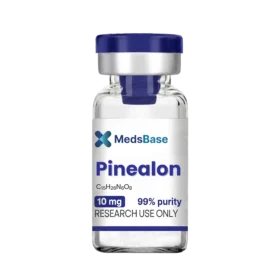
Pinealon
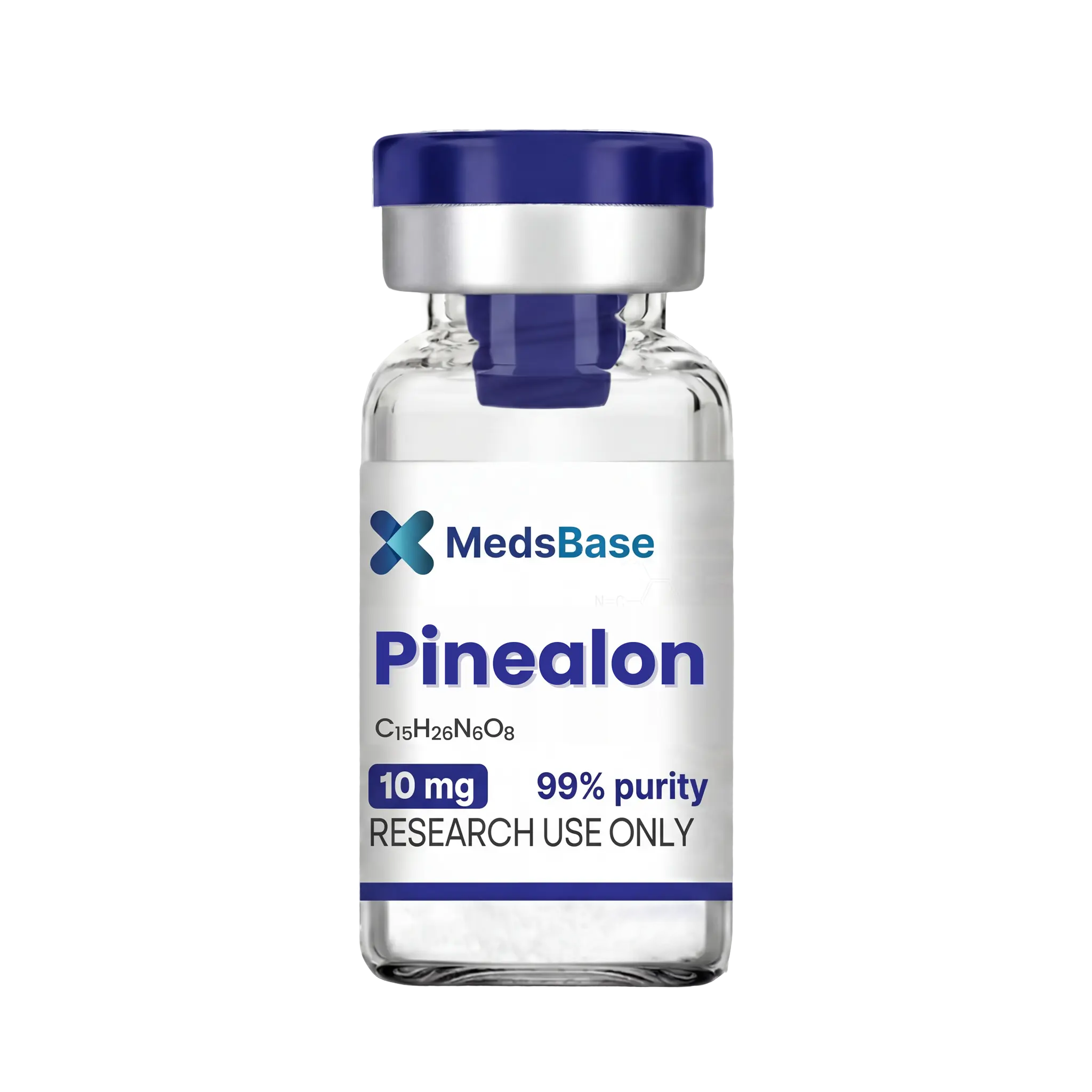
✅ Khavinson short-peptide bioregulator (tripeptide EDR)
✅ Proposed direct nuclear access + chromatin-level signalling
✅ Studied in cognitive aging and neuroprotection models
✅ Antioxidant + mitochondrial-protective in neuronal cultures
✅ Sibling to Epitalon (longevity peptide)
Pinealon contains synthetic peptide compound.
✓ Medically reviewed by Morgan Ellis — Pharmacy Researcher · 8 years experience · Last reviewed: May 2026
Quick Answer — What is Pinealon?
Pinealon is a synthetic tripeptide (sequence Glu-Asp-Arg, EDR) belonging to the Khavinson short-peptide bioregulator family developed at the St. Petersburg Institute of Bioregulation and Gerontology. Originally derived from cattle pineal-gland-extract research, Pinealon is studied for neuroprotective, anti-oxidant, and cognitive-aging effects in laboratory models — with a proposed mechanism involving direct nuclear access and chromatin-level gene-expression regulation. Sibling peptide to Epitalon within the Khavinson series. Supplied in 5 mg, 10 mg, and 20 mg lyophilized vials for laboratory research use only.
📦 Every order is covered by our Reshipment Assurance Policy — if your parcel does not arrive within 20 business days, we reship it.
| Specification | Detail |
|---|---|
| CAS Number | 308067-43-8 (commonly cited; not all peptide-vendor sources publish a registry number) |
| Type | Synthetic tripeptide bioregulator (Khavinson short-peptide family) — developed at the St. Petersburg Institute of Bioregulation and Gerontology by Vladimir Khavinson; originally based on cattle pineal-gland extract research. Pinealon is the cognitive / neuroprotective member of the Khavinson series, paired with Epitalon (longevity / telomerase) as the two most-studied compounds. |
| Molecular Formula | C15H26N6O8 |
| Molecular Weight | ~418.4 Da |
| Sequence | H-Glu-Asp-Arg-OH (EDR) — linear 3-residue sequence. Free N- and C-termini; no disulfide bridge, no acylation, no PEGylation. Net charge +1 at neutral pH (one cationic Arg balanced against the carboxylate groups of Glu/Asp). |
| Form | Lyophilized powder (white to off-white) |
| Purity | ≥99% (HPLC verified, COA on request) |
| Storage | Lyophilized: 2–8 °C (refrigerator) for working stock; −20 °C for long-term storage of unopened vials. Reconstituted: 2–8 °C, use within ~14–28 days. Protect from light. Avoid repeated freeze–thaw cycles of the reconstituted solution. |
| Solubility | Highly soluble in bacteriostatic water or sterile water — short charged tripeptides dissolve rapidly with gentle swirling. No specialised solvents required. |
| Research Use | For laboratory research use only. Not for human or veterinary diagnostic or therapeutic use. |
What Is Pinealon?
Pinealon is a synthetic tripeptide consisting of L-glutamic acid, L-aspartic acid, and L-arginine (sequence Glu-Asp-Arg, single-letter code EDR). It is a member of the Khavinson short-peptide bioregulator family — a group of 2- to 4-amino-acid peptides developed at the St. Petersburg Institute of Bioregulation and Gerontology under Vladimir Khavinson, originally based on the fractionation and characterisation of bioactive material extracted from cattle pineal gland and other tissues. Within the Khavinson series, Pinealon is the compound most associated with cognitive function and neuroprotection in published research, while its sibling tetrapeptide Epitalon (Ala-Glu-Asp-Gly, AEDG) is the most-studied compound in the longevity / telomerase context.
Khavinson short peptides differ structurally from most other research peptides in two important ways: they are extremely short (Pinealon is just three residues, MW ~418 Da, smaller than a typical small-molecule drug) and their proposed mechanism centres on direct nuclear access rather than receptor binding at the plasma membrane. The published Khavinson model holds that short charged peptides can cross both the cell membrane and the nuclear envelope, reach chromatin, and modulate gene expression through sequence-specific interactions with DNA — a mechanism distinct from the canonical receptor-binding pharmacology of larger peptides. This model is supported by published research from the Khavinson group spanning several decades and is the subject of continued mechanistic investigation by independent researchers.
Pinealon has been investigated in laboratory research contexts focused on cognitive aging, oxidative-stress protection of neuronal cultures, cerebral ischemia models, and circadian / pineal-axis research. It is not approved by the FDA, EMA, MHRA, or any other major regulator for human therapeutic use. The research-grade Pinealon sold here is supplied for laboratory research use only and is not intended for human or veterinary administration.
Mechanism of Action — Khavinson Short-Peptide Bioregulation
The published mechanistic model for Khavinson short peptides — supported by research from the Khavinson group and tested in independent laboratories — proposes three principal modes of action:
- Direct nuclear access and DNA-binding regulation of gene expression — Khavinson short peptides are proposed to traverse the plasma membrane and the nuclear envelope and reach chromatin directly. The published model holds that the short charged sequences (typically containing combinations of Glu / Asp / Arg / Lys residues) can engage in sequence-specific contacts with the major or minor groove of B-form DNA at promoter regions, modulating transcription of specific gene panels. Pinealon (Glu-Asp-Arg) has been linked in published work to upregulation of genes involved in antioxidant defense, mitochondrial function, and neuronal survival.
- Anti-oxidant and mitochondrial-protective effects — In neuronal-culture and in-vivo rodent models, Pinealon administration is reported to reduce markers of reactive oxygen species (ROS), preserve mitochondrial membrane potential under stress (hyperoxia, hypoxia, glutamate excitotoxicity), and decrease apoptotic signalling. These effects are downstream of the gene-expression modulation rather than direct radical-scavenging.
- Neuroprotection in cognitive-aging models — Behavioural studies in aged rodents have reported improvements in spatial-learning and working-memory performance after Pinealon administration relative to age-matched controls. The mechanism is interpreted as a combination of antioxidant protection of vulnerable neuronal populations (hippocampal CA1, cortical layer V) and direct gene-expression effects in neurons supporting synaptic plasticity machinery.
Khavinson short peptides have very short plasma half-lives (minutes), but proposed effects persist for hours to days through downstream gene-expression cascades — a profile broadly similar to other receptor-trigger peptides where duration is set by signalling-cascade kinetics rather than by sustained plasma residence. Subcutaneous administration is the standard route in published research protocols.
Published Research Applications
Pinealon is used in laboratory research contexts that investigate:
- Cognitive-aging research — spatial learning, working memory, and behavioural performance in aged-rodent models; the most-studied research application for Pinealon
- Oxidative-stress protection of neuronal cultures — cortical and hippocampal primary-culture protection against H2O2, glutamate excitotoxicity, hyperoxia; ROS and mitochondrial-membrane-potential readouts
- Cerebral ischemia / stroke models — ischemia-reperfusion injury in rodent middle-cerebral-artery occlusion (MCAO) models; infarct-volume and behavioural-deficit readouts
- Neurodegenerative-disease in-vitro research — Alzheimer-type Aβ-toxicity and Parkinson-type α-synuclein-toxicity models in cultured neurons; published work in PC12 and SH-SY5Y lines
- Hypoxia and high-altitude research — cognitive and behavioural performance under hypobaric / hypoxic conditions
- Pineal-axis and circadian research — historical pineal-gland-extract origin makes Pinealon a research tool for examining pineal-axis modulation of circadian gene expression, though most current research focuses on neuroprotection rather than circadian rhythm per se
- Khavinson peptide comparative pharmacology — side-by-side comparison with Epitalon (AEDG, longevity / telomerase), Vilon (KE, immune), and Livagen (KEDA, hepatoprotection) to dissect sequence-specificity of short-peptide effects
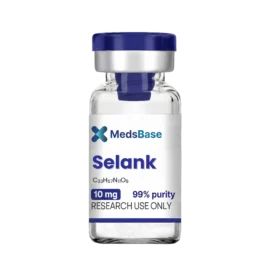
For broader context on neuroactive short peptides and related research compounds, see Epitalon (sibling Khavinson tetrapeptide), Semax (ACTH-derived heptapeptide, cognitive enhancement), Selank (tuftsin-derived anxiolytic/nootropic), and DSIP (delta sleep-inducing peptide). Browse the full research peptides catalog for related compounds.
Available Strengths and Concentrations
MedsBase stocks Pinealon in three lyophilized vial sizes calibrated to typical research protocol lengths. Each strength is available in 10-vial, 20-vial, or 30-vial pack formats:
| Vial Strength | Typical Research Use Case | Pack Sizes |
|---|---|---|
| 5 mg | Pilot dosing — short cognitive-aging protocols, dose-response titration, oxidative-stress in-vitro work | 10, 20, or 30 vials |
| 10 mg | Standard research strength — multi-week cognitive-aging studies, MCAO ischemia models, multi-cohort protocols | 10, 20, or 30 vials |
| 20 mg | Extended-cycle protocols — long-arm aging studies, large-cohort behavioural work, lowest per-mg cost | 10, 20, or 30 vials |
All three strengths are the same chemical form (lyophilized powder, ≥99% HPLC purity). Published research protocols use a wide dose range depending on model and route — typically 100 µg–4 mg per kg body weight in rodent models. Determine dose ranges from peer-reviewed literature appropriate to your specific protocol.
How It Compares — Pinealon vs Epitalon
Pinealon and Epitalon are the two most-studied compounds in the Khavinson short-peptide family. Both are short charged peptides developed by the same research group and share the proposed direct-nuclear-access mechanism, but they have entirely different sequence specificity and different best-studied research applications.
| Criterion | Pinealon | Epitalon |
|---|---|---|
| Sequence | Glu-Asp-Arg (EDR) | Ala-Glu-Asp-Gly (AEDG) |
| Length | 3 amino acids (tripeptide) | 4 amino acids (tetrapeptide) |
| Molecular weight | ~418 Da | ~390 Da |
| Net charge | +1 (Arg balances Glu/Asp) | −2 (Glu/Asp dominate; no cationic residues) |
| Best-studied research focus | Cognitive aging, neuroprotection, oxidative-stress protection of neuronal cultures | Telomerase activation, lifespan extension, longevity research |
| Tissue origin (proposed) | Cattle pineal-gland extract fractionation | Cattle pineal-gland extract fractionation |
| Proposed mechanism | Direct nuclear access; antioxidant and mitochondrial gene-expression modulation | Direct nuclear access; proposed telomerase-promoter binding |
| Plasma half-life | Minutes (effect persists via downstream cascades) | Minutes (effect persists via downstream cascades) |
For research focused on neuroprotection, cognitive-aging models, or oxidative-stress protection of neuronal cultures, Pinealon is the more targeted Khavinson peptide. For research focused on telomerase activation, replicative-senescence reversal, or longevity-axis pharmacology, Epitalon remains the more widely-studied option. Some research protocols use both compounds in parallel to dissect the sequence-specificity of Khavinson short-peptide effects.
Storage and Reconstitution
Before reconstitution: store lyophilized vials refrigerated at 2–8 °C in original packaging for short-term working stock. For long-term storage, freeze unopened vials at −20 °C. Lyophilized Pinealon is stable under refrigeration for up to 24 months and at −20 °C for up to 36 months. Avoid freeze-thaw cycles on the lyophilized powder. Pinealon is a short unmodified tripeptide with no disulfide bridge or acyl chain — handling is among the simplest in the catalogue.
Reconstitution procedure: inject bacteriostatic water down the side wall of the vial (not directly onto the lyophilized cake). For a 10 mg vial, 2.0 mL of bacteriostatic water yields a 5 mg/mL working concentration; 1.0 mL yields a 10 mg/mL stock. For a 5 mg vial, 1.0 mL of bacteriostatic water yields a 5 mg/mL working stock. For a 20 mg vial, 2.0 mL yields a 10 mg/mL working stock. Swirl gently — do not shake vigorously, as foaming entrains air and can disrupt peptide chains. Allow the powder to dissolve fully (typically <1 minute for Pinealon) before withdrawing. Once reconstituted, store the vial at 2–8 °C and use within 14–28 days. Protect from light. Discard if cloudiness, particulates, or colour change appears.
Frequently Asked Questions
What is the Khavinson short-peptide family and why is Pinealon part of it?
The Khavinson short-peptide family is a series of 2- to 4-amino-acid peptides developed at the St. Petersburg Institute of Bioregulation and Gerontology by Vladimir Khavinson and colleagues, starting in the 1970s. The original research extracted bioactive material from various cattle tissues (pineal, thymus, prostate, retina, etc.) and identified short peptide fragments responsible for tissue-specific bioregulatory effects. Pinealon (Glu-Asp-Arg) is the cognitive / neuroprotective compound in this series; Epitalon (Ala-Glu-Asp-Gly) is the longevity / telomerase compound; Vilon, Livagen, Thymogen, and others target other tissues.
How does Pinealon differ from Epitalon?
Both are short Khavinson peptides extracted from cattle pineal-gland research, but they have different sequences and different best-studied applications. Pinealon (Glu-Asp-Arg, tripeptide, +1 net charge) is studied for cognitive aging and neuroprotection. Epitalon (Ala-Glu-Asp-Gly, tetrapeptide, −2 net charge) is studied for telomerase activation and lifespan extension. The opposite net charge is one structural reason the two peptides target different genomic loci under the proposed direct-DNA-binding mechanism.
What is the proposed mechanism of Khavinson short peptides?
The published Khavinson model holds that short charged peptides can cross the cell membrane and nuclear envelope, reach chromatin, and modulate gene expression through sequence-specific contacts with the DNA double helix at promoter regions. This is distinct from the canonical receptor-binding mechanism of larger peptides. The model is supported by research from the Khavinson group spanning several decades and is the subject of continued mechanistic investigation by independent researchers.
How short can a peptide be and still be biologically active?
Pinealon at 3 amino acids is among the shortest pharmacologically-active peptides known. Even shorter examples exist (the dipeptide carnosine, the GLP-1 fragments, dipeptide HSP modulators), but most research peptides are longer (10–40+ residues). The Khavinson short-peptide series is a focused area of research specifically because the very short sequences allow rapid synthesis, easy crossing of cellular barriers, and clean structure-activity dissection.
Why is the plasma half-life of Pinealon so short?
Short charged peptides are rapidly cleared by glomerular filtration and proteolysis. Pinealon has a plasma half-life of only minutes — yet the proposed effects (gene-expression modulation, antioxidant protection, behavioural improvement) persist for hours to days through downstream signalling cascades. This profile is similar to other receptor-trigger peptides where duration is set by signal-cascade kinetics rather than by sustained plasma residence.
What is the typical research dose of Pinealon in rodent models?
Published rodent-model dose ranges span approximately 100 µg–4 mg per kg body weight per day, depending on route (subcutaneous most common), model (cognitive aging, MCAO, oxidative stress), and study duration. Subcutaneous administration is the standard research route. Determine dose ranges from peer-reviewed literature appropriate to your specific protocol.
Does Pinealon have effects outside the CNS?
Pinealon is best-studied in CNS contexts (cognitive aging, neuroprotection, cerebral ischemia), but the proposed mechanism — direct nuclear access and gene-expression modulation — is in principle tissue-independent. Some published research has examined peripheral effects (anti-oxidant in hepatic and renal models, immunomodulation in mixed-cell-culture systems), but the bulk of the literature centres on CNS readouts.
Is there established CAS-registry-number documentation for Pinealon?
CAS 308067-43-8 is the most commonly cited registry number across peptide-vendor catalogues, but unlike Epitalon (which has a well-documented CAS 307297-39-8 across major reference databases), Pinealon’s CAS registration is less authoritatively published. Researchers requiring a regulatory-grade authoritative reference should verify against current CAS Registry sources.
More options in Peptides
Ranked by recent MedsBase order volume — what other customers in this category are picking.
| Strength | 5 mg, 10 mg, 20 mg |
|---|---|
| Quantity | 10 Vials, 20 Vials, 30 Vials |
 Pinealon
Q & A
Pinealon
Related products
Reviews
There are no reviews yet