









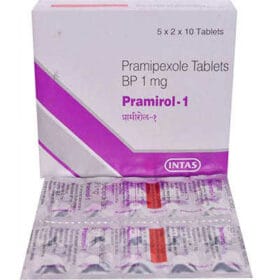
Pramirol
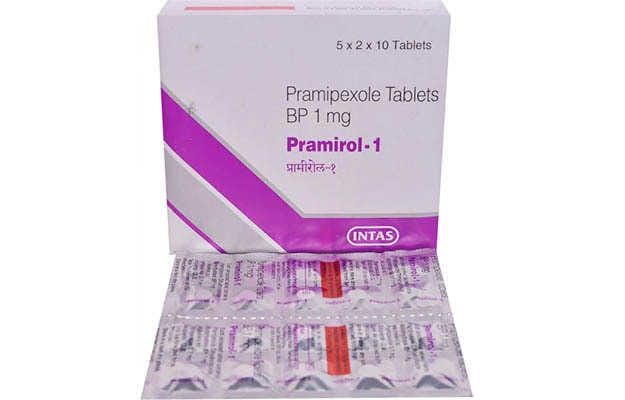
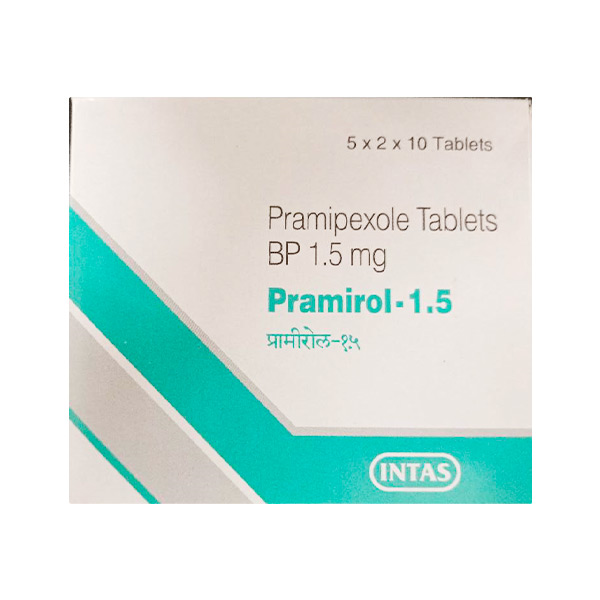

✅ Alleviates Parkinson’s symptoms
✅ Improves motor function
✅ Reduces tremors
✅ Enhances mobility
✅ Restores dopamine levels
Pramirol contains Pramipexole.
✓ Medically reviewed by Morgan Ellis — Pharmacy Researcher · 8 years experience · Last reviewed: May 2026
⚡ Quick Answer
Pramirol is an oral pramipexole (1 mg or 1.5 mg) tablet — a non-ergot dopamine agonist used to treat Parkinson disease and moderate-to-severe restless legs syndrome (RLS). It directly stimulates dopamine D2/D3 receptors in the brain, partially substituting for the dopamine that is no longer being made. Pramipexole is excreted almost entirely unchanged by the kidneys — renal dosing is essential. It has the highest D3:D2 selectivity of all clinical dopamine agonists, which may explain its anti-depressant effect (FDA-recognised for depressive symptoms in Parkinson disease). Critical safety signals: impulse-control disorders (gambling, hypersexuality, binge eating, compulsive shopping), sudden-onset sleep (sleep attacks while driving), and orthostatic hypotension. Dose must be titrated up slowly and tapered down slowly — never stopped abruptly.
📦 Every order is covered by our Reshipment Assurance Policy — if your parcel does not arrive within 20 business days, we reship it.
Why order from MedsBase
Our generic medications are sourced from WHO-GMP certified manufacturers and shipped worldwide in discreet, plain packaging — no medication name on the parcel exterior. Card payments are routed through a regulated processor (statement descriptors include a regulated card-payment processor — never “MedsBase” or any medication name). Crypto and SEPA bank transfer are also accepted. Every order is backed by our Reshipment Assurance Policy.
What Is Pramirol?
Pramirol is an oral tablet containing pramipexole 1 mg or 1.5 mg. pramipexole is a non-ergot dopamine D2/D3 receptor agonist, originally introduced as Mirapex / Mirapexin / Sifrol. Pramirol is manufactured by a WHO-GMP certified facility and is bioequivalent to the originator brand at the same strength.
Pramipexole is one of the two most widely used non-ergot dopamine agonists (the other is ropinirole). It is suitable as monotherapy in early Parkinson disease — particularly in younger patients where delaying levodopa is desirable — and as adjunct in advanced disease. Distinctively among Parkinson medications, pramipexole has documented anti-depressant activity and is sometimes specifically chosen in PD patients who have prominent depressive symptoms. It is also licensed for moderate-to-severe restless legs syndrome.
How Does Pramirol (pramipexole) Work?
Pramipexole directly stimulates dopamine D2 and D3 receptors, with markedly higher affinity for D3 than D2 — the highest D3 selectivity of any clinically used dopamine agonist. D3 receptors are concentrated in the limbic system, which may explain the documented anti-depressant effect seen with pramipexole that is less prominent with other agonists. It does not affect serotonin 5-HT2B receptors, so does not cause cardiac valve fibrosis. Excretion is almost entirely renal — the kidney handles >90% unchanged.
Who Is Pramirol For?
Pramirol is appropriate for adults with Parkinson disease (monotherapy in early disease, adjunct to levodopa in advanced disease) and for moderate-to-severe restless legs syndrome unresponsive to non-pharmacological measures and iron repletion. It is sometimes specifically chosen in Parkinson patients with prominent depressive symptoms because of its independent anti-depressant action. Younger PD patients (under 65) often benefit from starting with a dopamine agonist before levodopa, to delay levodopa-induced dyskinesia.
Dosing and Titration
Dopamine agonist therapy must be titrated upwards over weeks to avoid intolerable nausea, postural hypotension and somnolence. The dose schedule below is a typical starting framework — your neurologist will tailor it to your response.
| Week | Pramipexole “salt” dose for Parkinson disease | For RLS |
|---|---|---|
| 1 | 0.125 mg three times daily (0.375 mg/day) | 0.125 mg 2–3 hours before bedtime |
| 2 | 0.25 mg three times daily (0.75 mg/day) | 0.25 mg at bedtime |
| 3 | 0.5 mg three times daily (1.5 mg/day) | 0.5 mg at bedtime |
| Maintenance | 1.5–4.5 mg/day in 3 divided doses | 0.125–0.75 mg at bedtime |
| Renal dosing (CrCl 35–50) | Reduce frequency — 0.125 mg twice daily start | CrCl < 20 ml/min: avoid |
Pramipexole is also available as a once-daily prolonged-release tablet (Mirapex ER) for Parkinson disease — not in this Pramirol presentation. Renal function dictates dosing strongly: in CrCl 35–50 ml/min start at 0.125 mg twice daily; in CrCl 15–35 start at 0.125 mg once daily; in CrCl < 15 ml/min avoid.
Common Side Effects
Common (>10%): nausea, dizziness, somnolence, postural hypotension, peripheral oedema (ankle swelling), constipation, hallucinations (visual more than auditory), dyskinesia (when combined with levodopa).
Less common but serious: sudden-onset sleep, impulse-control disorders, livedo reticularis (mottled skin pattern), vivid dreams, leg oedema, syncope, dyskinesia, hallucinations, paranoia.
Rare: dopamine agonist withdrawal syndrome (DAWS) on rapid taper — depression, anxiety, panic, fatigue, drug craving, autonomic instability. This is the reason agonists must be tapered slowly.
Drug Interactions
- Dopamine antagonists — metoclopramide, prochlorperazine, haloperidol, risperidone, olanzapine: pharmacological antagonism, may worsen Parkinson symptoms. Use domperidone or ondansetron for nausea instead.
- CNS depressants — alcohol, benzodiazepines, opioids, sedating antihistamines: increased somnolence and sleep-attack risk.
- Antihypertensives — additive postural hypotension. Stand up slowly. Monitor blood pressure during titration.
- Levodopa — intentional combination, but may unmask dyskinesia. Lower the levodopa dose if dyskinesia emerges.
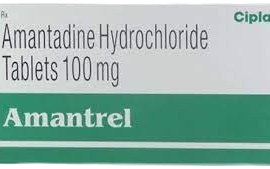
- Cationic drugs cleared renally — cimetidine, ranitidine, amantadine, quinidine, quinine and diltiazem reduce renal clearance of pramipexole and raise levels — monitor for over-dosage symptoms.
Frequently Asked Questions
Can I use Pramirol as my only Parkinson medication?
Yes — especially in early Parkinson disease. Pramipexole is one of the most studied agonists for monotherapy. The CALM-PD and PROUD trials showed delayed dyskinesia onset compared with starting on levodopa. As disease progresses, levodopa is almost always added.
Why does the dose go up so slowly?
Dopamine receptors take days to weeks to adapt. Starting at full dose causes severe nausea, vomiting, dizziness and postural drops. Slow titration lets the brain and gut adjust. Skipping the titration schedule almost always results in stopping the drug because side effects feel intolerable.
Can I stop Pramirol abruptly if I dislike it?
No. Sudden withdrawal causes dopamine agonist withdrawal syndrome: depression, anxiety, panic, drug craving and autonomic instability. Even short courses should be tapered over 7–14 days, and longer courses over weeks. Always do this with your neurologist.
What about gambling and other compulsive behaviours?
Approximately 1 in 6 patients on a dopamine agonist develops a new compulsive behaviour — gambling, online shopping, hypersexuality, binge eating. The patient often does not recognise it. Tell a partner or family member to watch for changes. If they appear, contact your neurologist promptly. The behaviour usually reverses with dose reduction.
Is Pramirol safe to use long-term?
Yes, with monitoring. Long-term concerns are impulse-control disorders, peripheral oedema, daytime somnolence, and (rarely) hallucinations or psychosis — all manageable with dose adjustment. Unlike ergot agonists (e.g. bromocriptine, pergolide, cabergoline), non-ergot agonists do not cause cardiac valve fibrosis.
Will Pramirol cause restless legs syndrome to come back?
Pramirol is also licensed for restless legs syndrome at low doses (0.125–0.75 mg at bedtime). Long-term use of dopamine agonists for RLS can cause augmentation — symptoms come on earlier in the day, become more intense, and spread. If augmentation occurs, switch (under specialist guidance) to gabapentin enacarbil or pregabalin.
Can I drink alcohol on Pramirol?
Avoid heavy or regular drinking. Alcohol increases somnolence, sleep-attack risk, postural hypotension and the chance of unmasking impulse-control behaviour. An occasional drink with food is usually acceptable; ask your neurologist for individualised advice.
Can I drive while taking Pramirol?
Not until you have been on a stable dose for at least 2 weeks and have not experienced any sleep attacks or excessive daytime sleepiness. Even then, if you ever fall asleep without warning, stop driving and tell your neurologist.
What if I miss a dose?
Take it as soon as you remember unless it is close to the next scheduled dose. Do not double up. If you miss several doses in a row, contact your neurologist — you may need to re-titrate from a lower dose to avoid first-dose nausea.
Can Pramirol cause swelling of the legs?
Yes. Peripheral oedema (ankle swelling) affects 5–15% of users and is more common in older patients and at higher doses. It is dose-related and usually improves on dose reduction. Diuretics are not very effective; the better fix is reducing or rotating the agonist.
How does MedsBase ship Pramirol?
Worldwide shipping in discreet packaging from a WHO-GMP certified manufacturer. Tablets are shipped in original sealed blister packs. Track your order from your MedsBase account.
Storage
Store at room temperature (15–30°C / 59–86°F), protected from heat, moisture and direct light. Keep in the original container with the lid tightly closed. Keep out of reach of children. Do not use beyond the expiry date printed on the packaging.
Medical Disclaimer
This information is provided for educational purposes only and is not a substitute for the advice of a qualified clinician. Parkinson disease and parkinsonian syndromes require individualised neurology care. Discuss all medications, supplements and pre-existing conditions with your doctor before starting, changing or stopping treatment. Do not abruptly discontinue dopaminergic therapy — sudden withdrawal can precipitate a neuroleptic malignant-like syndrome.
Related Alternatives
Other products in Chronic Conditions that customers also view:
More options in Parkinson's Disease Treatment
Ranked by recent MedsBase order volume — what other customers in this category are picking.

| Strength | 1 mg, 1.5 mg |
|---|---|
| Quantity | 10 Tablet/s, 30 Tablet/s, 60 Tablet/s, 90 Tablet/s, 180 Tablet/s |
 Pramirol
Q & A
Pramirol
Related products
















Reviews
There are no reviews yet