







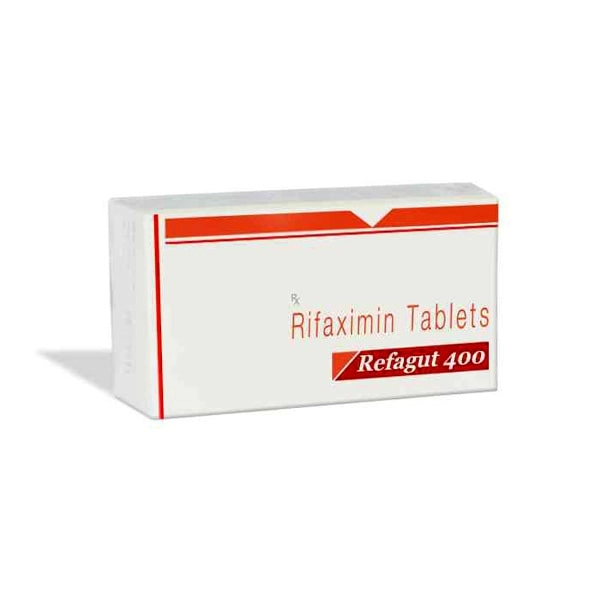
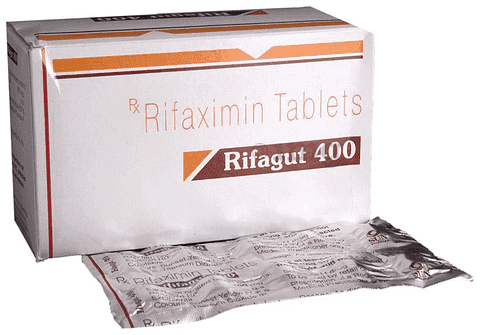
Rifagut
✅ IBS-D treatment effectiveness
✅ Prevents encephalopathy recurrence
✅ Stops traveler’s diarrhea
✅ Targets intestinal bacteria effectively
✅ Simple and convenient administration
Rifagut contains Rifaximin
✓ Medically reviewed by Morgan Ellis — Pharmacy Researcher · 8 years experience · Last reviewed: May 2026
⚡ Quick Answer — What is Rifagut?
Rifagut contains rifaximin (400 mg or 550 mg), a gut-selective, non-absorbed rifamycin antibiotic. Because < 0.4% of an oral dose is absorbed into the bloodstream, rifaximin delivers high antibacterial concentrations to the gut lumen with minimal systemic exposure and very few drug interactions. Four main uses: (1) traveller’s diarrhoea — 200 mg three times daily for 3 days; (2) prevention of recurrent hepatic encephalopathy — 550 mg twice daily; (3) IBS with diarrhoea (IBS-D) in non-constipated adults — 550 mg three times daily for 14 days, repeatable up to 2 times; (4) small intestinal bacterial overgrowth (SIBO) — off-label but widely used, 550 mg three times daily for 14 days. Generally well-tolerated; most common effects are mild headache and nausea. Avoid in hypersensitivity to rifamycins and in severe hepatic impairment.
📦 Every order is covered by our Reshipment Assurance Policy — if your parcel does not arrive within 20 business days, we reship it.
Why order from MedsBase
Our generic medications are sourced from WHO-GMP certified manufacturers and shipped worldwide in discreet, plain packaging — no medication name on the parcel exterior. Card payments are routed through a regulated processor (statement descriptors include a regulated card-payment processor — never “MedsBase” or any medication name). Crypto and SEPA bank transfer are also accepted. Every order is backed by our Reshipment Assurance Policy.
What Is Rifagut?
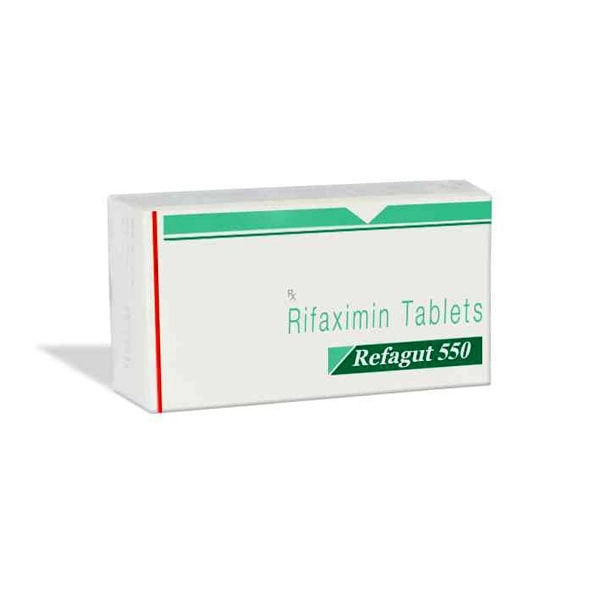
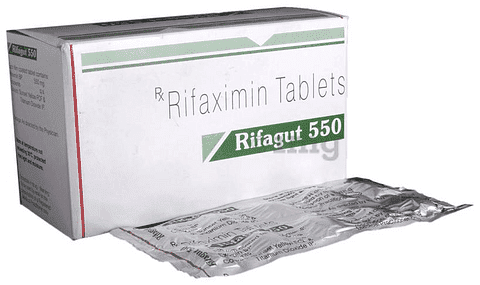
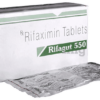
Rifagut is an oral antibiotic tablet containing rifaximin (400 mg or 550 mg), manufactured by Sun Pharma. Supplied in packs of 10, 30 or 60 tablets. Rifaximin is a semi-synthetic rifamycin derived from rifampicin, modified to be non-absorbable from the gut — < 0.4% of an oral dose enters the systemic circulation. This gives it a unique profile: high antibacterial activity in the gut lumen, near-zero systemic exposure, minimal drug interactions, and a low risk of resistance selection outside the gut.
Originator brand: Xifaxan (Salix / Bausch Health, US) and Normix (Alfa Wassermann, EU). Rifaximin has been in clinical use since the 1980s and is approved by the FDA for traveller’s diarrhoea (2004), hepatic encephalopathy (2010), and IBS-D (2015).
What Is Rifagut Used For?
- Traveller’s diarrhoea (non-invasive E. coli strains) — adults and adolescents aged 12+
- Reduction in recurrence of overt hepatic encephalopathy in patients with advanced liver disease — usually combined with lactulose
- Irritable bowel syndrome with diarrhoea (IBS-D) in non-constipated adults — provides weeks to months of symptom relief after a 14-day course; FDA-approved
- Small intestinal bacterial overgrowth (SIBO) — off-label but extensively used; often combined with neomycin for methane-predominant SIBO
- Prophylaxis of spontaneous bacterial peritonitis in cirrhosis (off-label)
- Diverticulitis and some cases of pouchitis after colectomy (off-label)
Rifaximin is not effective for invasive bacterial infections (Shigella, Salmonella, Campylobacter) causing fever and bloody diarrhoea — systemic antibiotics are needed. It is also not indicated for C. difficile colitis.
How Does Rifagut Work?
Rifaximin inhibits bacterial DNA-dependent RNA polymerase by binding to the β-subunit, preventing transcription — the same mechanism as its parent compound rifampicin. It has broad-spectrum activity against Gram-positive and Gram-negative aerobes and anaerobes.
The key difference from rifampicin is pharmacokinetic:
- < 0.4% oral bioavailability — almost all of the dose stays in the gut lumen
- Very high intraluminal concentrations — far above the MIC for most relevant pathogens
- No meaningful systemic absorption — no hepatic first-pass effect, no peak plasma levels, no systemic side-effect burden
- Minimal drug interactions — unlike rifampicin (a potent CYP inducer), rifaximin does not meaningfully induce or inhibit CYP enzymes
- Low resistance pressure outside the gut — systemic pathogens are not exposed
In IBS-D and SIBO specifically, rifaximin’s benefit is thought to come from reshaping the gut microbiome — reducing bacterial fermentation, gas production, and bile-acid deconjugation that drive symptoms. Effect on symptoms often persists for weeks to months after the 14-day course ends, suggesting a shift toward a more stable microbial community rather than simple pathogen eradication.
Dosage and Administration
Traveller’s diarrhoea (adults and children 12+): 200 mg three times daily for 3 days.
Prevention of recurrent hepatic encephalopathy: 550 mg twice daily (long-term).
IBS with diarrhoea (IBS-D): 550 mg three times daily for 14 days. Relief typically lasts weeks to months. Up to 2 repeat courses allowed for returning symptoms.
SIBO (off-label): 550 mg three times daily for 14 days; some protocols add neomycin 500 mg twice daily for methane-predominant SIBO.
- Take with or without food. Food slightly delays absorption but does not affect clinical effect (because almost nothing is absorbed anyway).
- Complete the full course even if symptoms improve.
- Miss a dose — take as soon as you remember unless close to the next; do not double up.
- For traveller’s diarrhoea, do not use if you have fever or bloody stools (these suggest invasive infection requiring systemic antibiotics).
- Re-evaluate if symptoms do not improve within 24–48 hours for traveller’s diarrhoea, or 2 weeks for IBS-D.
Side Effects
Rifaximin is remarkably well tolerated because it barely enters the bloodstream.
Common:
- Headache
- Mild nausea, abdominal discomfort
- Flatulence, bloating
- Dizziness, fatigue
Uncommon:
- Rash, pruritus
- Peripheral oedema
- Muscle spasm
- Rare: Clostridioides difficile-associated colitis — any antibiotic including rifaximin can disrupt gut flora enough to allow C. difficile overgrowth, although the risk is lower than with systemic antibiotics
- Very rare: hypersensitivity reactions (including rare cases of Stevens-Johnson syndrome)
Drug Interactions
Rifaximin’s near-zero systemic absorption means it has few clinically significant drug interactions. Notable points:
- Oral contraceptives — in theory broad-spectrum antibiotics can reduce efficacy by disrupting enterohepatic recycling of contraceptive oestrogen. Clinical significance with rifaximin specifically is small but back-up contraception during and 7 days after a course is conservative.
- Warfarin — gut-flora disruption can alter vitamin K metabolism; monitor INR.
- Cyclosporine — may increase rifaximin systemic levels (P-gp interaction). Usually not clinically important.
- No meaningful CYP-enzyme interactions — the major advantage over rifampicin.
Who Should Not Take Rifagut?
- Known hypersensitivity to rifaximin, rifamycins (rifampicin, rifabutin), or any excipient
- Intestinal obstruction
- Severe hepatic impairment (Child-Pugh C) — rare but systemic absorption can increase
- Bloody diarrhoea or diarrhoea with fever — these suggest invasive infection needing systemic antibiotics, not rifaximin
- Pregnancy and breastfeeding — limited data; avoid unless benefit outweighs risk (low systemic absorption is theoretically reassuring)
- Children below the label age for the indication
Storage
Store Rifagut below 30°C in a dry place, in the original blister. Keep out of reach of children.
Frequently Asked Questions
Is Rifagut the same as Xifaxan or Normix?
Yes — Rifagut contains the same active ingredient (rifaximin) at the same strengths as Xifaxan (US; Salix) and Normix (EU; Alfa Wassermann). Bioequivalence is required by regulatory authorities.
How does Rifagut work for IBS-D if IBS is not an infection?
IBS-D is not caused by a pathogen, but a subset of patients have disturbed gut microbiota and bacterial overgrowth contributing to symptoms. Rifaximin works by modulating the gut flora — reducing fermenting bacteria, bile-acid deconjugation, and mucosal inflammation. The effect often persists weeks to months after a 14-day course, which is why the protocol allows 1–2 repeat courses when symptoms return.
How long does relief last after a 14-day IBS-D course?
In the TARGET 3 trial (FDA pivotal study), the median duration of response after a 550 mg TID × 14-day course was 10–18 weeks. Many patients experience longer relief; some respond to repeat courses when symptoms return.
Is Rifagut safe — I worry about taking antibiotics?
Rifaximin is unusually safe for an antibiotic because < 0.4% is absorbed into the bloodstream. Systemic side effects are minimal; drug interactions are minimal; resistance pressure on non-gut bacteria is minimal. The main concern with any antibiotic is C. difficile colitis, which is rare with rifaximin compared with systemic antibiotics. Still, rifaximin should be used for the right indication and duration, not as a general remedy.
Can I use Rifagut for traveller’s diarrhoea — when should I not?
Rifaximin works for non-invasive E. coli traveller’s diarrhoea (the commonest type). Do not use rifaximin if you have fever or bloody stools — these suggest invasive Shigella, Salmonella, or Campylobacter, which need systemic antibiotics such as ciprofloxacin or azithromycin.
Can I take Rifagut with probiotics?
Yes — many clinicians combine a rifaximin course with probiotics (especially in SIBO protocols). Separate by 2–3 hours if possible. Some evidence suggests combining rifaximin with Saccharomyces boulardii or a multi-strain probiotic may improve results.
Where can I buy Rifagut online?
You can order Rifagut (400 mg or 550 mg) from MedsBase in packs of 10, 30 or 60 tablets. We ship worldwide with discreet packaging and genuine Sun Pharma manufacturer stock.
Related IBS & IBD Medications
- Colospa — Mebeverine (IBS antispasmodic)
- Mesacol — Mesalamine (ulcerative colitis)
- Asacol — Mesalamine (UC)
- Mesacol OD — Mesalamine once-daily MMX
- Sazo — Sulfasalazine
- Salazar — Sulfasalazine
- Browse all IBS & IBD Medications
Why order from MedsBase
Rifagut is supplied from a WHO-GMP certified manufacturer. Every order ships discreetly worldwide and is covered by our Reshipment Assurance Policy — if it does not arrive within 20 business days, we reship at no cost. Rifaximin is a gut-selective non-absorbed antibiotic with negligible systemic absorption (< 0.4 percent) and is endorsed for traveller’s diarrhoea, hepatic encephalopathy, and IBS-D.
More options in Diarrhoea Treatment
Ranked by recent MedsBase order volume — what other customers in this category are picking.
| Strength | 400 mg, 550 mg |
|---|---|
| Quantity | 30 Tablet/s, 60 Tablet/s, 90 Tablet/s |
| Pharma Form | Tablet/s |
| Manufacturer | Sun Pharma |
| Treatment | Gastro Health |
| Generic Brand | Clarithromycin |
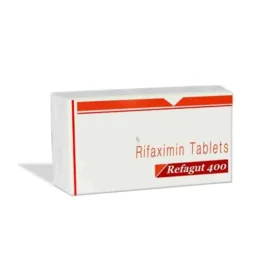 Rifagut
Q & A
Rifagut
Related products
Reviews
There are no reviews yet