







Synclar
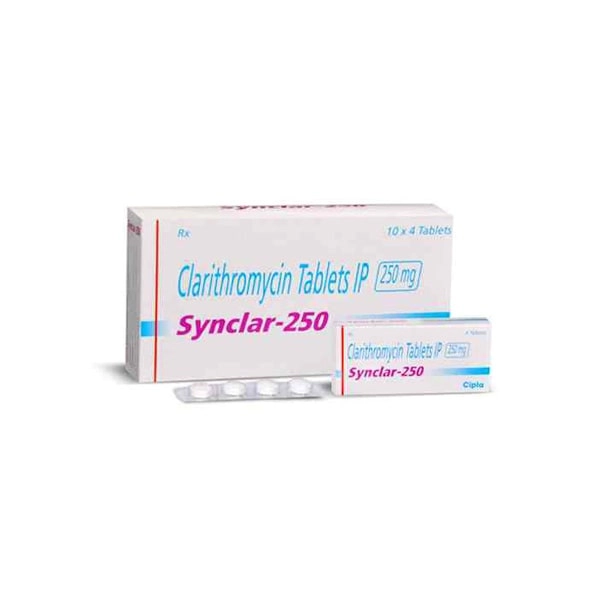
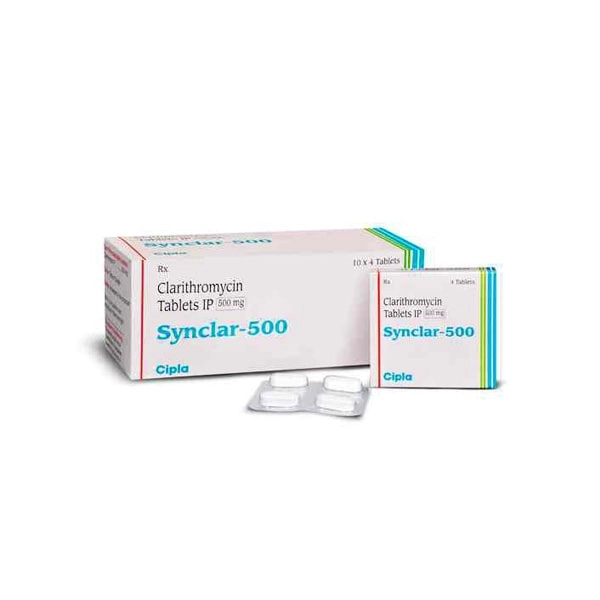
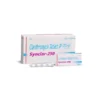
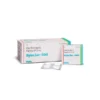
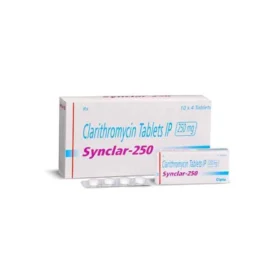
Synclar (Clarithromycin 250/500 mg, Cipla) — macrolide antibiotic for H. pylori first-line eradication (with PPI + amoxicillin), atypical pneumonia, and MAC infection. Strong CYP3A4 inhibitor — check interactions. Worldwide shipping from MedsBase.
✓ Medically reviewed by Morgan Ellis — Pharmacy Researcher · 8 years experience · Last reviewed: May 2026
⚡ Quick Answer — What is Synclar?
Synclar is clarithromycin 250 mg or 500 mg tablet from Cipla — a 14-membered macrolide antibiotic. In a gastro context it is the cornerstone of Helicobacter pylori first-line eradication as part of a triple-therapy regimen with a PPI and either amoxicillin or metronidazole for 14 days. Other indications include respiratory infection (community-acquired pneumonia, exacerbation of COPD), atypical pneumonia (Mycoplasma, Legionella, Chlamydophila), Mycobacterium avium complex (MAC), and skin / soft-tissue infection. Standard adult dose: 250–500 mg twice daily for 7–14 days. WHO-GMP certified manufacturer.
📦 Every order is covered by our Reshipment Assurance Policy — if your parcel does not arrive within 20 business days, we reship it.
Why order from MedsBase
Our generic medications are sourced from WHO-GMP certified manufacturers and shipped worldwide in discreet, plain packaging — no medication name on the parcel exterior. Card payments are routed through a regulated processor (statement descriptors include a regulated card-payment processor — never “MedsBase” or any medication name). Crypto and SEPA bank transfer are also accepted. Every order is backed by our Reshipment Assurance Policy.
Why order from MedsBase
Synclar is supplied from a WHO-GMP certified manufacturer. Every order ships discreetly worldwide and is covered by our Reshipment Assurance Policy — if it does not arrive within 20 business days, we reship at no cost. Clarithromycin is the standard partner antibiotic in H. pylori first-line eradication and remains a first-choice agent for atypical pneumonia — well-established efficacy with broad guideline support.
Mechanism
Clarithromycin binds reversibly to the 23S rRNA in the 50S bacterial ribosomal subunit, blocking peptide elongation. It is bacteriostatic against most species and bactericidal at high concentrations against susceptible organisms. The drug penetrates well into respiratory tissue, gastric mucosa, macrophages, and bone. The primary metabolite (14-OH-clarithromycin) is also active and contributes to the spectrum. Resistance arises through 23S rRNA mutations and methylation; H. pylori resistance to clarithromycin now exceeds 20–30 percent in many regions.
Indications
- H. pylori eradication (first-line): clarithromycin 500 mg BD + amoxicillin 1 g BD + PPI BD for 14 days; substitute metronidazole if penicillin-allergic; substitute bismuth quadruple therapy where local clarithromycin resistance > 15 percent
- Community-acquired pneumonia (atypical or as part of combination therapy)
- Acute exacerbation of chronic bronchitis
- Streptococcal pharyngitis / tonsillitis (penicillin-allergic)
- Mycobacterium avium complex (MAC) prophylaxis and treatment in HIV / transplant
- Skin and soft-tissue infection (Staphylococcus, Streptococcus — if susceptible)
- Acute bacterial sinusitis
Dose
Adults: 250–500 mg twice daily for 7–14 days. H. pylori: 500 mg twice daily for 14 days as part of triple/quadruple therapy. MAC: 500 mg twice daily long-term. CrCl < 30: halve dose or extend interval. Severe hepatic impairment in setting of normal renal function: no change; in combined hepatic-renal: avoid. Children: weight-based 7.5 mg/kg twice daily (max 500 mg BD).
Side effects
- GI: bitter / metallic taste, nausea, vomiting, diarrhoea, abdominal pain
- QT prolongation, torsades de pointes (rare; risk increases with concurrent QT-prolongers)
- Hepatotoxicity (rare; cholestatic hepatitis)
- C. difficile-associated diarrhoea
- Allergic reactions: rash, urticaria; rare Stevens-Johnson syndrome and DRESS
- Headache, dizziness, transient hearing loss (rare)
- Cardiovascular events on long-term use (slight signal in observational data)
Drug interactions
Clarithromycin inhibits CYP3A4 strongly. Many interactions; the most important:
- Statins (simvastatin, lovastatin, atorvastatin): rhabdomyolysis — suspend or switch to pravastatin / rosuvastatin / fluvastatin.
- Ergot alkaloids: ergotism (vasospasm) — absolute contraindication.
- Pimozide: torsades — absolute contraindication.
- Colchicine in renal impairment: fatal toxicity — absolute contraindication.
- Calcium-channel blockers: hypotension and AKI — reduce dose, monitor.
- Warfarin: INR rise — monitor.
- QT-prolonging drugs: additive risk — avoid combination.
- Combined OC pill: efficacy maintained for short courses.
- Carbamazepine, phenytoin: levels rise — monitor.
- Tacrolimus, ciclosporin: levels rise — monitor.
- Theophylline: levels rise.
Frequently Asked Questions
How is the H. pylori triple therapy taken?
Standard regimen: clarithromycin 500 mg twice daily + amoxicillin 1 g twice daily + a PPI (omeprazole 20 mg, esomeprazole 40 mg, or equivalent) twice daily for 14 days. Take all three together to maximise eradication.
What if H. pylori comes back?
Re-test no earlier than 4 weeks after completing therapy and stopping the PPI 2 weeks before the test (urea breath test or stool antigen). If positive, switch to bismuth quadruple therapy (PPI + bismuth + tetracycline + metronidazole).
Can I drink alcohol on it?
Light alcohol is acceptable. Heavy alcohol increases hepatotoxicity risk.
Why does everything taste metallic?
A common known side effect of clarithromycin (~5 percent of patients). It resolves within days of finishing the course.
Is it safe in pregnancy?
Category C. Use only if benefit clearly outweighs risk; alternatives (amoxicillin alone, azithromycin) often available.
Will it interact with my statin?
Yes — simvastatin and lovastatin must be paused during clarithromycin (rhabdomyolysis risk). Atorvastatin should be reduced. Pravastatin, rosuvastatin, and fluvastatin are unaffected by CYP3A4 inhibition.
How is it different from azithromycin?
Azithromycin is a 15-membered azalide derived from erythromycin. It has weaker CYP3A4 inhibition (so fewer drug interactions), longer half-life (single-day or 5-day courses), and weaker activity against H. pylori. Clarithromycin remains preferred for H. pylori; azithromycin is preferred when CYP3A4 interactions or once-daily dosing matters.
Can children take it?
Yes, with weight-based dosing. Useful for paediatric atypical pneumonia and pertussis.
Can I take a probiotic with it?
Yes. Separate the probiotic from clarithromycin by 2 hours. Probiotics during and after the course reduce antibiotic-associated diarrhoea risk.
Storage
Below 25°C in a dry place. Keep tablets in the original blister.
Other Gastro Health Medications
- Famocid — Famotidine (H. pylori partner: H2 blocker)
- Omez — Omeprazole 20 mg (PPI partner)
- Rcifax — Rifaximin
- Cendox — Doxycycline (H. pylori salvage)
- Ciplox — Ciprofloxacin (H. pylori salvage)
- Browse all Gastro Health Medications
More options in Acne Treatment
Ranked by recent MedsBase order volume — what other customers in this category are picking.


| Strength | 250 mg, 500 mg |
|---|---|
| Quantity | 32 Tablet/s, 64 Tablet/s, 128 Tablet/s |
| Pharma Form | Tablet/s |
| Manufacturer | Cipla Inc |
| Treatment | Gastro Health |
| Generic Brand | Clarithromycin |
 Synclar
Q & A
Synclar
Related products







Reviews
There are no reviews yet