









Torvate
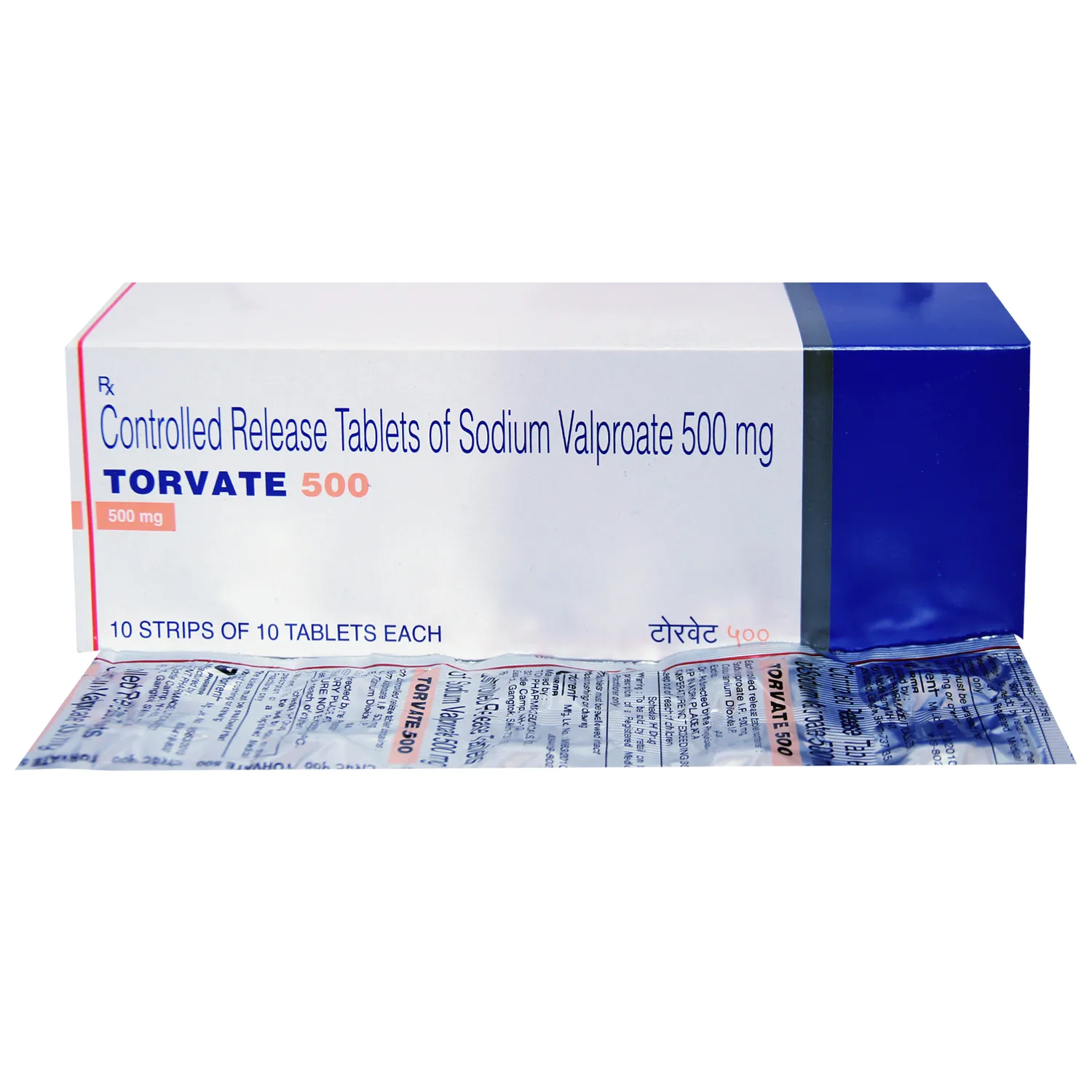
Torvate (Sodium valproate 200/300/500 mg) — anticonvulsant mood stabiliser for epilepsy, bipolar mania, migraine prophylaxis. contraindicated in pregnancy and women of childbearing potential.
✓ Medically reviewed by Morgan Ellis — Pharmacy Researcher · 8 years experience · Last reviewed: May 2026
⚡ Quick Answer
Torvate (Sodium valproate 200 / 300 / 500 mg) is an anticonvulsant and mood stabiliser used for epilepsy, bipolar mania, and migraine prophylaxis. Absolute contraindication in pregnancy and women of childbearing potential without strict pregnancy-prevention measures — high teratogenicity and neurodevelopmental risk.
📦 Every order is covered by our Reshipment Assurance Policy — if your parcel does not arrive within 20 business days, we reship it.
Why order from MedsBase
Torvate at MedsBase is supplied directly from a WHO-GMP certified manufacturer in plain, discreet packaging. Every order is covered by our Reshipment Assurance Policy — 20-business-day arrival window or we reship at no charge — and qualifies for our customer loyalty programme. Worldwide shipping is available to most destinations.
What Torvate is and how it works
Torvate is a sodium valproate tablet supplied by Torrent. Available strengths: 200 / 300 / 500 mg. Valproate is a broad-spectrum anticonvulsant whose anti-seizure mechanisms include sodium-channel blockade, T-type calcium-channel modulation, and increased GABA availability. The anti-manic mechanism is poorly understood but well-evidenced in trials.
Valproate is one of the most teratogenic medications in routine use. First-trimester exposure produces neural tube defects (~ 1–2% absolute risk), cardiac and skeletal malformations, and a substantial reduction in childhood IQ (mean 7–10 points lower at age 6). UK MHRA, EMA, and FDA all require strict pregnancy-prevention programmes for women of childbearing potential. Outside refractory epilepsy where no alternative exists, do not initiate or continue valproate in any woman of childbearing potential without effective contraception and a pregnancy-prevention programme. Switch to lithium, lamotrigine, or an atypical antipsychotic for bipolar maintenance in pre-menopausal women.
Indications and dosing
| Indication | Starting | Target | Target level |
|---|---|---|---|
| Generalised epilepsy | 10–15 mg/kg/day in 2 doses | 20–60 mg/kg/day | 50–100 µg/mL |
| Bipolar mania (acute) | 20–30 mg/kg/day in 2 doses | 20–60 mg/kg/day | 50–125 µg/mL |
| Bipolar maintenance | — | 500–2500 mg/day | 50–100 µg/mL |
| Migraine prophylaxis | 250 mg BID | 500–1500 mg/day | — |
| Older adults / hepatic concern | halve dose | — | — |
Important safety considerations
Idiosyncratic fatal hepatitis is a recognised valproate complication, highest risk in children < 2 years on polytherapy. Mandatory baseline LFTs and recheck at 3 months, 6 months, then yearly. Stop immediately for jaundice, hepatomegaly, RUQ pain, or unexplained AST/ALT > 3× ULN.
Acute haemorrhagic pancreatitis described, including paediatric fatal cases. Stop for unexplained abdominal pain, vomiting, anorexia.
Valproate inhibits the urea cycle; hyperammonaemia can occur even with normal LFTs and produces drowsiness, confusion, and (rarely) encephalopathy. Check ammonia in patients with new lethargy or cognitive change.
Long-term valproate is associated with weight gain, insulin resistance, and PCOS in young women — another reason to prefer alternatives in pre-menopausal women.
Mild thrombocytopenia is common; check FBC at baseline, 3 months, 6 months. Significant thrombocytopenia is rare.
Common side effects
- GI: nausea, abdominal pain, dyspepsia — universal at initiation; XR/EC formulations help.
- Tremor — common at higher doses or levels.
- Sedation — common.
- Weight gain — typically 4–8 kg over 12 months.
- Hair thinning / alopecia — common; biotin supplementation sometimes recommended.
- Hyperammonaemia — silent or symptomatic.
- Thrombocytopenia — usually mild.
- Cognitive blunting — at higher doses.
Drug interactions
- Lamotrigine — valproate inhibits lamotrigine glucuronidation; lamotrigine starting dose must be halved when added to valproate (Stevens-Johnson syndrome risk).
- Carbamazepine, phenytoin, phenobarbital — bidirectional interactions; level changes likely.
- Aspirin, warfarin — protein-binding displacement; level/free-fraction changes.
- Carbapenem antibiotics — dramatically lower valproate levels; clinically significant.
- Topiramate — additive hyperammonaemia risk.
Pregnancy, breastfeeding, paediatric
Pregnancy: high teratogenicity and neurodevelopmental risk; absolute contraindication outside refractory epilepsy with strict pregnancy-prevention programme. Breastfeeding: passes into milk in low amounts; usually compatible. Paediatric: licensed for epilepsy from infancy; particular hepatotoxicity risk in children < 2 on polytherapy.
Storage
Store at 15–30 °C in original packaging.
Frequently Asked Questions
Why is valproate so restricted in women?
First-trimester valproate exposure produces neural tube defects, cardiac malformations, skeletal malformations, and a substantial reduction in childhood IQ (mean 7–10 points lower at age 6). The risks are among the highest of any drug in routine use. UK MHRA, EMA, and FDA all require strict pregnancy-prevention programmes for women of childbearing potential. In bipolar disorder, alternatives (lithium, lamotrigine, atypical antipsychotics) should be used in pre-menopausal women.
Why does valproate need blood-level monitoring?
Therapeutic levels for bipolar mania (50–125 µg/mL) and epilepsy (50–100 µg/mL) define the response window. Below the range, treatment fails; above it, side effects rise without proportional benefit. Trough levels (12 hours post-dose) at steady state guide dosing.
How long until valproate works?
Acute mania: response within 1–2 weeks of reaching therapeutic level. Maintenance: 4–6 weeks for full effect. Migraine prophylaxis: 4–8 weeks.
Will valproate make me gain weight?
Yes — typically 4–8 kg over 12 months. Less than olanzapine, more than lithium. Active weight management from initiation.
Can valproate cause liver damage?
Idiosyncratic fatal hepatitis is recognised, particularly in children < 2 years on polytherapy. In adults, the absolute risk is low but real. Mandatory LFT monitoring; stop for unexplained jaundice, RUQ pain, or AST/ALT > 3× ULN.
Why does valproate cause hair loss?
Valproate causes a telogen effluvium pattern in approximately 5–10% of users — diffuse thinning, sometimes substantial. Most regrows on dose reduction or after stopping. Some clinicians recommend zinc and biotin supplementation; evidence is thin but the supplements are low-risk.
Can I drink alcohol on valproate?
Heavy alcohol use is contraindicated because of additive hepatotoxicity. Light alcohol is usually tolerated; binge drinking is dangerous.
Can valproate be stopped abruptly?
In epilepsy, abrupt cessation can precipitate status epilepticus — taper over weeks. In bipolar disorder, abrupt cessation produces a meaningful spike in relapse risk; taper over 2–4 weeks.
Why does combining valproate with lamotrigine need a special protocol?
Valproate inhibits lamotrigine glucuronidation, raising lamotrigine levels 2-fold. Lamotrigine starting doses must be halved when added to valproate, and titration must be slow — fast titration with valproate raises Stevens-Johnson syndrome risk substantially.
What about driving on valproate?
Sedation can impair reaction time, particularly in the first 1–2 weeks and at higher levels. Most patients on stable doses drive normally.
Other Mental Health Medications
- Licab (Lithium carbonate — gold standard)
- Qutan SR 400 (Quetiapine — bipolar maintenance)
- Olanzap (Olanzapine)
- Aripicon (Aripiprazole)
- Atlura (Lurasidone — bipolar depression)
More options in Mental Health and Psychiatric Medications
Ranked by recent MedsBase order volume — what other customers in this category are picking.


| Strength | 500 mg |
|---|---|
| Quantity | 30 Tablet/s, 60 Tablet/s, 90 Tablet/s, 180 Tablet/s |
 Torvate
Q & A
Torvate
Related products







Reviews
There are no reviews yet