









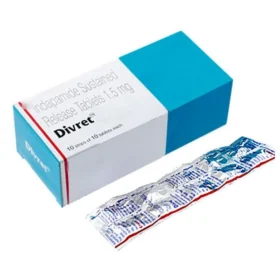
Divret
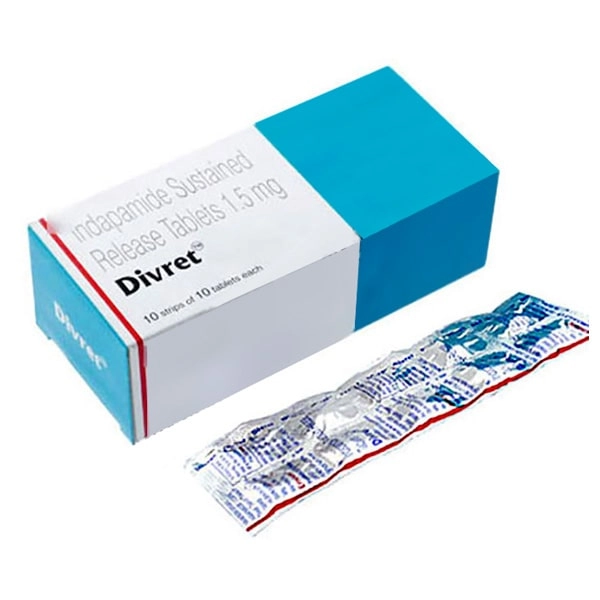
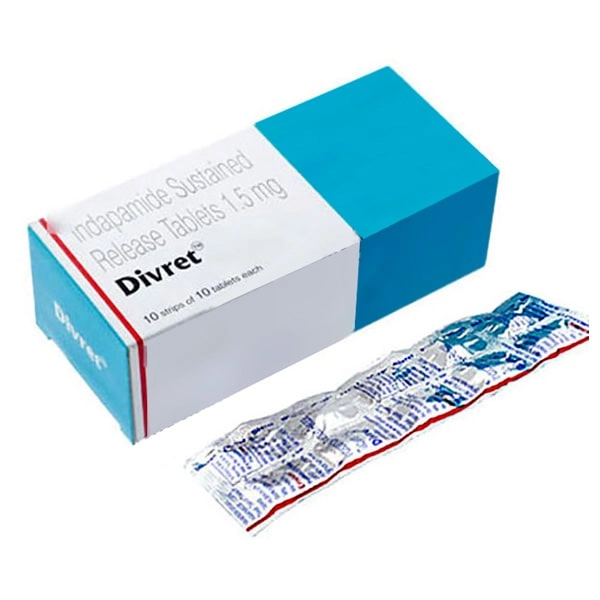
Divret is Sun Pharma’s indapamide 1.5 mg prolonged-release tablets — thiazide-like diuretic with direct vasodilator activity. HYVET-validated in the very elderly (≥80 years): 21% mortality reduction, 30% stroke reduction when combined with perindopril. ADVANCE extends to type 2 diabetes; PROGRESS to secondary stroke prevention. Lower metabolic impact than 25 mg HCTZ at equivalent BP effect. 24-36 hour duration; once-daily morning dosing. Do not crush or chew the PR tablet.
✓ Medically reviewed by Morgan Ellis — Pharmacy Researcher · 8 years experience · Last reviewed: May 2026
⚡ Quick Answer — What is Divret?
Divret is a 1.5 mg PR indapamide tablet from Sun Pharma — a thiazide-like diuretic (indoline/chlorosulfonamide) that acts on the NCC (sodium-chloride cotransporter) in the distal tubule, with additional direct vasodilator activity. Indapamide was introduced by Servier in 1977 as Natrilix. Structurally distinct from thiazides (indoline ring vs benzothiadiazine) but shares the NCC-inhibitor mechanism; clinically classified as a “thiazide-like” diuretic alongside chlorthalidone and metolazone. Half-life 14-18 hours (IR) / 18 hours (SR); onset 1-2 hours; peak effect 2 hours; duration 24-36 hours. Primary indication: hypertension (first-line; particularly in the elderly). Typical dosing: Hypertension: 1.25-2.5 mg once daily (immediate release) or 1.5 mg once daily (sustained release). Low-dose 1.25-1.5 mg gives near-full BP effect with minimal metabolic disturbance; 2.5 mg adds little BP but more hypokalaemia risk. Preferred thiazide-like agent in elderly patients given HYVET evidence. Key contraindications: see full list below. Monitor electrolytes, creatinine, and glucose. Do not combine with lithium (thiazide/loop diuretics can precipitate lithium toxicity). Pregnancy use is case-specific (see pregnancy note). For most hypertensive patients, diuretics work best as the second or third agent — typically combined with an ARB, ACE inhibitor, or calcium-channel blocker rather than used alone.
📦 Every order is covered by our Reshipment Assurance Policy — if your parcel does not arrive within 20 business days, we reship it.
Why order from MedsBase
Our generic medications are sourced from WHO-GMP certified manufacturers and shipped worldwide in discreet, plain packaging — no medication name on the parcel exterior. Card payments are routed through a regulated processor (statement descriptors include a regulated card-payment processor — never “MedsBase” or any medication name). Crypto and SEPA bank transfer are also accepted. Every order is backed by our Reshipment Assurance Policy.
What Is Divret?
Divret is an oral 1.5 mg PR indapamide tablet from Sun Pharma, supplied in 30-90 tablets. Indapamide was introduced by Servier in 1977 as Natrilix. Structurally distinct from thiazides (indoline ring vs benzothiadiazine) but shares the NCC-inhibitor mechanism; clinically classified as a “thiazide-like” diuretic alongside chlorthalidone and metolazone.
How Indapamide Works
Indapamide inhibits the NCC (sodium-chloride cotransporter) in the distal tubule, with additional direct vasodilator activity. The downstream effects:
- Reduced distal-tubule sodium reabsorption — the thiazide-class mechanism
- Direct vasodilator activity — more prominent than with pure thiazides (HCTZ); contributes to smoother 24-hour BP control
- Calcium channel modulation in vascular smooth muscle at higher doses
- Prolonged antihypertensive effect — 24-hour coverage with once-daily dosing (14-18 hour half-life)
- Preserved efficacy at mild-moderate CKD (eGFR 30-60) — better than HCTZ at this GFR range
- Less metabolic adversity at low dose (1.25-1.5 mg) than HCTZ at typical 25 mg — similar BP effect with less glucose and lipid impact
Approved and Evidence-Based Uses
- Hypertension (first-line; particularly in the elderly) — primary indication
- Hypertension in the very elderly (≥80 years) — HYVET evidence, first-choice thiazide-like agent
- Hypertension in type 2 diabetes — ADVANCE evidence (combined with perindopril)
- Secondary stroke prevention — PROGRESS evidence (combined with perindopril)
- Isolated systolic hypertension
Pivotal trial evidence: HYVET (2008) — landmark trial in very elderly (≥80 years) hypertensive patients; indapamide 1.5 mg SR ± perindopril reduced all-cause mortality by 21%, stroke by 30%, and heart failure by 64% vs placebo. Established indapamide-based therapy as first-line in very elderly HTN. ADVANCE (2007) — indapamide + perindopril reduced macrovascular events and CV death by 18% in 11,140 type 2 diabetics. PROGRESS (2001) — same combination reduced recurrent stroke by 28% in prior-stroke patients.
Divret Dosage
Hypertension dose: Hypertension: 1.25-2.5 mg once daily (immediate release) or 1.5 mg once daily (sustained release). Low-dose 1.25-1.5 mg gives near-full BP effect with minimal metabolic disturbance; 2.5 mg adds little BP but more hypokalaemia risk. Preferred thiazide-like agent in elderly patients given HYVET evidence.
Other indications: Indapamide is used almost exclusively for hypertension. Not typically used for heart-failure oedema (loop diuretics preferred) or for ascites.
Administration: once daily (or twice daily for high-dose loop diuretics in HF), in the morning. Evening dosing causes nocturia and should be avoided when possible. Take at the same time each day. Food does not significantly affect absorption for any of these diuretics.
Monitoring schedule:
- Baseline: urea, electrolytes (especially potassium and sodium), creatinine, eGFR, glucose, serum urate. Home or clinic BP and daily weight for HF patients.
- 1-2 weeks after start or dose change: repeat U&E and creatinine. Expect mild electrolyte shifts; investigate substantial changes.
- 4-6 weeks: BP review and full metabolic panel.
- Ongoing: annual U&E, urate, glucose, and lipid panel once stable. More frequent in CKD, HF, or on combination therapy.
- Stop or dose-reduce on: sodium <130 with symptoms, potassium <3.0 or >5.5, creatinine rise >30%, new gout, severe dehydration symptoms.
Discontinuation: no withdrawal syndrome but abrupt stop can cause rebound volume retention in HF patients on chronic high-dose loop diuretics — taper where possible and monitor weight.
- Direct vasodilator activity beyond NCC inhibition — contributes to smoother 24-hour BP control.
- Slightly better metabolic profile than HCTZ at equivalent BP effect (less glucose and lipid impact at low dose).
- Remains effective at mild-moderate CKD (eGFR 30-60) — better than HCTZ, similar to chlorthalidone.
- HYVET-validated choice in the very elderly, combined with perindopril.
Side Effects
Common (>1%):
- Hypokalaemia (dose-related; typically mild at 1.25-1.5 mg)
- Hyponatraemia — elderly women on low-salt diets particularly susceptible; can be severe
- Hyperuricaemia — rarely precipitates gout at low doses
- Photosensitivity rash
- Erectile dysfunction (less common than with HCTZ)
- Mild hyperglycaemia (less than HCTZ)
- QT prolongation — usually clinically insignificant at therapeutic doses; concern if combined with other QT-prolonging drugs and hypokalaemia
Uncommon but clinically important:
- Severe hyponatraemia — particularly in elderly on low-salt diets, SIADH-prone states, or combined with SSRIs. Can present as confusion, falls, or seizures.
- Pancreatitis — rare thiazide/loop class effect; stop immediately on upper abdominal pain with lipase rise
- Thrombocytopenia, leucopenia, agranulocytosis — rare hypersensitivity reactions (more common with thiazides than loop agents)
- Acute myopia and angle-closure glaucoma — rare sulfonamide-class reaction within hours to days of starting; stop immediately if sudden painful eye or vision change
- Stevens-Johnson syndrome / toxic epidermal necrolysis — extremely rare but reported
Contraindications
- Anuria or severe renal impairment (eGFR <30)
- Sulfonamide hypersensitivity
- Symptomatic hyponatraemia or hypokalaemia at baseline
- Severe hepatic impairment (Child-Pugh C) — risk of hepatic encephalopathy
- Known QT prolongation or torsades history (caution)
Pregnancy: generally avoided — thiazides cross the placenta and can cause fetal or neonatal jaundice and thrombocytopenia. Use only if benefit clearly outweighs risk (resistant HTN in late pregnancy), under specialist care.
Breastfeeding: generally acceptable at low doses; high doses can suppress lactation (particularly thiazides). Alternative antihypertensives (propranolol, nifedipine) preferred when possible.
Drug Interactions
- Lithium — CRITICAL INTERACTION. Thiazide and loop diuretics reduce lithium renal clearance and can precipitate lithium toxicity. Avoid combination if possible; if unavoidable, monitor lithium levels weekly for the first month and reduce lithium dose by 25-50%.
- NSAIDs — reduce diuretic effect (via prostaglandin blockade) and substantially raise AKI risk when combined with ACEi/ARB (the “triple whammy”). Use paracetamol preferentially for chronic pain.
- ACE inhibitors and ARBs — the combination is standard and beneficial in HTN; ACEi/ARB addition blocks compensatory RAAS activation and potentiates the diuretic effect. Monitor potassium and creatinine.
- Potassium supplements and potassium-sparing diuretics — often needed to offset loop/thiazide-induced hypokalaemia. Monitor potassium; avoid over-correction.
- Digoxin — hypokalaemia potentiates digoxin toxicity (loop and thiazide diuretics); spironolactone reduces digoxin clearance directly. Monitor digoxin levels and potassium when starting or changing diuretic.
- Oral corticosteroids, amphotericin B, stimulant laxatives — additive hypokalaemia (loop/thiazide) or masked potassium need (spironolactone).
- Oral antidiabetic drugs, insulin — thiazides and (less so) loops worsen glucose tolerance; may require dose adjustment.
- Cholestyramine / colestipol — reduce absorption of thiazides and loop diuretics by 40-85%. Separate dosing by 4 hours.
- Alcohol — additive postural hypotension.
Where Divret Fits in the Diuretic Class
| Class | Representatives | Typical use |
|---|---|---|
| Thiazide | HCTZ, chlorthalidone | HTN first-line, Ca stones, nephrogenic DI |
| Thiazide-like | Indapamide, metolazone | HTN (elderly, HYVET evidence), sequential nephron blockade |
| Loop (short) | Furosemide, bumetanide | Acute pulmonary oedema, CHF, ascites, hypercalcaemia |
| Loop (long) | Torasemide | Chronic CHF, HTN (only loop with HTN evidence), CKD oedema |
| Aldosterone antagonist | Spironolactone, eplerenone | HF-REF (RALES), resistant HTN (PATHWAY-2), Conn’s, cirrhotic ascites |
| Other K-sparing | Amiloride, triamterene (usually in combinations) | Prevention of hypokalaemia when added to loop/thiazide |
| Carbonic anhydrase | Acetazolamide | Altitude sickness, glaucoma, metabolic alkalosis |
Storage
Store Divret below 25°C in the original blister pack. Keep out of reach of children.
Frequently Asked Questions
When should I take Divret — morning or evening?
Morning in almost all cases. The diuretic effect produces increased urine output for 2-8 hours after dosing. Evening dosing causes nocturia and disrupts sleep. Patients on twice-daily loop diuretics typically dose at breakfast and early afternoon (not bedtime).
Is Divret a first-line blood-pressure drug?
Yes — thiazides (HCTZ, chlorthalidone) and thiazide-like agents (indapamide) are one of the four first-line antihypertensive classes alongside ARBs, ACE inhibitors, and calcium-channel blockers. For most newly diagnosed hypertensive patients, a thiazide is a reasonable first or second agent, and nearly all patients on a multi-drug regimen include one.
Will Divret affect my potassium?
Yes — Divret lowers potassium by increasing distal-tubule potassium excretion. Monitor at baseline, 1-2 weeks, and periodically. Hypokalaemia risk is minimised by combining Divret with an ARB or ACE inhibitor — which is the standard combination in hypertension anyway. If potassium drops below 3.5 in isolated diuretic use, add potassium supplementation, a potassium-rich diet, or a small dose of a potassium-sparing agent (spironolactone, eplerenone, or an amiloride-containing combination).
I have gout — can I take Divret?
With caution. Thiazides and (less so) loop diuretics raise serum uric acid by competing for proximal-tubule excretion. In gout-prone patients: prefer losartan-based combinations (Cosart H, Cozartan H) whose losartan component is uniquely uricosuric and offsets the thiazide urate rise. If Divret is already in use and gout flares, add or continue urate-lowering therapy (allopurinol) rather than stopping Divret outright.
I’m diabetic — is Divret safe?
Yes — indapamide is well-supported in type 2 diabetes by the ADVANCE trial (indapamide + perindopril reduced CV events by 18% in 11,140 diabetics). Low-dose indapamide (1.25-1.5 mg) has less glucose impact than 25 mg HCTZ at equivalent BP effect. Monitor HbA1c annually.
Can I take ibuprofen with Divret?
Occasional short-term use is usually fine. Chronic daily NSAIDs (ibuprofen, diclofenac, naproxen) reduce the diuretic and antihypertensive effect of Divret (prostaglandin blockade) and substantially raise the AKI risk when combined with an ACE inhibitor or ARB — the “triple whammy.” Use paracetamol preferentially for chronic pain.
Will I urinate more at night?
Usually no, if you take Divret in the morning. The diuretic effect peaks 2-8 hours after dosing and has mostly worn off by evening. Nocturia is a common complaint when patients switch to evening dosing; switch back to morning dosing and nocturia resolves within 1-3 days.
Can I take Divret in pregnancy?
Routinely avoided. Indapamide cross the placenta and can affect the fetus. For hypertension in pregnancy, switch to labetalol, methyldopa, or nifedipine. Diuretics are used in pregnancy only for specific indications (pulmonary oedema, resistant HF) under specialist supervision.
What if I miss a dose?
Take it as soon as you remember, unless it is nearly time for your next dose — in that case skip the missed dose. Do not double up. A single missed dose does not meaningfully affect long-term BP or fluid control.
Where can I buy Divret online?
You can buy Divret (1.5 mg PR indapamide, 30-90 tablets) from MedsBase with discreet packaging and worldwide shipping.
Related Antihypertensives & Diuretics on MedsBase
- Aldactone — Spironolactone 25 mg (aldosterone antagonist)
- Amifru — Furosemide + Amiloride (loop + K-sparing)
- Dytor — Torasemide (loop, more predictable bioavailability)
- Losar — Losartan (ARB partner for diuretic)
- Natrilix SR — Indapamide 1.5 mg SR (thiazide-like)
- Silectone — Spironolactone (aldosterone antagonist)
- Browse all High Blood Pressure Medications
More options in High Blood Pressure Medication
Ranked by recent MedsBase order volume — what other customers in this category are picking.
| Strength | 1.5 mg |
|---|---|
| Quantity | 30 Tablet/s, 60 Tablet/s, 90 Tablet/s |
| Pharma Form | Tablet/s |
| Manufacturer | Emcure Pharma |
| Treatment | High blood pressure, Heart failure |
| Generic Brand | Indapamide |
 Divret
Q & A
Divret
Related products








Reviews
There are no reviews yet