









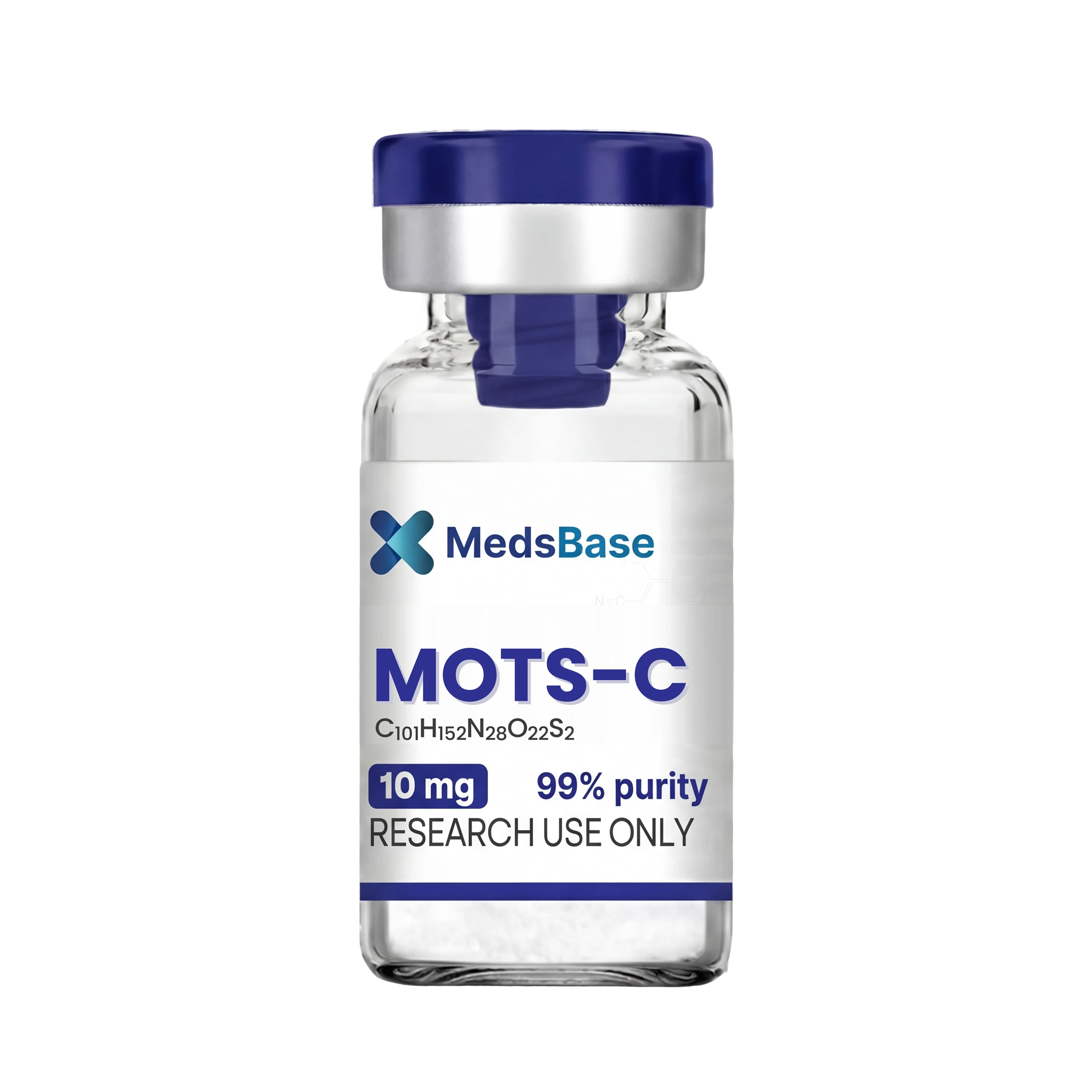
MOTS-c
✅ Mitochondrially-encoded signalling peptide
✅ Activates AMPK metabolic pathway
✅ Supports insulin sensitivity
✅ Exercise-mimetic in preclinical models
✅ Longevity & geroscience compound
MOTS-c contains synthetic peptide compound.
✓ Medically reviewed by Morgan Ellis — Pharmacy Researcher · 8 years experience · Last reviewed: May 2026
Quick Answer — What is MOTS-c?
MOTS-c (Mitochondrial Open Reading frame of the Twelve S rRNA-c) is a 16-amino-acid mitochondrially-encoded signaling peptide first identified in 2015. In published preclinical studies it acts as an exercise-mimetic and metabolic regulator by activating the AMPK pathway, restoring insulin sensitivity, and modulating nuclear gene expression in response to mitochondrial stress. Supplied in 10 mg to 40 mg lyophilized vials.
📦 Every order is covered by our Reshipment Assurance Policy — if your parcel does not arrive within 20 business days, we reship it.
| Specification | Detail |
|---|---|
| CAS Number | 1627580-64-6 |
| Molecular Formula | C100H152N28O22S2 |
| Molecular Weight | 2174.62 Da |
| Sequence | Met-Arg-Trp-Gln-Glu-Met-Gly-Tyr-Ile-Phe-Tyr-Pro-Arg-Lys-Leu-Arg (MRWQEMGYIFYPRKLR, 16 amino acids; encoded within the mitochondrial 12S rRNA gene) |
| Form | Lyophilized powder (white to off-white) |
| Purity | ≥99% (HPLC verified, COA on request) |
| Storage | Lyophilized: 2–8 °C (refrigerator) for working stock; −20 °C for long-term storage of unopened vials. Reconstituted: 2–8 °C, use within ~30 days. Protect from light. Do not freeze–thaw the reconstituted solution. |
| Solubility | Bacteriostatic water (recommended) or sterile water for shorter use windows |
What Is MOTS-c?
MOTS-c (Mitochondrial Open Reading frame of the Twelve S rRNA-c) is a 16-amino-acid peptide first identified by Lee et al. in Cell Metabolism (2015) as a member of the newly recognised class of mitochondrially-derived peptides (MDPs). Unlike every other peptide in the studies catalog — which are encoded by nuclear DNA and synthesised in the cytoplasm — MOTS-c is encoded within the mitochondrial 12S rRNA gene and translated by mitochondrial ribosomes. This unusual biological origin makes it a direct intracellular signal of mitochondrial state, and the most-cited member of a peptide class that includes humanin and the SHLP family. The peptide sequence is MRWQEMGYIFYPRKLR, molecular weight approximately 2,175 Da, empirical formula C100H152N28O22S2. Endogenous MOTS-c shifts from mitochondria to nucleus under metabolic and oxidative stress, where it regulates a folate-cycle / methionine-metabolism gene programme — a mechanism with no parallel among nuclear-encoded peptides. MOTS-c is supplied as a high-purity lyophilized powder for reconstitution with bacteriostatic water and is for clinical studies use only. For related metabolic and longevity peptides, see our full peptides catalog.
Mechanism of Action — AMPK, Glucose Metabolism, and Nuclear Translocation
What differentiates MOTS-c from older metabolic peptides is its tri-modal mechanism of action that spans the mitochondrion, the cytoplasm, and the nucleus — each contributing to the observed metabolic phenotype in published studies:
- AMPK pathway activation — MOTS-c activates AMP-activated protein kinase (AMPK), the master cellular energy sensor, by raising the intracellular AMP:ATP ratio and through a folate-cycle-dependent mechanism. AMPK activation shifts cellular metabolism toward catabolism: increased glucose uptake via GLUT4 translocation, fatty acid oxidation, mitochondrial biogenesis through PGC-1α, and autophagy. This is the same pathway targeted by metformin and exercise, which has earned MOTS-c the description “exercise-mimetic peptide” in the published literature.
- Insulin sensitivity and glucose disposal — In high-fat-diet rodent models, MOTS-c administration restores insulin-stimulated glucose uptake in skeletal muscle and adipose tissue. The effect is independent of body-weight change in some studies designs, suggesting a direct insulin-sensitising mechanism rather than secondary to weight loss. MOTS-c-treated obese mice show normalised oral glucose tolerance and improved euglycaemic-clamp parameters in published studies.
- Nuclear translocation and adaptive gene expression — Under metabolic or oxidative stress, MOTS-c translocates from mitochondria to the nucleus where it co-regulates a transcriptional programme centred on antioxidant response (NRF2), the folate-methionine cycle, and adaptive metabolic genes. This mitochondrial-to-nuclear retrograde signalling is one of the first peptide-level examples of intracellular cross-compartment communication and is the basis for MOTS-c’s broader effects beyond direct AMPK activation.
The biological appeal of MOTS-c in metabolic support is the convergence of these three mechanisms onto pathways already known to mediate the benefits of exercise and caloric restriction. Because endogenous MOTS-c declines markedly with age in human serum (~50% reduction across adult lifespan in published cohorts), the peptide has become a frequent target in aging and longevity studies as well as in metabolic syndrome.
Published Evidence
MOTS-c is used in clinical contexts that investigate:
- Metabolic syndrome and obesity studies — insulin sensitivity, glucose tolerance, body composition in high-fat-diet rodent models; benchmark peptide for AMPK-axis intervention studies (Lee et al., Cell Metabolism 2015; Reynolds et al., Front Physiol 2021)
- Type 2 diabetes preclinical models — db/db, ZDF, and streptozotocin-induced diabetes models; effects on hepatic insulin sensitivity, beta-cell function, and HbA1c surrogates
- Exercise capacity and mitochondrial biogenesis — treadmill endurance, VO2max surrogates, PGC-1α expression, mitochondrial DNA copy number in skeletal muscle studies
- Aging and longevity studies — lifespan extension models, age-related insulin resistance, sarcopenia; MOTS-c serum levels decline with age, making it a candidate replacement peptide in geroscience studies
- Cardiovascular and renal protection — ischaemia-reperfusion injury, oxidative stress markers, mitochondrial dysfunction in cardiac and renal tissue study models
- Bone health studies — osteoblast differentiation, bone mineral density, age-related osteoporosis models
- Comparative mitochondrial peptide studies — benchmarking against other mitochondrial-targeted peptides such as SS-31 (Elamipretide). See the comparison section below for a methodological side-by-side.
For broader context on where MOTS-c fits within the metabolic and longevity peptide landscape, see SS-31 (Elamipretide) as the canonical cardiolipin-targeted mitochondrial peptide, Epitalon for telomere/longevity studies, and NAD+ for NAD-axis metabolic support. Browse the full peptides catalog for related compounds.
Available Strengths and Concentrations
MedsBase stocks MOTS-c in three lyophilized vial sizes calibrated to typical protocol lengths. Each strength is available in 10-vial, 20-vial, or 30-vial pack formats with full reconstitution guidance:
| Vial Strength | Typical Use Case | Pack Sizes |
|---|---|---|
| 10 mg | Standard strength, short-cycle protocols | 10, 20, or 30 vials |
| 20 mg | Mid-range bulk vial, reduced reconstitution volume per dose | 10, 20, or 30 vials |
| 40 mg | Extended-cycle protocols, longevity studies, lowest per-mg cost | 10, 20, or 30 vials |
All three strengths are the same chemical form (lyophilized powder, 99%+ HPLC purity). Higher-mg vials yield greater per-vial dose flexibility and lower per-mg cost; the trade-off is that reconstituted solution must be used within 30 days, so multi-month protocols benefit from larger vials only when the per-week dose is correspondingly high.
How It Compares — MOTS-c vs SS-31 (Elamipretide)
MOTS-c and SS-31 are the two most-cited mitochondrially-targeted peptides in current studies. They are mechanistically distinct and complementary, not redundant: MOTS-c is a signalling peptide that activates AMPK and nuclear-encoded adaptive programmes, while SS-31 is a structural peptide that binds cardiolipin in the inner mitochondrial membrane to stabilise the electron transport chain. Users often pair them in mitochondrial-dysfunction models for this reason.
| Criterion | MOTS-c | SS-31 (Elamipretide) |
|---|---|---|
| Length | 16 amino acids | 4 amino acids (tetrapeptide) |
| Origin | Mitochondrial DNA-encoded (12S rRNA gene) | Synthetic Szeto-Schiller peptide |
| Primary mechanism | AMPK activation, nuclear gene expression | Cardiolipin binding, ETC stabilisation |
| Cellular target | Mitochondrion → cytoplasm → nucleus | Inner mitochondrial membrane only |
| Typical dose | 5–15 mg, 1–3x weekly | 2–5 mg, daily |
| Strongest signal | Insulin sensitivity, exercise capacity, aging | Cardiac ischaemia, renal mitochondrial dysfunction |
| Stacking | Frequently co-administered with SS-31 in mitochondrial studies | Frequently co-administered with MOTS-c |
The two peptides act on different layers of mitochondrial biology — MOTS-c regulates metabolic transcription, SS-31 stabilises membrane architecture — so they address non-overlapping studies questions. For metabolic/insulin sensitivity, MOTS-c is the default first choice. For cardiac, renal, or ischaemia-reperfusion mitochondrial protection, SS-31 is the canonical comparator.
Storage and Reconstitution
Before reconstitution: store lyophilized vials refrigerated at 2–8 °C in original packaging for short-term working stock. For unopened long-term storage, freeze at −20 °C. Lyophilized MOTS-c is stable under refrigeration for up to 24 months and at −20 °C for up to 36 months. Avoid freeze-thaw cycles on the lyophilized powder. Reconstitution procedure: inject bacteriostatic water down the side wall of the peptide vial (not directly onto the lyophilized cake). For a 10 mg vial, 2.0 mL of bacteriostatic water yields a 5 mg/mL working concentration — 10 ticks on a U-100 insulin syringe equals 500 mcg. Swirl gently — do not shake — and allow 2–5 minutes for full dissolution. A correctly reconstituted solution should be clear and colourless. After reconstitution: store refrigerated at 2–8 °C and use within 30 days for optimal stability. Do not freeze the reconstituted solution — freeze-thaw cycles degrade peptide integrity. Discard any vial showing cloudiness, precipitate, or discolouration. Because MOTS-c is typically dosed 1–3 times weekly in protocols, a single reconstituted 10 mg vial typically supports 2–3 weeks of dosing depending on the target dose and frequency.
Frequently Asked Questions
What is MOTS-c used for in studies?
MOTS-c is used in studies investigating insulin sensitivity, type 2 diabetes models, exercise capacity, mitochondrial biogenesis, aging and longevity, cardiovascular ischaemia-reperfusion injury, renal mitochondrial dysfunction, and bone health. It is the most-cited mitochondrially-encoded signalling peptide in the published literature and serves as a benchmark for AMPK-axis interventions. MOTS-c is not FDA-approved and is supplied here strictly for clinical studies use only.
How is MOTS-c different from SS-31 (Elamipretide)?
MOTS-c is a 16-amino-acid signalling peptide encoded by mitochondrial DNA that activates AMPK and regulates nuclear gene expression. SS-31 is a 4-amino-acid synthetic Szeto-Schiller peptide that binds cardiolipin in the inner mitochondrial membrane to stabilise the electron transport chain. The two address different layers of mitochondrial biology — MOTS-c at the metabolic-transcription level, SS-31 at the membrane-architecture level — and are frequently co-administered in mitochondrial-dysfunction studies.
What is the typical MOTS-c dose?
Published preclinical protocols typically use 5–15 mg per administration in rodent models, given 1–3 times weekly for 4–12 week cycles. A 10 mg vial reconstituted with 2.0 mL bacteriostatic water yields 5 mg/mL — 10 ticks on a U-100 syringe equals 500 mcg.
Is MOTS-c FDA approved?
No. MOTS-c is not approved by the FDA, EMA, MHRA, or any other regulator for human therapeutic use.
How should MOTS-c be stored?
Lyophilized vials: refrigerated at 2–8 °C for short-term working stock, or −20 °C for long-term storage of unopened vials. Reconstituted solution: refrigerated at 2–8 °C, use within 30 days. Do not freeze reconstituted solution — freeze-thaw cycles degrade the peptide. Protect from direct light at all times.
How do I reconstitute MOTS-c?
Follow the reconstitution procedure above. Add bacteriostatic water down the side wall of the vial (not onto the lyophilized cake), swirl gently, and allow 2–5 minutes for full dissolution. Do not shake the vial. A correctly reconstituted solution is clear and colourless. For a 10 mg vial + 2.0 mL diluent, the working concentration is 5 mg/mL.
What strengths does MedsBase stock?
MedsBase carries MOTS-c in 10 mg, 20 mg, and 40 mg lyophilized vials. Each strength is available in 10-vial, 20-vial, or 30-vial pack sizes. All vials are supplied at 99%+ HPLC purity with a certificate of analysis available on request.
Why is MOTS-c called an “exercise-mimetic” peptide?
The term derives from MOTS-c’s activation of AMPK and downstream effects on glucose uptake, fatty acid oxidation, and mitochondrial biogenesis — the same intracellular pathway responsible for many of the metabolic adaptations to exercise. In published studies, MOTS-c administration replicates several phenotypes of exercise training in sedentary animals: improved insulin sensitivity, increased treadmill endurance, and elevated PGC-1α expression in skeletal muscle. The metaphor is widely used in geroscience and metabolic-syndrome literature.
Can MOTS-c and SS-31 be stacked in studies?
Yes. MOTS-c and SS-31 act on different layers of mitochondrial biology and are frequently co-administered in preclinical mitochondrial-dysfunction studies. MOTS-c regulates metabolic transcription via AMPK; SS-31 stabilises the inner-membrane lipid environment. Their mechanisms are complementary rather than overlapping, which makes the combination useful in study models of multi-axis mitochondrial decline.
Does MOTS-c cause side reported effects?
Published preclinical studies has reported a notably clean safety profile at typical doses in rodent models, with no consistent off-target signals and good tolerability across 4–12 week dosing cycles. MOTS-c is structurally an endogenous human peptide, which reduces the risk of antibody-mediated reactions seen with engineered analogs. Long-term human safety data are not available because human trials are still in early stages.
What is the half-life of MOTS-c?
In preclinical studies, MOTS-c has an estimated plasma half-life of approximately 3–4 hours following subcutaneous administration. The relatively short systemic half-life is offset by intracellular accumulation and the peptide’s role as an intracellular signalling molecule rather than a circulating hormone — effects persist beyond the plasma clearance window in study models.
Why does endogenous MOTS-c decline with age?
Published cohort data show roughly a 50% decline in human serum MOTS-c levels between young and aged adults. The mechanism is not fully understood but is thought to relate to age-associated mitochondrial DNA mutations, declining mitochondrial transcription, and reduced biosynthesis of mitochondrially-encoded peptides in general. The age-related decline is one reason MOTS-c has attracted strong interest in longevity and geroscience studies.
How long does MOTS-c take to show effects in preclinical studies?
Acute effects on AMPK phosphorylation and glucose uptake are detectable within hours of administration. Insulin-sensitivity and body-composition effects in high-fat-diet rodent models typically become statistically significant after 2–4 weeks of regular dosing. Exercise-capacity improvements (treadmill endurance, VO2max surrogates) accrue over 4–8 weeks of continuous dosing.
Can I order MOTS-c for international shipping?
Yes. MedsBase ships MOTS-c worldwide from our dedicated peptide shipping network. Peptide-only orders qualify for our standalone peptide shipping service. All orders ship in temperature-controlled packaging with full tracking and are covered by our Reshipment Assurance Policy.
Other Peptides for Metabolic, Mitochondrial, and Longevity Studies
- SS-31 (Elamipretide) — Cardiolipin-binding mitochondrial tetrapeptide — canonical inner-membrane stabiliser
- NAD+ — Nicotinamide adenine dinucleotide — sirtuin/longevity-axis metabolic support
- Epitalon — AEDG pineal tetrapeptide — telomerase activation and longevity studies
- Semaglutide — Long-acting GLP-1 agonist — glycaemic and body-weight studies
- Retatrutide — Triple GLP-1/GIP/glucagon agonist — multi-axis metabolic support
Further Reading
📖 Compare mitochondrially-targeted peptides
Explore the broader peptides catalog for mitochondrial and metabolic peptides including SS-31 (Elamipretide) for cardiolipin-targeted membrane studies, NAD+ for sirtuin-axis longevity studies, and Epitalon for telomere-axis longevity studies.
More options in Peptides
Ranked by recent MedsBase order volume — what other customers in this category are picking.

| Strength | 10 mg, 20 mg, 40 mg |
|---|---|
| Quantity | 10 Vials, 20 Vials, 30 Vials |
 MOTS-c
Q & A
MOTS-c
Related products
Reviews
There are no reviews yet