







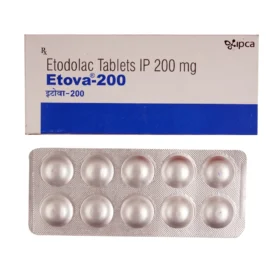
Etova
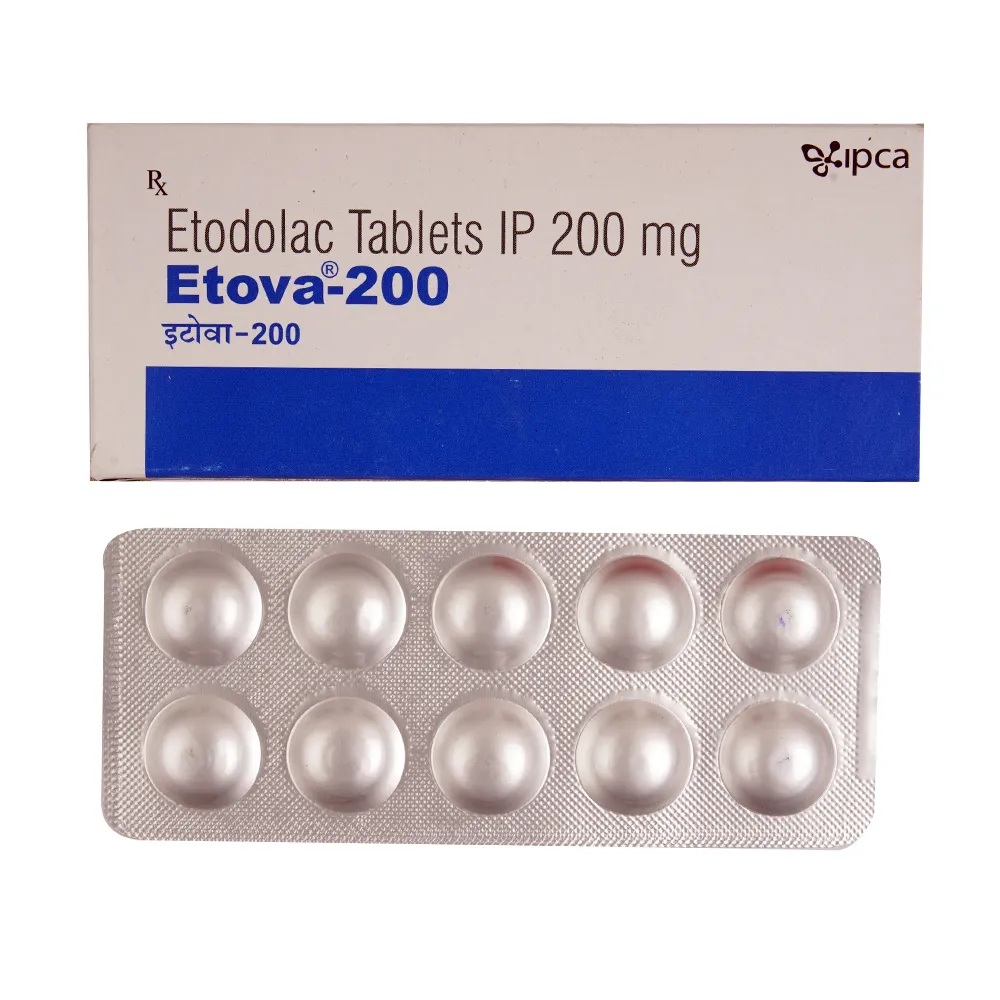
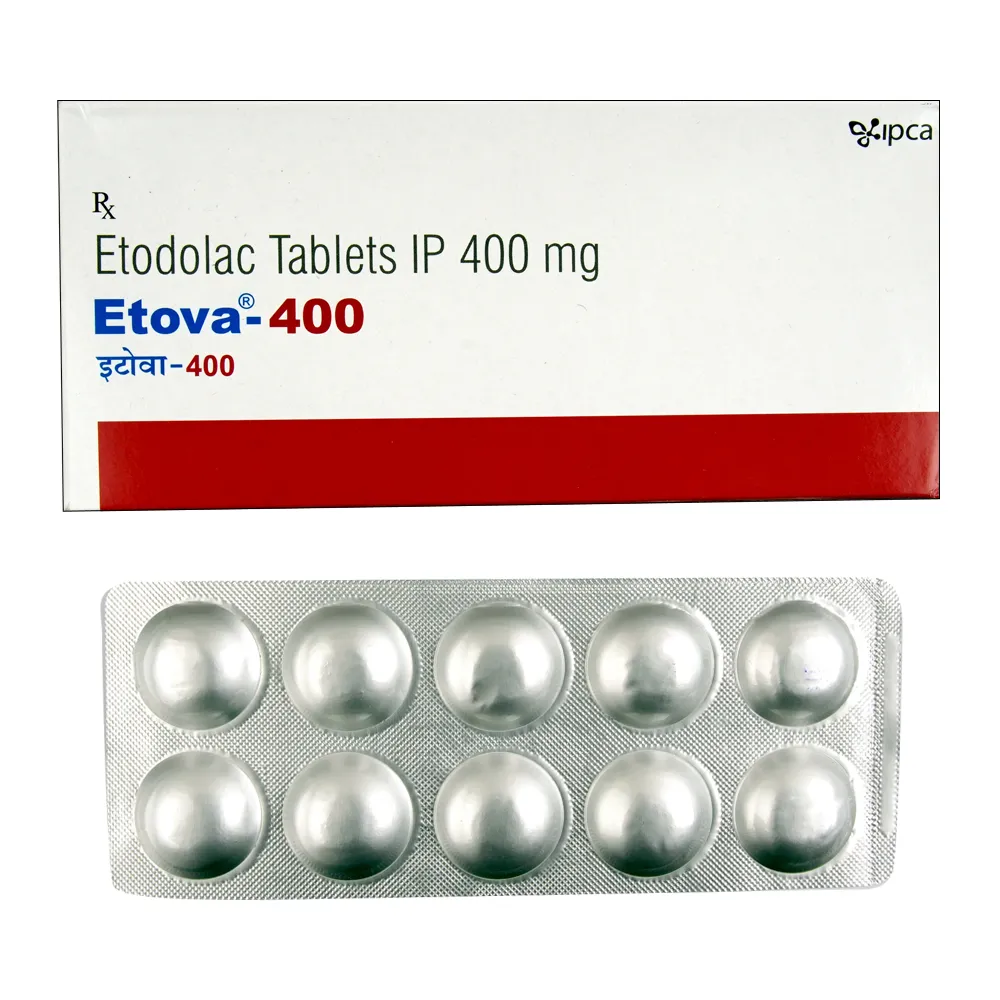
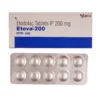
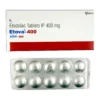
✅ Relieves Pain
✅ Reduces Inflammation
✅ Treats Arthritis Symptoms
✅ Prescribed NSAID
✅ Oral Medication Option
Etova contains Etodolac.
✓ Medically reviewed by Morgan Ellis — Pharmacy Researcher · 8 years experience · Last reviewed: May 2026
⚡ Quick Answer — What is Etova?
Etova is an etodolac tablet available in 200 mg and 400 mg strengths. Etodolac is a preferential COX-2 NSAID — at therapeutic doses it blocks the inflammation-driving COX-2 enzyme more than the stomach-protective COX-1, giving a modestly gentler GI profile than diclofenac, ibuprofen, or naproxen. The usual adult dose is 200–400 mg twice daily with food. Etova is widely used for osteoarthritis, rheumatoid arthritis, acute musculoskeletal pain, and post-operative pain.
📦 Every order is covered by our Reshipment Assurance Policy — if your parcel does not arrive within 20 business days, we reship it.
Why order from MedsBase
Our generic medications are sourced from WHO-GMP certified manufacturers and shipped worldwide in discreet, plain packaging — no medication name on the parcel exterior. Card payments are routed through a regulated processor (statement descriptors include a regulated card-payment processor — never “MedsBase” or any medication name). Crypto and SEPA bank transfer are also accepted. Every order is backed by our Reshipment Assurance Policy.
Etova is an oral tablet containing etodolac, a second-generation NSAID marketed by Ipca Laboratories. Etodolac belongs to the pyranocarboxylic-acid class and has a documented 5–10 fold preference for COX-2 over COX-1 at clinical doses. This places it between classical non-selective NSAIDs (ibuprofen, diclofenac) and highly selective COX-2 inhibitors (celecoxib), with a generally intermediate risk profile.
Etodolac’s 7-hour half-life allows simple twice-daily dosing, and the preferential COX-2 activity means fewer reports of indigestion, gastritis, and peptic ulcer disease than with non-selective NSAIDs at equivalent anti-inflammatory effect.
What Is Etova Used For?
- Osteoarthritis — joint pain, stiffness, reduced range of movement
- Rheumatoid arthritis — symptomatic relief of inflammatory flares
- Acute musculoskeletal pain — sprains, strains, soft-tissue injury
- Post-operative pain — including dental, orthopaedic, and gynaecological procedures
- Low back pain
- Ankylosing spondylitis — second-line option when indomethacin is not tolerated
- Primary dysmenorrhoea
- Dental and orofacial pain
How Does Etodolac Work?
Etodolac has preferential COX-2 activity — at therapeutic doses it inhibits the inflammation-driving COX-2 enzyme more than the stomach-protective COX-1. This gives a modestly lower risk of GI ulcers than classical non-selective NSAIDs such as diclofenac, ibuprofen, and naproxen.
The therapeutic chain of events is the same for every NSAID:
- Tissue injury or inflammation releases phospholipids from cell membranes
- Phospholipase A₂ converts them to arachidonic acid
- Cyclooxygenase (COX-1/COX-2) converts arachidonic acid to prostaglandins — the molecules responsible for pain, swelling, and fever
- Etodolac blocks the COX enzymes, so less prostaglandin is produced, so there is less pain and inflammation
Because prostaglandins also protect the stomach lining, regulate kidney blood flow, and influence platelet function, the same mechanism that relieves pain is also responsible for the main NSAID side effects: stomach irritation, fluid retention, high blood pressure, and (in some individuals) kidney stress.
Etova Dosing
- Osteoarthritis, rheumatoid arthritis: 200–400 mg twice daily with food. Maximum 1,200 mg/day (rarely needed).
- Acute pain, post-operative pain: 200–400 mg twice daily for 3–7 days.
- Elderly, low body weight (< 60 kg), renal impairment: start at 200 mg twice daily and titrate only if needed.
Take with food or milk to reduce GI irritation. Swallow tablets whole with water. Doses should be spaced about 12 hours apart (e.g. 8 a.m. and 8 p.m.). Miss a dose: take it when you remember unless the next is due within 4 hours — then skip.
GI safety — read this before the first dose. Every NSAID, including Etova, carries a real risk of gastritis, peptic ulcer, and upper-GI bleeding. The risk is highest in patients over 65, in those with prior ulcer disease, and in anyone also taking low-dose aspirin, corticosteroids, SSRIs, or anticoagulants. Take Etova with food, use the lowest effective dose for the shortest reasonable time, and ask your doctor about co-prescribing a proton pump inhibitor (omeprazole, pantoprazole) if you need it for more than 2–4 weeks.
Who Should Not Take Etova?
- Known hypersensitivity to Etodolac or any NSAID
- Active or recurrent peptic ulcer, GI bleed, or GI perforation
- Asthma, urticaria, or rhinitis precipitated by aspirin or another NSAID (“aspirin-exacerbated respiratory disease”)
- Severe heart failure (NYHA class IV)
- Severe hepatic impairment (Child–Pugh C)
- Severe renal impairment (CrCl < 30 mL/min)
- Third trimester of pregnancy (risk of premature ductus arteriosus closure and oligohydramnios)
- Recent coronary artery bypass graft surgery (CABG) — absolute contraindication for all NSAIDs
Cardiovascular risk
All NSAIDs (except low-dose aspirin) carry some increase in the risk of heart attack and stroke, and can worsen heart failure. The risk is dose- and duration-dependent and is generally highest with COX-2 selective agents and with diclofenac. Patients with established ischaemic heart disease, peripheral arterial disease, stroke, or uncontrolled hypertension should use non-selective NSAIDs (ibuprofen or naproxen) at the lowest effective dose, or use paracetamol instead where possible.
Renal (kidney) safety
NSAIDs reduce renal prostaglandin production, which can cause salt and water retention, raise blood pressure, and — in vulnerable patients — cause acute kidney injury. High-risk groups are the elderly, patients on ACE inhibitors/ARBs plus diuretics (the “triple whammy”), anyone dehydrated (vomiting, diarrhoea, heat, heavy exercise), and those with pre-existing CKD. Stop the NSAID and seek medical review if you develop reduced urine output, swelling, or unexplained weight gain.
Side Effects of Etova
Etova is generally well tolerated at standard doses.
- Common (1–10%): dyspepsia, abdominal pain, nausea, constipation or diarrhoea, headache, dizziness, mild ankle swelling, rash
- Uncommon: peptic ulcer, GI bleeding (lower rate than non-selective NSAIDs but still possible), elevated liver enzymes, hypertension aggravation, tinnitus
- Rare but serious: severe hepatotoxicity, Stevens-Johnson syndrome, acute kidney injury, heart failure aggravation, anaphylaxis
Etova vs Celecoxib and Ibuprofen
| Drug | COX preference | Typical dose | GI risk | CV risk |
|---|---|---|---|---|
| Etodolac (Etova) | Preferential COX-2 | 200–400 mg BID | Lower | Moderate |
| Celecoxib | Highly selective COX-2 | 100–200 mg BID | Lowest | Moderate |
| Ibuprofen | Non-selective | 400 mg TDS/QDS | Moderate | Low (≤ 1,200 mg/d) |
| Diclofenac | Non-selective (slight COX-2) | 50 mg TDS | Moderate-high | Higher |
| Naproxen | Non-selective | 500 mg BID | Moderate | Lowest |
Ordering & Delivery
MedsBase offers worldwide shipping on every order. Orders are dispatched in discreet packaging and arrive in branded manufacturer packs. If your preferred strength or pack size is out of stock, contact customer support for an ETA.
Medical disclaimer. The information on this page is provided for general education only. It is not a substitute for advice from your own doctor or pharmacist. NSAIDs have well-documented gastrointestinal, cardiovascular, and renal risks — please talk to a qualified healthcare professional before starting, stopping, or changing therapy, especially if you have a history of ulcer disease, heart disease, kidney disease, asthma, or are pregnant.
Frequently Asked Questions
What is Etova used for?
Etova (etodolac) is used for osteoarthritis, rheumatoid arthritis, ankylosing spondylitis, acute musculoskeletal pain, post-operative pain, and primary dysmenorrhoea.
Is etodolac safer than diclofenac for the stomach?
Yes, at equivalent anti-inflammatory doses. Etodolac’s preferential COX-2 activity gives fewer GI ulcers and bleeds than non-selective NSAIDs like diclofenac, ibuprofen, and naproxen. It is still not risk-free and should be taken with food.
How long does Etova take to work?
Pain relief typically begins within 30–60 minutes; peak effect at 1–2 hours. Anti-inflammatory effect builds over 1–2 weeks of regular dosing.
Is Etova a COX-2 inhibitor like celecoxib?
Etodolac is preferential (5–10 fold) but not highly selective like celecoxib (30–400 fold). For patients at high risk of ulcer, celecoxib is the stronger COX-2 choice; etodolac sits intermediate.
Can I take Etova long-term?
Yes for chronic inflammatory arthritis, but use the lowest effective dose and consider adding a proton pump inhibitor after 2–4 weeks. Blood pressure, kidney function, and liver enzymes should be reviewed at least annually.
Is Etova safe with heart disease?
Like all NSAIDs, etodolac carries some cardiovascular risk. In patients with established heart disease, naproxen or low-dose ibuprofen are often preferred. Discuss with your doctor before starting.
Can I take Etova with paracetamol?
Yes. Etodolac and paracetamol act on different pathways and can be combined for stronger pain relief.
Can I drink alcohol while on Etova?
Light drinking is usually tolerated. Regular or heavy drinking increases GI bleed risk and should be avoided.
Is Etova safe in pregnancy?
Avoid after 20 weeks; contraindicated in the third trimester. Use only under specialist advice in early pregnancy.
What if I miss a dose?
Take it when you remember unless the next dose is due within 4 hours. Never double up.
Can I drive while taking Etova?
Most people can. If you experience dizziness or drowsiness, avoid driving until the effect settles.
Related Alternatives
Other products in Chronic Conditions that customers also view:
More options in Pain Relief Medication
Ranked by recent MedsBase order volume — what other customers in this category are picking.
| Strength | 200 mg, 400 mg |
|---|---|
| Quantity | 30 Tablet/s, 60 Tablet/s, 90 Tablet/s, 180 Tablet/s |
 Etova
Etova
Q & A
Etova
Related products

Reviews
There are no reviews yet