







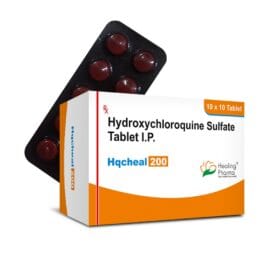
Hqcheal
✅ Treats autoimmune diseases
✅ Manages malaria effectively
✅ Reduces inflammation rapidly
✅ Alleviates rheumatoid arthritis symptoms
✅ Helps with lupus symptoms
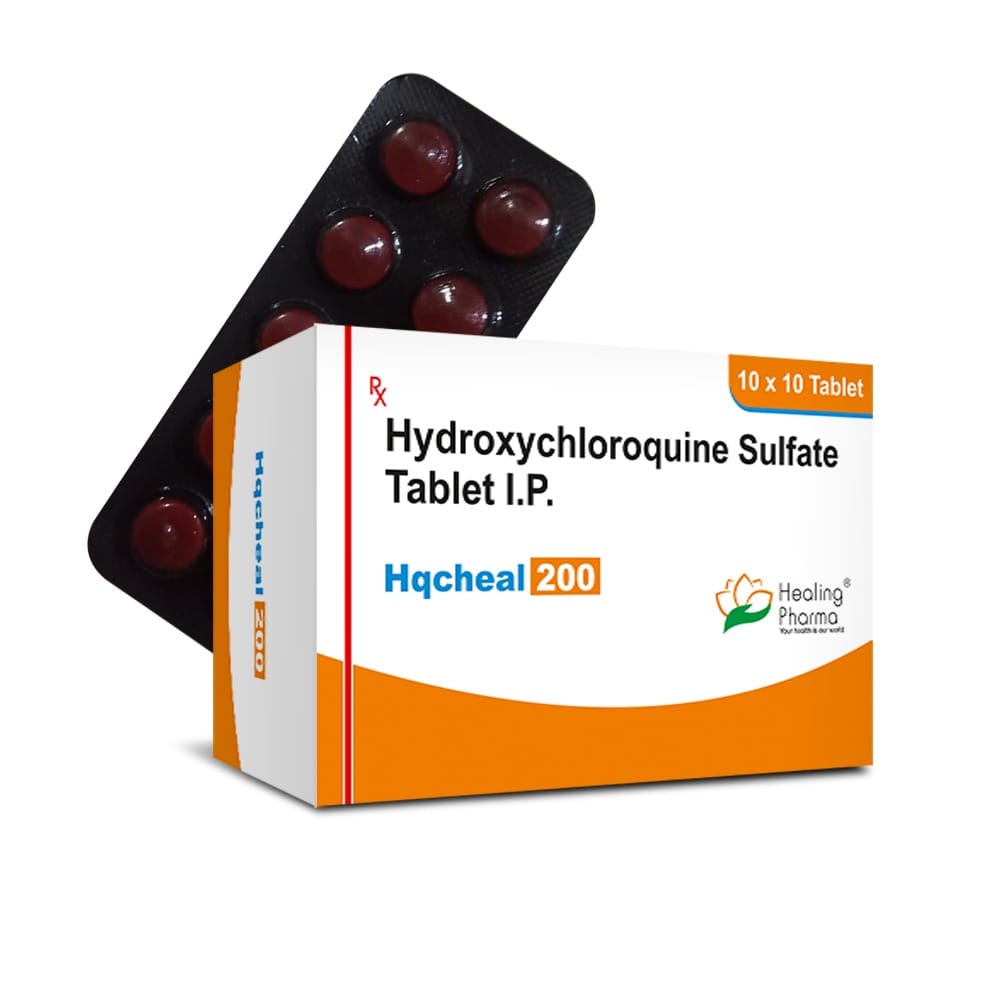
Hqcheal contains Hydroxychloroquine.
✓ Medically reviewed by Morgan Ellis — Pharmacy Researcher · 8 years experience · Last reviewed: May 2026
Quick Answer
Hqcheal contains hydroxychloroquine sulfate 200 mg (Healing Pharma). It treats and prevents chloroquine-sensitive malaria, and is the first-line aminoquinoline for rheumatoid arthritis, systemic lupus erythematosus, discoid lupus, and Sjögren’s syndrome. Dose: 400 mg/day for autoimmune disease (long-term maintenance ≤ 5 mg/kg/day actual body weight); 800 mg loading then 400 mg at 6 / 24 / 48 h for acute uncomplicated chloroquine-sensitive malaria. Mandatory baseline + annual ophthalmology screening after 5 years of continuous use to detect retinopathy. Modern endemic areas (sub-Saharan Africa, India, Southeast Asia, Amazon) have widespread chloroquine resistance — hydroxychloroquine is NOT the right prophylaxis for those destinations. Take with food to reduce GI upset.
🛡️ Every order is covered by our Reshipment Assurance Policy — if your parcel does not arrive within 20 business days we ship a free replacement on EMS or ITPS courier.
Why order from MedsBase
Hqcheal is sourced from a WHO-GMP certified manufacturer and shipped worldwide in discreet packaging. Every order is backed by our Reshipment Assurance Policy and supported by our 1,400+ customer reviews. Worldwide shipping with no prescription paperwork.
About Hqcheal
Hqcheal is a 200 mg hydroxychloroquine sulfate tablet manufactured by Healing Pharma under WHO-GMP certified conditions. Hydroxychloroquine is a 4-aminoquinoline antimalarial that doubles as the workhorse conventional synthetic disease-modifying anti-rheumatic drug (csDMARD) for mild-to-moderate rheumatoid arthritis and connective-tissue disease, with the lowest toxicity profile of any DMARD when dosed correctly.
How hydroxychloroquine works
Hydroxychloroquine accumulates in the acidic lysosomes of cells. In malaria parasites it interferes with haemoglobin digestion in the food vacuole, allowing toxic free haem to accumulate and kill the parasite. In autoimmune disease the lysosomotropic effect raises lysosomal pH, which interferes with antigen processing by dendritic cells, dampens Toll-like receptor signalling (especially TLR-7 and TLR-9 which recognise self-nucleic acids), and reduces interferon-α production. The dual mechanism explains why a single drug treats two unrelated diseases.
Half-life is ~ 40 days (steady state 4–6 weeks). Effect on autoimmune disease takes 8–12 weeks to develop and continues to deepen over 6 months — patience and adherence matter.
Indications and dosing
| Indication | Dose | Duration / notes |
|---|---|---|
| Rheumatoid arthritis (mild–moderate) | 200–400 mg/day in 1–2 divided doses (max 5 mg/kg/day actual body weight) | Onset 8–12 weeks. Long-term maintenance. Often combined with methotrexate or sulfasalazine. |
| Systemic lupus erythematosus (SLE) | 200–400 mg/day, max 5 mg/kg/day | Background therapy for almost all SLE patients per EULAR — reduces flares, organ damage, thrombosis, and improves survival. |
| Discoid / cutaneous lupus | 200–400 mg/day | First-line systemic for skin-only lupus. Can take 8–12 weeks for visible improvement. |
| Sjögren’s syndrome | 200–400 mg/day | Modest-evidence improvement in fatigue + arthralgia; little effect on dryness. |
| Acute uncomplicated chloroquine-sensitive P. falciparum / P. vivax / P. ovale / P. malariae | 800 mg loading → 400 mg at 6 h → 400 mg at 24 h → 400 mg at 48 h (total 2 g over 48 h) | Treatment course only — for chloroquine-sensitive areas. Add primaquine for radical cure of vivax/ovale. |
| Chloroquine-sensitive malaria prophylaxis | 400 mg once weekly | Start 1–2 weeks before travel, continue weekly during exposure, continue 4 weeks after return. Limited modern utility — most destinations are resistant. |
Monitoring schedule
| Time-point | Investigation | Reason |
|---|---|---|
| Baseline | Eye exam (fundus + OCT + visual field), FBC, U&E, LFTs, glucose, weight | Establish retinal baseline + dose-by-actual-weight calculation + screen contraindications. |
| Months 1–6 | Symptom review at each clinical contact | GI tolerance, headache, mood, skin rash, muscle weakness. |
| Year 1, then annually | FBC + LFTs | Rare cytopenias and rare hepatotoxicity. |
| Year 5, then annually | Comprehensive ophthalmology screening (OCT + 10-2 visual field + fundus autofluorescence) | Detect early retinopathy before irreversible damage. |
| Symptom-driven | CK + EMG if proximal weakness; nerve conduction if neuropathic symptoms | Rare myopathy / neuromyopathy with long-term use. |
Side effects
- Common (5–15 %): nausea, diarrhoea, abdominal cramping (mitigated by taking with food), headache, dizziness, mild itching, skin pigmentation (slate-grey patches in long-term users).
- Less common (1–5 %): hair lightening, photosensitivity, mood change, vivid dreams, blurred vision (early reversible accommodation effect — distinct from late retinopathy), tinnitus.
- Rare but serious: retinopathy (long-term, dose-dependent — see red-box), cardiomyopathy / QT prolongation (especially with concurrent QT-prolongers), myopathy, neuromyopathy, agranulocytosis, severe cutaneous reactions (Stevens-Johnson syndrome, toxic epidermal necrolysis, AGEP, drug rash with eosinophilia and systemic symptoms / DRESS).
- Cardiac: QTc prolongation is dose-dependent. Avoid combination with other QT-prolonging drugs (azithromycin, fluoroquinolones, ondansetron, methadone, antipsychotics) and correct electrolyte imbalance before high-dose therapy.
Drug interactions
| Interaction | Effect | Management |
|---|---|---|
| Digoxin | Hydroxychloroquine raises digoxin level | Monitor digoxin level; halve digoxin dose if needed. |
| Insulin / sulfonylureas / metformin | Hydroxychloroquine improves insulin sensitivity → hypoglycaemia risk | Monitor blood glucose; reduce diabetic medication dose if symptomatic hypoglycaemia. |
| Methotrexate | No significant pharmacokinetic interaction; combined as standard csDMARD pair | Combination is standard rheumatology practice. |
| QT-prolonging drugs (azithromycin, ondansetron, fluoroquinolones, methadone, antipsychotics) | Additive QTc prolongation | Avoid co-administration in patients with structural heart disease, electrolyte disturbance, or pre-existing long QT. |
| Cyclosporine | Hydroxychloroquine raises cyclosporine level | Monitor cyclosporine level if combined. |
| Antacids (Mg / Al hydroxide) | Reduce hydroxychloroquine absorption ~ 30 % | Separate by 4 hours. |
| Mefloquine | Both can lower seizure threshold | Avoid combination; choose one antimalarial agent. |
| Tamoxifen | Synergistic retinal toxicity in long-term use | Use lowest effective dose; intensified ophthalmology screening. |
Contraindications and cautions
- Absolute: known hypersensitivity to 4-aminoquinolines; pre-existing retinopathy.
- Caution: renal impairment (dose by actual body weight; consider dose reduction at CrCl < 30 mL/min), hepatic impairment, history of psoriasis (can flare), porphyria (can precipitate attack), G6PD deficiency, severe GI disease, neurological disease (rare seizures), psoriasis (flare risk).
- Pregnancy: compatible. Continuing hydroxychloroquine during pregnancy in lupus reduces flares and improves outcomes; ACR / EULAR / British Society for Rheumatology all recommend continuation. Crosses placenta — neonatal retina is not affected at maternal therapeutic dose.
- Breastfeeding: compatible. Excreted in breast milk in tiny amounts.
Storage
Store below 25 °C in a dry place, in original packaging. Keep out of reach of children — paediatric overdose with a single 200 mg tablet has caused fatal cardiotoxicity in a small child.
Frequently Asked Questions
How long does Hqcheal take to work for rheumatoid arthritis or lupus?
Most patients notice meaningful improvement at 8–12 weeks; the benefit continues to deepen for 6 months. Do not stop early because of “no effect at 4 weeks”. Combination with methotrexate may be used for faster onset in higher-disease-activity rheumatoid arthritis.
Do I need an eye exam before starting?
Yes — baseline fundus + OCT + visual field. Annual screening from year 5 of continuous use, earlier if dose > 5 mg/kg/day actual weight, renal CrCl < 60, or concurrent tamoxifen.
Can I take Hqcheal for malaria prophylaxis on a Southeast Asia or Africa trip?
No. Most modern endemic regions have widespread chloroquine and hydroxychloroquine resistance. Use mefloquine, doxycycline, or atovaquone-proguanil. Speak to a travel-medicine clinic for destination-specific advice.
What dose should I take for autoimmune disease?
Long-term maintenance should not exceed 5 mg/kg/day of actual body weight (not ideal body weight). For most adults this works out at 200–400 mg/day. Higher doses raise the retinal-toxicity risk substantially.
Is it safe in pregnancy?
Yes. Continuing hydroxychloroquine during pregnancy in lupus reduces disease flares and adverse pregnancy outcomes. Stopping it in pregnancy is associated with increased lupus flare and worse maternal and foetal outcomes.
Can I drink alcohol?
Moderate alcohol is acceptable. Avoid heavy drinking — both alcohol and hydroxychloroquine can rarely cause hepatotoxicity, and the combination raises the cardiac QT signal slightly.
Why does the doctor want a baseline weight?
The 5 mg/kg/day cap is calculated on actual body weight, not ideal body weight. Patients above ~80 kg often need 400 mg/day; patients below ~50 kg often need 200 mg/day to stay below the retinal-toxicity threshold.
What if I miss a dose?
Take it as soon as you remember unless it is close to the next dose. Do not double up. The 40-day half-life means a single missed dose has a tiny effect on overall blood levels.
Does Hqcheal cause weight gain?
No. Hydroxychloroquine is weight-neutral and slightly improves insulin sensitivity in patients with type 2 diabetes.
Is hydroxychloroquine the same as chloroquine?
Closely related but not identical. Hydroxychloroquine has an extra hydroxyl group that gives it a substantially better retinal-toxicity profile (~ 40 % less retinotoxic at equivalent doses) and better tolerability. For autoimmune disease, hydroxychloroquine is preferred over chloroquine. For malaria treatment in chloroquine-sensitive areas, both work.
Other Malaria Tablets
- HCQS 200/400 mg — Cipla hydroxychloroquine — 200 mg and 400 mg strengths
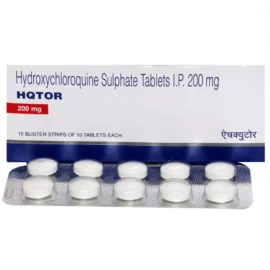
- Hqtor 200 mg — Torrent Pharma hydroxychloroquine 200 mg
- Hyquin 200 mg — Hetero hydroxychloroquine 200 mg
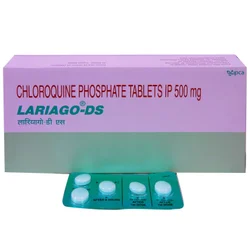
- Lariago 250 mg — Chloroquine — older 4-aminoquinoline, malaria-only use in chloroquine-sensitive areas
- Mefque 250 mg — Mefloquine — once-weekly chemoprophylaxis for chloroquine-resistant areas
More options in Malaria Tablets
Ranked by recent MedsBase order volume — what other customers in this category are picking.


| Strength | 200 mg |
|---|---|
| Quantity | 30 Tablet/s, 60 Tablet/s, 90 Tablet/s, 180 Tablet/s |
 Hqcheal
Q & A
Hqcheal
Related products




Reviews
There are no reviews yet