







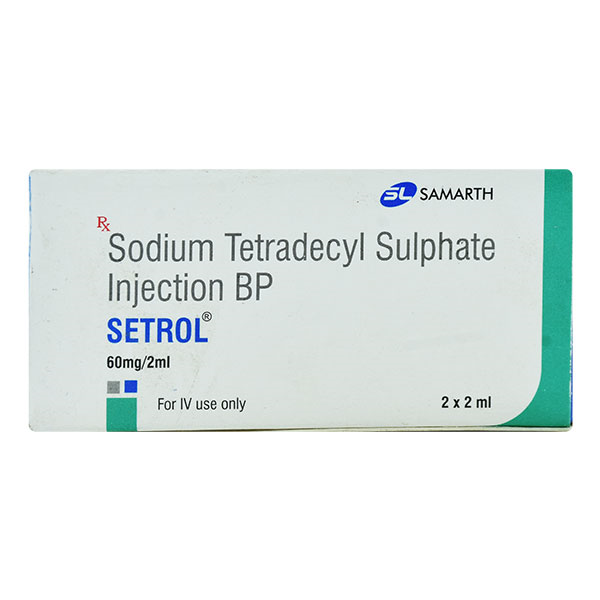
Setrol Injection
✅ Treats varicose veins effectively
✅ Reduces vein inflammation
✅ Improves blood flow
✅ Minimizes pain and discomfort
✅ Injectable for convenience
Setrol Injection contains Sodium Tetradecyl Sulfate.
✓ Medically reviewed by Morgan Ellis — Pharmacy Researcher · 8 years experience · Last reviewed: May 2026
Quick Answer
Setrol Injection contains sodium tetradecyl sulfate (STS) 3% or 1% — a detergent sclerosing agent used by trained clinicians for sclerotherapy of varicose veins and telangiectasias (spider veins). It is delivered as a foamed or liquid intravenous injection into the affected vein under ultrasound or visual guidance. This is NOT a self-administered medication.
📦 Every order is covered by our Reshipment Assurance Policy — if your parcel does not arrive within 20 business days, we reship it.
What sodium tetradecyl sulfate is
Sodium tetradecyl sulfate (STS, also known as STD or sotradecol) is a long-chain fatty-alcohol sulphate detergent. When injected into a vein, it disrupts the endothelial cell membrane, causing an inflammatory cascade that leads to thrombosis, fibrosis and eventually fibrotic obliteration of the vein lumen. The vein is then absorbed and disappears over weeks to months. STS is one of two FDA-approved sclerosants in the United States (the other is polidocanol).
Sclerotherapy is a procedure — not a self-injection medication
Setrol Injection must be administered by a vascular surgeon, dermatologist, interventional radiologist or other physician trained in sclerotherapy. Inadvertent intra-arterial injection causes ischaemic limb necrosis. Extravasation causes skin sloughing. Foam STS injection above the level of the heart is associated with rare visual disturbance and migraine-like aura. Self-administration is not safe.
Indications
- Varicose veins of the great and small saphenous veins, accessory saphenous and tributary veins.
- Telangiectasias and reticular veins (spider veins) of the lower limb.
- Venous malformations — selected vascular anomalies.
- Haemorrhoidal sclerotherapy (lower concentrations).
- Endoscopic treatment of bleeding oesophageal varices (specialist hospital use; largely replaced by band ligation and tissue glue for variceal bleeding).
Concentrations and use
| Vessel | Concentration | Volume per session |
|---|---|---|
| Telangiectasias (spider veins) | 0.1–0.25% | 0.1–0.5 ml per site |
| Reticular veins (1–3 mm) | 0.25–0.5% | 0.5–1 ml per site |
| Varicose tributaries (3–6 mm) | 0.5–1% | 2–4 ml as foam |
| Saphenous trunks (≥ 6 mm) | 1–3% (foam) | 4–10 ml as foam under ultrasound |
Foam sclerotherapy (Tessari technique: 1 part liquid to 4 parts air via two-syringe-and-3-way-tap method) gives ~3-4× the surface area of liquid STS and is preferred for medium and large veins.
Procedure essentials (clinician summary)
- Doppler / duplex ultrasound mapping of the venous tree before treatment.
- Patient supine; treated leg elevated for trunk treatment, level for spider veins.
- Compression stockings (class II, 23–32 mmHg) immediately after for 1–6 weeks depending on vessel calibre.
- Walk for 30 minutes after treatment; avoid prolonged standing or air travel for 1–2 weeks.
- Follow-up duplex at 4–6 weeks for trunk treatment to assess closure.
Adverse effects
- Common: hyperpigmentation along the treated vein (5–30%, usually resolves over months); transient bruising; pain at injection site; superficial thrombophlebitis; matting (new fine telangiectasias adjacent to treated area).
- Uncommon: deep vein thrombosis (< 1%), especially with high-volume foam.
- Rare but serious: visual disturbance / migraine aura with foam (presumed paradoxical embolism through patent foramen ovale), allergic reaction including anaphylaxis, skin necrosis from extravasation, intra-arterial injection causing limb ischaemia.
Contraindications
- Known hypersensitivity to sodium tetradecyl sulfate
- Acute superficial or deep venous thrombosis
- Significant peripheral arterial disease (ABI < 0.6)
- Pregnancy and breastfeeding (relative — defer treatment)
- Known right-to-left cardiac shunt (relative; consider for foam)
- Inability to ambulate after the procedure
- Severe systemic disease, immobility, hypercoagulable states
Storage
Store below 25 °C, away from light. Do not freeze. Discard any opened ampoule within 24 hours.
Why order from MedsBase
Setrol Injection is supplied through a WHO-GMP certified manufacturer with full COA documentation. We ship worldwide in plain, discreet packaging, and every order is covered by our Reshipment Assurance Policy. Your statement descriptor when paying by card shows the regulated payment processor (a regulated card-payment processor), never "MedsBase" or any medication name.
Frequently Asked Questions
Can I inject Setrol myself at home?
No. Sodium tetradecyl sulfate is administered intravenously by a trained clinician with ultrasound guidance for trunk veins and good visualisation for spider veins. Self-administration risks intra-arterial injection (causing limb necrosis), extravasation (causing skin sloughing) and DVT.
How is sclerotherapy different from laser treatment?
Sclerotherapy injects a chemical irritant directly into the vein. Laser ablation (endovenous laser, EVLT, or radiofrequency RFA) thermally seals the saphenous trunk through a fibre passed inside it. Both produce vein closure; choice depends on vein size, anatomy and operator preference. Spider veins are usually treated by sclerotherapy; saphenous trunks ≥ 6 mm are commonly treated by EVLT/RFA with adjunctive sclerotherapy of tributaries.
How many sessions will I need?
Spider veins typically need 2–4 sessions spaced 4–8 weeks apart. Reticular veins 1–3 sessions. Saphenous trunk treatment: 1 session for the trunk plus 1–3 follow-up sessions for residual tributaries.
Will the veins come back?
Treated veins do not return. New veins can form (recurrence rate 20–30% over 5 years for varicose disease) because the underlying valvular incompetence in adjacent vessels can progress. Compression stockings, weight management and avoiding prolonged standing slow recurrence.
Is sclerotherapy painful?
Most patients describe brief stinging or burning at injection that lasts a few seconds. Foam injection into trunk veins is usually painless beyond the needle stick. Post-procedure mild ache and tightness for 1–3 days is normal.
What about pregnancy?
Defer elective sclerotherapy until after pregnancy and breastfeeding. Many leg veins improve spontaneously postpartum and are best assessed 6 months after delivery.
Can it be used for haemorrhoids?
Yes — STS is used for sclerotherapy of grade I–II internal haemorrhoids at lower concentrations. This is a hospital or clinic procedure performed by a colorectal surgeon or proctologist.
Why do I need compression stockings afterwards?
Compression promotes vein closure, reduces post-treatment pain and bruising, and lowers the risk of DVT, hyperpigmentation and matting. Class II 23–32 mmHg is standard for 1–6 weeks depending on vessel size.
What is “matting” and how is it prevented?
Matting is the appearance of new fine red telangiectasias near the treated area, often around 4–6 weeks post-treatment. Risk factors are oestrogen exposure, larger feeding veins left untreated, and high concentrations. Most matting fades over 6–12 months. Prevention: treat feeding veins first, use the lowest effective concentration.
Can I drink alcohol or take aspirin around the procedure?
Alcohol on the day of treatment increases bruising slightly. Aspirin and NSAIDs are usually continued — they do not significantly affect outcomes and in some practices are encouraged in the first week to reduce inflammatory pigmentation.
Other Vascular & Circulation Medications
- All Heart & Blood Pressure Medications
- Atorvatin (atorvastatin) — lipid management, vascular health
- Trental 400 (pentoxifylline) — peripheral vascular flow
- Eliquis (apixaban) — DOAC for venous thromboembolism
- Calaptin SR (verapamil) — vascular smooth muscle / hypertension
Medical Disclaimer
This information is provided for educational purposes only and is not a substitute for medical advice. Always consult a qualified healthcare professional before starting, changing, or stopping any medication.
More options in Heart & Blood Pressure
Ranked by recent MedsBase order volume — what other customers in this category are picking.
| Strength | 60mg/2ml |
|---|---|
| Quantity | 2 Ampoule/s, 4 Ampoule/s, 6 Ampoule/s, 12 Ampoule/s |
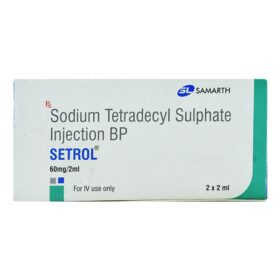 Setrol Injection
Q & A
Setrol Injection
Related products

Reviews
There are no reviews yet