





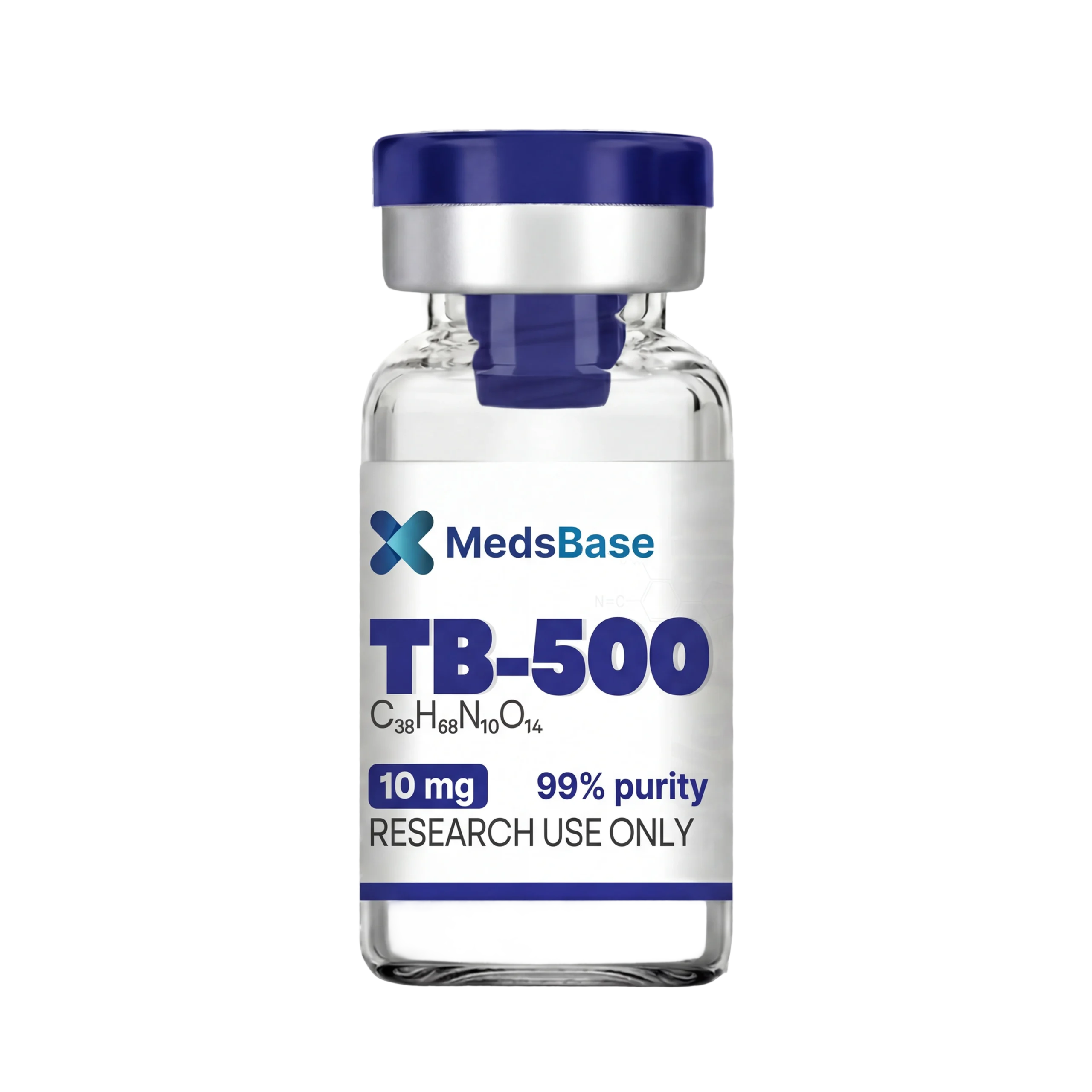
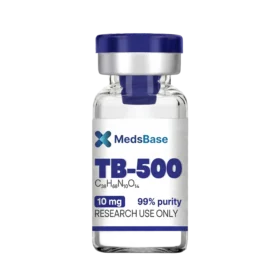
TB-500 (Thymosin Beta-4)
✅ Supports cellular regeneration
✅ Enhances tissue modeling
✅ Promotes fibroblast activity
✅ Stimulates angiogenic signaling
✅ Improves extracellular matrix stability
TB-500 contains synthetic peptide compound.
✓ Medically reviewed by Morgan Ellis — Pharmacy Researcher · 8 years experience · Last reviewed: May 2026
Quick Answer — What is TB-500?
TB-500 is a synthetic analog of Thymosin Beta-4, a naturally occurring 43-amino-acid peptide with systemic healing activity. In published preclinical studies it binds G-actin, stimulates angiogenesis via the VEGF/KDR pathway, and modulates TGF-beta inflammatory signaling. Supplied in 2 mg to 10 mg lyophilized vials.
📦 Every order is covered by our Reshipment Assurance Policy — if your parcel does not arrive within 20 business days, we reship it.
| Specification | Detail |
|---|---|
| CAS Number | 77591-33-4 |
| Molecular Formula | C212H350N56O78S |
| Molecular Weight | ~4963 Da (N-acetyl Thymosin β-4 (1–43)) |
| Sequence | Ac-SDKPDMAEIEKFDKSKLKKTETQEKNPLPSKETIEQEKQAGES |
| Form | Lyophilized powder (or as supplied) |
| Purity | ≥99% (HPLC verified, COA on request) |
| Storage | Lyophilized: 2–8 °C (refrigerator) for working stock; −20 °C for long-term storage of unopened vials. Reconstituted: 2–8 °C, use within ~30 days. Avoid vigorous agitation; large peptides denature with shaking. Do not freeze–thaw the reconstituted solution. |
| Solubility | Bacteriostatic water (recommended) or sterile water for shorter use windows |
What Is TB-500?
TB-500 is the clinical designation for a synthetic analog of Thymosin Beta-4 (TB4), a naturally-occurring 43-amino-acid peptide hormone found in nearly every cell of the human body. TB4 is most abundant in platelets, and is released at sites of tissue damage where it orchestrates cell migration, angiogenesis, and anti-inflammatory signaling. The synthetic form — TB-500 — reproduces the biological activity of TB4 and is the most widely studied compound in this class. The TB4 sequence is Ac-SDKPDMAEIEKFDKSKLKKTETQEKNPLPSKETIEQEKQAGES, molecular weight approximately 4,963 Da. It is supplied as a high-purity lyophilized powder for reconstitution with bacteriostatic water. For mechanism, published trial detail, and dosing considerations, see our full TB-500 guide.
Mechanism of Action — Systemic Healing via Three Pathways
TB-500 is distinguished from most peptides by its systemic distribution and long circulating half-life, which allow a single administration to influence repair processes across multiple tissues simultaneously. The three primary mechanistic pathways in published studies:
- G-actin sequestration — TB-500 binds monomeric actin (G-actin) via a central actin-binding motif (LKKTETQ). This preserves the cytoskeletal reservoir cells need to extend pseudopodia, migrate toward injury sites, and remodel after damage. Cell-migration assays in wound-edge studies consistently show enhanced migration rates in TB4-treated cells.
- Angiogenesis via VEGF / KDR signaling — TB-500 stimulates vascular endothelial migration and capillary formation through the VEGF receptor 2 (KDR) pathway. In ischemia-reperfusion and wound-healing studies this translates to faster restoration of perfusion at repair sites.
- Anti-inflammatory signaling via TGF-beta modulation — TB-500 reduces pro-inflammatory cytokine release and accelerates resolution of the inflammatory phase of healing. In cardiac ischemia studies, this has been linked to reduced infarct size and preserved cardiomyocyte function.
Because these three mechanisms distribute throughout the body, TB-500 produces effects in tissues distant from the injection site — the hallmark that distinguishes it from more localized healing peptides such as BPC-157. The practical consequence: TB-500 protocols are dosed twice weekly rather than daily.
Published Evidence
TB-500 is used in clinical contexts that investigate:
- Skeletal muscle repair — systemic recovery kinetics in crush, strain, and disuse-atrophy rodent models
- Cardiac recovery — cardiomyocyte survival, infarct size, and vascular remodeling post-ischemia (Smart et al., Nature 2011; Bock-Marquette et al., Nature 2004)
- Tendon and ligament healing — alone or stacked with BPC-157 in connective-tissue repair studies
- Systemic wound repair — dermal and corneal wound-healing studies, especially where multiple tissue beds are affected
- Hair cycle studies — follicular angiogenesis and hair-growth phase transitions in rodent study models
- Vascular repair — endothelial cell migration, capillary formation, and ischemia studies
- Comparative peptide studies — benchmarking against BPC-157 as the canonical local-healing comparator, or with IGF-1 LR3 and Ipamorelin/CJC-1295 in growth-factor studies. See our BPC-157 vs TB-500 comparison for the side-by-side.
For broader context on where TB-500 fits within the healing-peptide landscape, see the best peptides for muscle recovery cluster article and complementary compounds in the peptides catalog.
Available Strengths and Concentrations
MedsBase stocks TB-500 (synthetic Thymosin Beta-4) in the following lyophilized vial sizes. Each variation ships in 10-vial, 20-vial, or 30-vial pack formats with full reconstitution guidance:
| Vial Strength | Typical Use Case | Pack Sizes |
|---|---|---|
| 2 mg | Pilot studies, titration, or short protocols | 10, 20, or 30 vials |
| 5 mg | Standard strength, matches common 2–2.5 mg dose-per-administration protocols | 10, 20, or 30 vials |
| 10 mg | Extended studies, bulk prep, lowest per-mg cost | 10, 20, or 30 vials |
All three strengths are the same chemical form (lyophilized powder, 99%+ HPLC purity). Higher-mg vials offer lower per-mg cost and are generally preferred when users are modeling the 2–2.5 mg per-administration dose used across most published TB-500 protocols.
How It Compares — TB-500 vs BPC-157
TB-500 and BPC-157 are the two most-cited healing peptides. They are often studied together because their mechanisms are complementary rather than overlapping — BPC-157 acts locally via growth-factor upregulation, TB-500 acts systemically via actin and angiogenesis pathways.
| Criterion | TB-500 (Thymosin Beta-4) | BPC-157 |
|---|---|---|
| Length | 43 amino acids (~4,963 Da) | 15 amino acids (~1,419 Da) |
| Primary mechanism | G-actin sequestration, angiogenesis, TGF-beta | VEGF + NO + GH receptor upregulation |
| Distribution | Systemic, distributes widely | More localized at injection site |
| Typical dose | 2–2.5 mg twice weekly, 4–6 week loading | 250–500 mcg, 1–2x daily |
| Strongest signal | Cardiac, systemic muscle, vascular, hair | Tendon, ligament, gut barrier |
| Stacking | Commonly co-administered with BPC-157 | Commonly co-administered with TB-500 |
For the full side-by-side methodological comparison and when users pick one over the other, read BPC-157 vs TB-500: which healing peptide for your recovery goal.
Storage and Reconstitution
Before reconstitution: store lyophilized vials refrigerated at 2–8 °C in original packaging. Lyophilized TB-500 is stable under these conditions for up to 36 months. Avoid freeze-thaw cycles on the powder. Reconstitution procedure: inject bacteriostatic water down the side wall of the peptide vial (not directly onto the lyophilized cake) per the dilution table above. Swirl gently — do not shake — and allow 5–10 minutes for full dissolution. A correctly reconstituted solution should be clear and colourless. After reconstitution: store refrigerated at 2–8 °C and use within 30 days for optimal stability. Do not freeze reconstituted solution — freeze-thaw cycles degrade peptide integrity. Discard any vial showing cloudiness, precipitate, or discolouration.
Frequently Asked Questions
What is TB-500 used for in studies?
TB-500 is used in studies investigating skeletal muscle repair, cardiac recovery, tendon and ligament healing, wound repair, hair-cycle studies, vascular repair, and systemic tissue regeneration. It is not FDA-approved and is sold here strictly for clinical studies use only.
How is TB-500 different from BPC-157?
TB-500 is a 43-amino-acid synthetic analog of Thymosin Beta-4 that acts systemically via G-actin binding, angiogenesis, and TGF-beta signaling. BPC-157 is a 15-amino-acid pentadecapeptide that acts mostly locally via VEGF, nitric oxide, and growth-hormone-receptor pathways. The two are often co-administered in studies because their mechanisms are complementary.
What is the typical TB-500 dose?
Published preclinical protocols typically use 2–2.5 mg per administration, given twice weekly for a 4–6 week loading phase followed by a weekly maintenance phase. A 5 mg vial reconstituted with 2.0 mL bacteriostatic water yields 2.5 mg/mL — 80 ticks on a U-100 syringe delivers 2 mg.
Is TB-500 FDA approved?
No. TB-500 (synthetic Thymosin Beta-4) is not approved by the FDA, EMA, MHRA, or any other regulator for human therapeutic use.
How should TB-500 be stored?
Lyophilized vials: refrigerated at 2–8 °C in original packaging, stable up to 36 months. Reconstituted solution: refrigerated at 2–8 °C, use within 30 days. Do not freeze reconstituted solution — freeze-thaw cycles degrade the peptide.
How do I reconstitute TB-500?
Follow the reconstitution reference chart above. Add bacteriostatic water down the side wall of the vial (not onto the lyophilized cake), swirl gently, and allow 5–10 minutes for full dissolution. Do not shake the vial.
What strengths does MedsBase stock?
MedsBase carries TB-500 in 2 mg, 5 mg, and 10 mg lyophilized vials. Each strength is available in 10-vial, 20-vial, or 30-vial pack sizes. All vials are supplied at 99%+ HPLC purity with a certificate of analysis available on request.
Can TB-500 and BPC-157 be stacked in studies?
Yes. TB-500 and BPC-157 are among the most commonly co-administered peptides in preclinical studies. Their mechanisms are complementary (systemic vs local, actin-binding vs growth-factor-upregulation), and combined protocols appear frequently in connective-tissue and muscle recovery. See our comparison guide.
Why is TB-500 dosed less often than BPC-157?
TB-500 has a longer circulating half-life and distributes systemically, so published studies protocols typically dose twice weekly. BPC-157 is more localized and commonly dosed once or twice daily in the same types of injury-model studies.
Does TB-500 cause side reported effects?
Published preclinical studies has reported a reasonable safety profile at typical doses. Published toxicology work has not identified off-target signals at standard doses.
Is TB-500 the same as full Thymosin Beta-4?
TB-500 is marketed as a synthetic form of Thymosin Beta-4 (TB4). In commercial supply, what is sold as “TB-500” is typically the full 43-amino-acid TB4 molecule synthesized chemically. Some literature refers to shorter actin-binding fragments (LKKTETQ) as functional TB4 analogs in narrow contexts, but full-length TB4 is the dominant form.
What is the half-life of TB-500?
TB-500 (synthetic Thymosin Beta-4) has an estimated serum half-life of several days in preclinical studies — significantly longer than most GHRPs and site-specific healing peptides such as BPC-157. This extended half-life supports the less-frequent dosing schedules typically used in Tβ4 protocols.
How long does TB-500 take to show effects in preclinical studies?
Preclinical studies using Thymosin Beta-4 in cardiac, skeletal muscle, and connective tissue models typically observe measurable effects over 2–4 week cycles. The systemic distribution and longer half-life compared to site-directed peptides mean TB-500 timelines are generally extended.
Can I order TB-500 for international shipping?
Yes. MedsBase ships TB-500 worldwide from our dedicated peptide shipping network. Peptide-only orders qualify for our standalone peptide shipping service. All orders ship in temperature-controlled packaging with full tracking.
TB-500 is most often run alongside BPC-157 — angiogenesis (BPC-157) plus cytoskeletal repair (TB-500) gives faster, more complete soft-tissue recovery than either peptide alone; our Peptide Healing Stack (BPC-157 5 mg + TB-500 5 mg + bacteriostatic water) ships the matched protocol in a single parcel.
Other Peptides for Recovery and Performance
- BPC-157 — Body Protection Compound — tendon, ligament, gut recovery
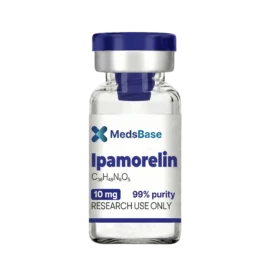
- Ipamorelin — Selective ghrelin agonist — clean GH pulse without cortisol/prolactin
- CJC-1295 with DAC — GHRH analog with extended half-life
- GHK-Cu — Copper peptide — skin and connective tissue regeneration
- IGF-1 LR3 — Long-R3 IGF-1 analog — anabolic / regenerative support
Further Reading
📖 Learn the science behind this peptide
Read our complete evidence-based guide: TB-500 — mechanism, trial data & outlook. Covers mechanism of action, published study data, typical dosing ranges, reconstitution protocols, stacking considerations, and safety/contraindication notes.
More options in Peptides
Ranked by recent MedsBase order volume — what other customers in this category are picking.
| Strength | 2 mg, 5 mg, 10 mg |
|---|---|
| Quantity | 10 Vials, 20 Vials, 30 Vials |
 TB-500 (Thymosin Beta-4)
Q & A
TB-500 (Thymosin Beta-4)
Related products
Reviews
There are no reviews yet